
How to Compare Grocery Prices Before Shopping
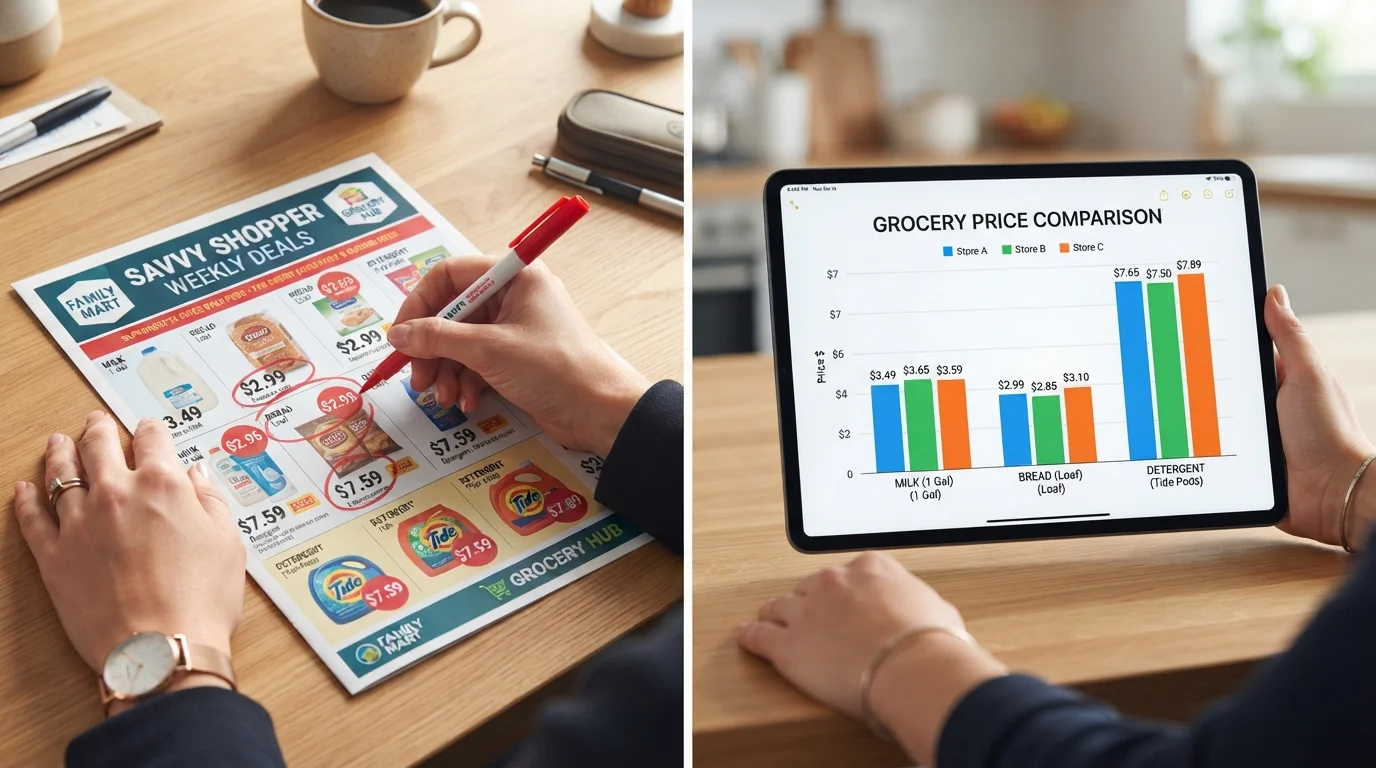
Two grocery products can look similar on a shelf but cost very different amounts once you compare their actual pack sizes, variants, and unit prices.
A 1kg bag of rice and a 5kg bag may have different prices per kilogram. A 900ml bottle of cooking oil cannot be fairly compared with a 1-litre bottle simply by looking at the total price. Even two products with the same weight can differ because of brand, quality, formulation, or packaging.
That is why Compare Grocery Prices is more useful when you look beyond the large price printed on the pack.
For shoppers in Pakistan, a simple comparison can help make a grocery budget more predictable and prevent a cheaper-looking product from turning out to be more expensive per kilogram, litre, or 100g.
What Does It Mean to Compare Grocery Prices?
Comparing grocery prices means checking two or more products or retailers using the same basis before deciding what to buy.
A useful comparison can include:
- Total selling price
- Pack size
- Price per kilogram
- Price per litre
- Price per 100g or 100ml
- Brand
- Product variant
- Quality or specification
- Retailer
- Discount or promotion
- Delivery or other additional charges
The important part is comparing like with like.
If one rice pack is 1kg and another is 5kg, their total prices alone do not tell you which one has the lower price for the same quantity.
Why Comparing Grocery Prices Matters

Food and household prices change over time, and the prices of the same type of product can also differ between retailers.
Pakistan’s Bureau of Statistics publishes price statistics using data collected from markets across the country, while provincial authorities publish notified rates for selected essential commodities. These systems are useful reference points, but they should not be treated as a guarantee of the exact price of every branded product at every retailer.
For an ordinary shopping trip, comparison can help with three practical questions:
Am I comparing the same quantity?
Am I comparing the same product or a different variant?
Is the lower total price actually lower per unit?
Answering these questions makes price comparison much more meaningful.
Start With the Same Product Quantity
The first step is to put products on the same basis.
Suppose you are comparing two rice packs:
- Pack A: Rs. 330 for 1kg
- Pack B: Rs. 1,500 for 5kg
Pack B has the higher total price, but that does not mean it is more expensive.
Its unit price is:
Rs. 1,500 ÷ 5 = Rs. 300 per kg
Pack A costs:
Rs. 330 ÷ 1 = Rs. 330 per kg
So the larger pack costs less per kilogram in this example.
The same principle works for:
- Atta
- Rice
- Daal
- Sugar
- Cooking oil
- Ghee
- Tea
- Detergent
- Other packaged groceries
Check the Price Per Kilogram
For products sold by weight, price per kilogram is one of the easiest ways to make a fair comparison.
Formula
Price per kg = Total price ÷ weight in kg
For example, if a 2kg product costs Rs. 760:
Rs. 760 ÷ 2 = Rs. 380 per kg
If another pack costs Rs. 420 for 1kg, the first product has the lower price per kilogram.
This method is particularly useful when grocery stores carry several pack sizes of the same product.
Compare Grocery Prices Per Litre for Liquids
The same idea applies to liquids.
For example:
- 500ml cooking oil = Rs. 300
- 1 litre cooking oil = Rs. 560
Convert both to a litre basis.
The 500ml bottle is half a litre:
Rs. 300 ÷ 0.5 = Rs. 600 per litre
The 1-litre bottle costs:
Rs. 560 ÷ 1 = Rs. 560 per litre
Although the 1-litre bottle costs more at checkout, its price per litre is lower.
This approach is useful for:
- Cooking oil
- Liquid detergent
- Shampoo
- Juices
- Milk
- Cleaning products
- Other liquid groceries and household products
Use Price Per 100g for Smaller Packs
For smaller products, price per 100g can make comparisons easier.
For example:
- 200g product = Rs. 180
- 500g product = Rs. 400
Calculate the price per 100g.
For the 200g pack:
Rs. 180 ÷ 2 = Rs. 90 per 100 g
For the 500g pack:
Rs. 400 ÷ 5 = Rs. 80 per 100 g
The larger pack therefore has the lower price per 100g in this example.
This method can be useful for:
- Tea
- Spices
- Biscuits
- Dry fruits
- Coffee
- Cereals
- Daal
- Other packaged foods
Do Not Compare Different Pack Sizes by Total Price
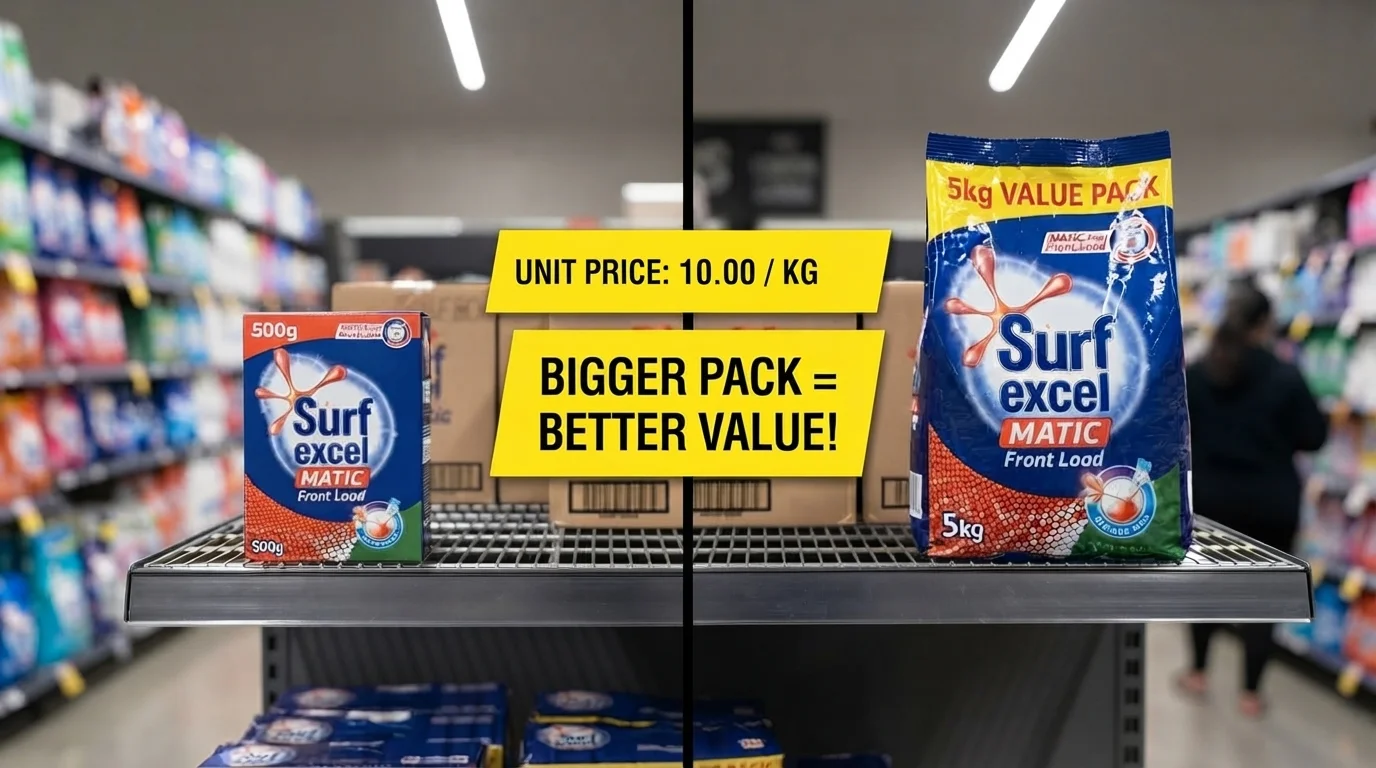
This is one of the most common mistakes in grocery shopping.
A shopper sees:
500g = Rs. 250
and
1kg = Rs. 430
and may immediately think that the 500g pack is cheaper.
It is cheaper at checkout because you are buying half as much.
The more useful comparison is:
500g: Rs. 250 ÷ 0.5 = Rs. 500/kg
1kg: Rs. 430 ÷ 1 = Rs. 430/kg
The 1kg pack costs more overall but less for the same quantity.
Check Whether You Are Comparing the Same Variant
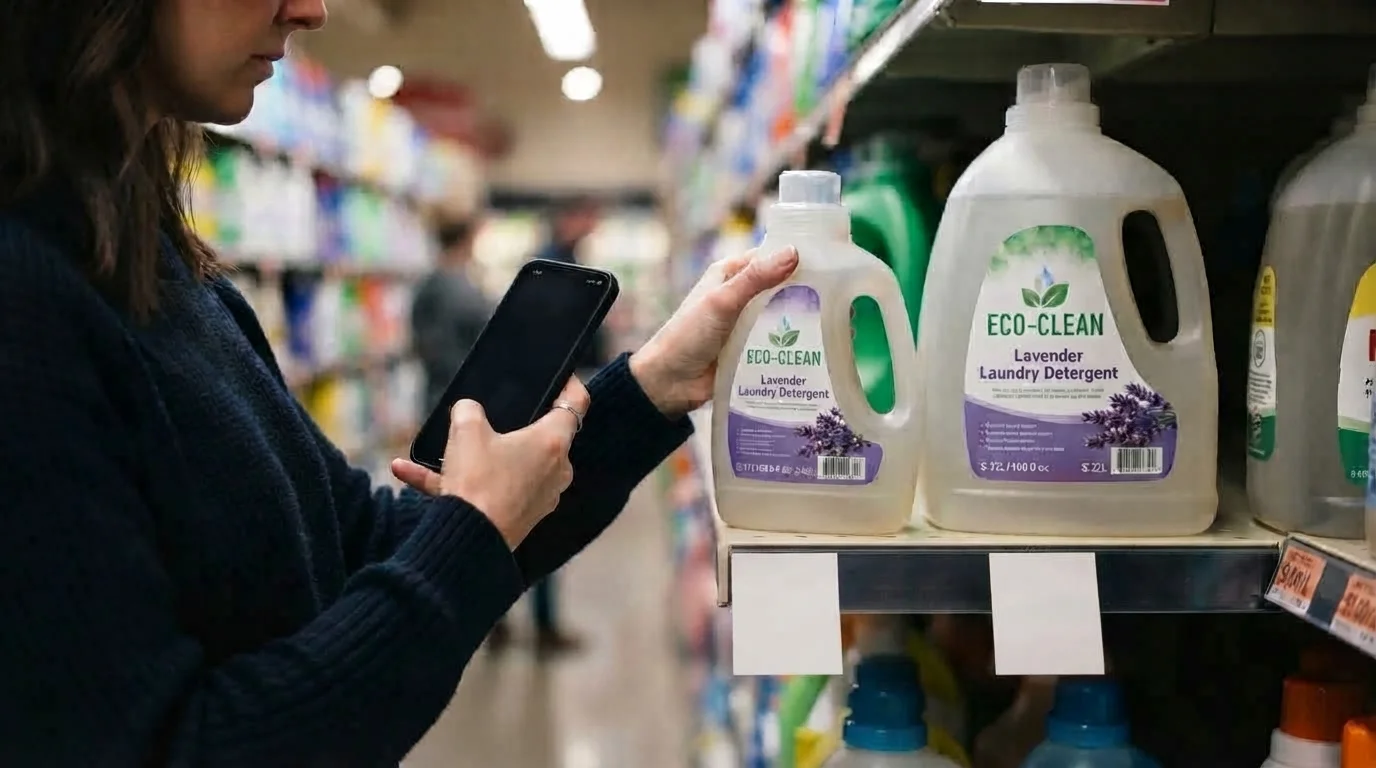
A lower price does not always mean you found the same product for less money.
Brands may sell several versions of a product.
For example, a detergent brand may have:
- Regular powder
- Matic powder
- Top-load detergent
- Front-load detergent
- Liquid detergent
- Different fragrance or formulation
Similarly, rice may be sold in different varieties and grades, while tea, cooking oil, and packaged foods can have different product specifications.
Before comparing grocery prices, check:
- Product name
- Variant
- Size
- Type
- Intended use
- Pack quantity
A Rs. 500 product is not necessarily a cheaper alternative to a Rs. 600 product if the two are different products.
Compare Grocery Prices Carefully (Brands)
Brand comparison can be useful, but price alone does not tell you whether two products are equivalent.
For example, two 1kg packs of rice may have different prices because they are different varieties or grades.
The same applies to:
- Tea
- Cooking oil
- Ghee
- Spices
- Detergent
- Cereals
- Biscuits
- Sauces
If you are switching brands to reduce cost, check the product description and pack information first.
For regular household shopping, you may also decide that a particular brand is worth paying more for because it is the product your family prefers.
Comparing grocery prices should give you information; the final choice depends on your requirements.
Compare the Same Product Across Different Stores
Once you know the exact product and pack size, you can compare retailers.
For example:
| Retailer | Product | Pack | Price |
|---|---|---|---|
| Store A | Product X | 1kg | Rs. 520 |
| Store B | Product X | 1kg | Rs. 495 |
| Store C | Product X | 1kg | Rs. 510 |
Now the comparison is meaningful because:
- Product is the same
- Variant is the same
- Pack size is the same
Store B has the lower listed price in this example.
For actual shopping, however, also check whether the listed price is current and whether delivery charges, membership conditions, or promotional requirements apply.
Look at the Final Cost, Not Just the Product Price
For online shopping, the displayed product price may not be the complete amount you pay.
The final cost can potentially include:
- Delivery fee
- Service charge
- Minimum-order requirement
- Other applicable charges
- Promotional conditions
For example, a product priced at Rs. 500 at one retailer and Rs. 515 at another does not automatically mean the first retailer is cheaper if the first order carries an additional delivery charge.
For physical stores, other practical costs can also matter, such as travelling distance or parking.
The cheapest shelf price is not always the lowest overall shopping cost.
Check Promotions Before Buying
Discounts can change the comparison.
A product may have:
- Sale price
- Buy-one-get-one offer
- Multi-pack promotion
- Loyalty discount
- Limited-time coupon
- Bundle offer
But promotional pricing needs to be read carefully.
Ask:
- Is the discount available to everyone?
- Is there a minimum purchase?
- Is the displayed price for one item or a bundle?
- Is the promotion still active?
- Does the discount apply to the exact variant you want?
Do not compare a temporary promotional price at one retailer with an ordinary price at another without noting the difference.
Compare Grocery Prices by Shopping Category
Different grocery categories need slightly different comparison methods.
Atta
Compare:
- Net weight
- Type of atta
- Price per kg
- Brand, if relevant
Rice
Check:
- Rice variety
- Grade or type
- Net weight
- Price per kg
- Whether the product is locally packed or branded
Daal
Compare:
- Type of pulse
- Whole or split form
- Pack size
- Price per kg
For example, masoor, moong, mash, and chana daal are different products, so their prices should not be treated as direct like-for-like comparisons.
Cooking Oil
Compare:
- Oil type
- Bottle size
- Price per litre
- Brand
- Any promotional conditions
Tea
Compare:
- Net weight
- Tea type
- Brand and variant
- Price per 100g or kg
Household Products
For products such as detergent, compare:
- Powder vs liquid
- Product variant
- Weight or volume
- Intended machine/use
- Price per 100g or 100ml
This is particularly important because a bigger-looking package does not necessarily contain proportionally more product.
Official Rates vs Retail Prices in Pakistan
Pakistan has several sources of official Compare Grocery Prices information, but shoppers should understand what those numbers represent.
The Punjab Food, Civil Supplies & Consumer Protection Department currently publishes notified commodity rates for items such as atta, rice, sugar, pulses, vegetable ghee and other commodities. Its September 25, 2026 table, for example, separately lists Moong, Gram, Mash, Masoor, Basmati rice, staples, sugar and vegetable ghee.
The Lahore district administration also maintains an Essential Commodities Rate List.
Meanwhile, the Pakistan Bureau of Statistics publishes weekly SPI and other price statistics based on market data collected across Pakistan.
These sources can help you understand market prices and trends, but a branded 1kg product in a particular supermarket may have a different retail price because of brand, formulation, packaging, retailer pricing, promotion, and other factors.
For price comparisons, always identify what exact price you are comparing and when it was observed.
Make a Simple Grocery Price Comparison Table
You do not need a complicated spreadsheet.
A basic table can be enough:
| Product | Pack Size | Store A | Store B | Store C | Lowest Unit Price |
|---|---|---|---|---|---|
| Rice | 1kg | Rs. 340 | Rs. 325 | Rs. 335 | Store B |
| Cooking Oil | 1L | Rs. 590 | Rs. 575 | Rs. 600 | Store B |
| Tea | 475g | Rs. 1,050 | Rs. 1,020 | Rs. 1,075 | Store B |
For actual shopping, add a date column because grocery prices change.
You can also add:
- Brand
- Variant
- Price per kg/litre
- Promotion
- Delivery cost
- Notes
This becomes especially useful for the products your household buys repeatedly.
Compare Prices Before Your Monthly Grocery Trip
Price comparison does not mean checking every product in your shopping list.
Start with the items that make up a significant part of your grocery spending.
For example:
- Review your grocery list.
- Identify frequently purchased or higher-cost products.
- Select the exact brand and pack sizes you want.
- Check prices at two or more retailers.
- Convert different pack sizes to a common unit.
- Note promotions and additional charges.
- Decide where the overall purchase makes practical sense.
For small price differences, travelling to another part of the city may not be worthwhile. The time and transport cost can outweigh the saving.
Compare Grocery Prices Without Changing Brands
You do not always have to switch brands to save money.
An easier approach can be to compare:
Same brand + same variant + different retailer
This gives you a cleaner comparison because the product itself has not changed.
For example, if your household regularly buys a particular 1kg pack of rice, compare that exact pack at several stores rather than comparing it with a completely different rice variety.
This is particularly useful when you have products that your family prefers and does not want to replace.
Compare Pack Sizes for Frequently Used Products
If a household regularly buys a particular product, pack-size comparison can be worthwhile.
Suppose you buy the same cooking oil every month. Compare Grocery Prices the available sizes using price per litre.
Or if your family uses a particular detergent regularly, compare its 1kg and 2kg options using price per kilogram.
However, do not buy a much larger pack simply because the unit price is lower. The saving only matters if the household will use the product within its appropriate storage period and you have suitable storage space.
How to Compare Grocery Prices in Lahore
Lahore shoppers have many grocery businesses to compare across different areas.
Grocer.pk’s Lahore directory currently contains hundreds of listings and lets users browse businesses by category and location. The directory separates Grocery Stores, Supermarkets, Kiryana Stores, and Online Grocery Stores, which can make it easier to identify different shopping options.
For example, a shopper can compare grocery prices across stores within a particular area rather than travelling across Lahore simply to check one product.
Area-based comparison can be especially practical for:
- Monthly grocery shopping
- Comparing nearby supermarkets
- Checking Kiryana stores for smaller purchases
- Finding online grocery options
- Combining grocery shopping with other errands
Grocer.pk’s Lahore area guide also covers locations such as DHA, Gulberg, Johar Town, and Model Town and connects shoppers with local grocery businesses.
A Practical Compare Grocery Prices Checklist
Before buying, ask:
- ☐ Am I comparing the same product?
- ☐ Is the variant the same?
- ☐ Is the pack size the same?
- ☐ If not, have I calculated the unit price?
- ☐ Is the price current?
- ☐ Is it a temporary promotion?
- ☐ Are there delivery or other additional charges?
- ☐ Does the product meet my household’s requirements?
- ☐ Is the larger pack practical for my storage and consumption?
- ☐ Is the saving large enough to justify travelling to another store?
This takes very little time once you get used to it.
Common Grocery Price Comparison Mistakes
Comparing total prices only
A larger pack will normally have a higher total price. Compare the price per unit instead.
Comparing different products
A cheaper product is not necessarily a cheaper version of the product you wanted.
Ignoring pack size
Always check grams, kilograms, millilitres or litres.
Ignoring promotions
A sale price may change the comparison, but check the promotion’s conditions.
Looking at outdated prices
Grocery prices change. A price found online several months ago may no longer be relevant.
Travelling too far for a small saving
A Rs. 20 saving may not justify a long journey or additional delivery charge.
Buying unnecessary bulk
A lower unit price does not help if the product remains unused or cannot be stored properly.
How Often Should You Compare Grocery Prices?
You do not need to compare every product before every shopping trip.
For everyday essentials, a useful approach is to check prices periodically and pay closer attention when:
- Your usual retailer changes its prices
- A product becomes significantly more expensive
- You see a major promotion
- You are changing pack sizes
- You are considering another brand
- You are preparing a large monthly purchase
For products with frequently changing prices, more regular checks can make sense.
Use Grocer.pk to Find Grocery Businesses
Price comparison is only useful when you have stores or retailers to compare.
Grocer.pk brings together grocery stores, supermarkets, Kiryana Stores and online grocery businesses in a searchable directory. Users can search by city, area, category, or business name.
If you are comparing prices in Lahore, start with businesses in your own area. You can then identify which stores are practical for the products on your shopping list.
The directory can help with finding the businesses to compare, while the actual current product price should be checked with the retailer.
Frequently Asked Questions
What is the easiest way to compare grocery prices?
Compare the same product and variant at different retailers. If pack sizes differ, convert the prices to a common unit such as price per kilogram or litre.
How do I compare grocery prices when pack sizes are different?
Divide the total price by the quantity. For example, divide the price of a 2kg pack by 2 to calculate its price per kilogram.
Is a bigger grocery pack always cheaper?
No. A bigger pack often has a lower unit price, but not always. Calculate the price per kg, litre, or another appropriate unit before deciding.
How can I compare grocery prices in Pakistan?
Check the exact product and pack size at different retailers, note the date, calculate unit prices where necessary, and include delivery or other applicable costs for online orders. Official price data can also provide useful reference information for selected commodities.
How can I compare grocery prices in Lahore?
Start by identifying grocery stores, supermarkets, Kiryana shops, or online grocery businesses in your area. Grocer.pk allows shoppers to browse Lahore businesses by location and category.
Should I compare brands or retailers?
Both can be useful, but start by comparing the same brand and variant across retailers if you want a straightforward price comparison. Compare different brands separately because product specifications may differ.
How often do grocery prices change?
There is no single schedule for every product. Prices can change because of market conditions, supply, retailer pricing, promotions, and other factors. For this reason, record the date whenever you make a price comparison.
Final Thoughts
Comparing grocery prices does not require checking every store in the city.
The most useful comparison is usually simple:
same product → same variant → same quantity → current price → final shopping cost.
When pack sizes differ, calculate the price per kilogram, litre, 100 g, or 100ml. When products differ, check whether the difference is due to brand, quality, formulation, or size before deciding that one is cheaper.
For Pakistani shoppers, official price lists can provide useful market references, while retailer prices tell you what a particular store is actually charging. Keeping those two types of information separate makes your comparison more accurate.
And for regular shopping, the cheapest product is not necessarily the most practical choice. Distance, delivery charges, product preference, storage space, and how quickly your household uses the item can all affect the real value of a purchase.