Cooking Oil in Pakistan: Types & How to Choose
Almost every meal in a Pakistani home starts with oil heating in a pan. Whether it is frying onions for salan, making parathas, or preparing snacks, cooking oil is something we use daily. Yet many people buy the same bottle every month without thinking much about the differences between various oils.
The market is full of options now. Some Cooking Oils are cheap, some are expensive, some claim to be healthier, and some are better for high-heat cooking. Understanding a few basic points can help you pick what actually suits your kitchen and budget.
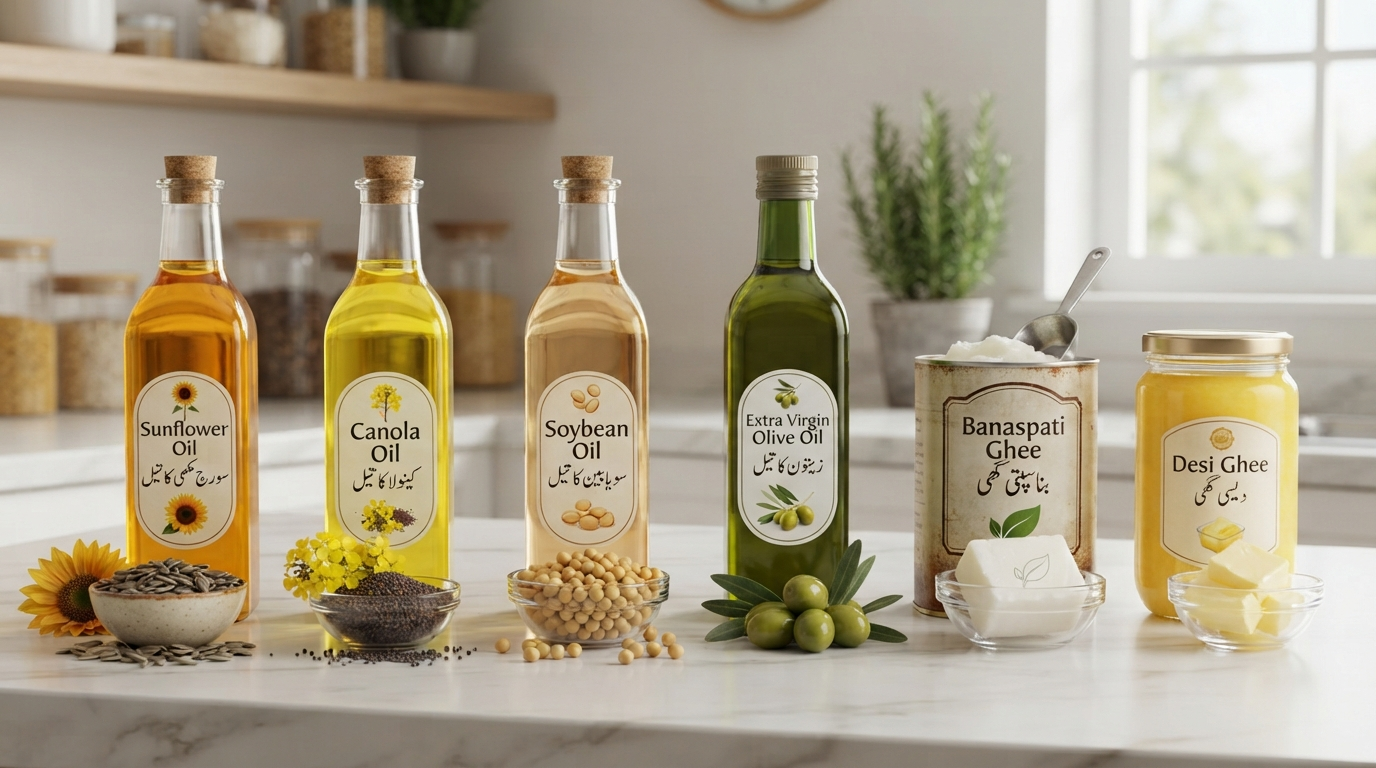
Common Types of Cooking Oil in Pakistan
Sunflower Oil
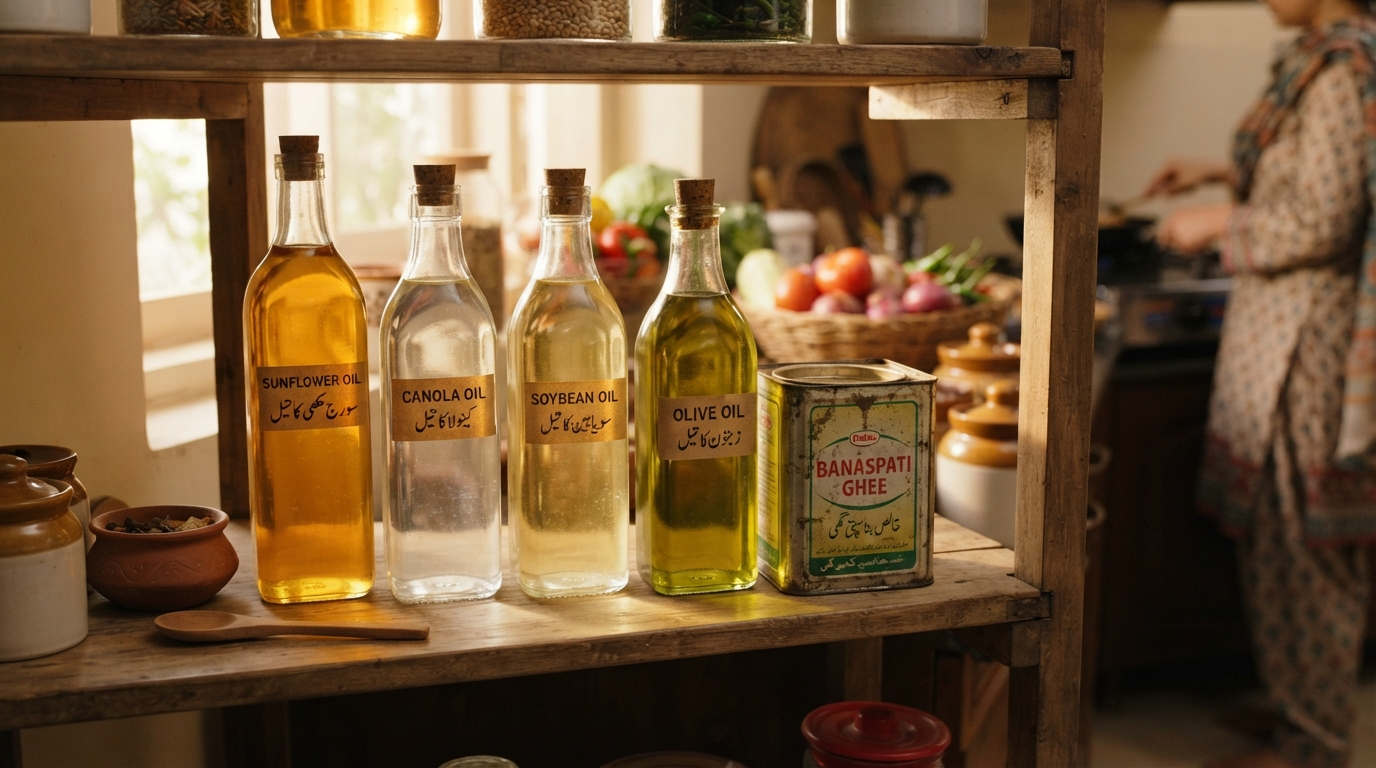
This is one of the most widely available Cooking Oils. It is light in colour and has a mild taste, so it does not overpower the food. Many households use it for everyday cooking because it is affordable and easy to find. It works well for frying and regular salans.
Canola Oil
Canola oil has become more popular in recent years. It is also light and has a high smoke point, which means it can handle higher temperatures without breaking down quickly. Some people prefer it, thinking it is a better everyday option.
Soybean Oil
This is usually one of the cheaper options on the market. It is commonly used in many homes and also by some small eateries. The taste is neutral, but the quality can vary a lot between brands.
Palm Oil
Palm oil is thicker and has a different texture. It is often used in commercial cooking and by some households because it is low-cost and lasts longer when used for deep frying. However, it is heavier compared to other oils.
Olive Oil
Olive oil is more expensive and not used as commonly for daily Pakistani cooking. Some people keep it for special dishes or salads. Regular deep frying with pure olive oil is usually not practical for most families because of the cost and smoke point.
Banaspati Ghee and Other Solid Fats
Although not exactly a liquid Cooking Oil, banaspati is still widely used in many homes for parathas, bakery items, and certain traditional dishes. It gives a different taste and texture compared to liquid oils.
How to Choose the Right Oil
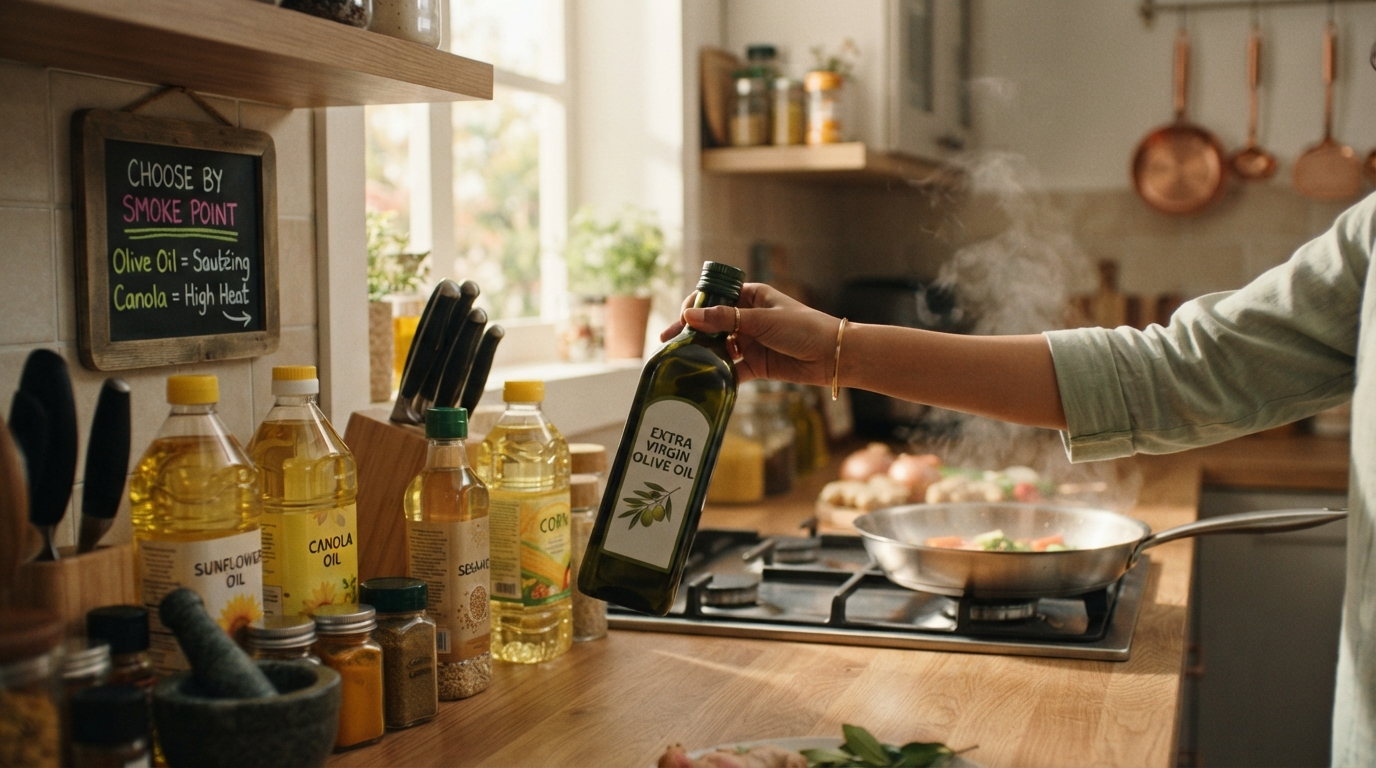
The “best” oil depends on how you cook and what you can comfortably afford.
If you do a lot of high-heat frying, choose an oil that can handle heat well. For light daily cooking, a neutral-tasting oil is usually enough. Taste also matters — some oils leave a stronger aftertaste, while others stay mild.
Price is a big factor for most families. The most expensive oil is not always necessary for everyday meals. At the same time, the cheapest option may not always give consistent quality. Checking the packaging date and buying from a busy store often helps, because older oil can lose freshness.
Many people also look at the label for terms like “fortified” or “cholesterol free.” These claims are common, but the basic quality of the oil and how fresh it is still matter more for regular use.
Practical Tips for Daily Use
- Do not reuse oil too many times, especially after deep frying.
- Store oil in a cool place away from direct sunlight.
- Keep the bottle tightly closed to avoid moisture and dust.
- If the oil smells strange or looks cloudy, it is better not to use it.
You can find all the common types of cooking oil in most grocery stores near you and supermarkets across Pakistan. Choosing a clean and reliable store usually means you get better stock.
Final Thoughts
Cooking oil is a daily necessity, but it does not have to be complicated. Once you know the basic differences between the common types, it becomes easier to decide what works for your home. You can stick to one or two trusted options for regular cooking and keep special oils only if you really need them.
A little attention while buying can improve both the taste of your food and the value you get for your money.