
Shan Foods: The Spice Brand Behind Pakistan’s Everyday Cooking
There’s a particular smell that greets you in a lot of Pakistani kitchens around dinner time — a mix of toasted cumin, dried red chilli, and cardamom that most people can place instantly, even if they couldn’t tell you the exact spice combination. More often than not, some part of that smell traces back to a small foil packet with the word “Shan Foods” printed across it.
A Single Room in Karachi
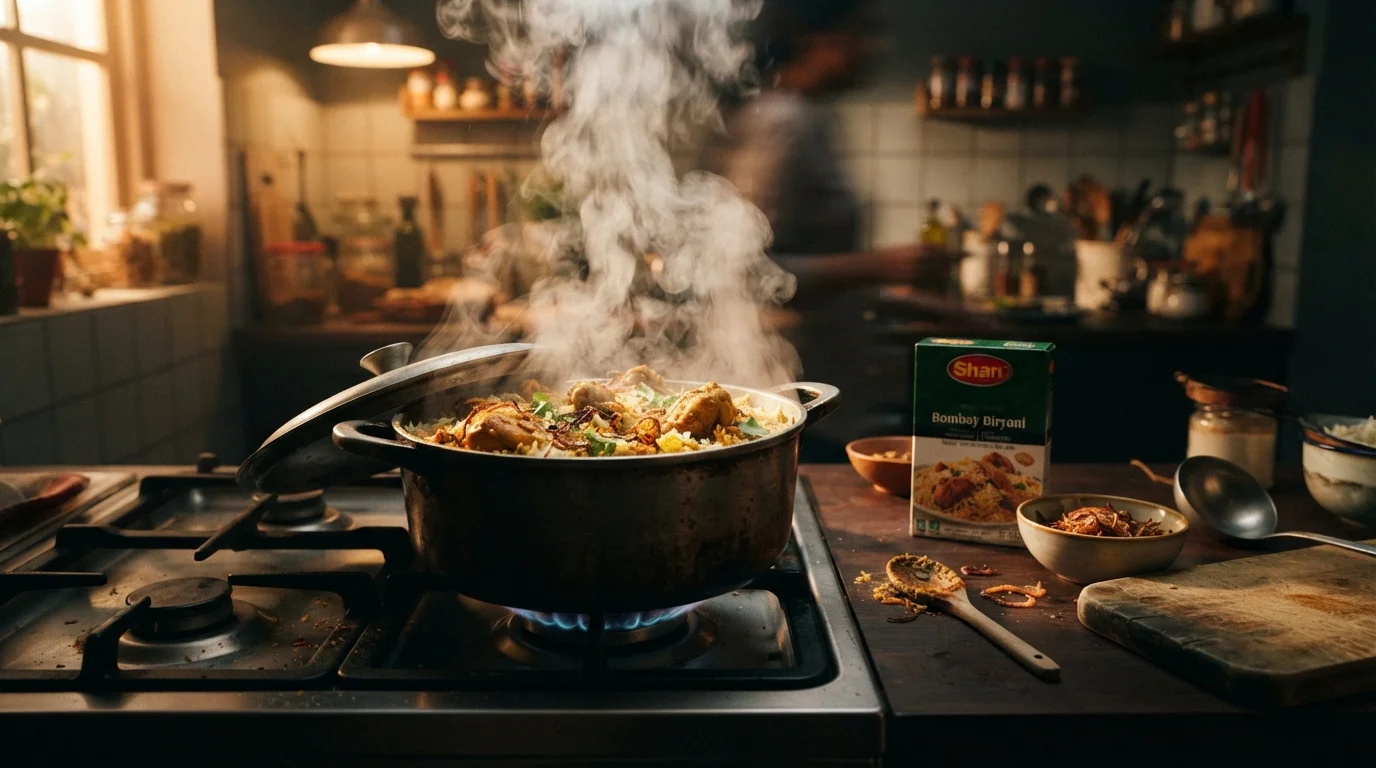
It’s easy to assume a brand this widely stocked must have started big. It didn’t. Shan Foods began in 1981 as a home-based operation in Karachi, run out of a single room by its founder, Sikandar Sultan. At the time, the idea itself was fairly simple — take the spice blends that home cooks were already grinding and mixing by hand for dishes like biryani and karahi, and package them so the taste came out consistent every time, without the guesswork.
That simplicity turned out to be the whole appeal. Within a few years, Shan had moved beyond Karachi, and by the following decade it was exporting to the UK, parts of Europe, the Middle East, and the United States. Today, the company’s products reach more than 50 countries, and along the way Shan has picked up several export performance awards from Pakistan’s trade bodies — recognition less for any single product than for how consistently it managed to scale a home-kitchen idea into an international one.
What’s Actually in a Box of Shan Foods
Ask most people what Shan makes, and “spice mixes” is usually the first answer — and it’s not wrong, exactly, just incomplete at this point. The brand’s catalogue has grown to cover a fairly wide stretch of the pantry:
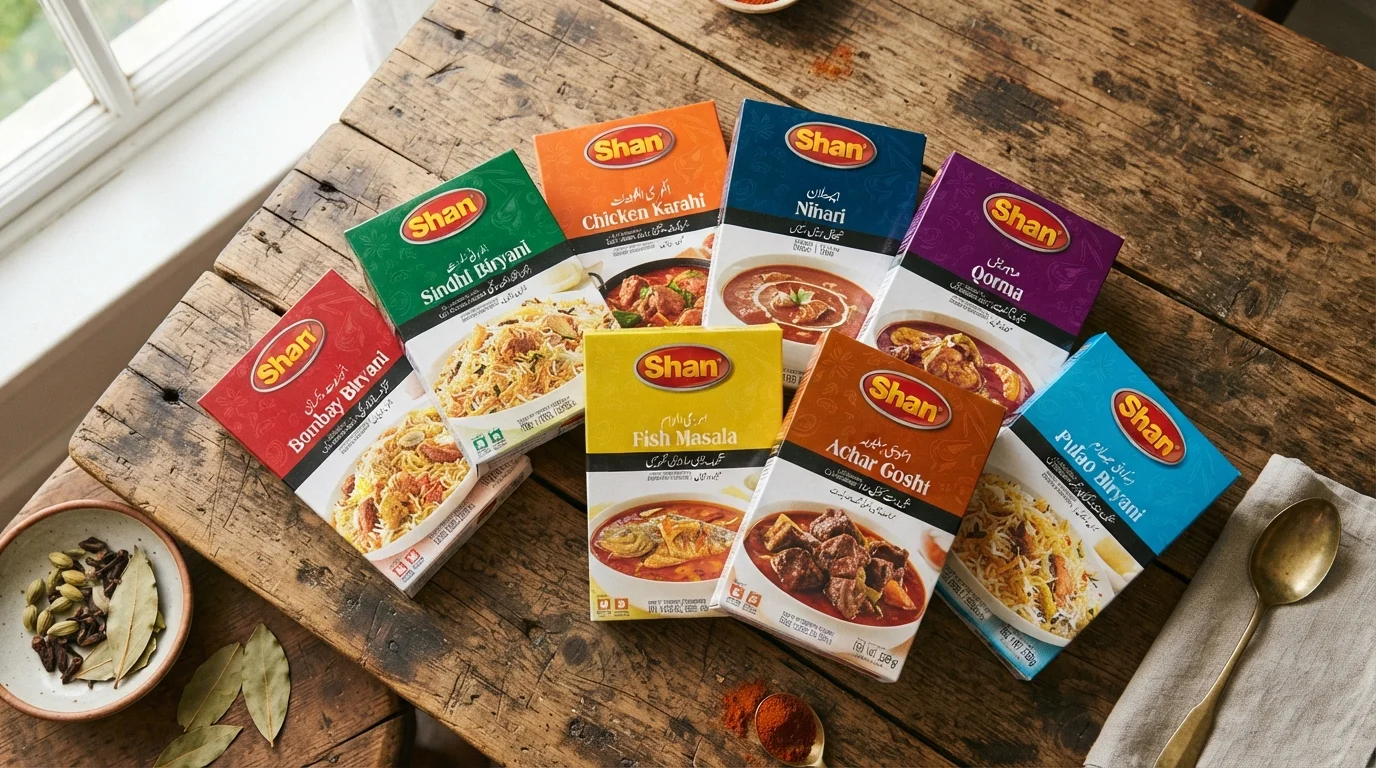
Recipe mixes remain the core of the business — pre-measured spice blends built for specific dishes: biryani, karahi, qorma, nihari, and a long list of regional and occasion-specific variants, including barbecue marinades for grilling season and mixes aimed at Eid cooking.
Plain spices sit alongside the recipe mixes for cooks who’d rather build their own blend — turmeric, red chilli, garam masala, and the usual staples, sold as single ingredients rather than pre-mixed.
Ready-to-cook sauces and cooking pastes are a newer layer on top of the dry spice mixes, meant to cut prep time down even further — closer to a stir-in sauce than a spice you measure out yourself.
Pickles, chutneys, and other condiments round out the savory side, while a small dessert mix range covers the sweeter end of things.
Instant noodles, sold under a separate product name, are the brand’s most obvious departure from its spice-only origins — a sign of a company that’s been willing to expand into adjacent categories rather than stay narrowly defined.
Shan and National: Two Names, One Category
No honest look at Shan Foods can really avoid mentioning National Foods, its long-standing counterpart in the same category. The two brands emerged roughly a decade apart — National in 1970, Shan in 1981 — and between them, they’re largely responsible for turning packaged recipe mixes into a normal part of Pakistani cooking rather than a novelty.
The two aren’t identical in approach. Shan built its early reputation specifically around the range and precision of its recipe mixes, with a catalogue that stretches into dozens of dish-specific variants. National, meanwhile, diversified earlier into a broader catalogue spanning categories like jams and desserts alongside its own spice range. Depending on which industry summary you read, the two brands trade the lead in overall recipe-mix market share, with regional strength varying by city. For a home cook, the practical difference usually comes down to which specific blend suits a particular dish — and plenty of Pakistani kitchens keep both brands stocked for exactly that reason.
Picking the Right Product for What You’re Cooking
If you’re standing in a store aisle trying to decide what to grab, it helps to think less about the brand and more about the dish:
- Making something with a long, specific spice list — nihari, biryani, a proper karahi — is where a dedicated recipe mix earns its keep, since getting the ratio wrong on a 15-ingredient blend is easy to do from scratch.
- For simpler, more everyday meals, plain spices give you room to adjust heat and flavor to your own taste rather than someone else’s average.
- If you’re short on time entirely, the ready-to-cook sauces trim even more steps out of the process, at the cost of a bit less control over the final flavor.
As with any packaged shan foods, it’s worth a quick look at the ingredient list, particularly if you’re managing allergies or dietary restrictions.
Finding Shan Products Across Pakistan
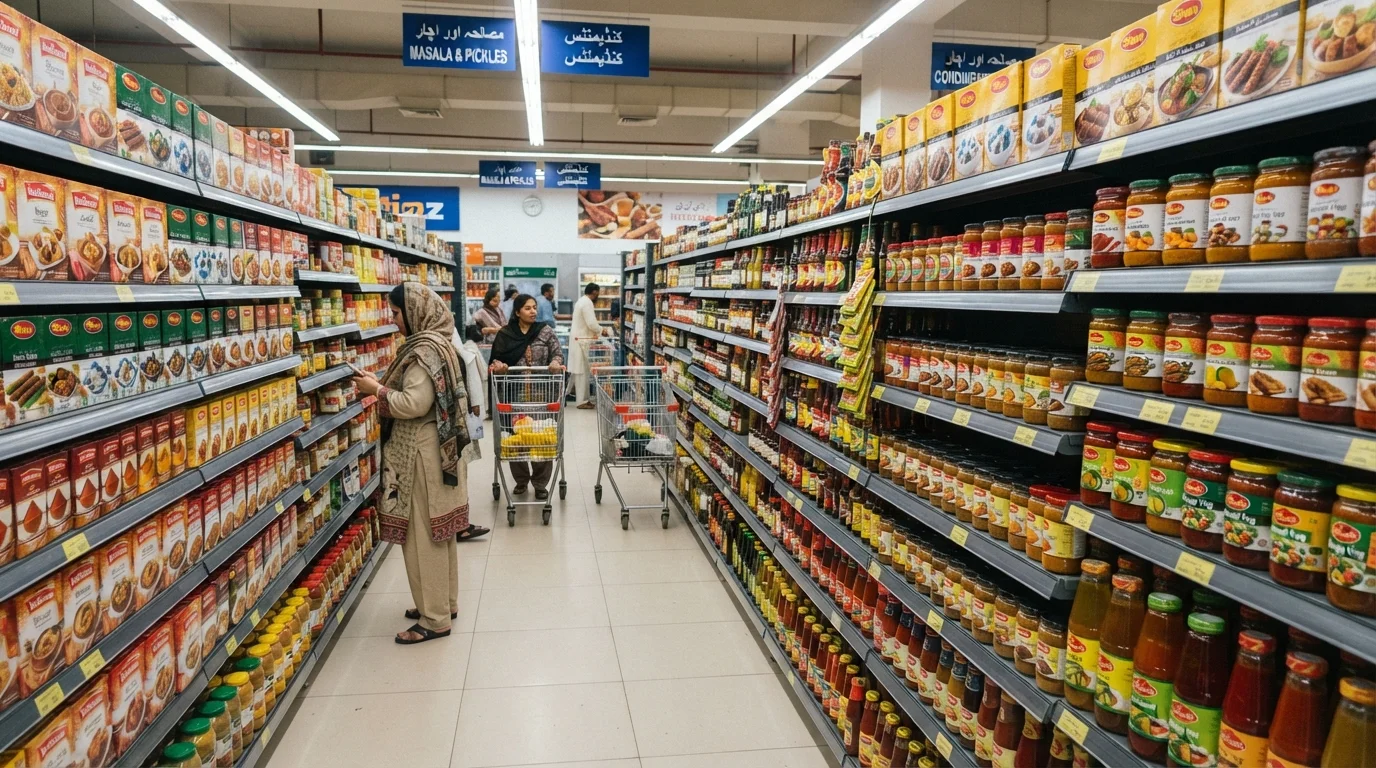
Shan’s products are about as widely distributed as packaged groceries get in Pakistan — you’ll find at least a portion of the range in almost any supermarket, and a fair number of neighborhood kiryana stores carry the most popular mixes too. Specific variants and pack sizes, unsurprisingly, vary more by store.
To find a store near you through Grocer.pk:
Or browse listings by city:
Worth Knowing Before You Shop
Grocer.pk is an independent grocery-store directory — we aren’t affiliated with Shan Foods, and nothing on this page should be read as an official product listing. A store showing up in our directory doesn’t guarantee a specific item is currently on the shelf; prices, packaging, and availability shift over time, sometimes without much notice. If you’re making a special trip for one particular product, a quick call ahead saves the hassle.
Related Brands on Grocer.pk
If you’re comparing options, our guide to National Foods covers Shan’s closest competitor in more depth, and our Brands section has profiles of other names you’ll recognize from grocery store shelves, including Sunsilk.
Frequently Asked Questions
When and where was Shan Foods founded? Shan Foods started in 1981 in Karachi, as a home-based business run by founder Sikandar Sultan.
Is Shan a family-run business? Yes — Shan Foods has remained a privately held, family-run company since it was founded, even as it grew into an international brand.
What’s the difference between Shan and National Foods? Both are Pakistani spice and recipe mix companies with overlapping product categories. Shan is particularly known for the depth of its dish-specific recipe mix range, while National has a broader spread across categories like jams and desserts. Many households use products from both, depending on the dish.
Does Shan Foods make anything besides spices? Yes — beyond recipe mixes and plain spices, the range includes ready-to-cook sauces, pickles, dessert mixes, and instant noodles.
Where can I buy Shan foods products in Pakistan? Most supermarkets and a large number of kiryana stores across major cities stock at least part of the range. Availability of specific products varies by store.
Does Grocer.pk sell Shan Foods products? No — Grocer.pk is a directory that helps you find grocery stores and supermarkets. Purchases happen directly with the retailer.