Pakistani Pantry Staples: What to Keep at Home
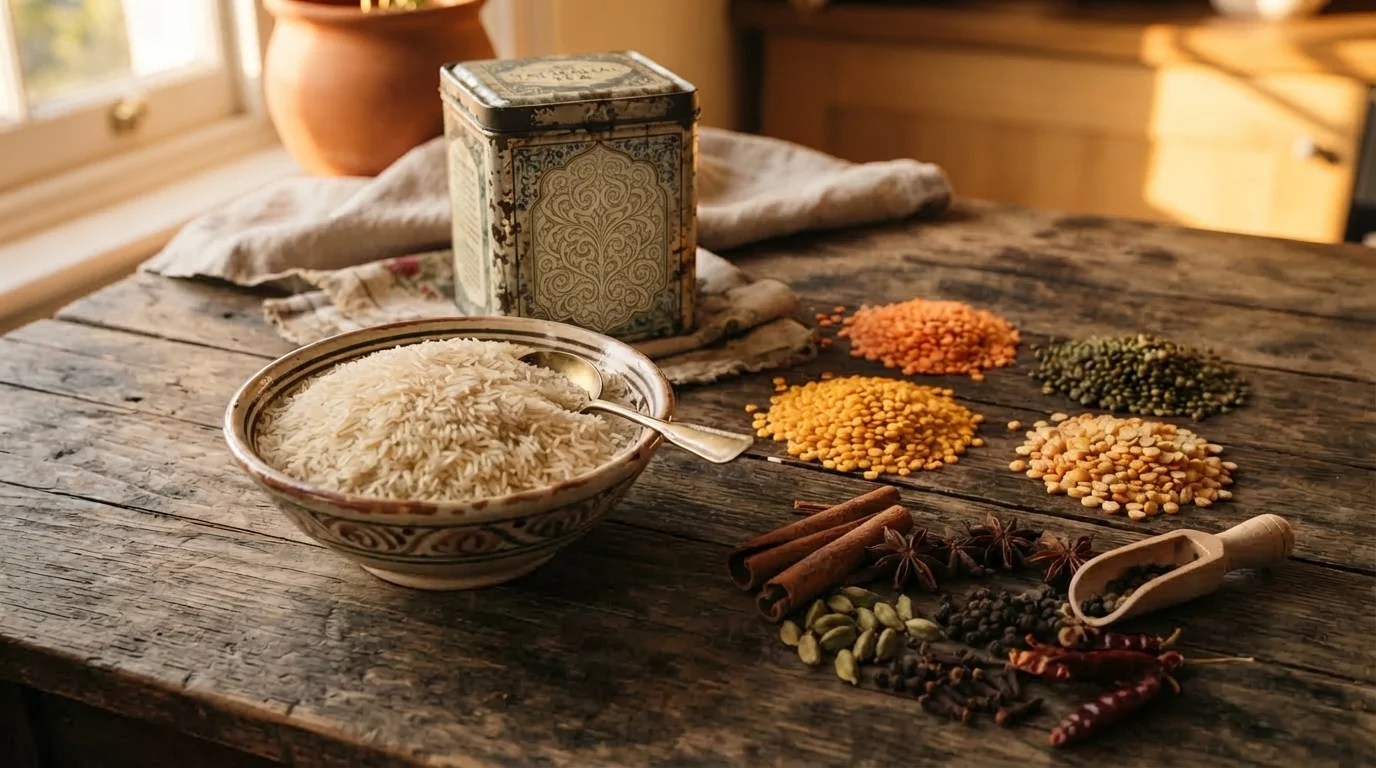
A well-stocked pantry does not need to be packed with every grocery item available in the market. For most Pakistani households, a practical pantry is built around the ingredients used repeatedly in everyday cooking: atta, rice, daal, cooking oil, spices, tea, and a few other long-lasting essentials.
The right pantry staples depend on how your family cooks. A household that makes roti most days will use more atta, while another may rely more heavily on rice. Some families cook daal several times a week, while others use different pulses less frequently.
The goal is not to buy everything in large quantities. It is to keep the ingredients you use regularly available, stored properly, and easy to check before they run out.
What Are Pantry Staples?
Pantry staples are foods and cooking ingredients that are kept at home for regular use and generally have a longer shelf life than fresh foods.
In a Pakistani kitchen, pantry staples commonly include:
- Atta and other flours
- Rice
- Daal and pulses
- Cooking oil or ghee
- Salt
- Sugar
- Everyday spices
- Tea
- Basic cooking ingredients
- Sauces and condiments
- Selected dry foods and snacks
Not every household needs the same list. Pantry staples should reflect your family’s normal meals rather than a fixed shopping formula.
Essential Pakistani Pantry Staples
1. Atta and Flour
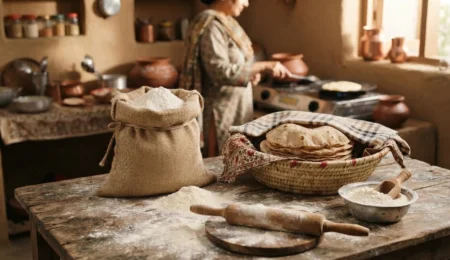
For households that regularly prepare roti or paratha, atta is one of the most important pantry items.
A basic flour section may include:
- Whole wheat atta
- Maida
- Besan
- Suji
- Corn flour, when used
- Other specialty flours according to your cooking
You do not need every type of flour in your pantry. Keep the varieties that appear regularly in your recipes.
Atta is also one of the staple food categories monitored in Pakistan’s food-price system. For example, the Punjab government’s Lahore rate list currently includes wheat flour among its monitored everyday food items.
2. Rice
Rice is another everyday staple in many Pakistani homes. It can be used for simple meals as well as dishes such as pulao and biryani.
Depending on your household, your pantry might contain:
- Basmati rice
- Sella rice
- Regular cooking rice
- A preferred local rice variety
There is no need to keep several varieties unless your family actually uses them.
If rice is eaten frequently, buying a suitable pack size can reduce the need for repeated small purchases. However, storage conditions should always be considered before buying larger quantities.
3. Daal and Pulses
Daal is a practical pantry staple because dried pulses can be stored for relatively long periods when kept properly.
Common choices include:
- Masoor daal
- Moong daal
- Chana daal
- Mash daal
- Whole chickpeas
- Black chickpeas
- White beans
- Other pulses used by your family
Pakistan’s official food-price information regularly tracks several pulse categories, including moong, chana, mash, and masoor, reflecting their place in everyday household food purchasing.
Instead of filling a cupboard with every available pulse, keep the varieties that your family actually cooks.
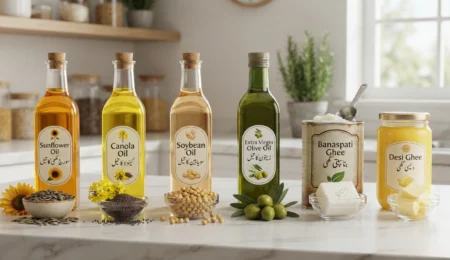
4. Cooking Oil and Ghee
Cooking oil or ghee is another basic pantry requirement.
Depending on your household’s cooking practices, this may include:
- Cooking oil
- Vegetable ghee
- Desi ghee
- A specialty oil used for particular recipes
Check the amount remaining before every major grocery trip. Oil bottles can look reasonably full even when the quantity is lower than expected, particularly when several people use the kitchen.
If you buy larger containers, make sure the pantry has a suitable place to store them away from excessive heat and direct sunlight.
5. Salt
Salt takes up little storage space but is used in a large number of Pakistani recipes.
A pantry may need:
- Regular table salt
- Iodized salt, if preferred
- Specialty salt if your household uses it
There is little reason to keep excessive quantities. One or two appropriate packs can usually be enough for normal household rotation.
6. Sugar
Sugar is commonly used for tea, desserts and other household recipes.
Keep enough for your normal consumption rather than automatically purchasing large quantities. If sugar consumption in your household is low, a smaller pack can be more practical.
Sugar is also included among the food commodities monitored in Punjab’s current Lahore rate information.
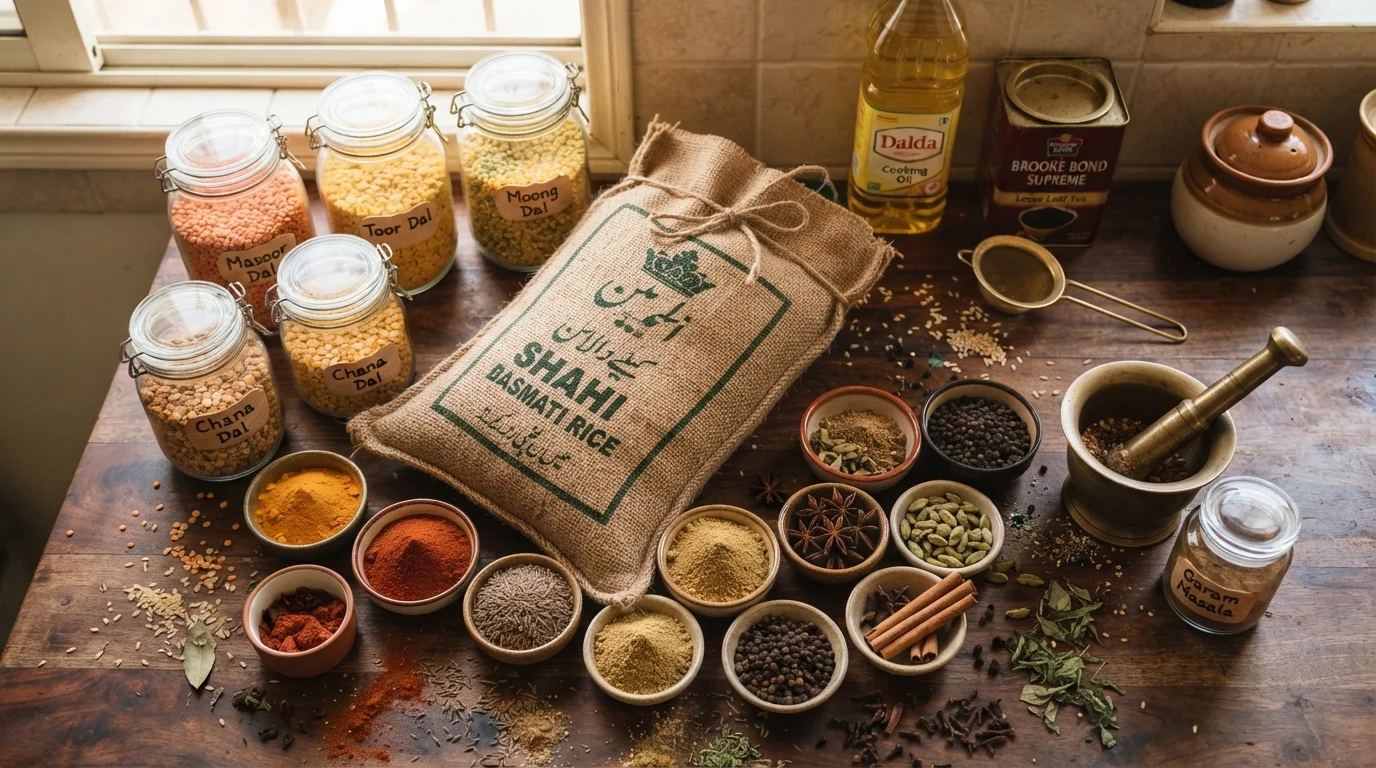
7. Everyday Spices
Spices are what make a Pakistani pantry different from a basic collection of grains and flour. You do not need an enormous spice collection, but several ingredients are useful for everyday cooking.
A practical selection can include:
- Red chilli powder
- Turmeric
- Coriander powder
- Cumin
- Black pepper
- Garam masala
- Whole cumin
- Cinnamon
- Cloves
- Cardamom
- Bay leaves
- Chaat masala, if used
The exact selection should follow your family’s cooking style.
For example, a household that frequently prepares biryani, pulao, and curries may use more whole spices than a household that mainly prepares simple everyday meals.
8. Tea and Coffee
For households where chai is part of the daily routine, tea deserves its own place in the pantry.
Common items include:
- Black tea
- Green tea
- Tea bags
- Coffee
- Tea whitener or powdered milk, if used
Tea is also a regularly tracked household food category in Pakistan’s official statistics and price information.
Keep the quantity that matches your actual consumption. Buying several large packs at once is not useful if the household uses very little tea.
9. Basic Cooking Ingredients
A few additional ingredients can make everyday cooking easier without turning the pantry into a storage room.
Depending on your meals, consider keeping:
- Vinegar
- Soy sauce
- Tomato paste or puree
- Tamarind/imli
- Cornflour
- Baking powder
- Baking soda
- Stock cubes or cooking stock, if used
- Breadcrumbs
- Vermicelli/seviyan
These are not universal essentials. They belong in the pantry when your household regularly uses them.
Pakistani Pantry Staples by Meal
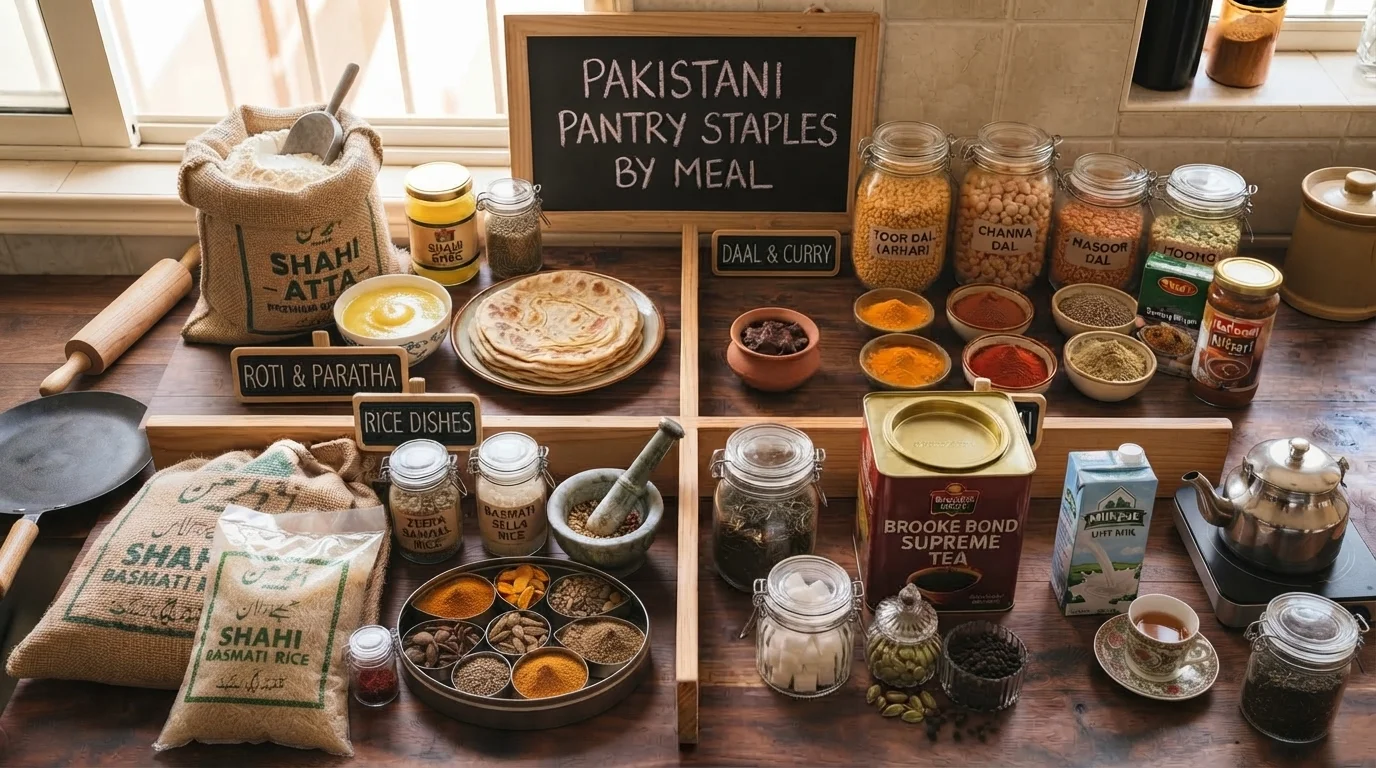
Another useful way to organize your pantry is by the meals you normally prepare.
For Roti and Paratha
Keep:
- Atta
- Salt
- Cooking oil or ghee
- Besan or other flour if used for specific recipes
For Daal and Curry
Keep:
- Daal
- Cooking oil
- Salt
- Red chilli powder
- Turmeric
- Coriander powder
- Cumin
- Garam masala
- Other household-specific spices
For Rice Dishes
Keep:
- Rice
- Cooking oil or ghee
- Salt
- Cumin
- Whole spices
- Biryani or pulao ingredients when regularly prepared
For Chai
Keep:
- Tea
- Sugar
- Milk or milk alternative
- Cardamom if commonly used
This meal-based approach can be more useful than simply copying a long grocery list because it connects pantry stock to the food your household actually prepares.
What Should Not Stay in the Pantry?
Not every grocery item belongs in a pantry.
Some foods need refrigeration, freezing, or frequent replacement. Depending on the product, these can include:
- Fresh milk
- Yogurt
- Fresh meat
- Chicken
- Fish
- Eggs
- Fresh vegetables
- Fresh fruit
- Some dairy products
- Opened products that require refrigeration
The exact storage requirement should come from the product label. A pantry system works best when dry, shelf-stable foods are separated from foods that need controlled temperatures.
How Much of Each Pantry Staple Should You Keep?
There is no universal quantity that works for every Pakistani household.
A family of two and a family of six will have different consumption patterns. Even two families of the same size may use very different quantities of atta, rice, oil, or tea.
A better approach is to monitor your actual usage.
For each major staple, ask:
- How quickly does it normally finish?
- How much do we use in a week?
- How much space do we have?
- Can the product be stored safely for that long?
- Do we regularly use the product or only buy it occasionally?
After tracking your household for a few shopping cycles, you can establish your own minimum and maximum stock levels.
A Simple Pantry Stock System
You do not need complicated inventory software to manage pantry staples.
Try a simple three-level system:
Full: You have enough for normal use.
Low: The item is getting close to the amount you normally keep.
Buy: The remaining quantity is unlikely to last until your next planned grocery trip.
For frequently used staples such as atta, rice, cooking oil, and tea, this can prevent the common problem of discovering that an essential ingredient has finished while preparing a meal.
How to Store Pakistani Pantry Staples
Good storage matters just as much as buying the right products.
Keep dry foods dry
Rice, flour, pulses and spices should be stored in a clean, dry environment. Moisture can affect quality and encourage unwanted pests.
Use airtight containers where appropriate.
Transferring opened dry goods into suitable airtight containers can help protect them from moisture and contamination.
Label opened products
If you transfer a product from its original package, label the container when useful, particularly if several similar ingredients are stored together.
Rotate older stock first.
When buying a new pack, move older stock forward and use it first. This simple first-in, first-out approach helps prevent forgotten products from sitting at the back of a cupboard.
Keep an eye on dates.
Packaged products have different shelf-life requirements. Follow the manufacturer’s storage instructions and use-by or best-before information where provided.
Pantry Staples for a Small Pakistani Kitchen
A small kitchen does not need a large stockpile.
A compact pantry could focus on:
- Atta
- Rice
- Two or three regularly used daals
- Cooking oil
- Salt
- Sugar
- Core spices
- Tea
- A few frequently used sauces or cooking ingredients
Choose smaller packs when storage space is limited.
This can also make stock rotation easier because products are less likely to remain unused for long periods.
Pantry Staples for a Larger Family
A larger household may need greater quantities of frequently used staples, but the principle remains the same: buy according to consumption.
For example, a family that eats roti with most meals may need to replenish atta more frequently than a household that eats more rice or bread.
Instead of automatically doubling every quantity because the family is larger, track the products that actually disappear fastest.
Pantry Staples in Lahore
For shoppers in Lahore, pantry staples are available through a wide range of supermarkets, grocery stores, Kiryana shops, and larger retail outlets.
The right place to shop depends on the type of purchase. A large monthly stock-up may suit a supermarket, while a nearby Kiryana Store can be convenient when you only need a few staples.
Grocer.pk’s Lahore directory covers grocery businesses across areas of the city, while its supermarket guide includes areas such as DHA, Gulberg, Johar Town and Model Town.
When shopping for pantry staples in Lahore, compare the actual pack size and unit price, not just the displayed price. A larger pack is not automatically the better purchase if your household will take a long time to use it.
Pantry Staples vs Fresh Groceries
Pantry staples and fresh groceries serve different purposes.
| Pantry Staples | Fresh Groceries |
|---|---|
| Atta | Tomatoes |
| Rice | Green vegetables |
| Daal | Fruit |
| Cooking oil | Fresh milk |
| Sugar | Fresh meat |
| Salt | Chicken |
| Dry spices | Yogurt |
| Tea | Fresh herbs |
Pantry items can often be purchased less frequently and stored for longer, while fresh foods usually require more frequent shopping and appropriate refrigeration.
Keeping these two groups separate makes grocery planning easier.
A Practical Pakistani Pantry Checklist
Use this as a starting point rather than a mandatory Monthly Grocery List.
Core Staples
- ☐ Atta
- ☐ Rice
- ☐ Masoor daal
- ☐ Moong daal
- ☐ Chana daal
- ☐ Mash daal
- ☐ Chickpeas
- ☐ Cooking oil
- ☐ Ghee, if used
- ☐ Salt
- ☐ Sugar
- ☐ Tea
Everyday Spices
- ☐ Red chilli powder
- ☐ Turmeric
- ☐ Coriander powder
- ☐ Cumin
- ☐ Black pepper
- ☐ Garam masala
- ☐ Cinnamon
- ☐ Cloves
- ☐ Cardamom
- ☐ Bay leaves
Additional Cooking Items
- ☐ Maida
- ☐ Besan
- ☐ Suji
- ☐ Vinegar
- ☐ Tomato paste/puree
- ☐ Tamarind
- ☐ Cornflour
- ☐ Baking powder, if used
- ☐ Baking soda, if used
- ☐ Sauces and condiments
Tea and Breakfast Extras
- ☐ Coffee
- ☐ Tea bags
- ☐ Tea whitener, if used
- ☐ Oats
- ☐ Cereal
- ☐ Jam
- ☐ Honey
- ☐ Peanut butter
Only add the optional items your household actually consumes.
How to Build a Pantry Without Overspending
A stocked pantry should make shopping easier, not encourage unnecessary buying.
Start with the foods your household uses every week. Then add less frequently used ingredients only when you have a genuine need for them.
Before every major grocery trip:
- Check the pantry.
- Identify low items.
- Look at expiry or best-before dates where relevant.
- Remove products that are no longer suitable for use.
- Compare pack sizes and prices.
- Buy according to your expected consumption.
- Put older products where they will be used first.
This approach can reduce duplicate purchases and make it easier to see where your grocery budget is actually going.
Frequently Asked Questions
What are pantry staples in Pakistan?
Pantry staples are commonly used, relatively long-lasting food and cooking ingredients kept at home. In Pakistani kitchens, these often include atta, rice, daal, cooking oil, salt, sugar, spices, and tea.
What are the most important Pakistani pantry staples?
For many households, the core staples are atta, rice, daal, cooking oil or ghee, salt, sugar, everyday spices, and tea. The exact list depends on what the family normally cooks.
How long should pantry staples be stored?
Storage life varies by product. Follow the packaging instructions and keep dry foods in suitable conditions. Do not assume that every pantry item can be stored for the same length of time.
Should I buy pantry staples in bulk?
Bulk buying can be practical for frequently used, shelf-stable products when you have enough storage space, and the product will be used within its appropriate shelf life. A large pack is not automatically the better choice.
What pantry staples should I keep for everyday Pakistani cooking?
A useful starting point is atta, rice, one or more types of daal, cooking oil, salt, basic spices, and tea. Add ingredients such as besan, suji, whole spices, and sauces according to your household’s recipes.
Where can I buy pantry staples in Lahore?
Pantry staples are available at supermarkets, grocery stores, Kiryana shops, and other food retailers throughout Lahore. Grocer.pk can be used to browse grocery businesses by area and category.
Final Thoughts
A useful Pakistani pantry is not defined by how many products are stored in it. It is defined by whether the ingredients you regularly need are available when you need them.
For many households, that starts with a small group of reliable staples: atta, rice, daal, cooking oil or ghee, salt, sugar, spices and tea. From there, each family can build its pantry around its own meals, preferences, storage space and shopping routine.
The best pantry is therefore personal. Keep the staples your kitchen genuinely uses, store them properly, rotate older stock, and avoid buying large quantities simply because a product is labelled as a pantry essential.