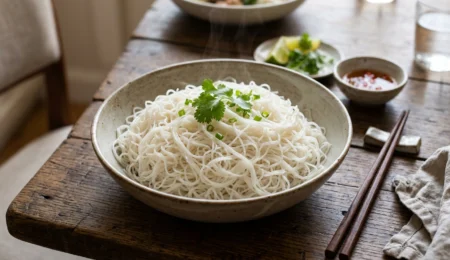
Maida in Pakistan: How It Is Made, Used, and Chosen
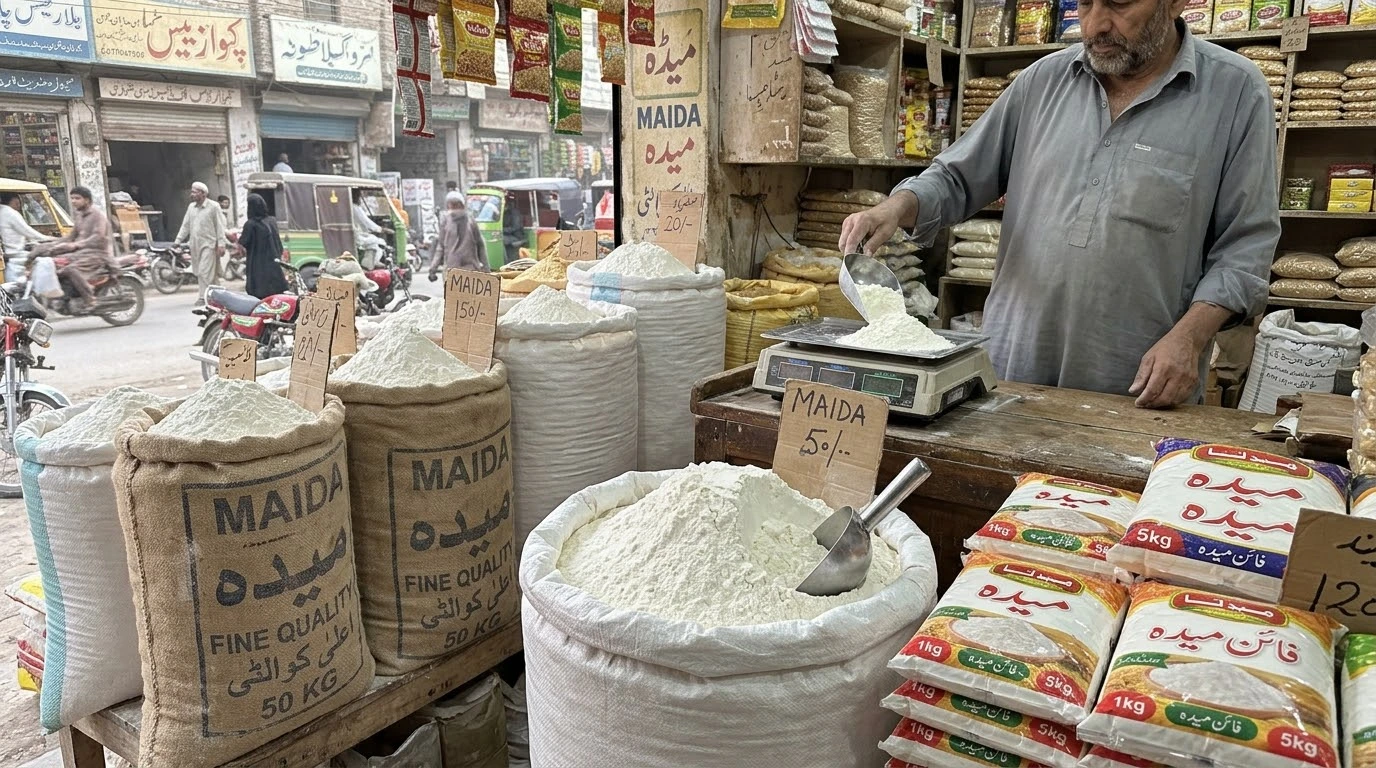
Maida is a familiar ingredient in Pakistani kitchens. It is used in bakery products, samosas, biscuits, noodles, and many recipes that need a fine, smooth flour. Yet when you stand in front of a grocery shelf, it may not be clear which flour to choose or whether maida can be replaced with atta.
The answer depends on what you plan to cook. Flour is not just a powder that thickens or binds ingredients. Its milling, texture, and protein content affect how dough stretches, how baked goods rise, and how a finished recipe feels.
This guide explains what maida is, how it differs from other wheat flours, where it works best, and what to check when buying it in Pakistan.
What Is Maida?
Maida is a finely milled, refined wheat flour. During milling, much of the wheat grain’s bran and germ is separated from the starchy endosperm. The endosperm is then ground and sifted into a fine flour.
This process gives maida its light colour and smooth texture. Because much of the bran is removed, refined flour generally contains less fibre than whole-wheat atta.
Maida is sometimes called refined wheat flour, white flour, plain flour, or all-purpose flour. These names can overlap, but they are not guaranteed to describe identical products in every country. The wheat variety, milling process, and flour specifications can differ.
For Pakistani shoppers, the most reliable starting point is the product’s own label. Check whether it identifies the flour as maida or refined wheat flour, and review any additional ingredients or product claims.
How Maida Is Made

The basic process starts with cleaned wheat. The grain is milled to separate its outer layers from the endosperm, which is then ground and sifted to produce a fine flour.
In simple terms, the main stages are:
- Cleaning: Wheat is cleaned to remove unwanted material.
- Milling: The grain is broken down, and its components are separated.
- Sifting: Flour is separated according to particle size and composition.
- Packing: The finished flour is packed for storage and sale.
The details can vary by mill and product. The important point for shoppers is that maida is a refined wheat flour, while whole-wheat atta retains more of the grain.
Maida, Atta, and Suji: What Is the Difference?
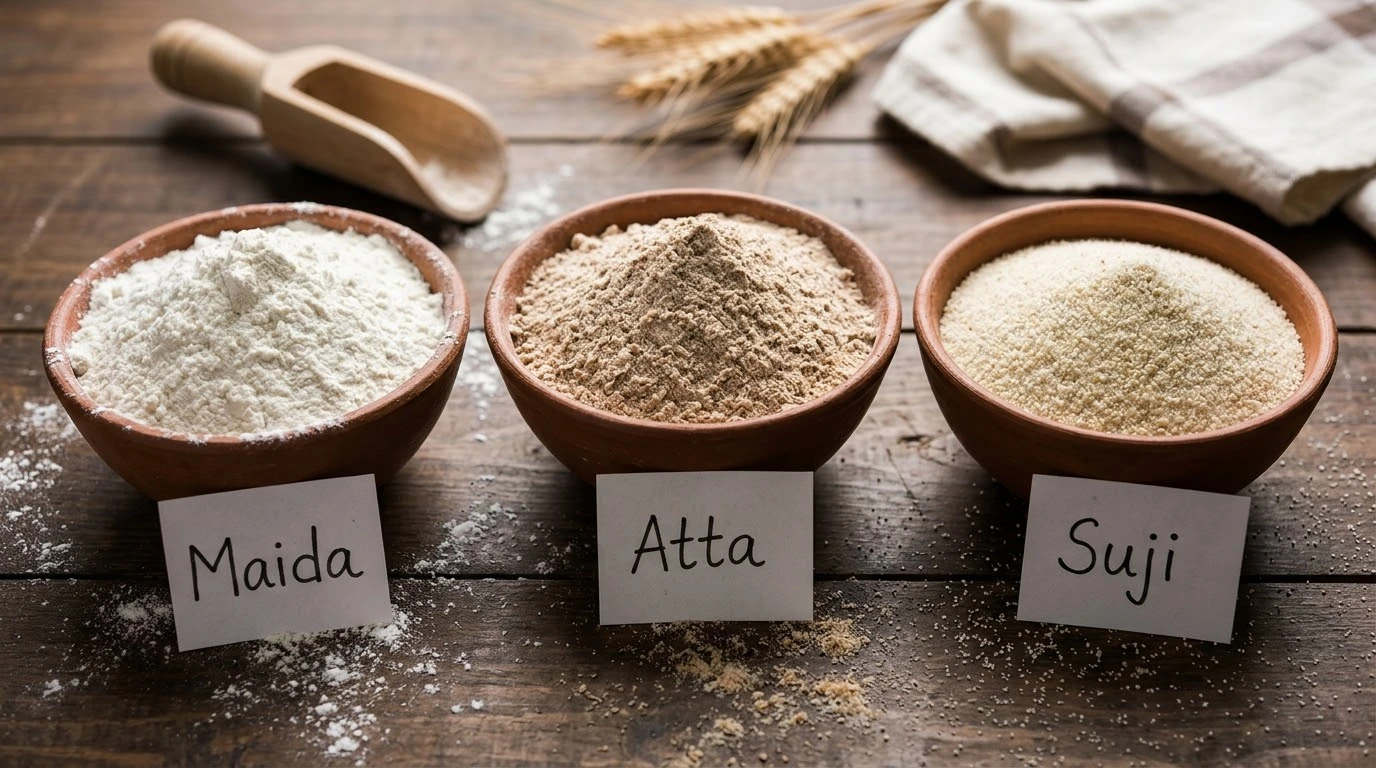
These three products come from wheat, but they are processed and used differently.
| Flour | What it is | Common uses |
|---|---|---|
| Maida | Fine, refined wheat flour | Biscuits, cakes, pastries, samosa wrappers, and some breads |
| Atta | Whole-wheat flour that retains more of the grain | Roti, chapati, and other everyday flatbreads |
| Suji (semolina) | Coarser particles of wheat, usually from the endosperm | Halwa, some pasta, and selected baking recipes |
Maida is usually smoother than atta and suji. Atta generally contains more fibre because more of the grain is retained. Suji has a coarser texture, which makes it behave differently in doughs and batters.
They are not interchangeable in every recipe. Replacing maida with atta can change a recipe’s flavour, texture, moisture needs, and final appearance.
Types of Maida: What the Names Mean
The word maida identifies refined wheat flour, but it does not tell you everything about how the flour will perform.
General-purpose or all-purpose flour
This type is intended for a range of cooking and baking tasks. It may work in recipes such as biscuits, some breads, and everyday baking. However, flour sold as all-purpose flour in another country may have different properties from a Pakistani maida product.
Flour for cakes and delicate baking
Some baking recipes work better with flour that has a lower protein content. It can help produce a tender texture in cakes and similar baked goods.
Do not assume that every packet of maida is cake flour. If a recipe specifies cake flour, follow the recipe’s guidance or use a suitable substitute designed for that purpose.
Flour for bread and dough
Some doughs need flour with more strength or a particular protein level. A flour’s ability to form and develop gluten affects how it stretches and holds its structure.
A generic packet of maida may work in some bread recipes, but it may not produce the same result as a flour selected specifically for bread-making.
Fine flour and fine atta
The terms fine flour and fine atta can be used differently by sellers. A fine texture alone does not confirm that a product is maida.
If the distinction matters for your recipe, check the product name and ingredients, or ask the seller whether it is refined wheat flour or whole-wheat atta that has been milled finely.
What Is Maida Used For?
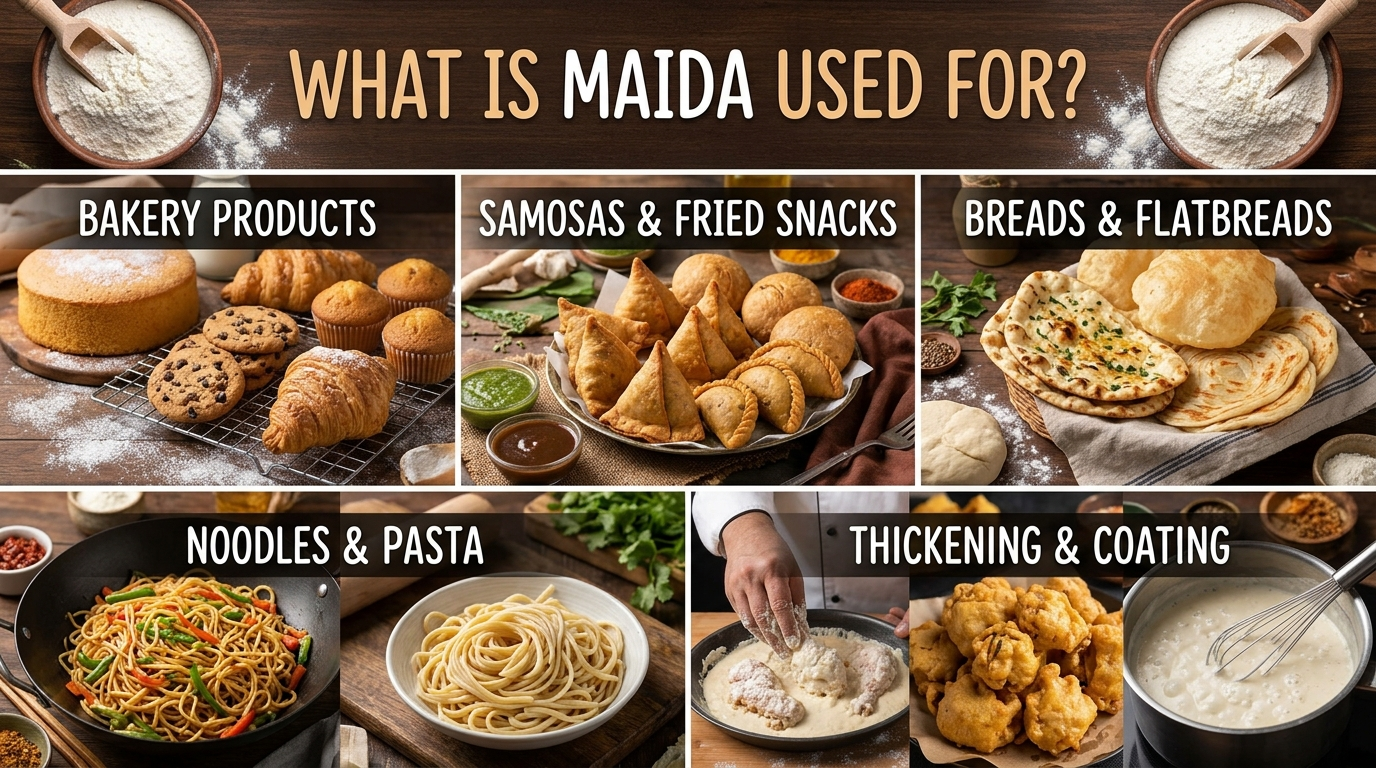
Maida is useful when a recipe needs a fine flour, a smooth dough, or a particular texture.
Bakery products
Maida is commonly used in cakes, biscuits, cookies, pastries, and other baked goods. The best flour depends on the recipe and the texture you want.
Samosas and fried snacks
Some samosa wrappers and other fried snacks use maida to make a dough that can be rolled thinly. The result depends on the recipe, including the amount of fat, water, and resting time.
Breads and flatbreads
Selected naan, kulcha, and other bread recipes use maida. Some recipes combine it with other flours to balance softness, flavour, and structure.
Noodles and pasta
Wheat flour is used in many noodle products, but the exact flour can vary. Some pasta is made with durum wheat semolina rather than ordinary maida, so check the product or recipe before substituting.
Thickening and coating
Small amounts of maida may be used to thicken sauces or coat foods before cooking. The method and quantity depend on the recipe.
Is Maida the Same as All-Purpose Flour?
Maida is often a practical substitute for all-purpose flour in everyday recipes, but the two terms do not guarantee identical flour properties.
Different countries and manufacturers use different wheat varieties, milling methods, and protein specifications. These differences can affect dough strength, tenderness, and the final texture of baked goods.
If a recipe calls for all-purpose flour, maida may work well in many cases. For a recipe where texture is especially important, use the flour type specified by the recipe or test a small batch before making a larger quantity.
Is Maida Healthy?
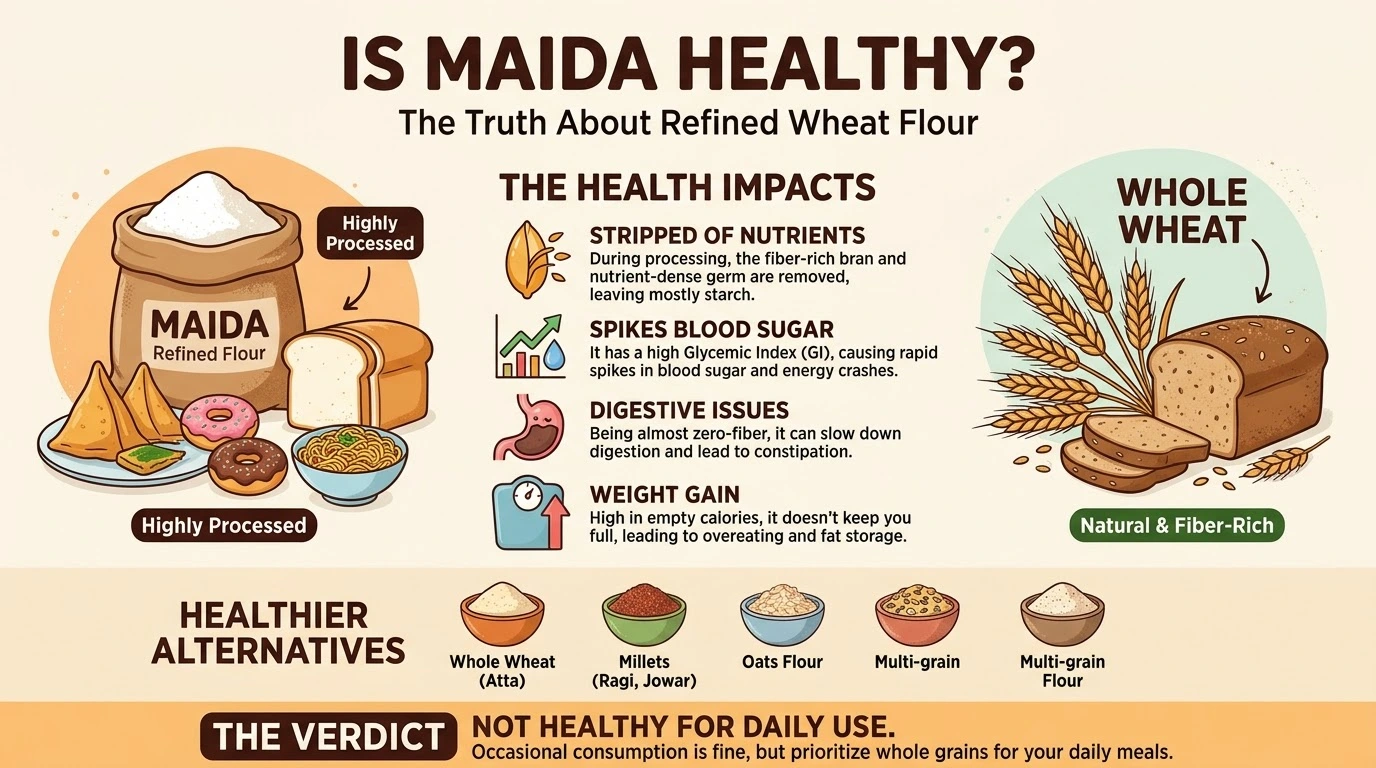
Maida is a refined grain product. Since much of the bran and germ is removed during milling, it generally contains less fibre than whole-wheat atta.
That does not mean maida is poisonous or that a single food determines a person’s health. The overall eating pattern, portion size, and frequency of consumption matter.
For everyday meals, including whole grains, vegetables, pulses, and other fibre-rich foods can help create a more varied diet. Maida can still have a place in recipes where its texture is useful.
People managing a medical condition, including diabetes, should follow dietary advice suited to their individual needs rather than relying on a single ingredient rule.
How to Choose Maida When Shopping in Pakistan
A little attention to the package can help you choose flour that suits your recipe and storage conditions.
1. Read the product name.
Check whether the pack says maida or refined wheat flour. Do not rely only on words such as “fine,” “premium,” or “white.”
2. Check the ingredients.
Look for the flour’s stated ingredients and any additions, such as raising agents or other ingredients, if present.
3. Match the flour to your recipe.
A flour suitable for biscuits may not produce the same result as one intended for a particular bread or cake.
4. Check the date and packaging.
Choose a sealed pack with clear date information. Avoid flour in damaged packaging or flour that appears exposed to moisture or pests.
5. Consider pack size.
Choose a quantity you can store properly and use while the flour remains in good condition. A larger pack is not automatically better value if you cannot use it in time.
6. Store it correctly.
Keep flour in a clean, dry, airtight container, away from heat, moisture, and pests. Follow any storage instructions printed on the package.
Can You Replace Maida With Atta?
Sometimes, but the result may change.
Atta has a different texture and composition from refined flour. Replacing all the maida with atta may make a cake denser, a pastry less delicate, or a dough behave differently.
For everyday roti, whole-wheat atta is generally the usual choice. For recipes that rely on maida’s fine texture, use the flour specified in the recipe or try a partial substitution first.
If you are experimenting, change one ingredient at a time. That makes it easier to understand how the flour affects the result.
Frequently Asked Questions
What is maida called in English?
Maida is commonly called refined wheat flour. It is also often compared with all-purpose flour, plain flour, or white flour, although the exact properties can vary by product and country.
Is maida made from wheat?
Yes. Maida is made from wheat. It is refined by separating much of the bran and germ from the endosperm, then milling the endosperm into a fine flour.
Is maida the same as atta?
No. Maida is refined wheat flour, while atta generally refers to whole-wheat flour used for everyday roti and chapati. Atta retains more of the grain and usually contains more fibre.
Is maida the same as suji?
No. Maida is a fine refined flour, while suji is a coarser wheat product. They behave differently in recipes and should not be substituted automatically.
Can I use maida instead of all-purpose flour?
Maida often works as a practical substitute in many recipes, but flour properties vary. For delicate cakes, bread, or other recipes where texture matters, check the recipe’s flour requirements.
Does maida contain gluten?
Yes. Maida is made from wheat and naturally contains gluten. It is not suitable for people who need to avoid gluten for medical reasons.
How should I store maida?
Keep it in a clean, dry, airtight container, away from heat, moisture, and pests. Follow the storage instructions on the package, and check the flour before use if it has been stored for a long time.
Final Thoughts
Maida is a refined wheat flour used in many Pakistani and international recipes. Its fine texture makes it useful for selected bakery products, fried snacks, breads, and other dishes. The best choice depends on what you are making.
Grocery Product Label: Choose a flour suited to the recipe, and store it properly. For everyday meals, whole-wheat atta and other fibre-rich foods can help keep your diet varied.
Syed Abdul Manan is an SEO expert and WordPress specialist with over 10 years of experience in search engine optimization and WordPress development. He holds a Bachelor of Science in Computer Science (BSCS) and is the Founder & CEO of Grocer.pk, a searchable directory of grocery stores, supermarkets, kiryana shops, and online grocery businesses across Pakistan.
With a technical foundation in computer science, he has spent the past decade working on technical SEO, on-page optimization, content strategy, and building fast, well-structured WordPress websites. For more than six years, he has been developing and managing Grocer.pk, which now covers major cities including Lahore, Karachi, Islamabad and Faisalabad, helping people find nearby stores by city, area and category, along with locations, contact details and map links.
Syed Abdul Manan runs Grocer.pk with a professional, quality-focused approach, combining clean site architecture, structured listings and practical grocery guides to serve both shoppers and business owners. His goal is to help local businesses build a stronger online presence and to help users find reliable local information quickly.
Connect with him on LinkedIn.