How to Read a Grocery Product Label: A Shopper’s Guide
Two packets of biscuits may look almost identical on a grocery store shelf. One may contain more sugar, while the other may have a different serving size or ingredient combination. The same issue comes up when buying breakfast cereal, cooking oil, packaged milk, sauces, snacks, and other household groceries.
The information printed on the back or side of a packet can help you compare these products. However, many shoppers focus only on the brand name, price, or claims printed on the front.
A grocery product label includes details about what a product is made of, how much it contains, how to store it, and when to use it. Learning to read these details can help you avoid buying unsuitable products and make more informed grocery choices.
Start With These Details Before Putting a Product in Your Basket
You do not need to study every line on every packet. Start with the following checks:
| What to check | Why it matters |
|---|---|
| Product name | Confirms what you are buying |
| Ingredients | Shows what the product contains |
| Nutrition facts | Helps compare nutritional content |
| Serving size | Explains the quantity behind the nutrition figures |
| Manufacturing and expiry dates | Helps assess freshness and suitability |
| Net weight or volume | Shows how much product is inside |
| Allergen information | Helps people avoid ingredients they need to avoid |
| Storage instructions | Explains how to keep the product safely |
These details are particularly useful when comparing two products in the same category.
1. Read the Ingredients List, Not Just the Front of the Packet
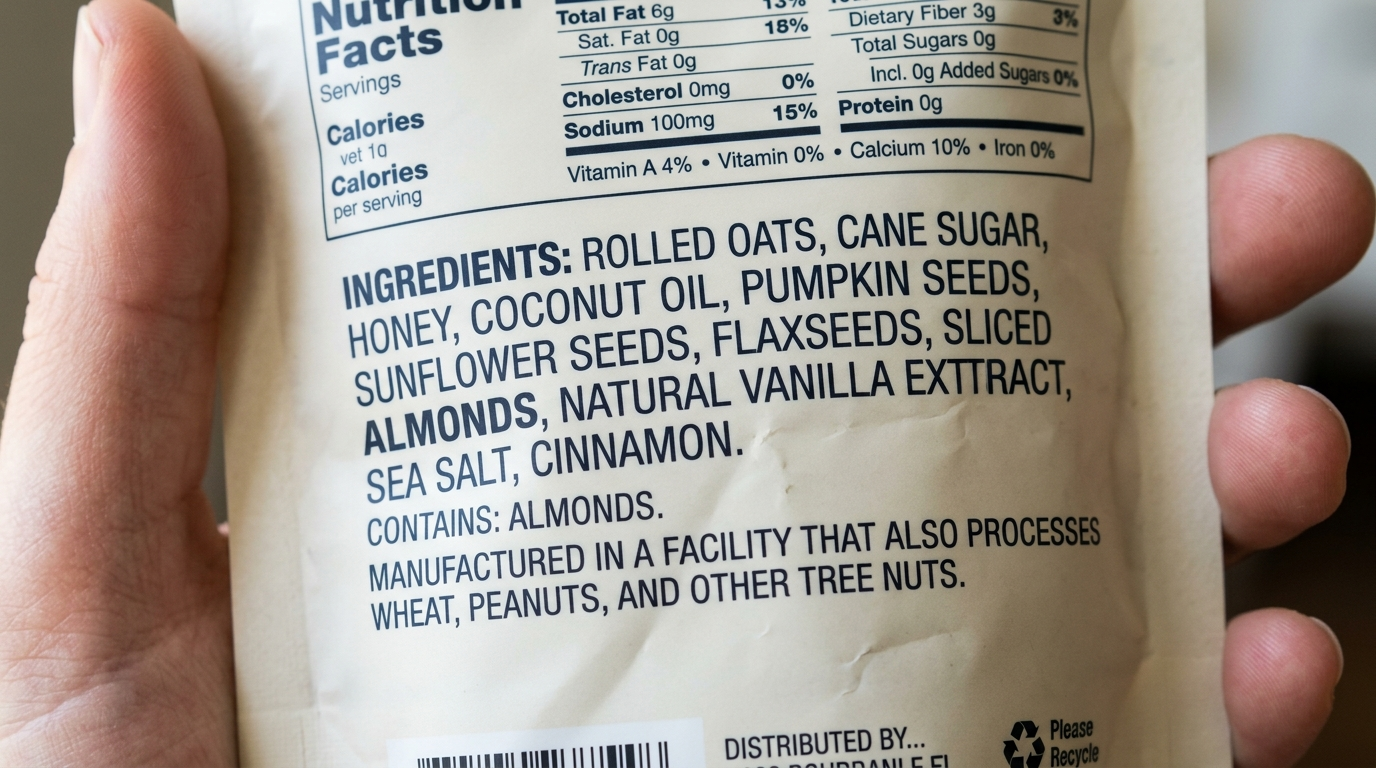
The ingredients list is one of the most useful parts of a grocery product label. It tells you which ingredients went into the product.
Ingredients are generally listed in descending order by weight. This means the ingredient appearing first is present in the largest amount, while ingredients listed later are present in smaller amounts.
For example, imagine a packaged snack has this ingredients list:
- Refined wheat flour
- Sugar
- Vegetable oil
- Milk powder
- Salt
- Permitted flavouring
This tells you that refined flour is the main ingredient, followed by sugar and vegetable oil.
When comparing similar products, look at the first three ingredients. They can give you a quick idea of what makes up most of the product.
A useful shopping habit: If you are choosing between two breakfast cereals, biscuits, or packaged snacks, compare their first few ingredients rather than relying only on pictures or claims on the front.
2. Understand the Nutrition Facts Panel
The nutrition facts section provides information about the energy and nutrients in a product. Depending on the product and its grocery product label, you may see:
- Energy or calories
- Total fat
- Saturated fat
- Trans fat
- Carbohydrates
- Total sugars
- Protein
- Sodium
- Fibre
- Vitamins and minerals
These figures help you compare products, but they only make sense when you understand the quantity they refer to.
Why serving size matters
Nutrition information may be displayed per 100 grams, per 100 millilitres, per serving or in more than one format.
Suppose a packet contains four servings and the grocery product label gives the following figures per serving:
| Nutrient | Per serving |
|---|---|
| Energy | 150 kcal |
| Total sugar | 8 g |
| Total fat | 5 g |
| Sodium | 120 mg |
If you eat two servings, you consume twice those amounts:
- Energy: 300 kcal
- Sugar: 16 g
- Fat: 10 g
- Sodium: 240 mg
These are illustrative figures, not the nutrition values of a particular Pakistani product.
The serving size printed on a packet is a reference for the nutrition information. It is not necessarily the amount you will eat or a recommendation for how much you should consume.
For comparing two similar products, figures per 100 grams or 100 millilitres are often more useful because they put the products on the same basis.
3. Check Sugar Content Carefully
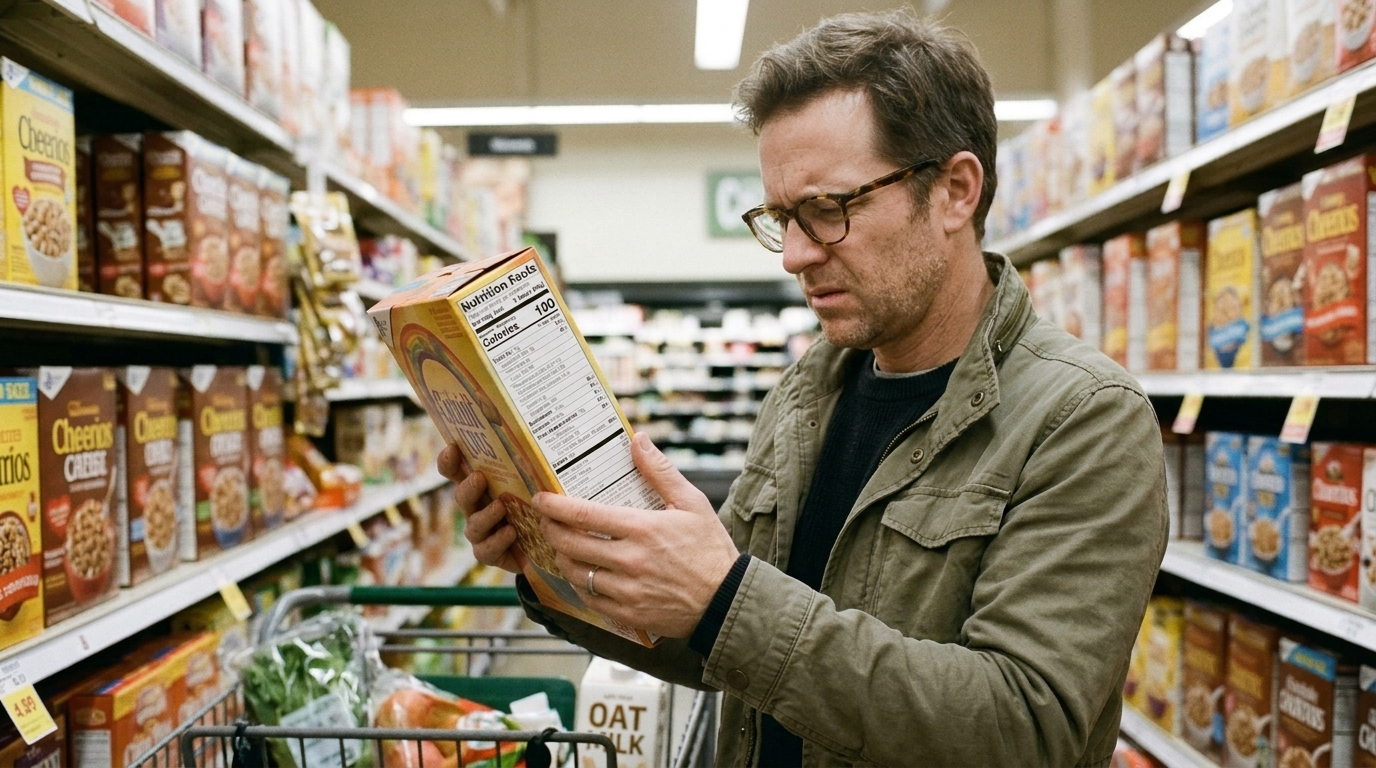
Sugar is found in many packaged foods, including biscuits, breakfast cereals, flavoured milk, sauces, desserts and drinks.
Look for the total sugars figure in the nutrition panel. Some products also show added sugars separately.
There is an important difference:
- Total sugars: Includes sugars naturally present in ingredients such as milk or fruit, as well as sugars added during manufacturing.
- Added sugars: Refers to sugars added during processing or preparation.
Not every Pakistani grocery product label displays these as separate figures. If the label does not provide an added-sugar value, check the ingredients list.
Sugar may appear under different names, including sucrose, glucose, fructose, dextrose, maltose, glucose syrup and corn syrup.
A product labelled “no added sugar” can still contain naturally occurring sugars. It is therefore worth checking the total sugars figure as well.
4. Pay Attention to Sodium and Salt
Sodium is a mineral found in salt and many other ingredients. Packaged foods can contain considerable sodium, particularly savoury snacks, instant noodles, sauces, seasoning mixes and ready-to-eat products.
If you are comparing two similar products, check the sodium amount on both grocery product labels.
Be careful with the units:
- Sodium is commonly shown in milligrams (mg).
- Salt may be shown in grams (g).
They are not the same measurement. Salt contains sodium, so a salt figure and a sodium figure should not be compared as if they were identical.
The World Health Organization recommends that adults consume less than 2,000 mg of sodium per day, equivalent to less than 5 g of salt. This is a general population recommendation, not a personalised medical target.
People who have been given specific dietary advice should follow their healthcare professional’s instructions.
5. Look at Fat, Saturated Fat and Trans Fat
The word “fat” on a nutrition panel does not tell you everything about a product’s nutritional quality.
Check these three entries when they are available:
Total fat: Shows the overall amount of fat in the stated quantity of food.
Saturated fat: Found in foods such as butter, cream, and some oils and fats. It is worth comparing when choosing similar products.
Trans fat: Industrially produced trans fats are particularly important to limit. If the ingredients list mentions partially hydrogenated oils, pay attention and consider another product.
A product labelled “low fat” is not automatically the better choice. Compare its sugar, sodium, and other ingredients too.
6. Check the Manufacturing Date and Expiry Date
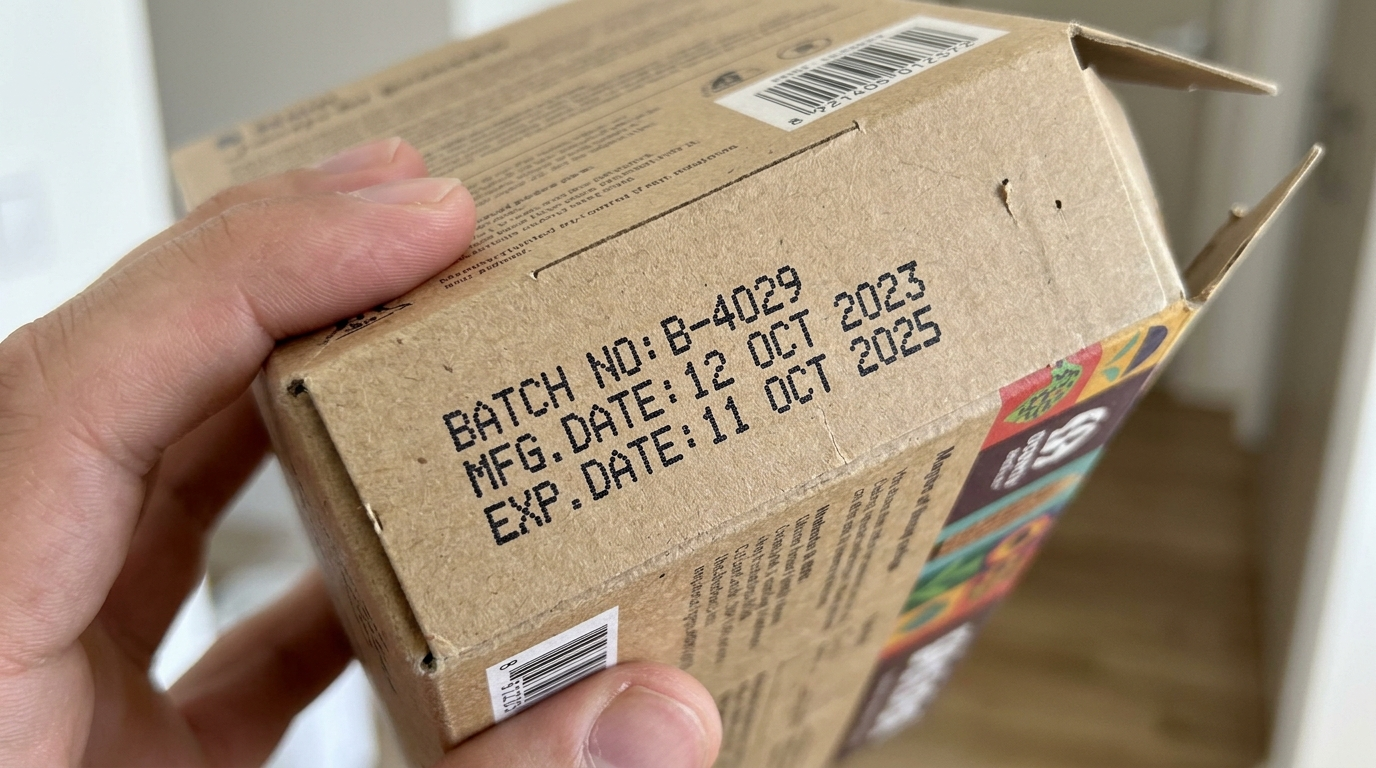
Never ignore the dates printed on packaged groceries. They help you understand how long a product is intended to retain its quality under the stated conditions.
Common date terms include:
- Manufacturing date: When the product was manufactured or packed, as applicable.
- Expiry date: The date after which the product should not be used according to its applicable labelling and safety requirements.
- Best before: Generally indicates the period during which the product is expected to retain its specified quality when stored correctly.
The exact meaning and legal requirements can depend on the product and applicable regulations.
Also check whether the date is printed clearly and whether it appears altered, covered, or difficult to read. Do not buy a product with a missing or unclear date when you cannot establish whether it is suitable for use.
7. Understand Net Weight and Net Volume
The net quantity tells you how much product is inside the package, excluding the packaging itself.
You may see measurements such as:
- Grams (g)
- Kilograms (kg)
- Millilitres (ml)
- Litres (L)
For example, one cooking oil bottle may contain 900 ml while another contains 1 litre. Their prices should not be compared without considering the difference in quantity.
You can calculate the price per unit:
Price per kg = Product price ÷ Product weight in kg
For a 500 g packet, convert the weight to 0.5 kg before calculating.
This method is also useful for comparing rice, flour, sugar, pulses, tea and other regularly purchased groceries.
8. Check Allergen Warnings
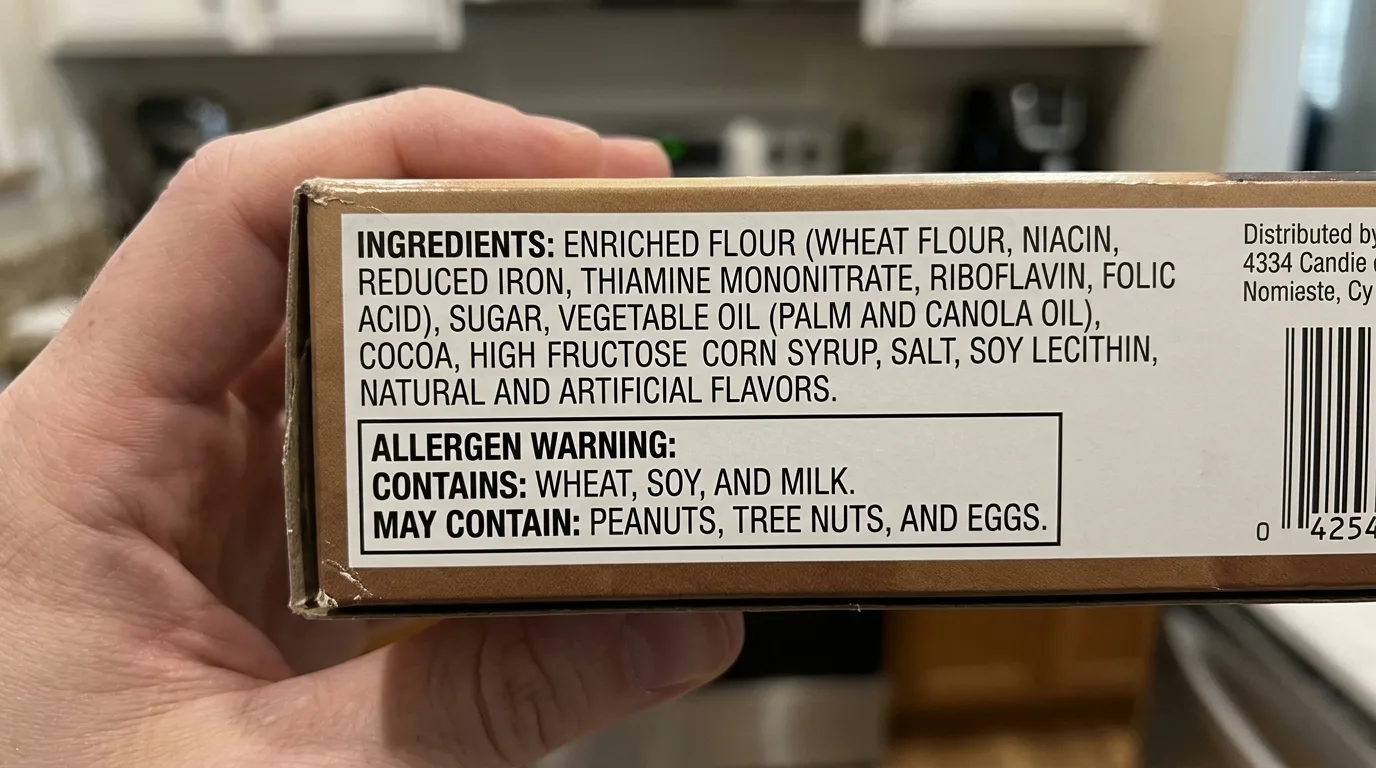
An allergen is a substance that can trigger an allergic reaction in someone sensitive to it.
Depending on the product, allergen information may mention ingredients such as:
- Milk
- Eggs
- Peanuts
- Tree nuts
- Soy
- Wheat or gluten-containing cereals
- Fish
- Crustaceans
Read the complete ingredient list as well as any separate allergen warning. Some products may also carry statements such as “may contain” or indicate that they are made in a facility that handles certain allergens.
These warnings are especially important for people with diagnosed food allergies. If the grocery product label is unclear, do not assume the product is safe.
9. Read Storage and Usage Instructions
Some products need special storage conditions to maintain their quality and safety.
Examples include:
- Refrigerating certain dairy products after opening
- Keeping cooking oils away from direct sunlight and heat
- Storing dry foods in a cool, dry place
- Following refrigeration instructions for sauces and beverages
- Using a product within the stated period after opening
A product can be within its printed date but still become unsuitable if it has been stored incorrectly or its packaging has been damaged.
Check for broken seals, leaking containers, swollen cans, damaged packaging, or unusual signs of spoilage. Follow the product’s storage instructions rather than relying on the expiry date alone.
10. Do Not Believe Every Claim Printed on the Front
The front of a packet is designed to attract attention. It may contain words and phrases that sound appealing, but you should check the supporting information before making a decision.
| Front-of-pack claim | What you should check |
|---|---|
| Natural | Read the ingredients and product description |
| No added sugar | Check total sugars and ingredients |
| Low fat | Compare total fat, saturated fat and sugar |
| High protein | Check the actual protein amount per 100 g or serving |
| Fortified | See which vitamins or minerals have been added |
| Whole grain | Check whether whole grain appears prominently in the ingredients |
| Baked, not fried | Still compare fat, sugar, sodium and ingredients |
A claim does not tell you the complete nutritional profile of a product. For example, a snack can be baked and still contain considerable salt or refined flour.
The best approach is to use the front label as a starting point and the ingredients and nutrition panel for the details.
11. Check the Manufacturer, Importer and Product Information
A packaged grocery product should provide identifying information about the business responsible for making or supplying it, as required by the relevant rules.
Depending on the product, the grocery product label may show:
- Manufacturer’s name and address
- Importer’s or distributor’s details
- Country of origin
- Batch or lot number
- Product category
- Instructions for preparation or use
- Relevant registration or certification details
This information can help consumers identify the product and contact the responsible business if they have a complaint or question.
For imported products, check whether the label provides the information required under the applicable Pakistani rules. Do not assume that an attractive foreign-language package automatically meets local requirements.
What Does a Grocery Product Label Need to Show in Pakistan?
Food labelling requirements can depend on the product category and the authority responsible for regulating it.
For example, the Punjab Food Authority’s published label approval information lists items such as:
- Manufacturing and expiry dates
- Batch number
- Product category
- Manufacturing address
- Nutrition facts
- Ingredients
- Net content
- Allergen warning
- Storage conditions
Punjab’s food regulations also address ingredient declarations, nutritional information and date marking.
This does not mean that every product in every province follows an identical approval process. Requirements may vary according to the product, applicable provincial rules, and other relevant regulations. For regulatory questions, check the current requirements of the food authority responsible for the product.
A Quick Grocery Product Label Checklist
Use this short checklist when shopping for packaged groceries:
- Is the product name and category clear?
- Can I read the ingredients list?
- What are the first three ingredients?
- Have I checked the serving size?
- Have I compared sugar and sodium?
- Have I checked saturated and trans fat where listed?
- Is the manufacturing or expiry information clear?
- Is the net weight or volume suitable for the price?
- Are there any allergen warnings relevant to my household?
- Have I checked storage instructions?
- Is the packaging sealed and undamaged?
You do not need to spend several minutes on every packet. With practice, these checks become a normal part of grocery shopping.
Frequently Asked Questions
What is a grocery product label?
A grocery product label is the information printed on or attached to a packaged food product. It can include the product name, ingredients, nutrition facts, quantity, dates, storage instructions, allergen warnings, and manufacturer details.
What should I check first on a food grocery product label?
Start with the ingredients list, serving size, sugar, sodium, and date information. If you are comparing two similar products, check the nutrition values on the same measurement basis, such as per 100 g.
How do I know if a packaged food is high in sugar?
Check the total sugars amount and, where available, added sugars. Compare similar products using the same quantity, such as per 100 g or per serving. The ingredients list can also help identify different names for sugar.
What is the difference between sodium and salt?
Sodium is a mineral found in salt and other ingredients. Salt is sodium chloride. The amounts are not interchangeable, so check which unit the nutrition panel uses before comparing products.
Why is the serving size important?
The calories and nutrient figures on a grocery product label may apply to one serving rather than the entire packet. If you eat more than one serving, you need to multiply the listed values accordingly.
What does best before mean on food packaging?
Best before generally indicates the period during which a product is expected to retain its specified quality when stored correctly. It is different from an expiry date. Always follow the product’s specific instructions and applicable food safety guidance.
Are imported grocery products required to have information in Urdu or English?
Labelling requirements depend on the applicable Pakistani rules and the product category. Check the label for clear product information in the language or languages required by the relevant regulation.
What should I do if a grocery product has no expiry date?
Do not assume that the product is safe simply because it is available for sale. Check the applicable date-marking requirements for that product and ask the retailer or responsible manufacturer for clarification. Avoid buying it if you cannot establish that it is properly labelled and suitable for use.
Final Word
A grocery product label is more than a collection of numbers and small print. It helps you understand what you are buying, compare similar products and check whether an item suits your household’s needs.
The next time you shop for biscuits, cooking oil, cereal, milk, sauces, or packaged snacks, turn the packet around and read the information on the back. A short check of the ingredients, nutrition facts, quantity, and dates can make your grocery decisions more informed.
Syed Abdul Manan is an SEO expert and WordPress specialist with over 10 years of experience in search engine optimization and WordPress development. He holds a Bachelor of Science in Computer Science (BSCS) and is the Founder & CEO of Grocer.pk, a searchable directory of grocery stores, supermarkets, kiryana shops, and online grocery businesses across Pakistan.
With a technical foundation in computer science, he has spent the past decade working on technical SEO, on-page optimization, content strategy, and building fast, well-structured WordPress websites. For more than six years, he has been developing and managing Grocer.pk, which now covers major cities including Lahore, Karachi, Islamabad and Faisalabad, helping people find nearby stores by city, area and category, along with locations, contact details and map links.
Syed Abdul Manan runs Grocer.pk with a professional, quality-focused approach, combining clean site architecture, structured listings and practical grocery guides to serve both shoppers and business owners. His goal is to help local businesses build a stronger online presence and to help users find reliable local information quickly.
Connect with him on LinkedIn.