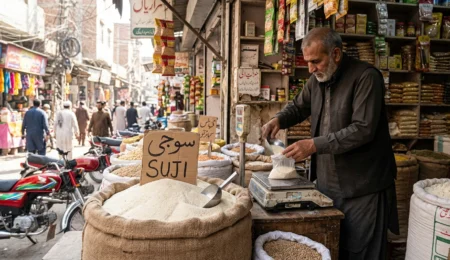
Seviyan (Vermicelli) in Pakistan: Types, Uses & Buying Guide
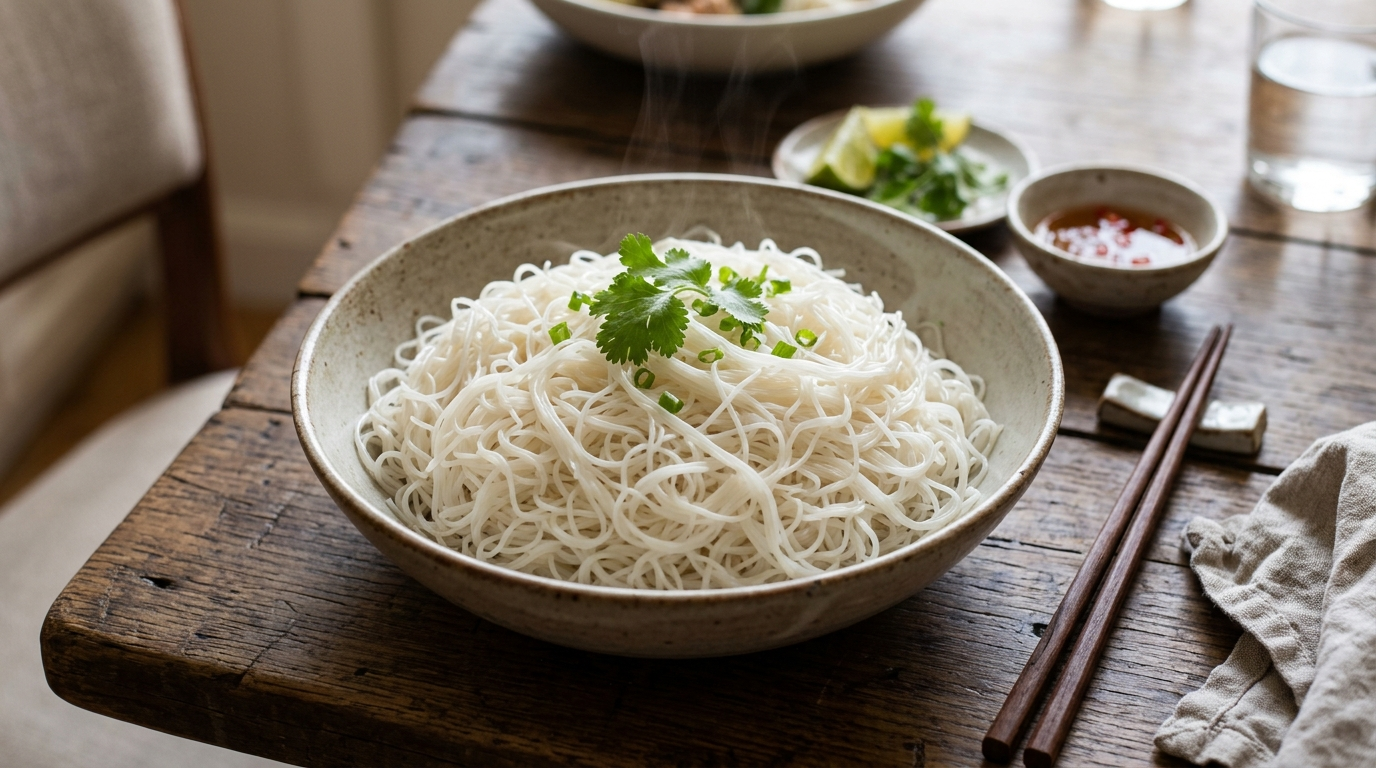
Seviyan, also known as vermicelli, is a familiar ingredient in Pakistani kitchens. It is commonly used to prepare sheer khurma, sweet seviyan, and milk-based desserts, especially during Eid-ul-Fitr. However, not every type of vermicelli has the same shape, texture, or cooking requirements. Some varieties are thin and cook quickly, while others are thicker, handmade, or already roasted.
Choosing the right seviyan can make a noticeable difference to the final dish. The wrong type may become too soft in milk, break apart during cooking, or fail to give you the texture you want.
Whether you are buying vermicelli for Eid, preparing a dessert for your family, or adding it to your regular grocery list, understanding the available varieties will help you make a better choice.
What Is Seviyan (Vermicelli)?
Seviyan is a type of thin, dried noodle commonly used in South Asian cooking. In Pakistan, it is particularly popular in sweet dishes made with milk, sugar, ghee, cardamom, and dry fruits.
Commercial vermicelli is generally made from wheat-based flour and water, although the exact ingredients can differ between manufacturers. Some handmade varieties also use refined wheat flour (maida), water, and salt.
Seviyan is available in different thicknesses and forms. It may be sold plain, roasted, handmade, or as a special product such as pheni. This is why checking the product description and ingredients is important rather than choosing a packet only by its appearance.
Different Types of Seviyan Available in Pakistan
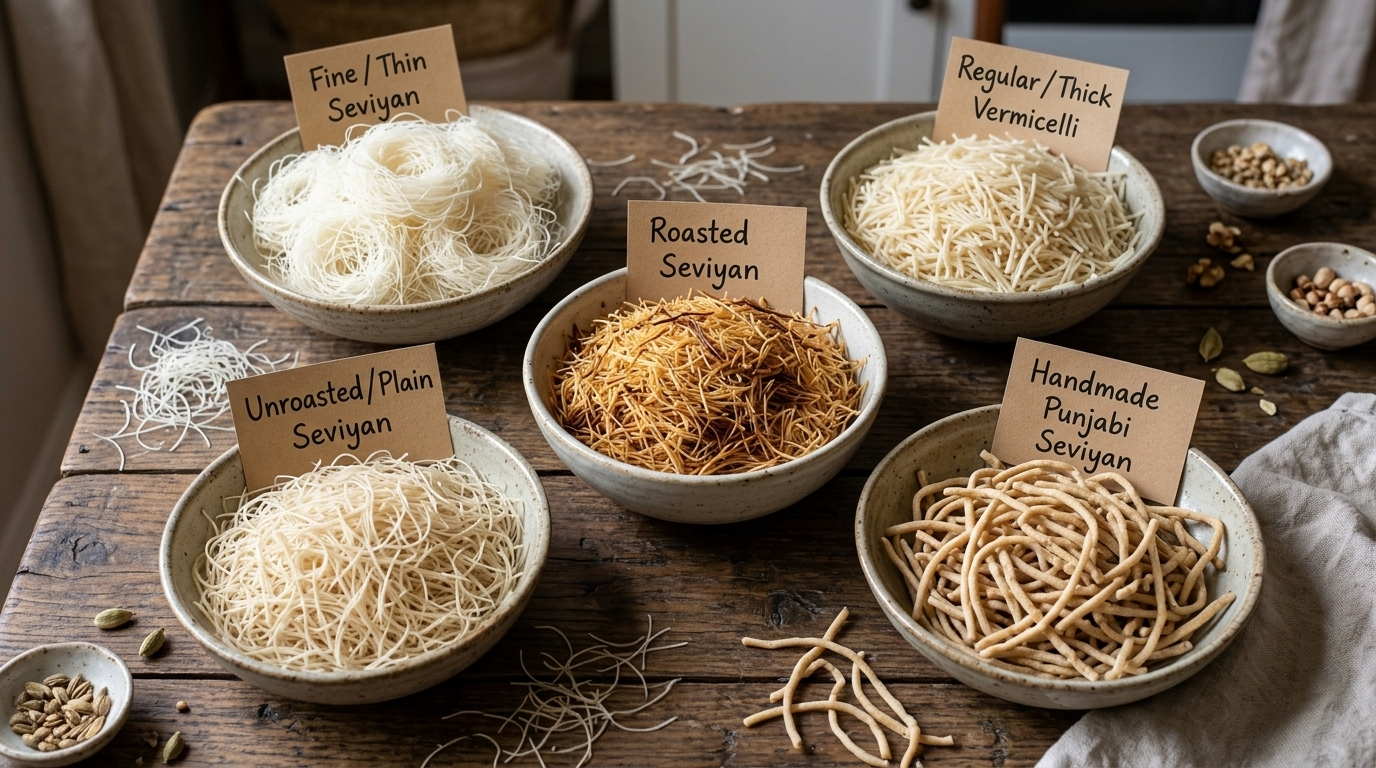
The names and classifications used by manufacturers are not always consistent. A product may be described by its thickness, preparation method, shape, or regional style. These are some of the varieties shoppers may come across.
1. Fine or Thin Seviyan
Fine seviyan has narrow, delicate strands that soften relatively quickly when cooked. It is commonly used in milk-based desserts where a soft texture is preferred.
Best uses:
- Sheer khurma
- Seviyan kheer
- Sweet milk vermicelli
- Other soft-textured desserts
Because fine strands cook quickly, avoid leaving them in boiling milk for too long. Overcooking can make the dessert overly thick or turn the strands mushy.
2. Regular or Thick Vermicelli
Regular or thicker vermicelli has more substantial strands than fine seviyan. Depending on the product, it may hold its shape better during cooking.
It can be suitable for dry sweet seviyan and recipes where you want the strands to remain more noticeable instead of blending into the milk.
Best uses:
- Dry meethi seviyan
- Sweet vermicelli dishes
- Recipes that require a firmer texture
Cooking time depends on the thickness and ingredients, so follow the packet instructions when available.
3. Roasted Seviyan
Roasted seviyan has already been browned during preparation. Its colour is usually golden or light brown, and it can have a toasted flavour.
This variety is convenient when you want to reduce preparation time. You may not need to roast it for as long as plain vermicelli before adding the other ingredients.
Best uses:
- Sheer khurma
- Sweet milk seviyan
- Quick dessert preparation
Do not assume that every brown-looking product is roasted. Check the packaging or ask the shopkeeper if the preparation method is unclear.
4. Unroasted or Plain Seviyan
Plain vermicelli is generally lighter in colour because it has not been browned in the same way as roasted varieties.
For recipes that require toasted flavour, you can roast it gently in ghee before adding milk or water. Keep the heat low and stir carefully because thin strands can brown quickly.
Best uses:
- Homemade sweet seviyan
- Sheer khurma recipes that begin with roasting
- Recipes where you want to control the level of browning
5. Handmade Punjabi Seviyan
Handmade Punjabi seviyan is a traditional-style variety that may have a different thickness and texture from machine-made vermicelli.
For example, Sunbeam Foods describes its handmade Punjabi seviyan as a product made from maida, water, and a little salt, with the strands stretched by hand and dried. This is one manufacturer’s product description, not a universal recipe for every handmade variety.
Best uses:
- Traditional milk seviyan
- Homemade sweet dishes
- Recipes that call for handmade vermicelli
Since handmade seviyan can differ in thickness, check the cooking instructions and allow for differences in texture.
6. Pheni or Fried Vermicelli
Pheni is another vermicelli-style product sold in Pakistan. It is different in appearance and preparation from ordinary straight vermicelli and is commonly associated with milk-based sweet dishes.
Some retailers list fried vermicelli or pheni as a separate product. Always check whether the product is ready to use, needs warming, or requires another preparation step.
Best uses:
- Milk-based desserts
- Traditional sweet preparations
- Special occasion desserts
Which Type of Seviyan Should You Buy?
The best choice depends on what you plan to cook. Use this comparison as a starting point:
| Type | Suitable use | What to expect |
|---|---|---|
| Fine seviyan | Sheer khurma, kheer | Softens quickly |
| Regular or thick | Dry sweet seviyan | More noticeable strands |
| Roasted | Quick milk desserts | Toasted flavour, less preparation |
| Plain or unroasted | Homemade sweet dishes | You control the roasting |
| Handmade Punjabi | Traditional milk seviyan | Texture varies by product |
| Pheni | Special milk desserts | Different shapes and preparations |
If you are making sheer khurma, fine or suitable roasted vermicelli is a practical option. For dry meethi seviyan, choose a variety that can retain its shape according to your recipe.
Popular Uses of Seviyan in Pakistani Cooking
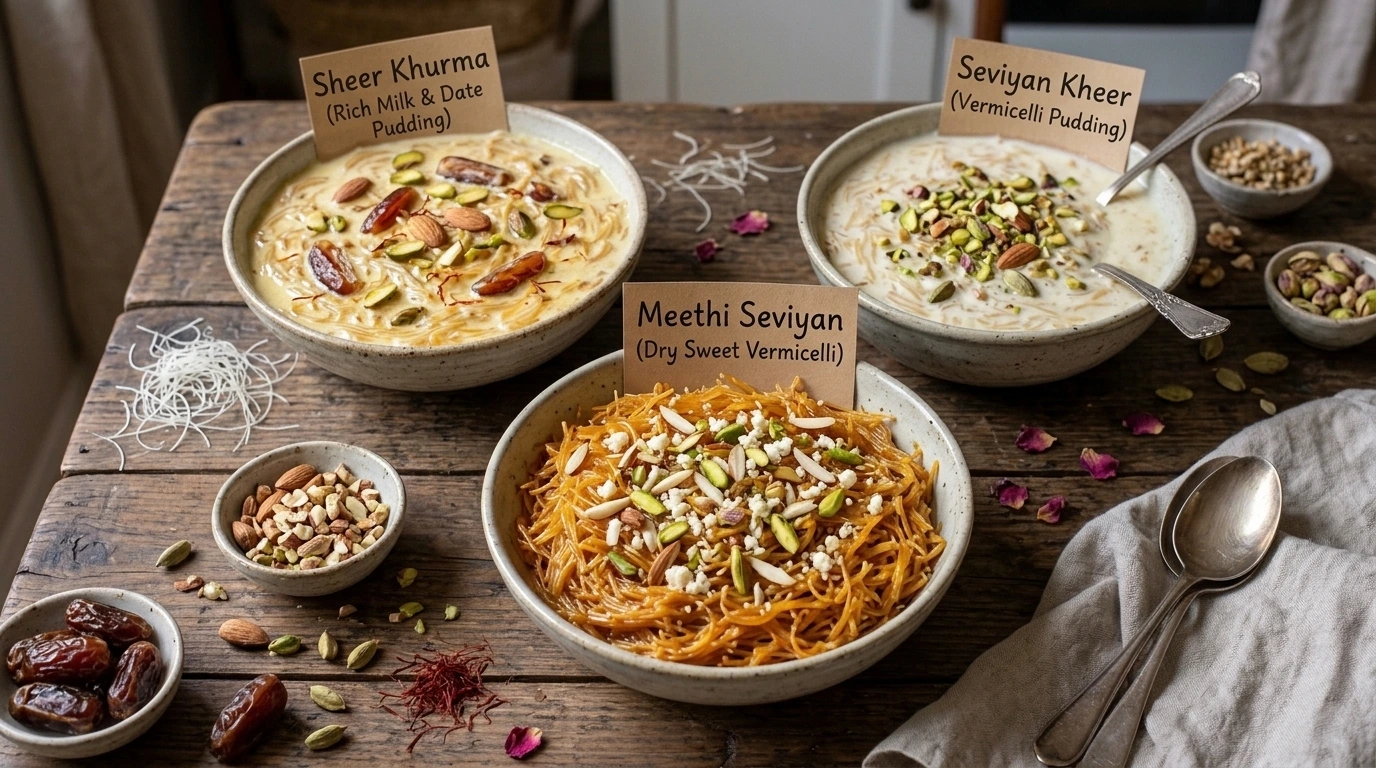
Seviyan is not limited to one dessert. Pakistani households use it in several sweet preparations.
Sheer Khurma
Sheer khurma is one of the best-known Eid-ul-Fitr desserts in Pakistan. It is prepared with milk, vermicelli, dates, sugar, cardamom, and dry fruits, although recipes vary between families.
The vermicelli is usually cooked with the milk until it becomes soft and the dessert reaches the preferred consistency. Almonds, pistachios, raisins, and other ingredients may be added according to taste.
Dry Meethi Seviyan
Dry meethi seviyan is prepared by roasting vermicelli in ghee and cooking it with sugar or a sweetened liquid. Cardamom and dry fruits can be added for flavour.
Unlike sheer khurma, this dish is not served as a milk pudding. The aim is generally to keep the strands separate and lightly coated.
Seviyan Kheer
Seviyan kheer is a milk-based dessert in which vermicelli is simmered with milk and sugar. Cardamom and nuts are common additions.
It is a simple option for family meals and special occasions. The amount of milk and cooking time determine whether the final dessert is light or thick.
Other Sweet Preparations
Vermicelli can also be used in regional and household dessert recipes. Some cooks combine it with milk, condensed milk, dates, nuts, or other flavourings to create their preferred version.
The ingredients and cooking method should match the particular type of vermicelli being used.
How to Choose Good Quality Seviyan
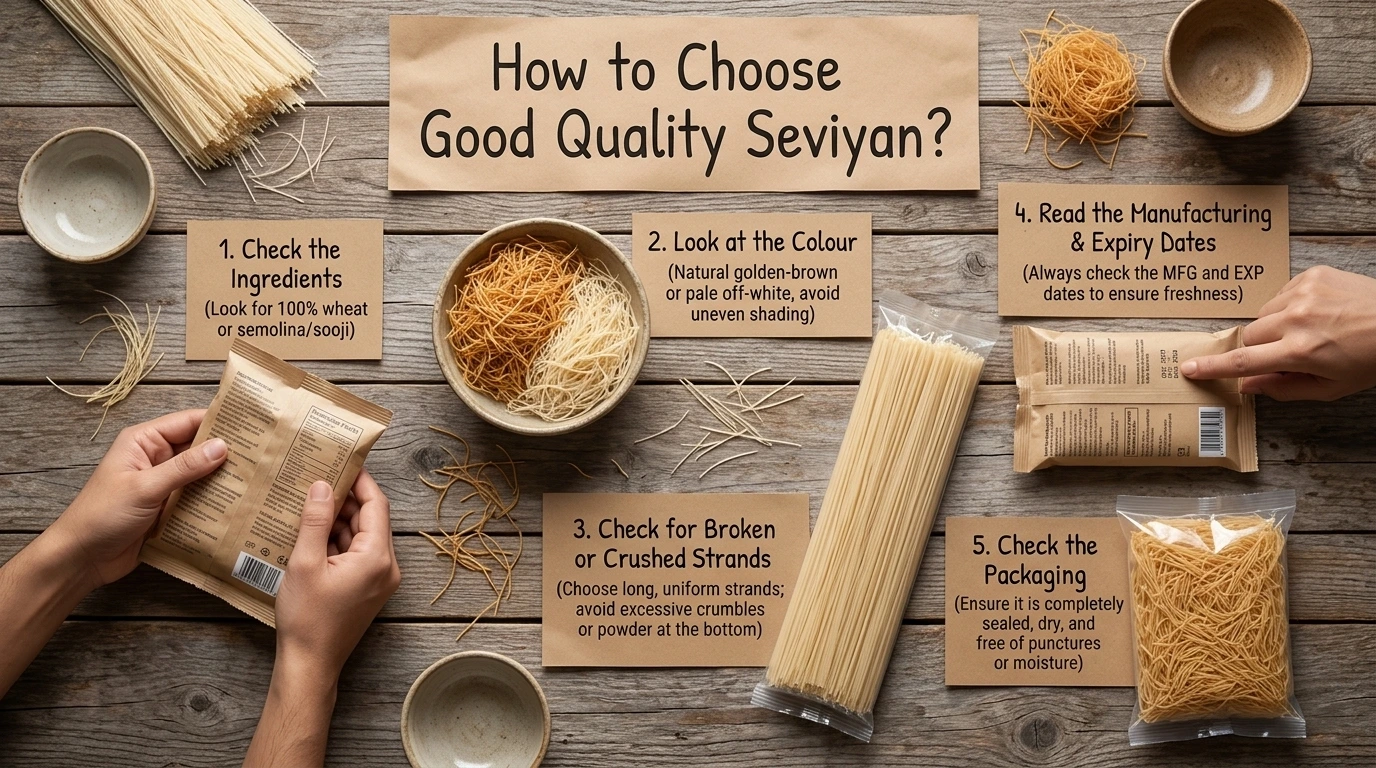
A low-priced packet is not automatically the best purchase. Before buying vermicelli, check a few practical details.
Check the Ingredients
Read the ingredients list to understand what the product contains. Wheat-based vermicelli may use different types of flour, and some products may contain additional ingredients.
If you have a wheat allergy or need to avoid gluten, do not assume ordinary seviyan is suitable. Check the ingredients and allergen information carefully.
Look at the Colour
The colour can give you an idea of whether the vermicelli has been roasted, but colour alone cannot confirm quality.
Choose a product with a consistent appearance for its stated variety. Avoid packets containing unusual discolouration or visible signs of moisture.
Check for Broken or Crushed Strands
Some breakage can happen during transport, but a packet containing mostly crushed pieces may not give you the texture you want.
If you are preparing a dish where longer strands matter, check the condition of the product through the transparent packaging, where possible.
Read the Manufacturing and Expiry Dates
Check the manufacturing date, expiry date, and storage instructions. Avoid packets with missing, unclear, or apparently altered date information.
The Punjab Food Authority’s published labelling guidance identifies information such as ingredients, nutritional facts, manufacturing and expiry dates, batch number, net weight, allergen warnings, and storage instructions as important label details.
Check the Packaging
The packet should be properly sealed and free from holes, tears, or signs of moisture. Damaged packaging can affect the condition of a dry food product.
For more guidance, read How to Read a Grocery Product Label in Pakistan.
How to Compare Vermicelli Prices
Vermicelli is sold in different packet sizes, so comparing only the printed price can be misleading. A smaller packet may cost less but offer a higher price per kilogram.
Use this simple calculation:
Price per 100 g = Packet Price ÷ Packet Weight in Grams × 100
For example:
- A 200 g packet costs Rs. 100.
- A 400 g packet costs Rs. 180.
The first packet costs Rs. 50 per 100 g, while the second costs Rs. 45 per 100 g. In this example, the 400 g packet offers a lower price per 100 g.
These figures are illustrative, not current market prices. Always compare the actual price, weight, ingredients, and product type before buying.
Also consider how much your household will use. Buying a larger packet is not useful if the remaining vermicelli will sit unused for a long time.
How to Store Seviyan at Home
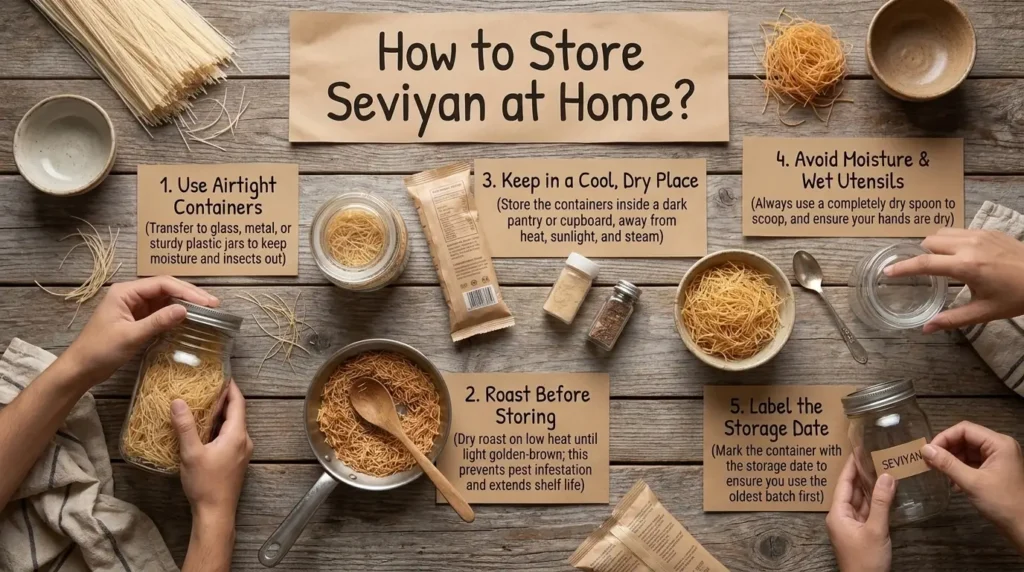
Proper storage helps keep vermicelli dry and in good condition.
- Keep the packet in a cool, dry place.
- Protect it from moisture and direct sunlight.
- After opening, transfer the remaining vermicelli to a clean, dry, airtight container.
- Keep it away from strong-smelling products.
- Follow any storage instructions printed on the packaging.
- Do not use vermicelli if you notice insects, mould, unusual odour, or signs of moisture.
Avoid storing an opened packet near the stove or sink, where heat and moisture can affect the product.
Where Can You Buy Seviyan in Pakistan?
You can usually look for vermicelli at local kiryana stores, general stores, supermarkets, and online grocery shops. Availability depends on the city, retailer, product type, and season.
Before purchasing, compare the packet size and ingredients rather than choosing only by brand or price.
You can use Grocer.pk to browse:
- Supermarkets in Pakistan
- Grocery stores in Pakistan
- Kiryana stores in Pakistan
- Online grocery stores in Pakistan
If you are preparing for Eid-ul-Fitr, you can also use our Eid grocery shopping checklist to organise seviyan, milk, sugar, ghee, cardamom, and other dessert ingredients.
Frequently Asked Questions About Seviyan and Vermicelli
What is seviyan called in English?
Seviyan is commonly called vermicelli in English. It refers to thin, dried noodle strands used in sweet and savoury dishes.
Is vermicelli the same as seviyan?
In the Pakistani and wider South Asian food context, seviyan is commonly used to refer to wheat-based vermicelli. However, the word vermicelli can also describe other noodle products, including rice-based varieties. Check the ingredients rather than assuming all products are identical.
Which seviyan is best for sheer khurma?
Fine or suitable roasted wheat vermicelli is a practical choice for sheer khurma. The best option depends on your preferred texture and recipe. Thin strands soften quickly, so avoid overcooking them.
What is the difference between roasted and unroasted seviyan?
Roasted seviyan have already been browned and usually have a toasted flavour. Unroasted seviyan is lighter in colour and can be roasted at home in ghee before cooking.
Is handmade Punjabi seviyan different from regular vermicelli?
Yes. Handmade Punjabi seviyan can have a different shape, thickness, and texture from machine-made vermicelli. Its exact ingredients and preparation method depend on the manufacturer.
Can I use regular vermicelli instead of fine seviyan?
You can use regular vermicelli in some recipes, but the final texture may differ. Thicker strands may need a different cooking time and may remain more noticeable in the dessert.
Is pheni the same as ordinary seviyan?
No. Pheni is sold as a separate vermicelli-style product and may have a different shape and preparation method. Check the packet instructions before using it.
Does vermicelli contain gluten?
Many common wheat-based vermicelli products contain gluten. Check the ingredient and allergen information on the packet, especially if you need to avoid wheat or gluten.
How should I store an opened packet of seviyan?
Keep it in a clean, dry, airtight container in a cool place. Protect it from moisture, insects, and direct sunlight, and follow the manufacturer’s storage instructions.
How can I find a good vermicelli price?
Compare the price per 100 g or per kilogram instead of looking only at the packet price. Also compare ingredients, weight, product type, and packaging condition.
Final Buying Advice
The right seviyan depends on the dish you want to prepare. Fine vermicelli is useful for soft milk desserts, roasted varieties save preparation time, handmade Punjabi seviyan offer a different texture, and pheni is a separate option for special sweet preparations.
Before buying, check the ingredients, packet weight, dates, packaging condition, and cooking instructions. A little attention at the grocery store can help you choose a product that suits both your recipe and your budget.
Syed Abdul Manan is an SEO expert and WordPress specialist with over 10 years of experience in search engine optimization and WordPress development. He holds a Bachelor of Science in Computer Science (BSCS) and is the Founder & CEO of Grocer.pk, a searchable directory of grocery stores, supermarkets, kiryana shops, and online grocery businesses across Pakistan.
With a technical foundation in computer science, he has spent the past decade working on technical SEO, on-page optimization, content strategy, and building fast, well-structured WordPress websites. For more than six years, he has been developing and managing Grocer.pk, which now covers major cities including Lahore, Karachi, Islamabad and Faisalabad, helping people find nearby stores by city, area and category, along with locations, contact details and map links.
Syed Abdul Manan runs Grocer.pk with a professional, quality-focused approach, combining clean site architecture, structured listings and practical grocery guides to serve both shoppers and business owners. His goal is to help local businesses build a stronger online presence and to help users find reliable local information quickly.
Connect with him on LinkedIn.