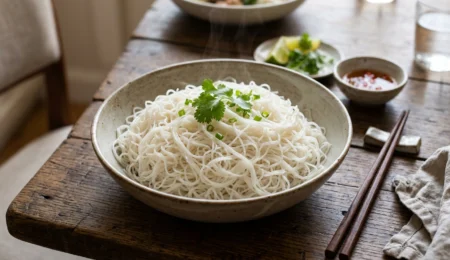
Is Pasta Made of Maida? Ingredients and Differences Explained
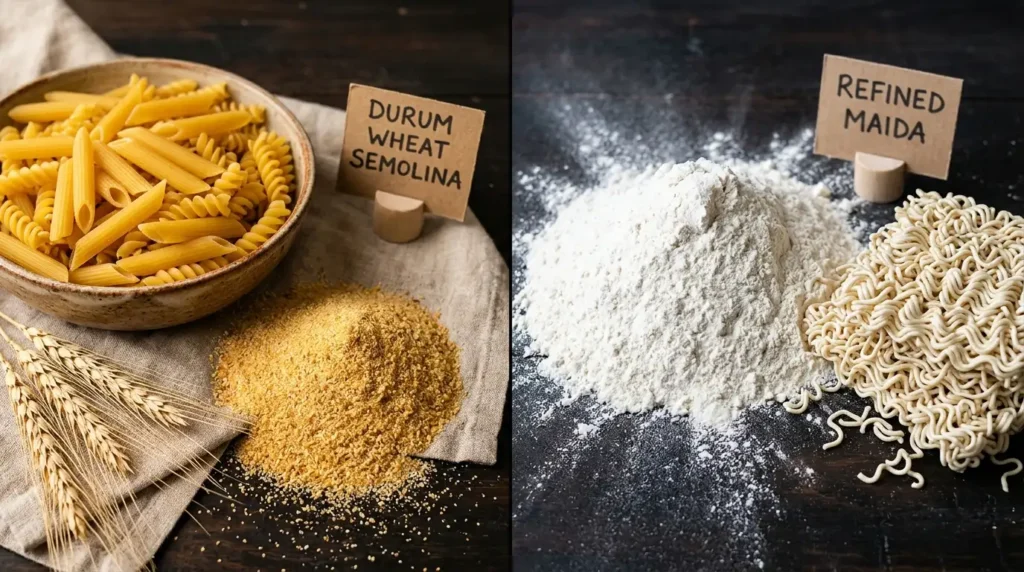
Pasta is a popular choice for quick lunches, dinners, and snacks. It can be prepared with vegetables, chicken, meat, cheese, or a simple tomato sauce. But when buying pasta in Pakistan, one question often comes up: is pasta made of maida, or is it made from suji?
The answer depends on the product. Many traditional dried pasta products are made from durum wheat semolina and water. Other varieties can use different types of wheat flour, whole-wheat flour, rice, lentils, or other ingredients.
If you want to understand what goes into your pasta, it helps to know how maida differs from semolina and how to read the ingredients printed on a packet.
Is Pasta Made of Maida or Suji?
Pasta is not always made from maida. Traditional dried pasta is commonly produced using durum wheat semolina, which is a coarse flour obtained from durum wheat. Water is mixed with the semolina to form dough, which is then shaped into pasta such as spaghetti, macaroni, penne, and fusilli.
However, not every product follows the same recipe. Some pasta products use other wheat flours or blends, while alternative varieties may be made from ingredients such as rice or legumes.
Here is a simple comparison:
- Semolina pasta: Made using semolina, often from durum wheat, and commonly used for traditional dried pasta.
- Maida-based pasta: Uses refined wheat flour, either on its own or as part of a flour blend.
- Whole-wheat pasta: Uses whole-wheat flour or whole-wheat semolina, retaining more of the grain’s bran.
- Alternative-flour pasta: May use rice, lentils, chickpeas, or other ingredients, depending on the product.
The name “pasta” alone does not tell you exactly which flour was used. Always check the product’s ingredient list.
What Is the Difference Between Maida and Semolina?
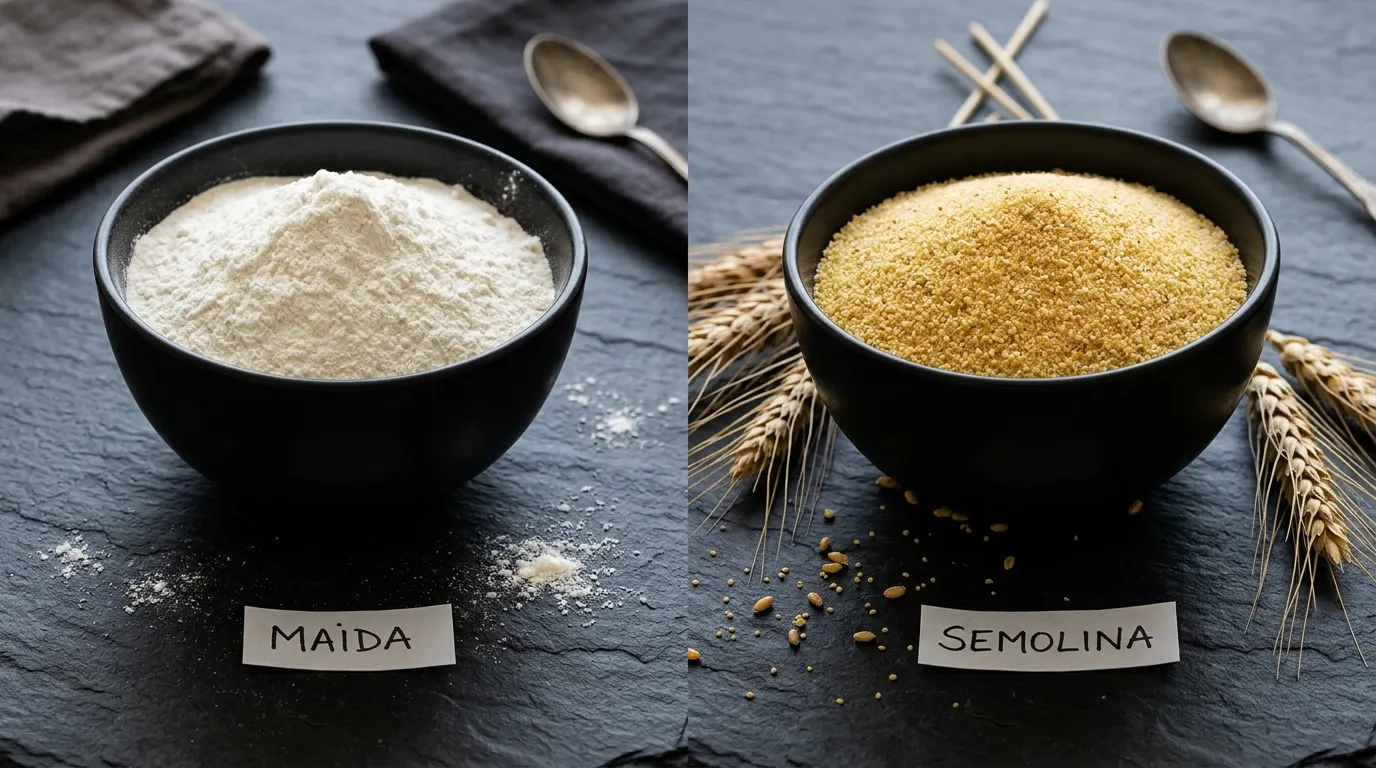
Maida and semolina both come from wheat, but they are not the same product.
Maida is finely milled, refined wheat flour. During refining, much of the bran and germ is removed. Semolina used for traditional pasta is generally coarsely milled from durum wheat, a hard variety of wheat valued for its pasta-making properties.
| Feature | Maida | Durum Wheat Semolina |
|---|---|---|
| Appearance | Usually fine and white | Usually coarse and yellowish |
| Source | Refined wheat | Durum wheat |
| Texture | Smooth and powdery | Gritty or granular |
| Common uses | Cakes, biscuits, pastries and some other foods | Pasta, some breads and selected desserts |
| Fibre | Generally lower than whole-wheat flour | Depends on the product and degree of refinement |
The important distinction is that semolina is not automatically whole grain. Refined durum wheat semolina can also have much of the bran and germ removed. For more fibre, check whether the product specifically says whole wheat or whole grain.
Why Is Semolina Commonly Used for Pasta?
Durum wheat semolina has properties that make it suitable for many traditional pasta products. When mixed with water and processed correctly, it forms dough that can be shaped into different pasta forms.
It can also help pasta maintain its structure during cooking. The final result depends on the wheat, flour composition, manufacturing process, and cooking method.
This is why pasta made from durum wheat semolina may have a firm texture when cooked correctly. However, you cannot judge the complete quality or nutritional value of a product from its flour type alone.
How Can You Tell If Pasta Contains Maida?
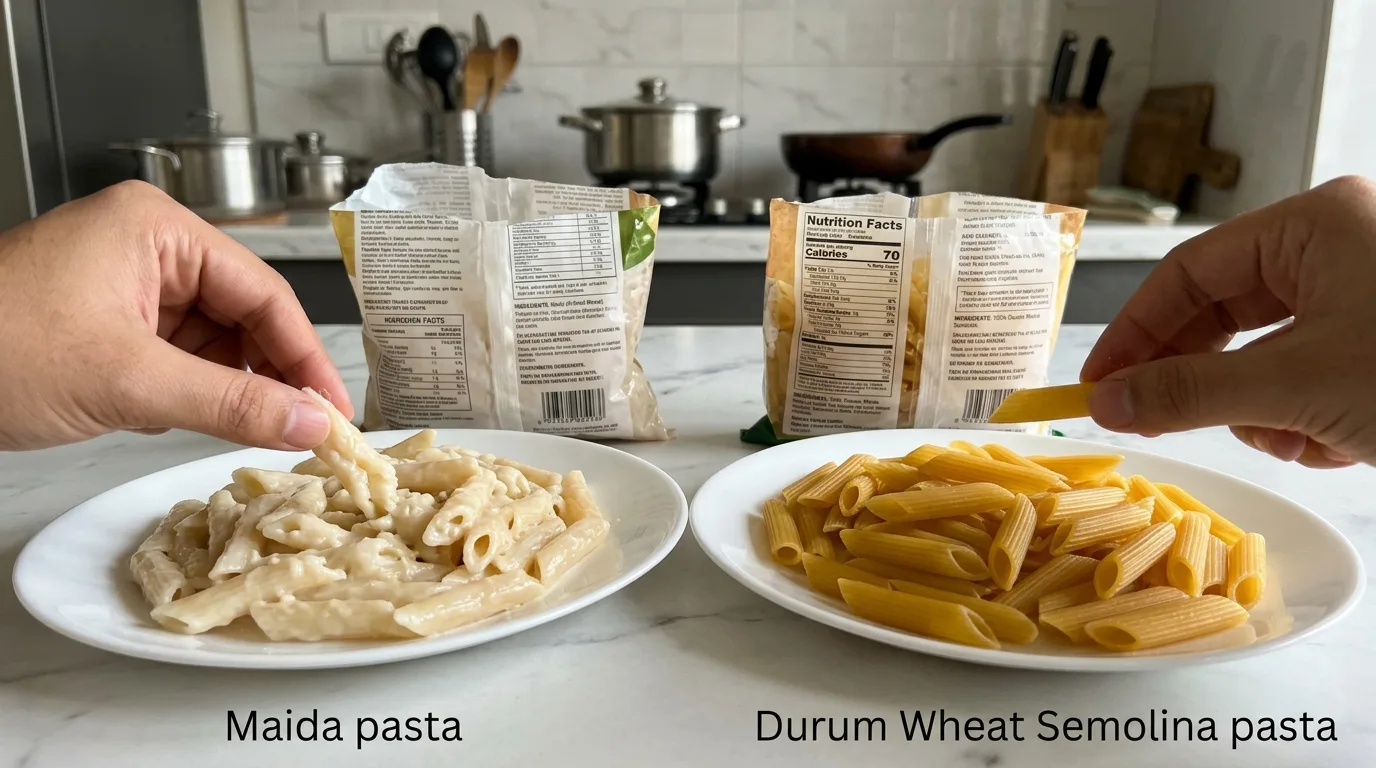
You do not need to guess based on the colour or shape of the pasta. The ingredient list on the packaging is a better starting point.
Use these checks when shopping:
1. Read the ingredients. Look for terms such as “durum wheat semolina,” “whole-wheat flour,” “refined wheat flour,” or “maida.” The wording depends on the manufacturer and local labelling practices.
2. Check the first ingredient. Ingredients are generally listed in descending order by weight under common food-labelling rules. The first ingredient can therefore help you understand which ingredient is present in the greatest amount.
3. Do not rely only on the front label. Words such as “premium,” “classic” or “healthy” do not identify the exact flour used. Read the back of the pack.
4. Look for whole-grain wording if fibre is your priority. “Whole wheat” or “whole grain” provides more useful information than a general claim that a pasta is made from wheat.
5. Check the nutrition panel. Compare fibre, protein and serving sizes across products. Different pasta products can have different nutritional values even when their ingredients sound similar.
If a packet lists durum wheat semolina as its ingredient, that is useful evidence about the flour used. If it lists maida or refined wheat flour, the product contains refined flour. If the wording is unclear, contact the manufacturer rather than assuming.
Is Maida Pasta Different From Suji Pasta?
Pasta made from different flours can behave differently during cooking. Durum wheat semolina is commonly used to make traditional dried pasta, while pasta made with other wheat flours may have a different texture.
However, the result is not determined by flour alone. Shape, processing, drying, and cooking time can also affect how well pasta holds its shape.
To get a better result at home:
- Follow the cooking time printed on the packet.
- Stir the pasta during cooking to help prevent pieces from sticking together.
- Test a piece before draining to check the texture.
- Avoid overcooking it if you prefer pasta that remains firm.
- Follow the manufacturer’s instructions for storage after opening.
These steps can improve the cooking result regardless of whether the pasta is made from semolina or another flour.
Is Pasta Made From Maida Bad for Health?
The answer depends on the ingredients, portion size, and the overall meal. Maida is a refined flour and generally contains less fibre than whole-wheat flour. But the presence of refined flour alone does not tell you everything about a food’s nutritional value.
If you want to increase your fibre intake, whole-wheat pasta can be one option. You can also serve pasta with vegetables, beans or lentils and a suitable protein source to make a more balanced meal.
Keep in mind that semolina pasta is not necessarily whole-grain pasta. A product made from refined durum wheat semolina may still contain less fibre than one made from whole-wheat flour.
People who need to avoid gluten should also know that ordinary wheat-based pasta, including pasta made from durum wheat semolina or maida, contains gluten unless specifically formulated otherwise. Check the packaging carefully if you have coeliac disease or another medical reason to avoid gluten.
Which Pasta Should You Buy?
There is no single choice that suits everyone. Your decision may depend on the recipe, budget, texture preference and nutritional needs.
- For traditional pasta dishes: Look for pasta made from durum wheat semolina if that is the type you prefer.
- For more fibre: Compare the nutrition labels and consider a whole-wheat or whole-grain option.
- For special dietary needs: Check the full ingredients and allergen information.
- For everyday cooking: Choose a product that fits your budget and gives you the cooking result you want.
Before buying, compare the ingredient list and nutrition information instead of relying only on the brand name or the appearance of the pasta.
For more useful grocery information, read Grocer.pk’s complete grocery items list in Pakistan and monthly grocery list for Pakistani families.
Frequently Asked Questions
Is all pasta made from maida?
No. Many traditional dried pasta products are made from durum wheat semolina and water. Other products may use refined wheat flour, whole-wheat flour, alternative grains, or flour blends. Check the label to know what a particular product contains.
Is pasta made from suji?
Many traditional pasta products are made from durum wheat semolina, which is a type of coarse flour. However, the word “suji” can refer to semolina made from different wheat types, so check the exact ingredient wording on the packet.
Is maida the same as semolina?
No. Maida is a fine, refined wheat flour, while semolina used for traditional pasta is usually made by coarsely milling durum wheat. They differ in texture and how they are commonly used.
Is durum wheat pasta healthier than maida pasta?
Not necessarily in every respect. Durum wheat semolina is valued for its pasta-making properties, but nutritional quality depends on the product’s complete ingredients and nutrition information. Whole-wheat pasta generally provides more fibre than refined-flour pasta.
How can I buy pasta without maida?
Read the ingredient list and choose a product whose listed ingredients match your needs. For example, look for durum wheat semolina or whole-wheat ingredients if those are your preferences. Do not rely only on claims printed on the front of the packet.
Does pasta contain gluten?
Most conventional pasta made from wheat, including durum wheat semolina and maida, contains gluten. Pasta made from rice or certain legumes may be gluten-free, but people who must avoid gluten should check the label and any cross-contact warnings.
Is macaroni also made from maida?
Macaroni is a type of pasta, so its ingredients depend on the product. It may be made from durum wheat semolina, other wheat flour, or a flour blend. Check the packet to confirm.
Final Verdict
Pasta is not always made from maida. Traditional dried pasta is commonly made from durum wheat semolina, while other varieties may contain refined wheat flour, whole-wheat flour, or alternative ingredients.
If you want to know exactly what you are eating, read the ingredient list and nutrition panel before buying. Understanding the difference between maida, semolina, and whole-wheat flour makes it easier to choose pasta for your recipe and dietary preferences.
Syed Abdul Manan is an SEO expert and WordPress specialist with over 10 years of experience in search engine optimization and WordPress development. He holds a Bachelor of Science in Computer Science (BSCS) and is the Founder & CEO of Grocer.pk, a searchable directory of grocery stores, supermarkets, kiryana shops, and online grocery businesses across Pakistan.
With a technical foundation in computer science, he has spent the past decade working on technical SEO, on-page optimization, content strategy, and building fast, well-structured WordPress websites. For more than six years, he has been developing and managing Grocer.pk, which now covers major cities including Lahore, Karachi, Islamabad and Faisalabad, helping people find nearby stores by city, area and category, along with locations, contact details and map links.
Syed Abdul Manan runs Grocer.pk with a professional, quality-focused approach, combining clean site architecture, structured listings and practical grocery guides to serve both shoppers and business owners. His goal is to help local businesses build a stronger online presence and to help users find reliable local information quickly.
Connect with him on LinkedIn.