What Is Maida in English? Meaning, Uses, and Difference from Atta
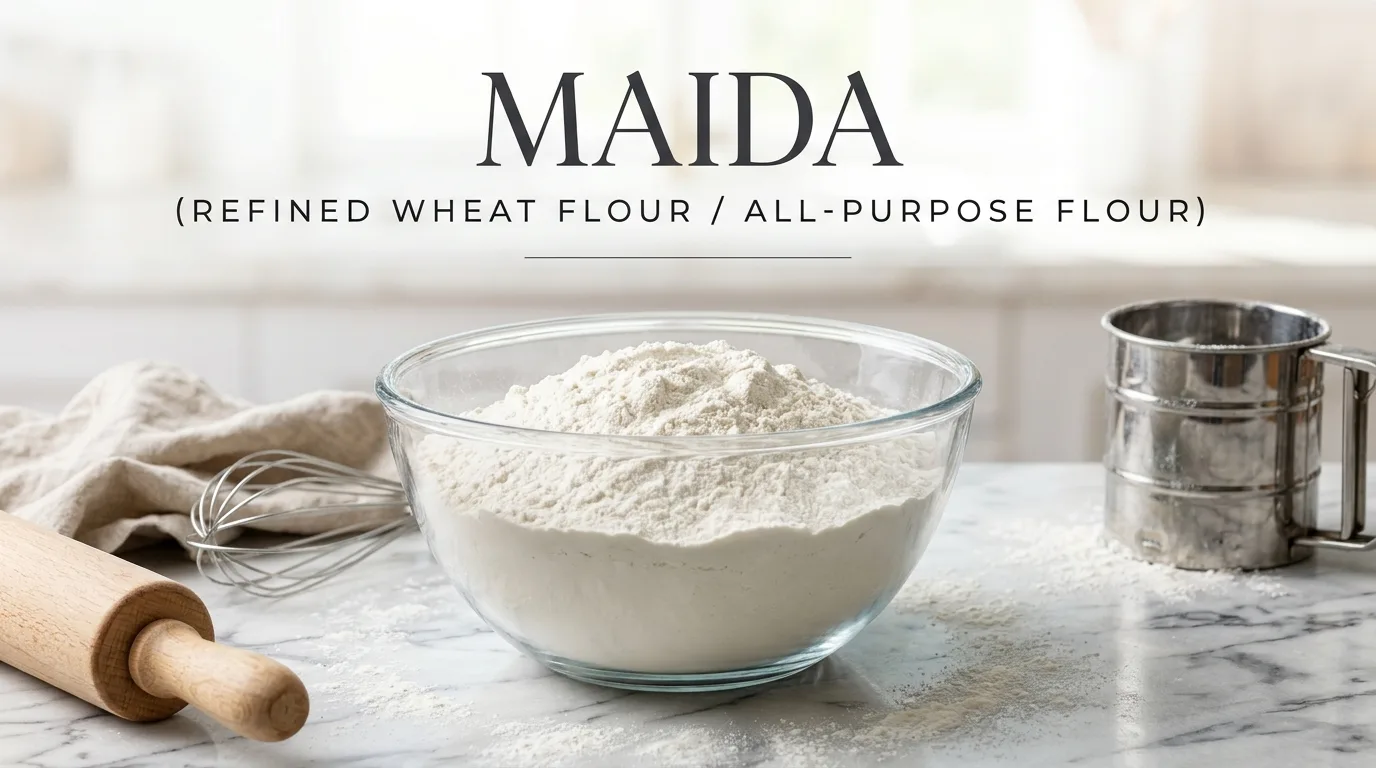
If you are reading a recipe in English and come across the word Maida in English, you may wonder which ingredient you need. In Pakistan, people commonly use maida to make bakery items, fried snacks, breads, and desserts. However, in English recipes, they often use a different name for the same type of flour.
Maida is commonly called refined wheat flour in English. It is also often referred to as all-purpose flour, white flour, or plain flour, depending on the country and context. All-purpose flour is a useful equivalent for many recipes, although flour types and their properties can vary by brand.
Understanding these names makes grocery shopping easier, especially when you are following a recipe from another country or checking the ingredients listed on a food package.
What Is the Maida in English?
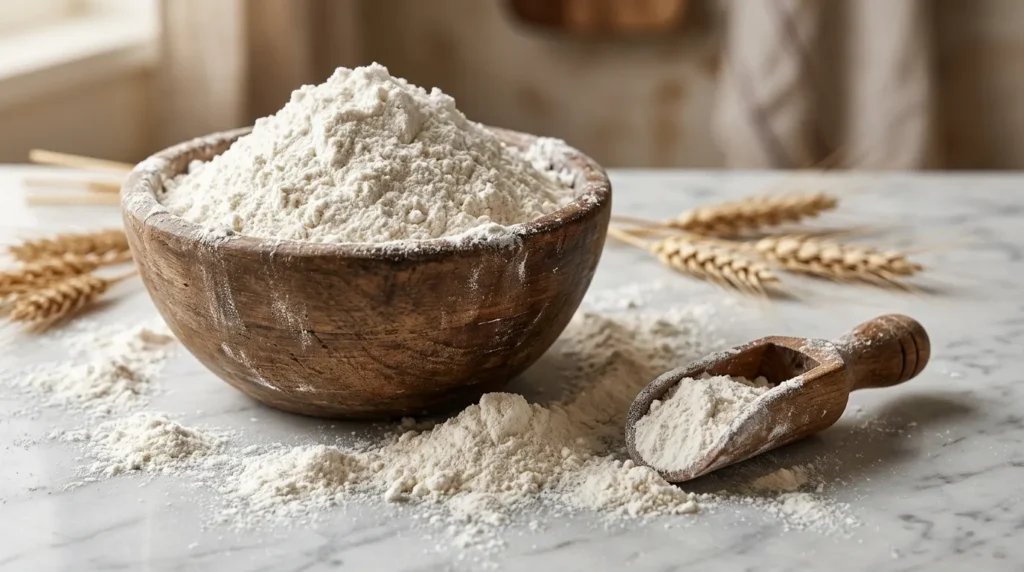
The most useful English term for maida is refined wheat flour. In everyday cooking, you may also see the following names:
- Refined wheat flour: Describes flour made by refining wheat and removing much of its bran and germ.
- All-purpose flour: A common term, particularly in American recipes, for flour intended for a variety of cooking and baking uses.
- Plain flour: A term commonly used in British recipes.
- White flour: A general name for flour with a white appearance; it does not always identify the exact type of flour.
When shopping in Pakistan, look for terms such as “maida,” “refined wheat flour,” or “all-purpose flour.” Check the product label rather than assuming every flour sold under a similar English name has identical properties.
What Is Maida Made From?
Maida is made from wheat. During refining, the bran and germ are largely separated from the starchy endosperm, which is then milled into a fine flour.
This processing gives maida its smooth texture and light colour. It also means that refined flour generally contains less fibre than whole-wheat flour, which retains more of the grain’s bran.
Some packaged flours may also be fortified with selected vitamins and minerals. The exact ingredients and nutritional composition depend on the product, so the label is the best source for brand-specific information.
Where Is Maida Used in Cooking?
Maida is a versatile ingredient in Pakistani and international cooking. Its fine texture makes it suitable for many recipes that need a smooth dough, batter, or baking mixture.
Common uses include:
- Bakery items: Cakes, biscuits, cookies, pastries, and some types of bread.
- Fried snacks: Samosa wrappers, spring rolls and coatings for certain fried foods.
- Breads and flatbreads: Selected naan, kulcha and other recipes that call for refined flour.
- Desserts: Doughnuts, pastries and different sweet preparations.
- Sauces and gravies: Small quantities may be used to thicken sauces or make a smooth base.
The best flour depends on the recipe. A cake recipe, for example, may require a different flour texture or protein level from a recipe for chewy bread.
What Is the Difference Between Maida and Atta?
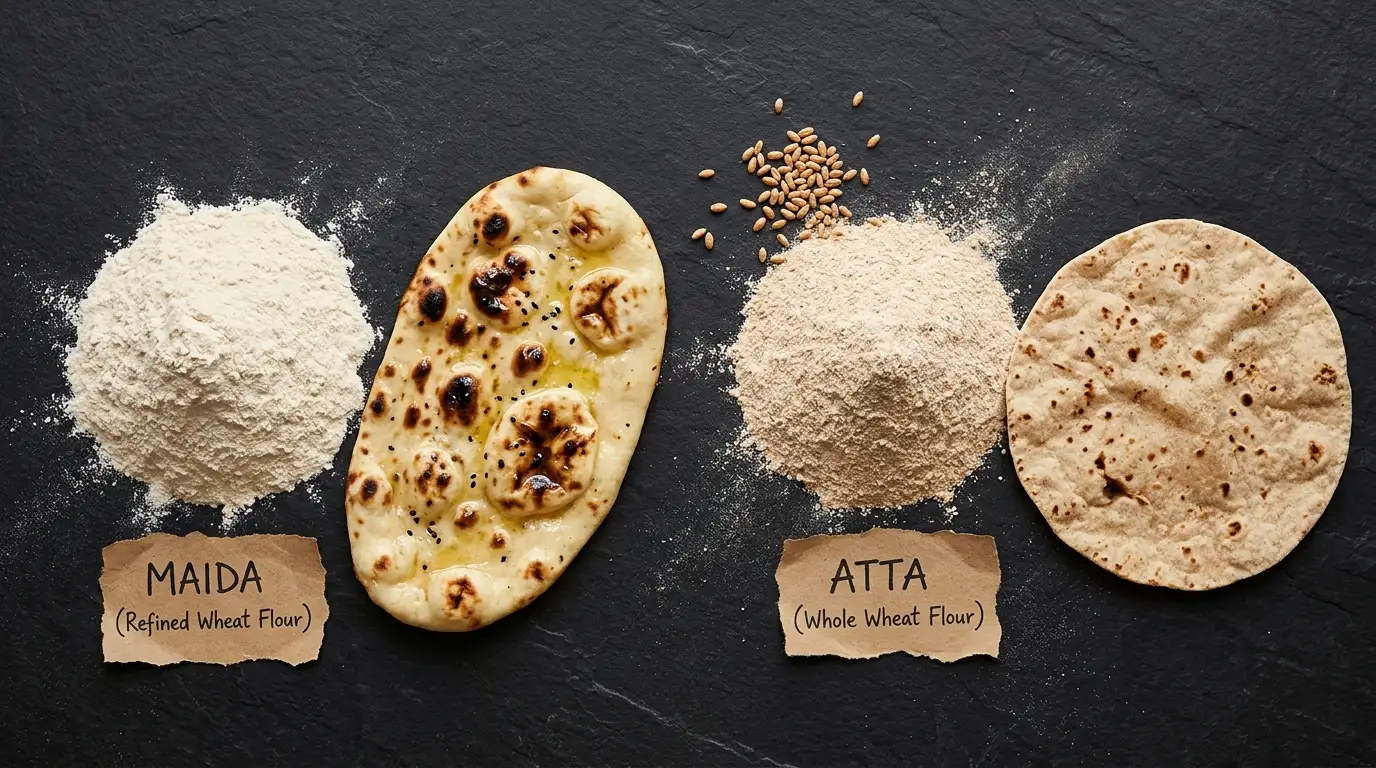
Maida and atta both come from wheat, but they are processed differently. In Pakistan, atta usually refers to whole-wheat flour used for everyday roti and chapati.
| Feature | Maida | Atta |
|---|---|---|
| English name | Refined wheat flour | Whole-wheat flour |
| Processing | Bran and germ are largely removed | More of the grain is retained |
| Texture | Fine and smooth | Usually more granular |
| Fibre | Generally lower | Generally higher |
| Common uses | Cakes, pastries, biscuits and selected breads | Roti, chapati and other whole-wheat recipes |
Atta is generally a better source of dietary fibre because more of the grain is retained. Maida can still be used in a balanced diet, but foods made mainly with refined flour usually provide less fibre than their whole-grain alternatives.
The two flours are not interchangeable in every recipe. Replacing all the maida with atta may change the taste, texture, moisture, and final appearance of the dish.
Is All-Purpose Flour the Same as Maida?
All-purpose flour is often the closest practical equivalent to maida in English-language recipes. Both are commonly used for general cooking and baking.
However, their exact composition can differ. Wheat varieties, protein levels, milling methods, and fortification practices vary between countries and manufacturers. These differences can affect how dough behaves and how baked food turns out.
If a recipe calls for all-purpose flour, maida will often work as a substitute. For recipes where texture is especially important, such as delicate cakes or particular bread recipes, follow the recipe’s flour specifications where possible.
Is Maida Healthy?
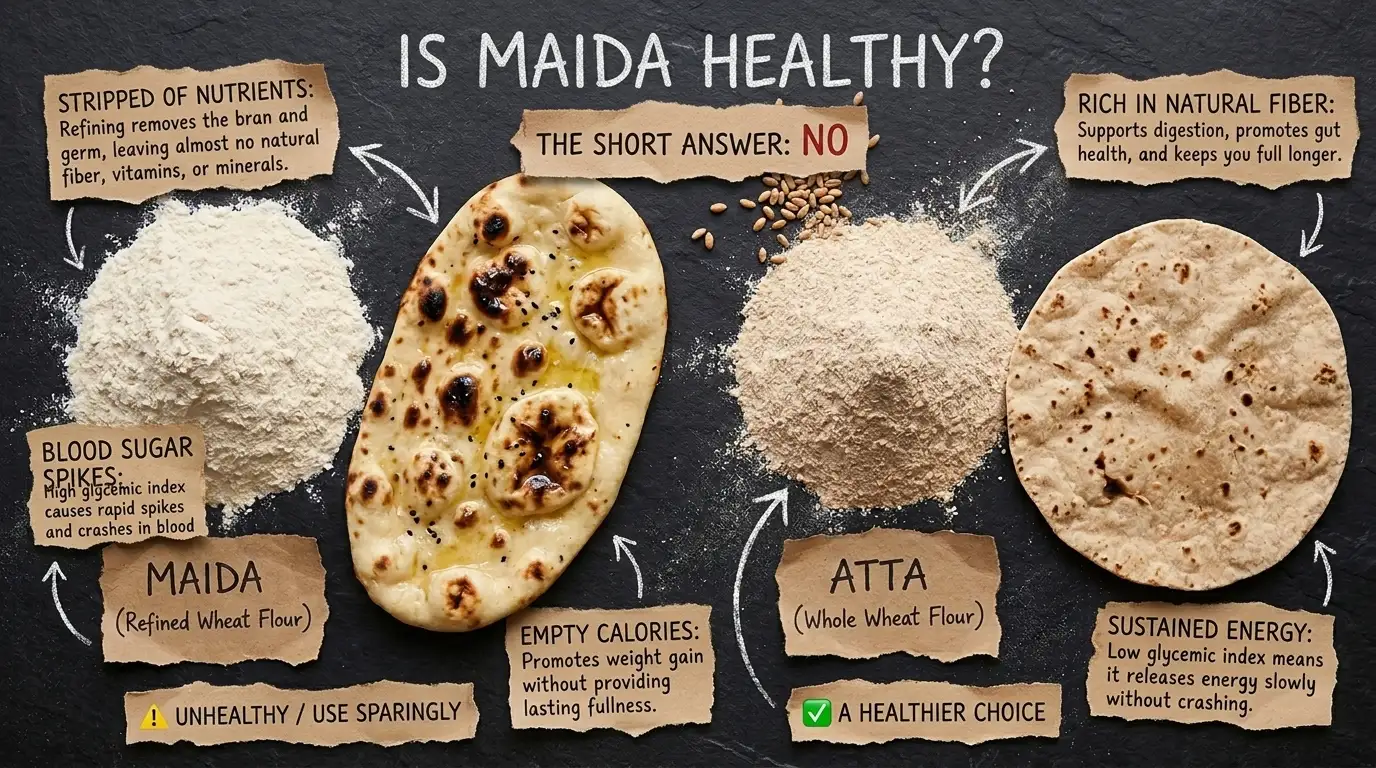
Maida is a refined grain product, so it generally contains less fibre than whole-wheat flour. The nutritional value of a meal also depends on the other ingredients, portion size, and how frequently the food is eaten.
For everyday meals, including whole grains, vegetables, pulses and other fibre-rich foods can help improve dietary variety. You do not necessarily need to eliminate maida; the aim is to maintain a balanced eating pattern.
People managing a medical condition such as diabetes may need individual dietary advice based on their overall diet and health needs.
How to Identify Maida When Buying Groceries
If you are shopping at a supermarket, grocery shop, or online store, these simple checks can help:
- Read the ingredient name: Look for maida or refined wheat flour rather than relying on the front-of-pack wording alone.
- Check the product type: Cake flour, bread flour, self-raising flour, and all-purpose flour may have different properties.
- Review the ingredient list: Some products contain additional ingredients or raising agents.
- Check the date and packaging: Choose a properly sealed pack within its stated date and avoid flour exposed to moisture or pests.
- Store it correctly: Keep flour in a clean, dry, airtight container away from heat and moisture.
If you buy loose flour, use a clean, dry container at home and check that the flour has no signs of moisture, insects, or unusual odour.
For more grocery information, you can also read Grocer.pk’s complete grocery items list in Pakistan and monthly grocery list for Pakistani families.
Frequently Asked Questions
1. What is maida called in English?
Maida is commonly called refined wheat flour. All-purpose flour is another widely used equivalent, while plain flour is common in British English.
2. Is maida called all-purpose flour?
Often, yes. Maida and all-purpose flour are similar and can be used interchangeably in many recipes, but their exact properties may vary by brand and country.
3. What is maida called in American English?
The closest common term in American recipes is usually all-purpose flour. Check the recipe requirements if a particular type of flour is specified.
4. What is maida called in British English?
Plain flour is a common British term for a general-purpose flour without added raising agents. It can be a suitable equivalent for maida in many recipes, although the products may differ.
5. Is maida the same as wheat flour?
Maida is made from wheat, but the phrase “wheat flour” can refer to different types of flour. Refined wheat flour is a clearer description of maida, while whole-wheat flour retains more of the grain.
6. Can I use maida instead of atta?
You can use maida in some recipes that call for atta, but the result may be softer, less fibrous, or otherwise different. For everyday roti and chapati, whole-wheat atta is generally the more suitable choice.
7. Does maida contain gluten?
Yes. Maida is made from wheat and naturally contains gluten, so it is not suitable for people who need to avoid gluten for medical reasons.
8. What should I look for when buying maida?
Check the ingredient name, packaging condition, expiry or best-before date, and storage instructions. For a specific recipe, also check whether it requires all-purpose flour, plain flour, or another flour type.
Final Thoughts
Maida in English is most accurately described as refined wheat flour, while all-purpose flour is a common equivalent in many recipes. Knowing the difference between maida and atta can help you choose the right ingredient for baking, cooking and everyday grocery shopping.
When buying flour, check the label and choose the type that suits your recipe. For regular meals, including whole-wheat flour and other fibre-rich foods can also help maintain a varied, balanced diet.
Syed Abdul Manan is an SEO expert and WordPress specialist with over 10 years of experience in search engine optimization and WordPress development. He holds a Bachelor of Science in Computer Science (BSCS) and is the Founder & CEO of Grocer.pk, a searchable directory of grocery stores, supermarkets, kiryana shops, and online grocery businesses across Pakistan.
With a technical foundation in computer science, he has spent the past decade working on technical SEO, on-page optimization, content strategy, and building fast, well-structured WordPress websites. For more than six years, he has been developing and managing Grocer.pk, which now covers major cities including Lahore, Karachi, Islamabad and Faisalabad, helping people find nearby stores by city, area and category, along with locations, contact details and map links.
Syed Abdul Manan runs Grocer.pk with a professional, quality-focused approach, combining clean site architecture, structured listings and practical grocery guides to serve both shoppers and business owners. His goal is to help local businesses build a stronger online presence and to help users find reliable local information quickly.
Connect with him on LinkedIn.