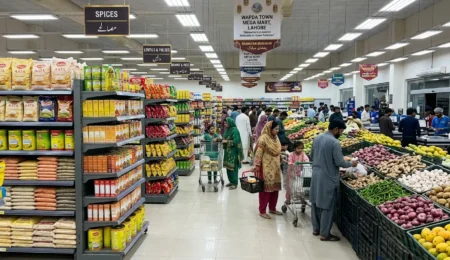
What Are Smart Ways to Save Money on Groceries? A Weekly and Monthly Guide
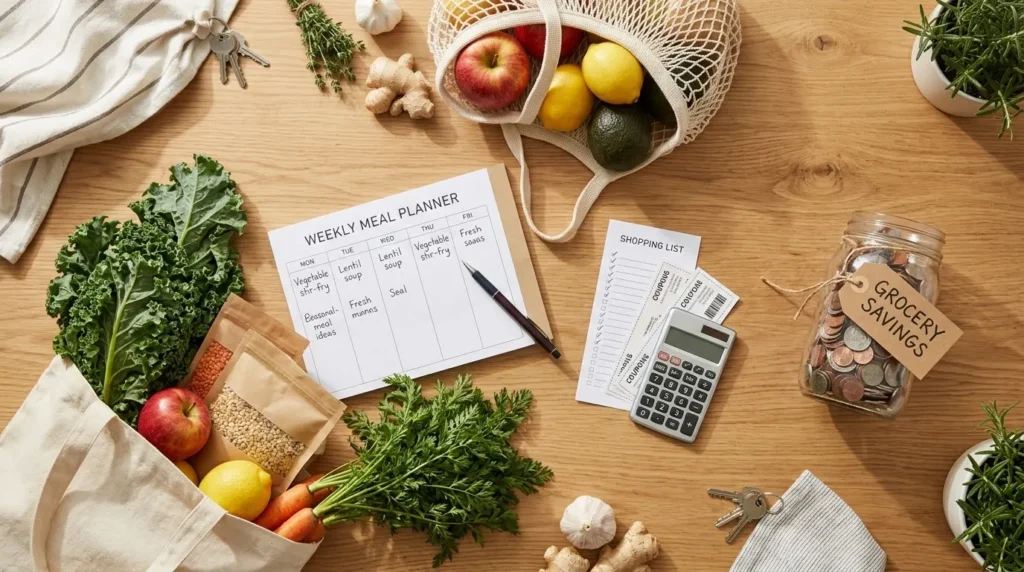
Grocery Shopping Is Getting Expensive. Here Is How to Stay in Control
You visit the grocery store to buy a few essentials, add some extra items to your basket, and discover that the final bill is higher than expected. This can happen when shopping becomes a routine without a clear budget or plan.
For Pakistani households, grocery expenses often include atta, rice, daal, cooking oil, milk, eggs, vegetables, fruit, tea, snacks, and household cleaning products. Managing these purchases can be difficult when prices change, and different family members need different things.
The solution is not always to buy the cheapest product. Sometimes, the bigger saving comes from avoiding duplicate purchases, buying the right quantities, comparing pack sizes, and reducing food waste.
A practical approach is to divide grocery shopping into two parts: monthly shopping for suitable pantry essentials and weekly shopping for fresh food. This makes spending easier to plan and helps you understand where your money goes.
1. Divide Your Grocery Budget into Three Parts
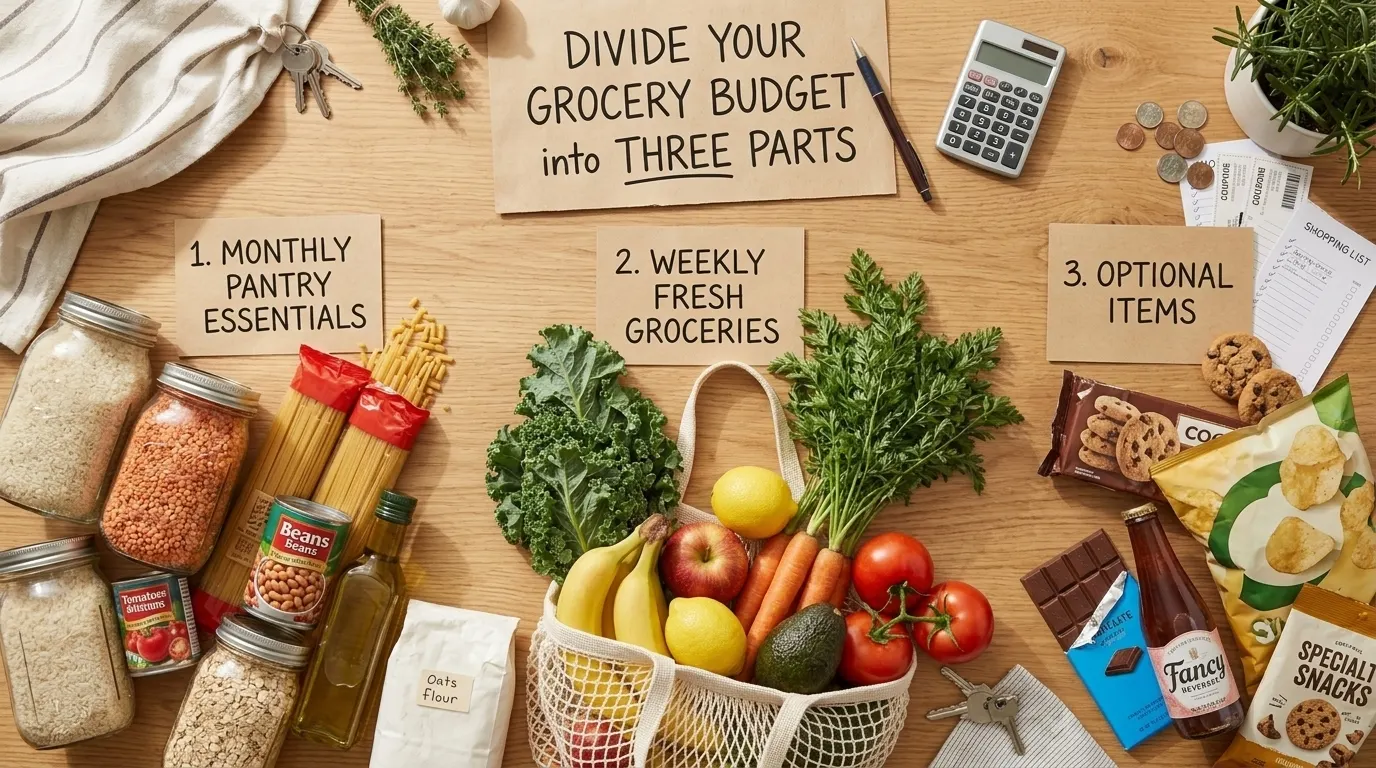
Before visiting a store, separate your shopping list into categories. This prevents essential purchases from getting mixed up with optional items.
Monthly pantry essentials
These may include atta, rice, daal, cooking oil, sugar, salt, tea, and frequently used spices. Buy quantities according to your household’s consumption and available storage space.
Weekly fresh groceries
Milk, bread, eggs, fruit, vegetables, and other perishable foods are often better purchased according to your family’s needs for the coming week. Buying too much fresh food can lead to waste.
Optional items
Biscuits, snacks, soft drinks, desserts, and speciality products can be included in your budget, but decide how much you want to spend on them before shopping.
This division gives you a clearer picture of your spending. It also helps you prioritise essential food and household products instead of using the entire budget on unplanned purchases.
2. Monthly Grocery Shopping: Buy What Your Family Actually Uses

Monthly grocery shopping can save time and help you organise your household supplies. However, buying everything in bulk is not always the best decision.
Start by checking your previous grocery receipts. Notice how much atta, rice, cooking oil, tea, and daal your family used during the last month. Use this information to estimate your next month’s requirements.
For example, if a bag of rice normally lasts your household six weeks, there is no need to purchase another bag every month. If cooking oil regularly runs out before the end of the month, include it in your monthly plan.
A monthly shopping list may include:
- Atta and other regularly used flour
- Rice and daal
- Cooking oil or ghee
- Sugar and salt
- Tea (Tapal Tea)and everyday spices
- Long-lasting pantry essentials
- Laundry and household cleaning products, if these are part of your grocery budget
You can use Grocer.pk’s complete grocery items list in Pakistan to prepare your own list. Remove products that your household does not use and adjust quantities according to family size.
When is bulk buying worth it?
A larger pack may have a lower price per kilogram, litre, or unit. But the saving is real only if you use the product before its quality deteriorates.
Before buying a large quantity, consider the price per unit, expiry or best-before information, storage conditions, and how quickly your household consumes the product.
Buying several discounted items that remain unused is not a smart way to save money. It simply ties up your budget in products you may not need.
3. Weekly Grocery Shopping: Make a Plan Before You Leave Home
Weekly shopping is useful for managing fresh food and topping up the items your household needs most often.
A simple routine can make a noticeable difference.
Check your kitchen first. Look inside the fridge, freezer, and pantry. Make a note of what is running low and what you already have.
Plan a few meals. Decide what your household is likely to eat during the coming week. Choose meals that use ingredients you already own before adding more products to your list.
Write down missing items. Buy the ingredients you need rather than purchasing everything from scratch.
Check your spending afterwards. Keep your receipt and compare the actual bill with your planned budget.
Suppose you already have rice, daal, onions, and tomatoes at home. Instead of buying ingredients for several completely different meals, plan some meals around these staples and purchase only the missing items.
This approach helps reduce duplicate purchases and makes better use of the groceries you already paid for.
4. Compare Unit Prices Instead of Looking Only at the Packet Price
One of the simplest ways to save money is to compare products of different sizes fairly.
Imagine two packets of rice:
- A 1kg packet costs Rs. 350.
- A 2kg packet costs Rs. 660.
The 1kg packet costs Rs. 350 per kilogram, while the 2kg packet costs Rs. 330 per kilogram. The larger pack is cheaper per kilogram by Rs. 20.
However, this does not automatically mean you should always buy the larger pack. If your household cannot use it properly or store it safely, the potential saving may be lost.
Use the same method when comparing cooking oil, green tea, detergent, flour, and other products. Check the quantity as well as the final price, and compare equivalent products whenever possible.
5. Do Not Let Discounts Increase Your Grocery Bill
Discounts can be useful, but they can also encourage unnecessary purchases.
A packet of biscuits or a bottle of sauce may look attractive during a promotion. If you did not need it and would not normally buy it, the discount has still increased your spending.
Before adding a discounted item to your basket, ask yourself three questions:
- Was this product already on my shopping list?
- Is the offer genuinely cheaper than comparable products?
- Will my household use it before it expires or loses quality?
If the answer to these questions is no, leave it on the shelf.
Keep an eye on the prices of the products you regularly buy. Comparing receipts over several weeks can help you identify which offers are genuinely useful rather than relying on promotional labels alone.
6. Reduce Food Waste to Keep More Money in Your Pocket

Food that goes unused or gets thrown away represents money that did not deliver value.
You can reduce waste without changing your entire diet. Start by purchasing realistic quantities and storing food according to the instructions on its packaging.
Keep older suitable products visible so they are easier to use first. Check the fridge before shopping and plan meals around ingredients that need to be used soon.
Fresh vegetables and fruit deserve particular attention. If your family consumes only a small amount of a particular vegetable, buying a large quantity may not be economical even when the price seems attractive.
The same applies to milk, bread and other perishable items. Buy according to expected use rather than assuming that a full fridge is always better.
Store perishable food safely, refrigerate it promptly where required, and follow appropriate food-safety guidance when keeping leftovers.
7. Should You Shop at a Local Grocery Store, Supermarket or Online?
The best place to buy groceries depends on the products you need, your location, and the total cost of shopping.
A local grocery shop may be convenient when you need a few items. A supermarket allows you to compare different brands in one place. A cash-and-carry store may offer larger packs, while online grocery shopping lets you review your basket before checkout.
However, no store type is automatically the cheapest for every product.
Choose five to ten products that your household buys regularly, such as milk, rice, cooking oil, tea, and detergent. Compare the same brands and pack sizes at the retailers available to you. Include delivery fees and transport costs when calculating the total.
Grocer.pk can help you discover local options through its supermarkets directory, grocery stores directory, and online grocery stores directory.
If you live in Lahore, you can also use the grocery stores near me in Lahore guide to explore listed businesses in the city. Confirm current product availability and prices with the retailer before travelling.
8. Track Your Spending with a Simple Monthly Review
You do not need a complicated budgeting system to understand your grocery expenses. A notebook, spreadsheet, or record of receipts can be enough.
At the end of each week, write down how much you spent on groceries. Separate essential food from optional purchases if that makes your spending easier to understand.
At the end of the month, compare the total with your budget. Look for areas where you could make a realistic change.
For example, an illustrative household might set a grocery budget of Rs. 40,000 per month. After reviewing its receipts, the family identifies Rs. 800 in unnecessary snack purchases, Rs. 600 in potential savings from suitable pantry deals, and Rs. 500 worth of avoidable food waste.
If these changes are genuinely achieved, the potential difference would be Rs. 1,900 per month, or Rs. 22,800 over a year.
These figures are examples, not typical savings or guaranteed results. Your actual savings will depend on your household’s needs, prices, and shopping habits.
The important step is to measure your own spending instead of assuming that every money-saving tip will produce the same result.
9. Common Grocery Budget Mistakes to Avoid
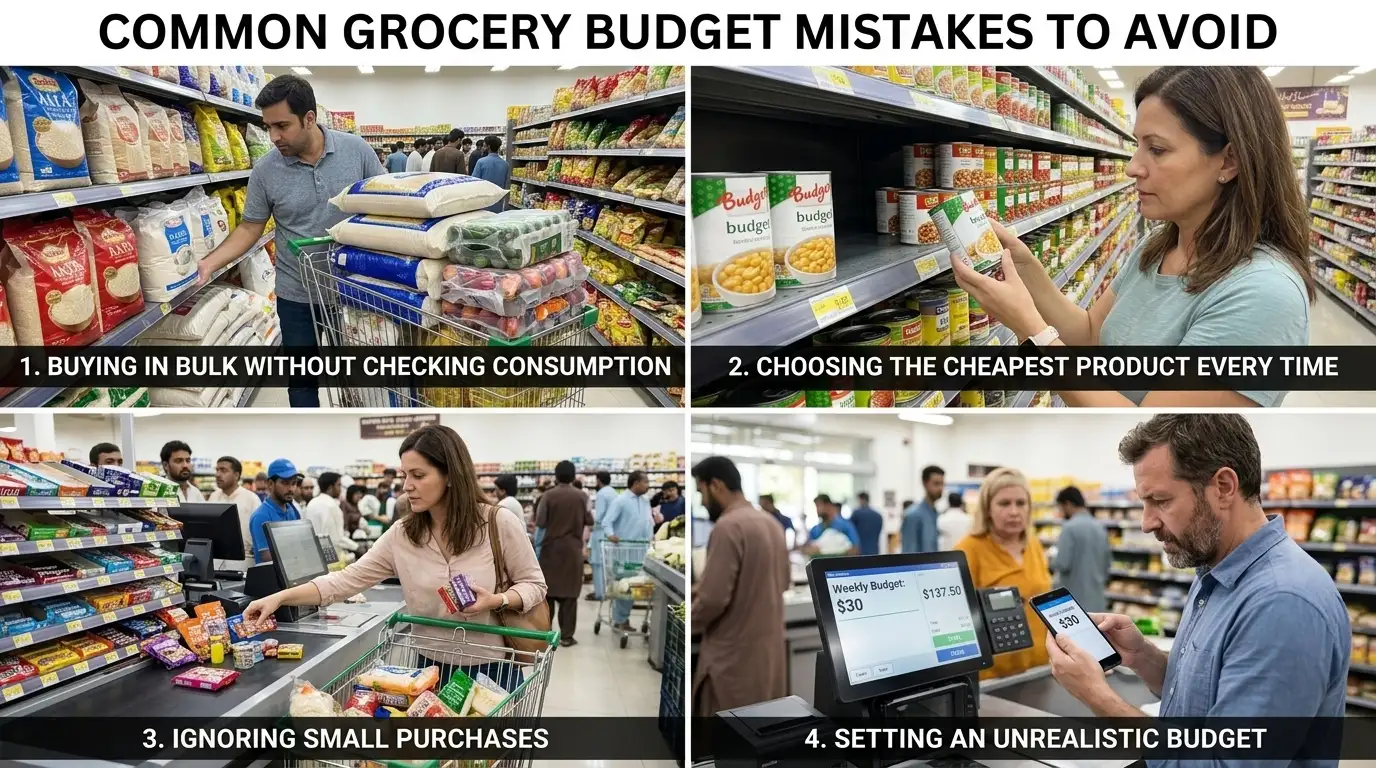
Even people who plan their shopping carefully can make decisions that increase their bills.
Buying in bulk without checking consumption: A large pack is not useful if your family cannot finish it in time.
Choosing the cheapest product every time: Price matters, but so do quantity, quality, ingredients, and suitability for your household.
Ignoring small purchases: Snacks, drinks, and unplanned additions may seem inexpensive individually, but they can add up over several shopping trips.
Setting an unrealistic budget: Your grocery budget should cover necessary food and household needs. A target that is too low may be difficult to maintain.
Making extra trips without a list: Frequent trips can add transport costs and create more opportunities for impulse buying. Combine errands when practical, while still buying fresh food in suitable quantities.
Ignoring storage: Poor storage can cause food to spoil and erase the savings you expected from a discount.
The goal is to spend intentionally, not to make grocery shopping unnecessarily difficult.
10. Your Weekly and Monthly Grocery Checklist
Use this routine as a starting point and adjust it to your family’s needs.
At the beginning of the month
- Set a realistic grocery budget.
- Check pantry supplies.
- Estimate how much atta, rice, daal, oil, and other staples you will need.
- Compare prices for frequently purchased products.
- Buy suitable long-lasting essentials.
Before each weekly shopping trip
- Check the fridge, freezer, and cupboards.
- Plan meals around available ingredients.
- Prepare a list of missing items.
- Estimate how much you can spend.
- Avoid adding unnecessary products.
After shopping
- Store groceries properly.
- Keep the receipt.
- Note any unplanned purchases.
- Use fresh food before it spoils.
At the end of the month
- Calculate your total grocery spending.
- Identify items that were wasted or bought unnecessarily.
- Check which price comparisons helped.
- Adjust next month’s quantities and budget.
For additional planning help, read Grocer.pk’s monthly grocery list for Pakistani families and grocery budget guide for Pakistan.
Frequently Asked Questions
What is the easiest way to save money on groceries?
Check what you already have at home, make a shopping list, set a realistic budget, and compare unit prices. Avoid buying items simply because they are discounted, and review your receipts to identify unnecessary spending.
Is monthly grocery shopping cheaper than weekly shopping?
Not always. Monthly shopping can help organise pantry essentials, while weekly shopping can help manage fresh food and avoid waste. Combining the two approaches often makes it easier to control quantities and spending.
Which grocery items should I buy in bulk?
Atta, rice, daal, cooking oil, tea, and certain household essentials may be suitable if your family uses them regularly and you have appropriate storage. Compare the unit price and expected consumption before purchasing larger packs.
How can I save money on groceries in Pakistan?
Plan your monthly rashan, buy fresh groceries according to weekly needs, compare prices between retailers, reduce food waste, and keep track of receipts. Choose methods that fit your household rather than following every promotion.
Are discounted grocery items always cheaper?
No. Check the actual price, quantity, and unit cost. A discount may still leave a product more expensive than an equivalent option, and buying something unnecessary increases your total spending.
How can I reduce food waste at home?
Plan meals around ingredients you already have, buy realistic quantities, store food properly, and use suitable older items first. Review what was discarded each week and adjust your next shopping list.
Is online grocery shopping better than visiting a store?
It depends on delivery fees, product prices, transport costs, and convenience. Compare the total cost of the same basket before deciding which option works best for you.
Final Thoughts
Saving money on groceries does not require buying the cheapest product every time or avoiding the foods your family enjoys. It requires a better understanding of what your household uses and a practical plan for purchasing it.
Use monthly shopping to organise long-lasting essentials, weekly shopping to manage fresh food, and receipts to track your spending. Compare pack sizes, avoid unnecessary purchases, and reduce food waste.
Small, consistent changes can make grocery spending easier to manage while keeping the focus on your household’s actual needs.
Syed Abdul Manan is an SEO expert and WordPress specialist with over 10 years of experience in search engine optimization and WordPress development. He holds a Bachelor of Science in Computer Science (BSCS) and is the Founder & CEO of Grocer.pk, a searchable directory of grocery stores, supermarkets, kiryana shops, and online grocery businesses across Pakistan.
With a technical foundation in computer science, he has spent the past decade working on technical SEO, on-page optimization, content strategy, and building fast, well-structured WordPress websites. For more than six years, he has been developing and managing Grocer.pk, which now covers major cities including Lahore, Karachi, Islamabad and Faisalabad, helping people find nearby stores by city, area and category, along with locations, contact details and map links.
Syed Abdul Manan runs Grocer.pk with a professional, quality-focused approach, combining clean site architecture, structured listings and practical grocery guides to serve both shoppers and business owners. His goal is to help local businesses build a stronger online presence and to help users find reliable local information quickly.
Connect with him on LinkedIn.