Salt in Pakistan: Types, Uses & Buying Guide
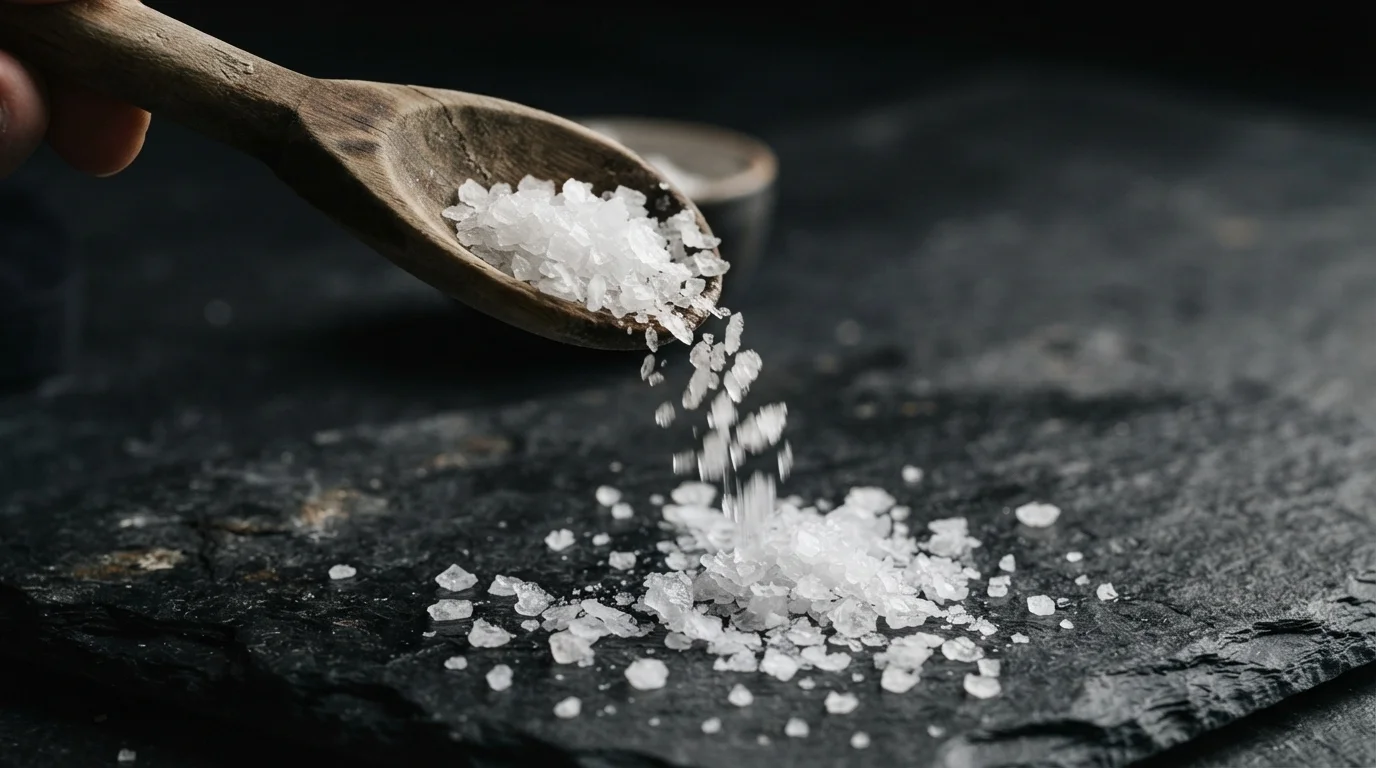
Salt is one of those grocery items that almost every Pakistani kitchen keeps within easy reach. A small amount can change the taste of daal, curry, rice, vegetables, meat, snacks, and homemade pickles. Yet the salt section at a supermarket is no longer limited to one simple white packet.
Today, shoppers can find refined table salt, iodized salt, non-iodized salt, pink rock salt, black salt and other specialty products. Some are intended for everyday cooking, while others are chosen because of their colour, flavour, texture or particular culinary use.
The differences are worth understanding before you buy. A packet labelled “salt” does not necessarily tell you everything you need to know about the product.
What Is Salt?
Salt is a mineral compound commonly known as sodium chloride. Food-grade salt is widely used to season food and is an important ingredient in many recipes.
In Pakistan, household salt can be sold in refined, iodized, and specialty forms. The Pakistan Standards and Quality Control Authority (PSQCA) has a specific Pakistan Standard for iodized food-grade salt, and lists iodized salt among compulsory food products subject to Pakistan Standards.
The salt available in grocery stores can differ in:
- Processing
- Crystal size
- Colour
- Texture
- Iodization
- Intended use
- Pack size
Understanding these differences makes grocery shopping much easier.
Common Types of Salt in Pakistan
The exact selection varies from shop to shop, but shoppers commonly encounter:
- Refined table salt
- Iodized salt
- Non-iodized salt
- Pink Himalayan or pink rock salt
- Black salt
- Coarse salt
- Fine salt
- Salt powder
Some of these describe the way salt is processed, while others describe colour, texture or culinary style. That is why two products can both be called salt but still be quite different in appearance and use.
Iodized Salt in Pakistan
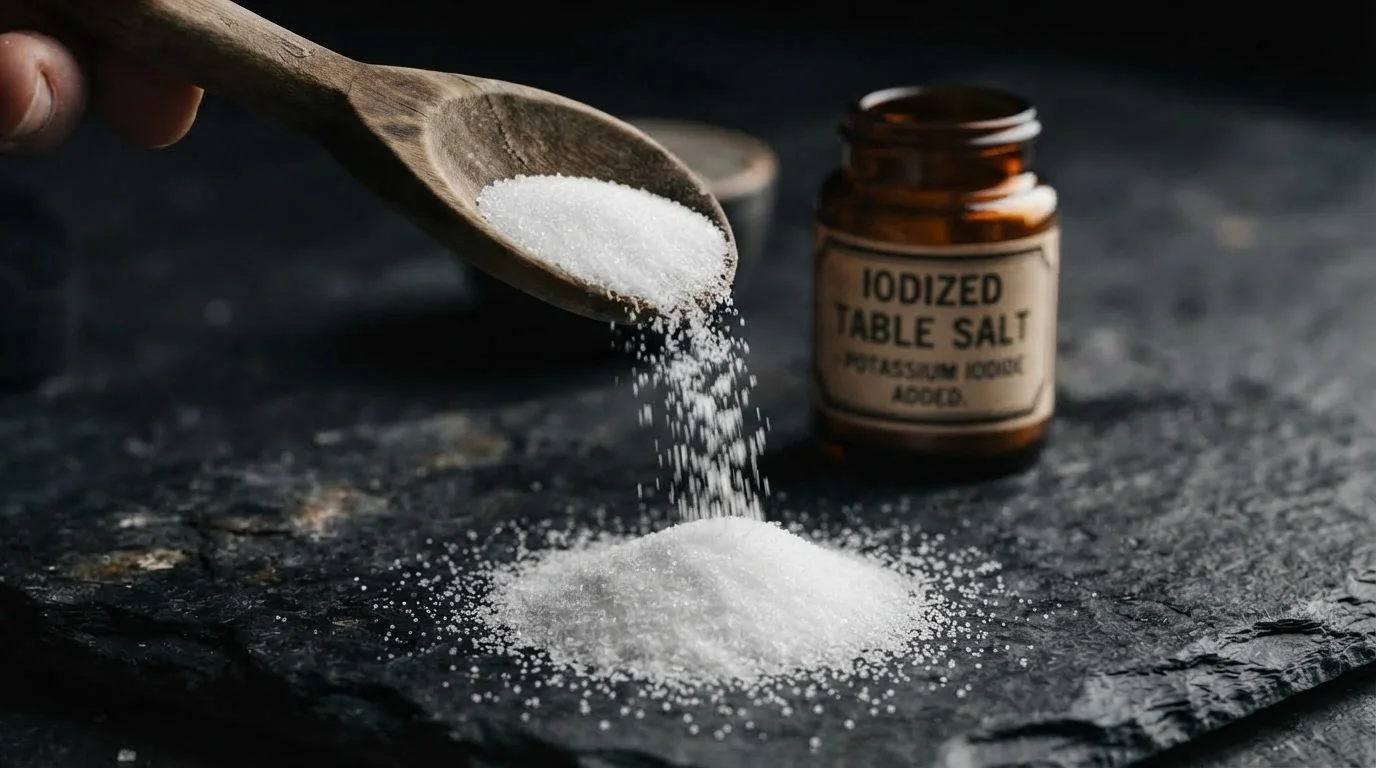
Iodized salt is ordinary food-grade salt to which iodine has been added.
It is one of the most important distinctions to understand when buying household salt because iodine is a required nutrient, and iodized salt is used as a practical way of delivering iodine through a commonly consumed food.
PSQCA lists Iodized Food Grade Salt under Pakistan Standard PS 1669-2008 and includes iodized salt in its list of compulsory food products.
For everyday household shopping, check the product label rather than assuming that every white salt packet is iodized.
What to check on iodized salt
Look for:
- The words “iodized salt”
- Product information on the package
- Net weight
- Manufacturer details
- Date information where applicable
- Properly sealed packaging
If your household specifically wants iodized salt, make sure the packet actually identifies itself as iodized.
Refined Table Salt in Pakistan
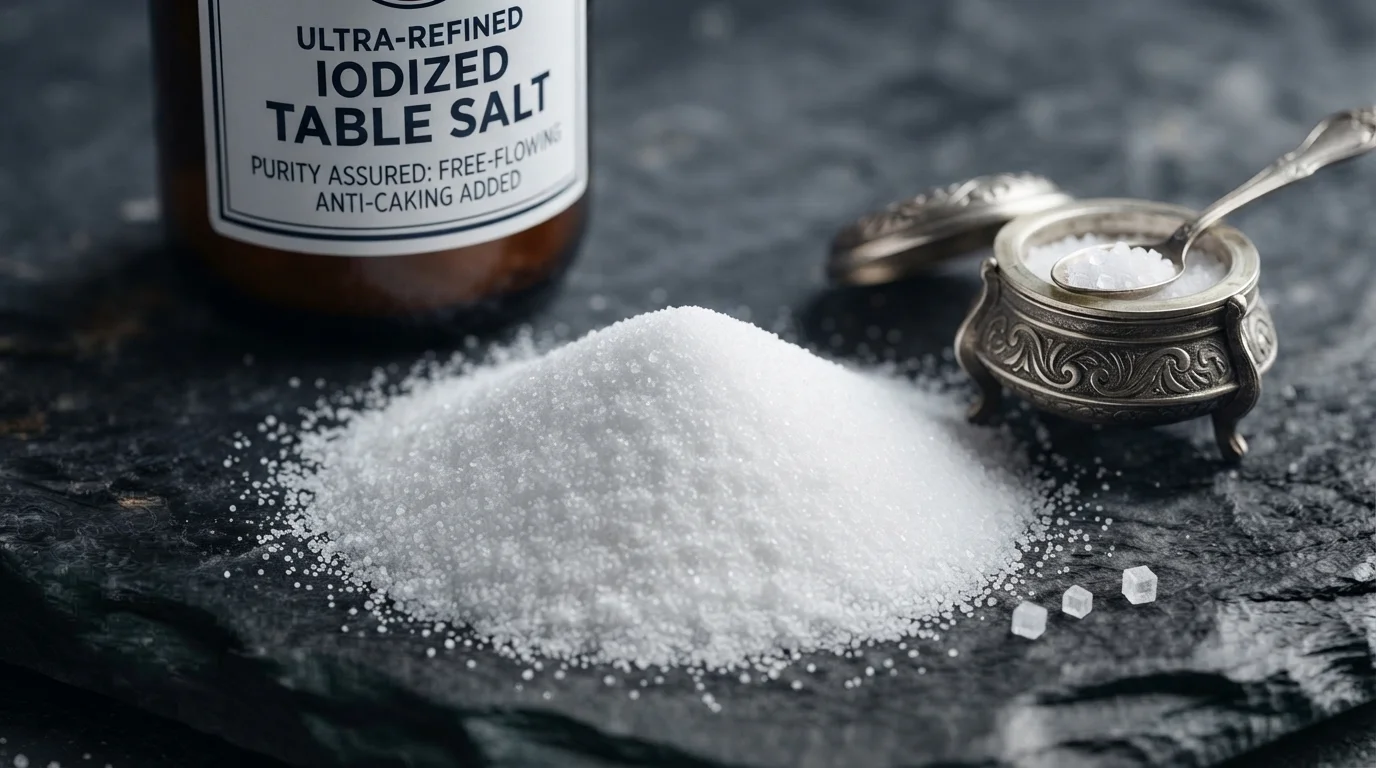
Refined table salt is the familiar fine white salt used for everyday cooking.
It is commonly sold in household packs and can be used for:
- Daal
- Salan
- Rice
- Vegetables
- Meat
- Eggs
- Snacks
- Soups
- Homemade sauces
- General seasoning
Many refined salts are available in iodized versions.
The important point when shopping is to distinguish the product type and label rather than judging salt quality only by how white or fine it looks.
Non-Iodized Salt in Pakistan
Non-iodized salt is salt that has not been fortified with added iodine.
It can appear in certain culinary products and specialty applications, but it should not automatically be considered better than iodized salt.
If you are choosing salt for normal household use and want an iodized product, check the label carefully because appearance alone will not reliably tell you whether iodine has been added.
Pink Salt in Pakistan
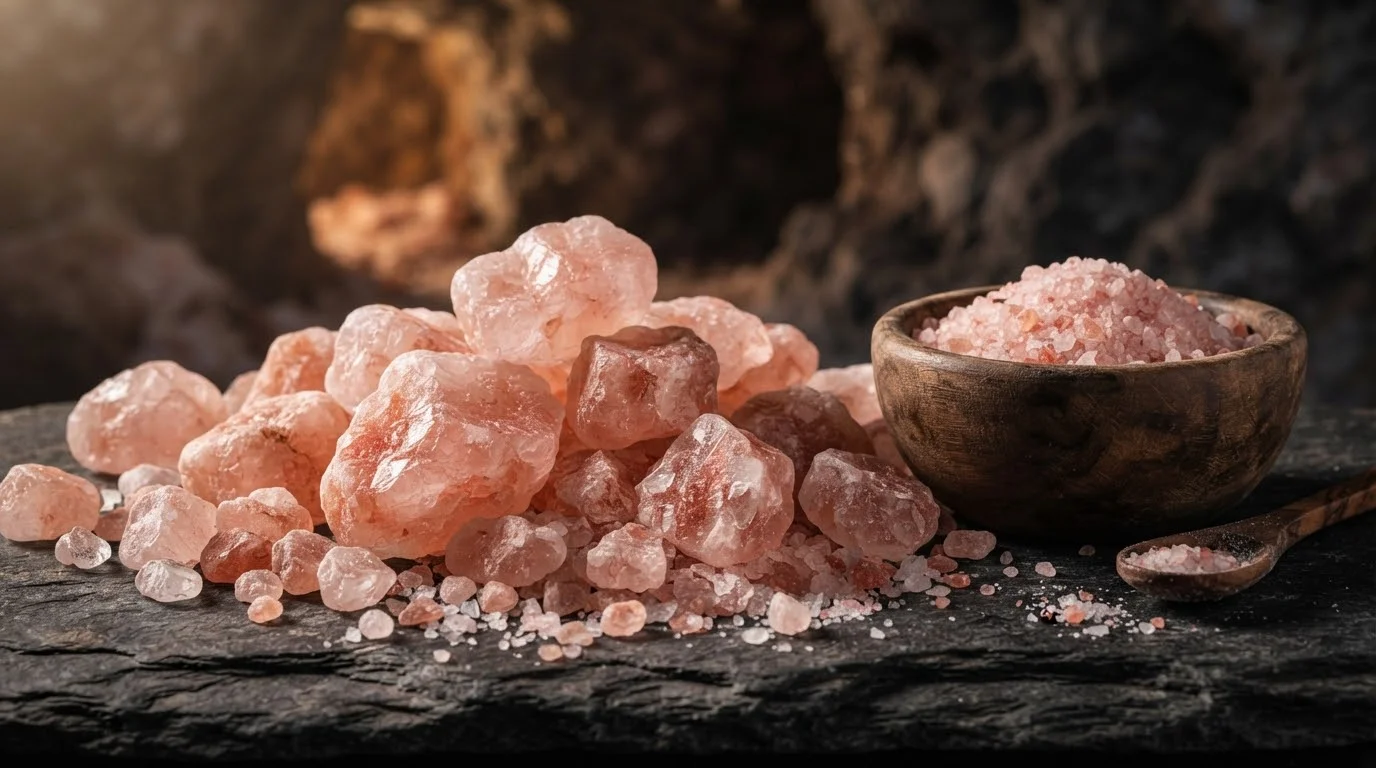
Pink salt has become a familiar product in Pakistani grocery stores.
Pakistan’s PSQCA standards list Pink Rock Salt (Food Grade) under PS 5605-2023.
Retail grocery listings in Pakistan show pink salt in different forms, including fine salt and regular household packs. Some products are marketed specifically as Himalayan or pink salt.
The colour comes from mineral content and the characteristics of the salt deposit. However, shoppers should not assume that a pink colour automatically makes one salt nutritionally superior to another.
For grocery purposes, pink salt can be selected for its appearance, flavour, or culinary preference.
Common uses of pink salt
Pink salt can be used for:
- Everyday cooking
- Seasoning
- Grilling
- Salads
- Snacks
- Finishing dishes
- Table use
Some products are finely ground, while others are available as coarse crystals or larger pieces.
Black Salt in Pakistan
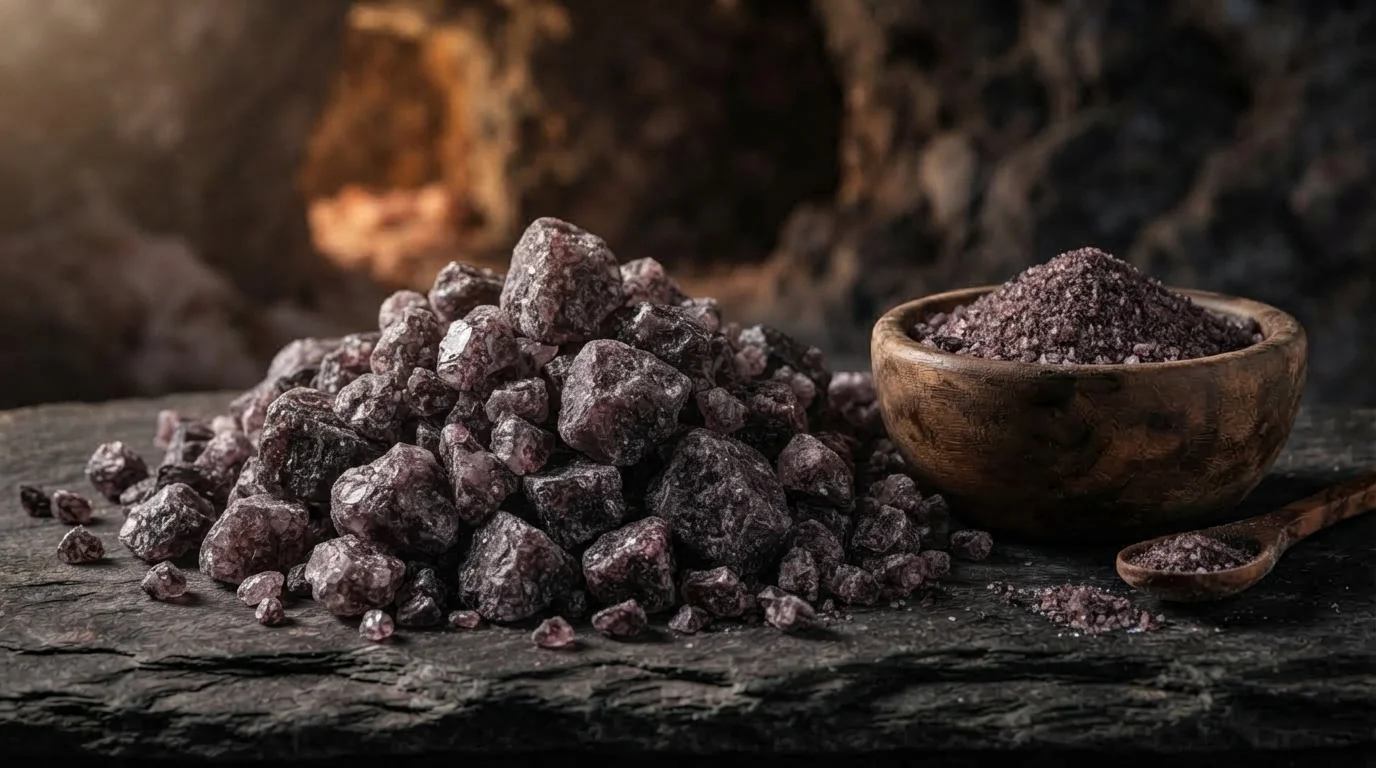
Black salt, commonly called kala namak, is another familiar South Asian seasoning.
It has a distinctive sulphurous aroma and flavour that makes it different from ordinary white salt.
Black salt is often used in:
- Chaat
- Fruit chaat
- Raita
- Salads
- Chutneys
- Some drinks
- Spice mixtures
A small amount can have a noticeable effect on flavour.
Black salt should therefore be treated as a specialty seasoning rather than a direct replacement for ordinary household salt in every recipe.
Current Pakistani supermarket listings show black salt powder as a separate grocery product from white, refined, and pink salt.
Fine Salt vs Coarse Salt in Pakistan
The size of the salt crystals can affect how quickly they dissolve and how easy they are to measure.
Fine Salt in Pakistan
Fine salt is convenient for:
- Cooking
- Baking
- Table use
- Soups
- Sauces
- General seasoning
Because the crystals are small, it is easy to distribute throughout a dish.
Coarse Salt in Pakistan
Coarse salt has larger crystals and can be useful for:
- Grilling
- Certain cooking techniques
- Finishing dishes
- Salt grinders
- Specialty recipes
Do not assume that one spoon of coarse salt and one spoon of fine salt will always behave identically in a recipe. Crystal size affects how much salt fits into a given volume.
Salt for Pakistani Cooking
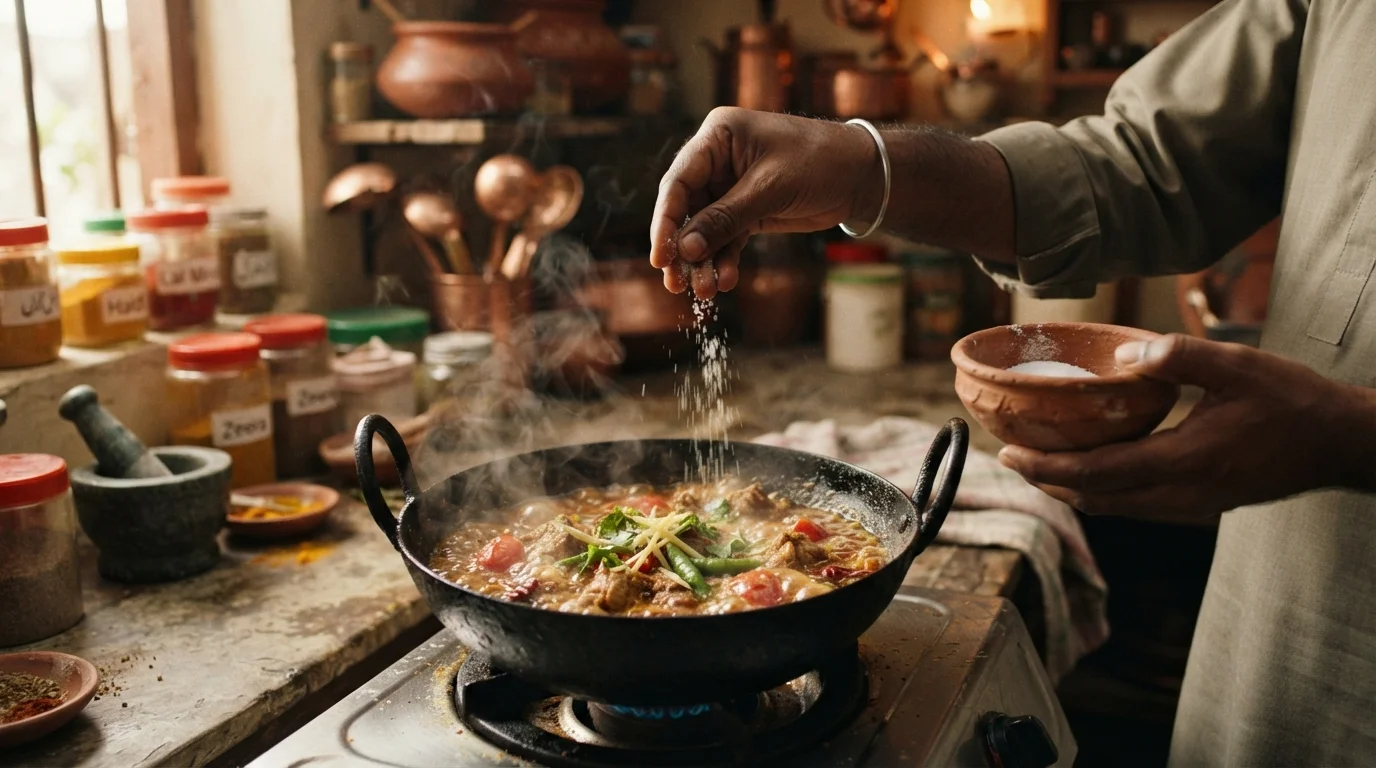
Salt is used throughout Pakistani cooking.
It appears in dishes such as:
- Daal
- Biryani
- Pulao
- Karahi
- Qorma
- Nihari
- Haleem
- Sabzi
- Aloo dishes
- Pakoras
- Chaat
- Raita
- Chutneys
- Pickles
- Homemade sauces
The amount required varies significantly from recipe to recipe.
For many dishes, salt is added during cooking and then adjusted near the end. This makes it easier to control the final taste.
Salt for Daal
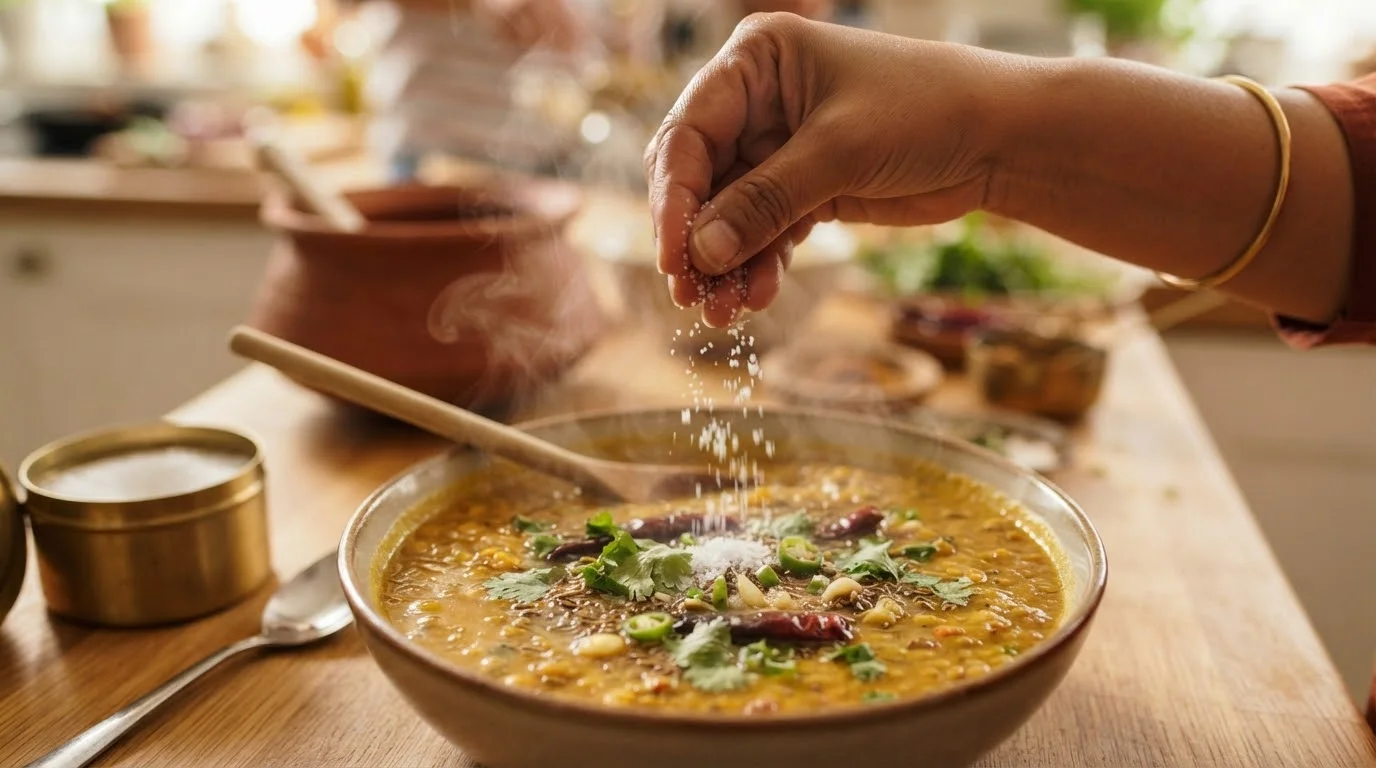
Daal is one of the simplest examples of how salt is used in Pakistani cooking.
Whether you are making masoor, moong, chana, or mash daal, salt is generally part of the seasoning.
However, the amount depends on:
- Quantity of daal
- Water used
- Other salty ingredients
- Cooking method
- Personal taste
- Whether the daal is served with rice or another salted dish
This is why buying a specialty salt does not automatically improve a daal recipe. The more important decision is using an appropriate amount and seasoning the dish properly.
Salt for Rice and Biryani
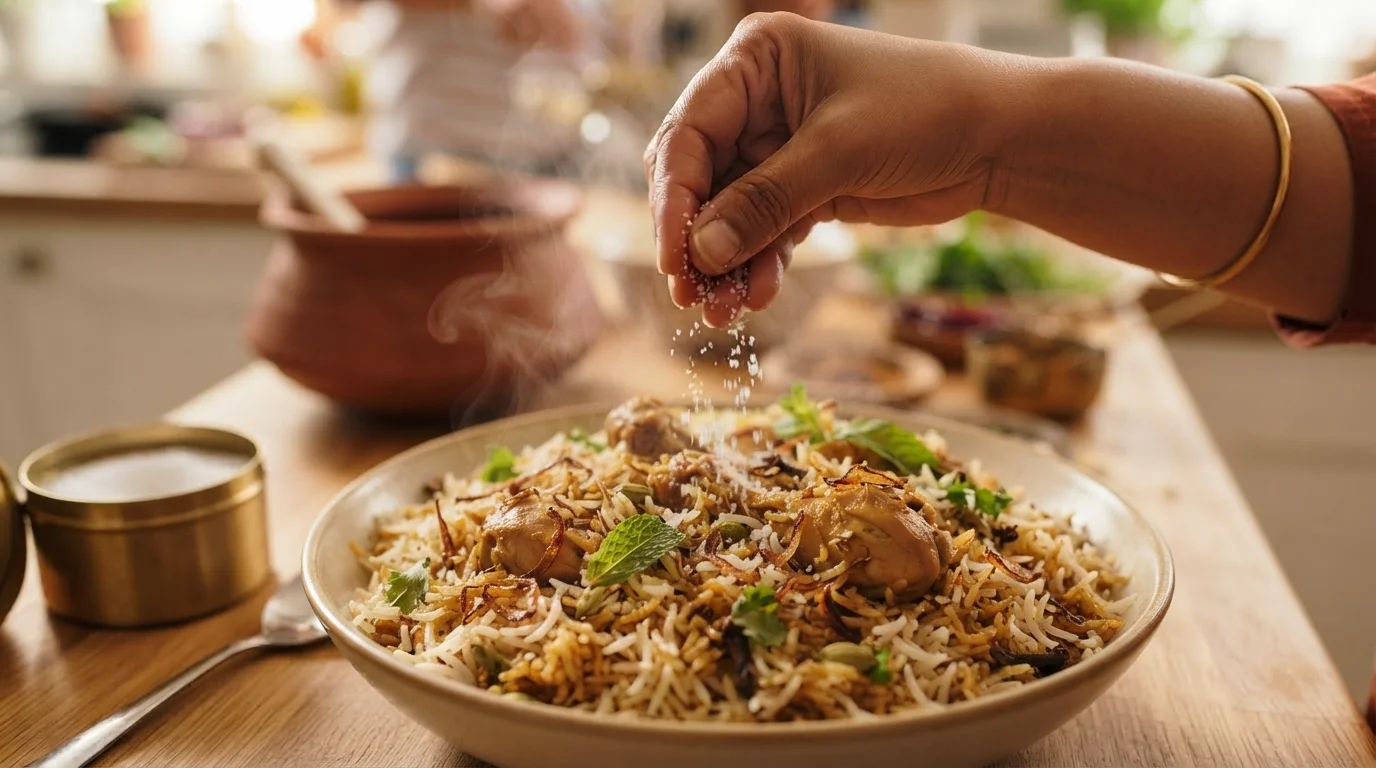
Salt plays an important role in rice dishes because plain rice itself has very little flavour.
For biryani, pulao and other rice preparations, salt can be added at different stages depending on the recipe.
When cooking rice separately, many cooks season the cooking water. When preparing a complete dish such as biryani, the salt is distributed through the overall recipe.
Fine salt is convenient because it dissolves quickly and distributes easily.
Salt for Pickles and Preserving
Salt has a long history of use in food preservation.
In traditional Pakistani cooking, salt can be part of preparations such as pickles and other preserved foods.
The exact amount matters because salt is not simply added for taste in these preparations. It can form part of the preservation method and the overall recipe.
For homemade pickles, it is better to follow a tested recipe rather than estimating the salt quantity based only on taste.
Salt for Chaat and Snacks
Black salt is particularly familiar in Pakistani and South Asian snack preparations.
A little black salt can be added to:
- Fruit chaat
- Chana chaat
- Raita
- Chutney
- Lemon drinks
- Salads
- Spiced snacks
Its flavour is noticeably different from regular table salt, which is why it is often used alongside other spices rather than as the only salt in a dish.
Salt for Baking
Salt is used in many baking recipes, even though the final product may not taste salty.
A small quantity can balance flavours and complement sweetness.
In baking, accurate measurement matters because the amount is usually much smaller than the quantities used in cooking.
Fine salt is generally easier to distribute evenly through flour and other dry ingredients.
If a recipe specifies a particular type or measurement, follow the recipe rather than changing the salt type casually.
How to Choose Salt at the Grocery Store
The best salt depends on what you need it for.
For everyday household cooking
A properly labelled food-grade table salt or iodized salt can be a practical choice.
For chaat and raita
Black salt can add the characteristic flavour associated with these dishes.
For specialty cooking
Pink or coarse salt may suit particular recipes or serving styles.
For baking
Fine salt is generally easier to measure and mix evenly.
For a salt grinder
Choose a product specifically suitable for grinding if the packet indicates that it is intended for that purpose.
The goal is not to collect every type of salt. Keep the products that your household actually uses.
What to Check on a Salt Packet
A few seconds of label checking can prevent confusion.
1. Product type
Is it:
- Iodized salt?
- Refined salt?
- Pink salt?
- Black salt?
- Coarse salt?
- Fine salt?
2. Net weight
Compare the actual weight across different packs.
3. Food-grade information
Make sure the product is intended for food use.
4. Manufacturer information
Packaged salt should provide relevant manufacturer or supplier details.
5. Packaging condition
Avoid packets that are torn, wet, or visibly damaged.
6. Date information
Check the information printed on the package where applicable.
7. Iodization
If you specifically want iodized salt, look for the word iodized on the package rather than assuming that ordinary-looking white salt contains iodine.
How Pack Size Changes the Price
Salt is relatively inexpensive compared with many grocery products, but pack size can still make a difference.
For example, compare:
Rs.80 for 800g
with:
Rs.120 for 1.5kg
The total prices alone do not tell you which is cheaper.
For the first product:
Rs.80 ÷ 0.8kg = Rs.100 per kg
For the second:
Rs.120 ÷ 1.5kg = Rs.80 per kg
The larger pack therefore has the lower price per kilogram in this example.
The same method can be used when comparing refined, iodized, pink, or other salts.
For more grocery comparison techniques, see How to Compare Grocery Prices Before Shopping.
Salt Prices Can Vary Between Products
There is no single price that represents every type of salt in Pakistan.
Current Pakistani supermarket listings show ordinary refined and iodized salts alongside pink and black salt products, with different pack sizes and prices. For example, one current Carrefour in Lahore and Kifayah Supermarket in Karachi listing shows several 800g products across different brands and varieties, while a Lahore grocery retailer lists white, black, refined, iodized, and pink salt separately.
That difference is important when researching or comparing salt prices.
A useful comparison should always identify:
Type + brand + pack size + retailer + date
A 200g black salt pack should not be compared directly with an 800g iodized salt pack simply because both are labelled “salt.”
Salt Storage at Home
Salt is easy to store, but moisture can cause problems.
Keep salt:
- In a dry place
- Away from steam
- Away from direct water exposure
- In a clean container
- Properly sealed after opening
A container with a secure lid is particularly useful for fine salt because moisture can cause clumping.
Do not keep an open salt container directly beside a kettle, stove, or sink if it is regularly exposed to steam or splashes.
Does Salt Expire?
Salt itself is a very stable mineral, but packaged food products can still carry date and storage information.
More importantly, specialty salts and blended products may contain additional ingredients or have specific storage instructions.
Always follow the information printed on the product packaging.
For ordinary household salt, keeping it dry and protected from contamination is more important than treating it like a highly perishable grocery item.
Iodized Salt vs Pink Salt
This is one of the most common comparisons shoppers make.
The two products can differ in processing, colour, and whether iodine has been added.
The key point is that pink colour does not automatically mean iodized.
If iodine is an important consideration for your household, read the package and specifically check whether the product is identified as iodized.
Pink salt can still be a useful culinary product, but colour alone should not be used to judge its nutritional characteristics.
Iodized Salt vs Non-Iodized Salt
The main distinction is the addition of iodine.
Iodized salt is specifically formulated with added iodine, while non-iodized salt does not have that added iodine.
For everyday grocery shopping, consumers who want iodized salt should check the package instead of relying on the product’s appearance.
Pakistan’s food standards framework specifically recognizes iodized food-grade salt under PS 1669-2008.
Is Pink Salt Healthier Than Regular Salt?
It is better not to choose salt solely on the assumption that a pink colour makes it healthier.
Pink salt and regular table salt are both sources of sodium, and the practical differences between products can include processing, crystal size and mineral composition.
If you are choosing salt for a particular dietary or medical reason, follow appropriate professional guidance rather than relying on marketing claims printed on a packet.
For ordinary grocery shopping, focus on the product type, label, intended use and quantity.
Is Black Salt the Same as Pink Salt?
No.
Black salt and pink salt are different products with different colours, aromas and flavours.
Black salt is particularly recognizable for its distinctive sulphurous smell and is widely used in South Asian seasoning.
Pink salt has a different appearance and is commonly sold as pink rock or Himalayan-style salt.
They can both be used in cooking, but they are not interchangeable in every recipe.
How Much Salt Should You Keep at Home?
Salt is used in small quantities compared with products such as flour, rice or cooking oil.
For most households, there is little reason to store a very large quantity.
One or two appropriate packs can usually be enough, depending on household size and consumption.
If you use several varieties, such as regular iodized salt and black salt, keep separate containers and label them clearly.
This avoids accidentally using a specialty seasoning when a recipe requires ordinary salt.
A Practical Salt Shopping Checklist
Before buying salt, check:
- What type of salt do I need?
- Do I want iodized or non-iodized salt?
- Is the product food-grade?
- What is the net weight?
- Is the packet sealed and dry?
- Am I buying fine or coarse salt?
- Is this pink, black, or regular salt?
- What is the price per kilogram?
- Does the product have any special storage instructions?
- Am I buying it for everyday cooking or a specific recipe?
This takes very little time but makes comparisons much more useful.
Where to Buy Salt in Pakistan
Salt is widely available through:
- Supermarkets
- Grocery stores
- Kiryana stores
- Cash and carry stores
- Online grocery stores
- Specialty food retailers
Small neighborhood shops will often carry everyday table and iodized salt, while larger supermarkets may offer a broader range of pink, black, coarse, and specialty products.
Online grocery stores can be particularly useful when comparing pack sizes and varieties before placing an order.
If you are searching for a specific product, use the exact term:
- Iodized salt
- Refined salt
- Pink salt
- Black salt
- Coarse salt
- Fine salt
This is more useful than searching only for “salt.”
Salt in a Pakistani Pantry
Salt is one of the simplest pantry staples, but the right quantity and variety depend on the household.
A practical pantry might contain:
- One regular household salt
- An iodized option if that is your preferred everyday salt
- Black salt if you regularly prepare chaat or raita
- Pink or specialty salt if your recipes or serving preferences call for it
There is no need to keep every type available in the market.
The better approach is to stock the salt varieties that actually appear in your cooking.
This also fits naturally with a broader Pakistani pantry. Alongside salt, households commonly keep atta, rice, daal, cooking oil or ghee, sugar, spices, and tea. You can see the broader list in Pakistani Pantry Staples: What to Keep at Home.
Salt and Your Grocery Budget
Salt usually represents a small part of a household grocery bill, but it is still useful to compare it properly.
When buying groceries regularly, small differences can add up across many products.
Rather than looking only at the total price, compare the unit cost:
Price ÷ weight = price per kilogram
This works particularly well when two brands sell salt in different pack sizes.
For household budgeting, it is also useful to track how frequently you actually replace the packet. A product that costs slightly more but lasts considerably longer may have a different impact on your monthly shopping than its shelf price suggests.
Frequently Asked Questions
What types of salt are available in Pakistan?
Common options include refined table salt, iodized salt, non-iodized salt, pink salt, black salt, fine salt, and coarse salt. Availability varies between retailers.
Which salt is commonly used for everyday cooking?
Fine table salt or iodized salt is a practical everyday choice for many households. The specific product should be selected according to the household’s preferences and the information on the package.
What is black salt used for?
Black salt, or kala namak, is commonly used in chaat, raita, salads, chutneys, fruit chaat, and other South Asian preparations where its distinctive flavour is wanted.
What is pink salt used for?
Pink salt can be used for general cooking, seasoning, grilling, and finishing dishes. It is available in different textures and pack sizes.
Is pink salt the same as Himalayan salt?
Products marketed as pink or Himalayan salt generally refer to pink rock salt associated with Pakistan’s Salt Range. However, shoppers should check the product label for the exact description and origin rather than relying only on the word “Himalayan.”
Is iodized salt available in Pakistan?
Yes. Iodized food-grade salt is a recognized Pakistan Standard, and iodized salt is also listed among compulsory food products under PSQCA’s standards framework.
Is black salt healthier than regular salt?
Black salt should not automatically be considered healthier simply because it is a different colour or has a distinctive flavour. It is still a salt product and should be used appropriately.
Can pink salt replace iodized salt?
That depends on the specific product. Pink colour alone does not tell you whether iodine has been added. If you specifically want iodized salt, check the product label for an iodization claim.
Which salt is best for baking?
Fine salt is generally convenient for baking because it distributes easily through dry ingredients. Always follow the recipe when a specific type or measurement is given.
How should salt be stored?
Keep salt sealed in a clean, dry place away from water and steam. A dry pantry or cupboard is generally suitable.
Should I buy a large pack of salt?
It depends on household consumption and storage. Because salt is normally used in small quantities, buying a very large pack is not necessary for every household. Compare the price per kilogram and choose a quantity you can store properly.
Final Takeaway
Salt may be a small item on a grocery list, but choosing the right variety can make shopping and cooking easier.
Iodized and refined table salt are practical choices for everyday kitchen use. Pink salt is widely available as a specialty and cooking salt, while black salt brings a distinctive flavour to chaat, raita, and other South Asian foods. Fine and coarse salts also have different practical uses.
When buying salt in Pakistan, look beyond the colour of the crystals. Check the type, iodization, food-grade information, net weight, packaging, and price per kilogram.
The simplest rule is also the most useful: buy the salt that matches how you actually cook. There is no need to keep every variety in the pantry when one or two well-chosen products can cover your household’s normal needs.
Syed Abdul Manan is an SEO expert and WordPress specialist with over 10 years of experience in search engine optimization and WordPress development. He holds a Bachelor of Science in Computer Science (BSCS) and is the Founder & CEO of Grocer.pk, a searchable directory of grocery stores, supermarkets, kiryana shops, and online grocery businesses across Pakistan.
With a technical foundation in computer science, he has spent the past decade working on technical SEO, on-page optimization, content strategy, and building fast, well-structured WordPress websites. For more than six years, he has been developing and managing Grocer.pk, which now covers major cities including Lahore, Karachi, Islamabad and Faisalabad, helping people find nearby stores by city, area and category, along with locations, contact details and map links.
Syed Abdul Manan runs Grocer.pk with a professional, quality-focused approach, combining clean site architecture, structured listings and practical grocery guides to serve both shoppers and business owners. His goal is to help local businesses build a stronger online presence and to help users find reliable local information quickly.
Connect with him on LinkedIn.