Suji (Semolina) in Pakistan: Types, Uses & Buying Guide
Suji is a familiar ingredient in Pakistani kitchens, especially for making suji halwa, desserts, and selected breakfast dishes. It is also used in some bakery products and pasta. Although most people recognise it by its grainy texture, suji is available in different levels of fineness, and choosing the right one can make a noticeable difference in cooking.
You may see it labelled as suji, sooji, semolina, or rava in grocery stores. These names are often used for similar wheat-based products, but the texture and intended use can vary between brands and products.
Whether you are buying suji for traditional halwa, a savoury recipe, or home baking, understanding its varieties and checking the packaging can help you make a better choice.
What Is Suji (Semolina)?
Suji, commonly called semolina in English, is a wheat product made by grinding and sifting cleaned wheat. Unlike very fine flour such as maida, it generally has a granular texture.
The Punjab Pure Food Regulations, 2018 describe suji or semolina as a product prepared by grinding and bolting cleaned wheat to a specified fineness. The regulations also include quality requirements relating to moisture, acidity, and other characteristics.
Suji is not the same as ordinary wheat flour. Its particles are generally larger, which gives it a different texture when cooked.
In Pakistan, suji is commonly used in traditional sweets and everyday cooking. Its neutral wheat flavour also makes it suitable for both sweet and savoury recipes.
Different Types of Suji Available in Pakistan
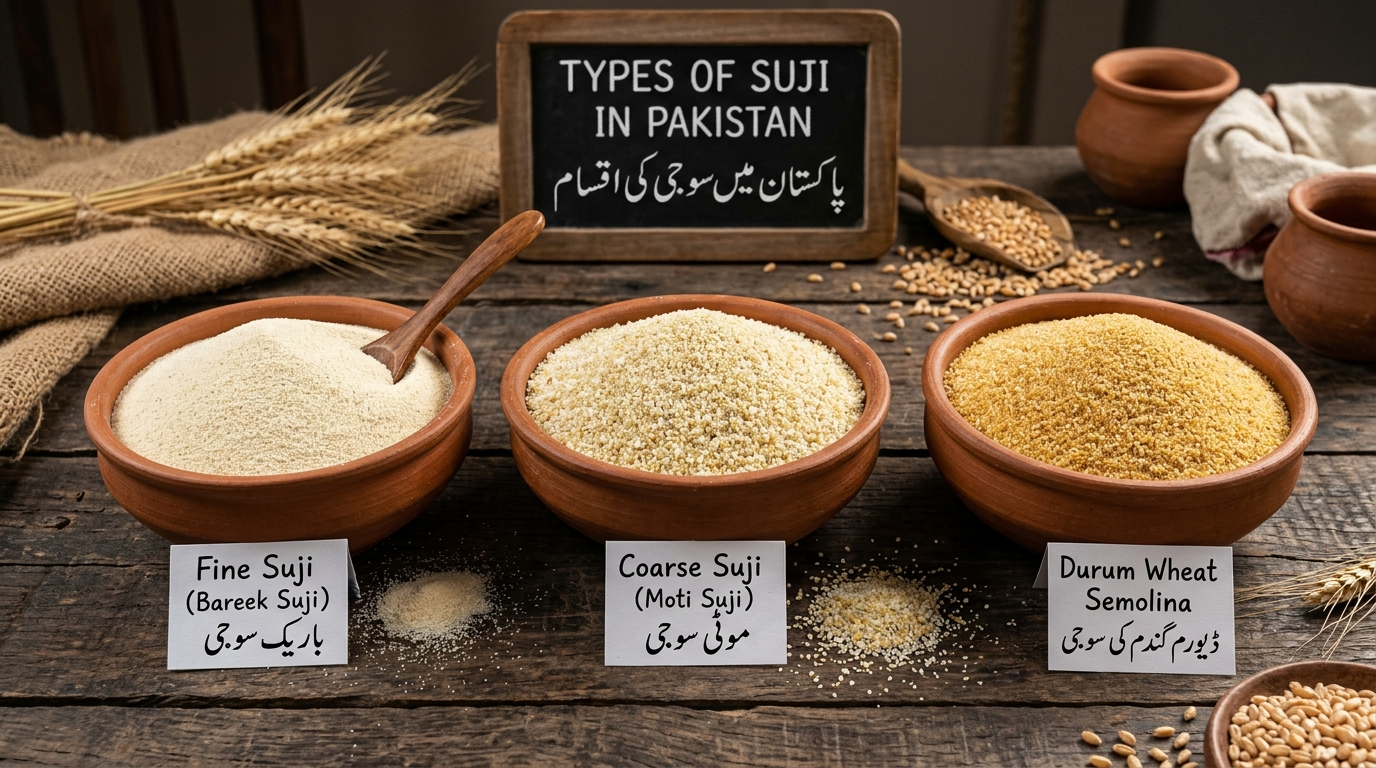
When shopping for suji, one of the most useful differences to understand is particle size. Some products are finely milled, while others have a more noticeable grainy texture.
1. Fine Suji (Bareek Suji)
Fine suji has smaller particles and a relatively smoother texture than coarse varieties. It is useful when a recipe needs a softer or more uniform consistency.
Common uses include:
- Soft suji halwa
- Porridge and milk-based preparations
- Selected cakes and baked recipes
- Some dessert and pudding preparations
- Savoury batters and breakfast dishes
Fine suji is a practical option when you prefer a less grainy result. However, the final texture still depends on the recipe, liquid quantity, cooking time, and preparation method.
2. Coarse Suji (Moti Suji)
Coarse suji has larger, more noticeable granules. It gives cooked dishes a more defined grainy texture and may need a different cooking time or amount of liquid than fine suji.
It is commonly used for:
- Traditional suji halwa
- Selected savoury preparations
- Some breads and baked recipes
- Recipes where a granular texture is preferred
Coarse suji is not automatically better than fine suji. The right choice depends on the dish you are preparing.
3. Durum Wheat Semolina
Durum wheat is a hard variety of wheat used to produce semolina for many traditional dried pasta products.
Durum wheat semolina is valued for its properties during pasta production. It is commonly used in products such as spaghetti, macaroni, penne, and other pasta shapes.
However, do not assume that every packet labelled suji in Pakistan is made from durum wheat. Check the ingredients and product description to confirm the wheat type.
If you are buying semolina specifically for pasta-making, look for a product that clearly identifies durum wheat semolina.
Suji vs Maida vs Atta: What Is the Difference?
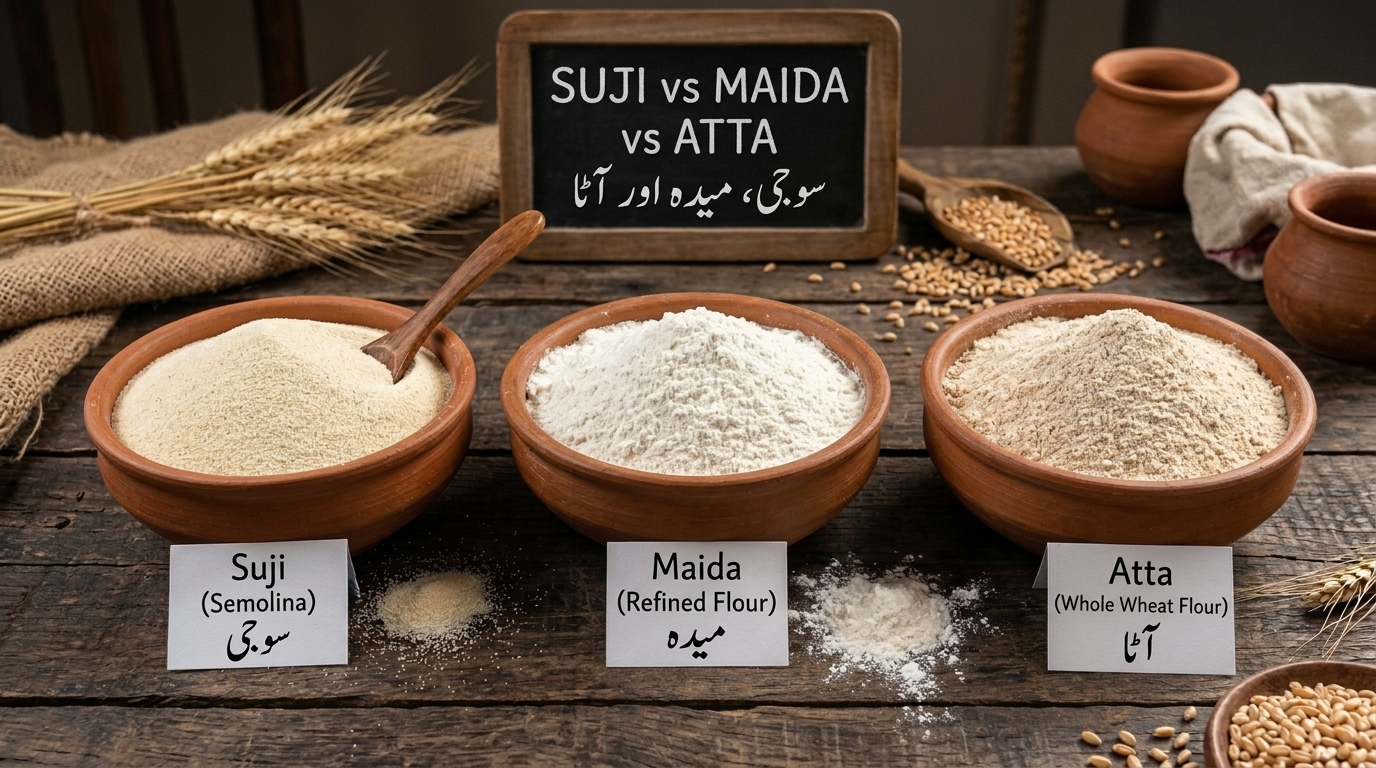
Suji, maida, and atta all come from wheat, but they differ in texture, processing, and common cooking uses.
| Product | Texture | Common Uses |
|---|---|---|
| Suji (Semolina) | Granular or coarse | Halwa, desserts, selected pasta and baking |
| Maida | Fine and powdery | Cakes, biscuits, pastries, and samosa wrappers |
| Atta | Usually fine to moderately coarse, depending on milling | Roti, chapati, and paratha |
The main difference is not simply colour. Processing and particle size affect how each product behaves in a recipe.
Suji is generally grainier than maida, while atta is commonly used for everyday whole-wheat flatbreads.
These products should not be substituted automatically. For example, replacing suji with maida in halwa changes the texture, while using suji instead of atta will not produce an ordinary roti.
For a more detailed comparison, read Maida (Refined Flour) in Pakistan: Types, Uses & Buying Guide and Types of Atta and Flour Used in Pakistan.
What Is Suji Used For in Pakistani Cooking?
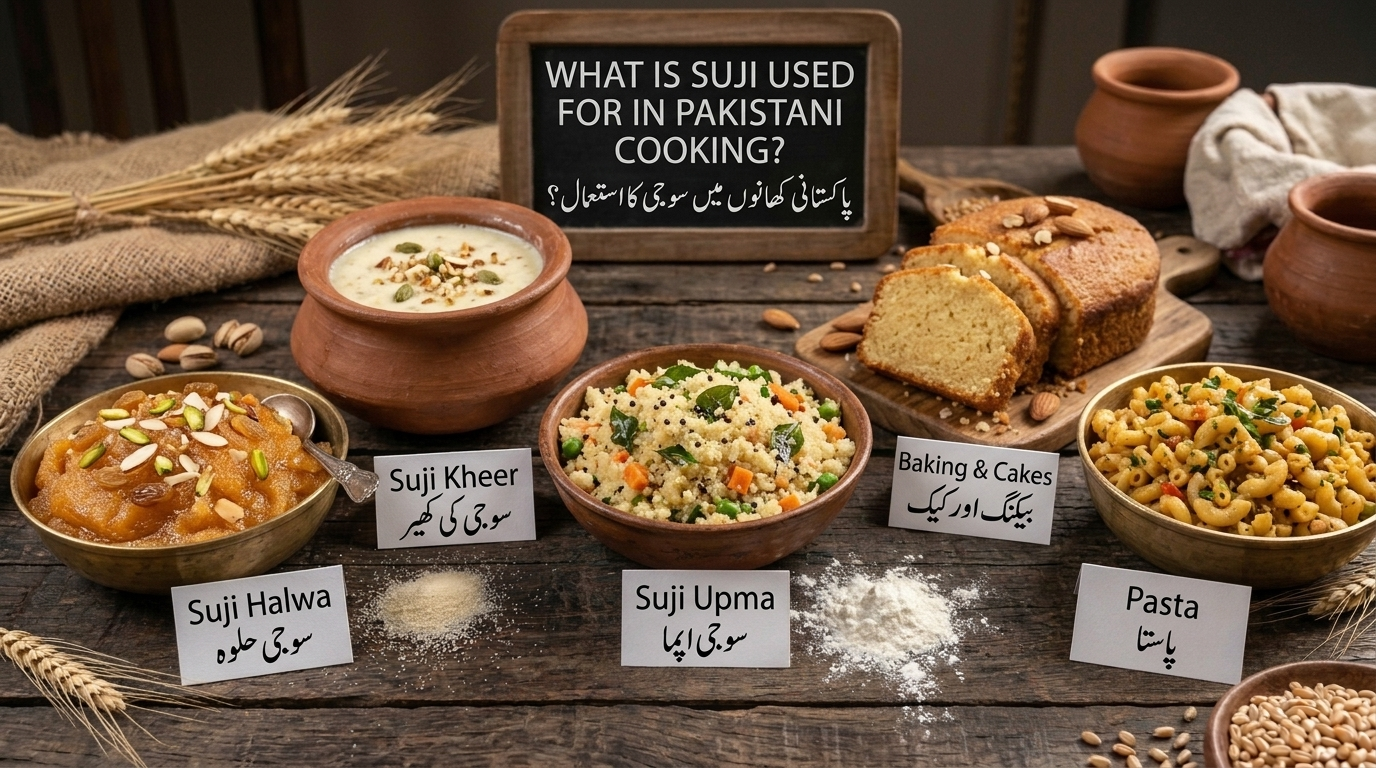
Suji is a versatile ingredient. It is used in traditional Pakistani recipes as well as selected international dishes.
Suji Halwa
Suji halwa is one of the best-known uses of semolina in Pakistan. It is generally prepared by roasting suji in ghee or oil, then adding liquid and sugar.
Cardamom, almonds, pistachios, and raisins may be added according to personal preference.
The texture depends on the suji’s particle size, roasting time, and the amount of liquid used. Some people prefer a soft halwa, while others like a slightly grainier consistency.
Suji Kheer
Suji can also be cooked with milk to make a soft, creamy dessert or breakfast preparation. It is usually cooked until the granules soften and the mixture reaches the desired consistency.
The Government of Pakistan’s Pakistan Dietary Guidelines for Better Nutrition, published with the Food and Agriculture Organization (FAO), includes a suji kheer recipe. This is a useful local reference for one of the ingredients’ common uses.
Suji Upma
Upma is a savoury preparation made with semolina. It is commonly cooked with vegetables, spices, and seasonings.
Although it is associated with South Asian cooking, it can also be prepared at home in Pakistan as a breakfast or light meal.
Baking and Cakes
Some recipes use suji to add a slightly grainy texture to cakes, biscuits, and other baked preparations.
It does not behave exactly like maida, so the two should not be substituted in equal quantities without checking the recipe.
Pasta and Other Wheat Products
Durum wheat semolina is widely used for traditional dried pasta. It can also be used in selected breads and other wheat-based preparations.
If you are checking whether a particular pasta contains suji or maida, read the ingredient list rather than relying on its appearance.
You can also read Is Pasta Made of Maida? Ingredients and Differences Explained for more information.
How to Choose Good-Quality Suji When Shopping
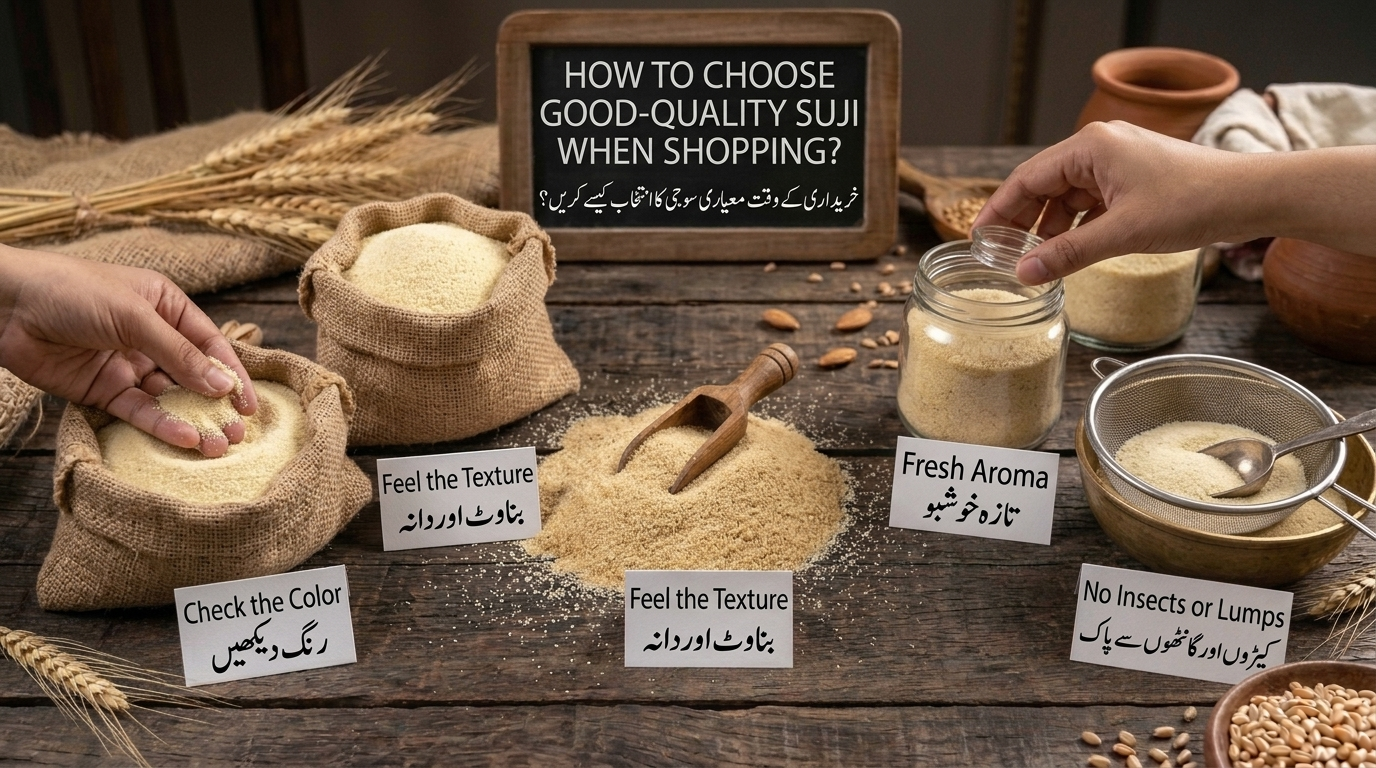
The product name alone does not tell you everything about its quality. Before buying suji from a supermarket, grocery store, or kiryana shop, check a few practical details.
Check the texture
If you are buying a transparent or open product, look at the granules. They should have a reasonably consistent appearance for the variety being sold.
Fine suji should look finer than coarse suji. Avoid products with visible foreign material or signs of insect activity.
Check the smell
Suji should not have a musty, damp, or unusual smell. An unpleasant odour can indicate poor storage or deterioration.
Read the packaging
For packaged products, check:
- Product name and type
- Ingredient information
- Manufacturing or packing date, where provided
- Best-before or expiry information
- Net weight
- Manufacturer or packer’s details
- Food authority or relevant registration details, where applicable
Prefer properly sealed packaging with clear product information.
Choose the right particle size.
Do not select a product simply because it is labelled premium or appears more expensive.
For soft preparations, fine suji may be suitable. For recipes that need a more noticeable grainy texture, coarse suji may be the better option.
Compare pack sizes
Suji is sold in different pack sizes depending on the brand and retailer. Compare the price per kilogram rather than looking only at the printed price.
A larger pack may offer better value, but only if you can store and use it properly.
Loose Suji vs Packaged Suji
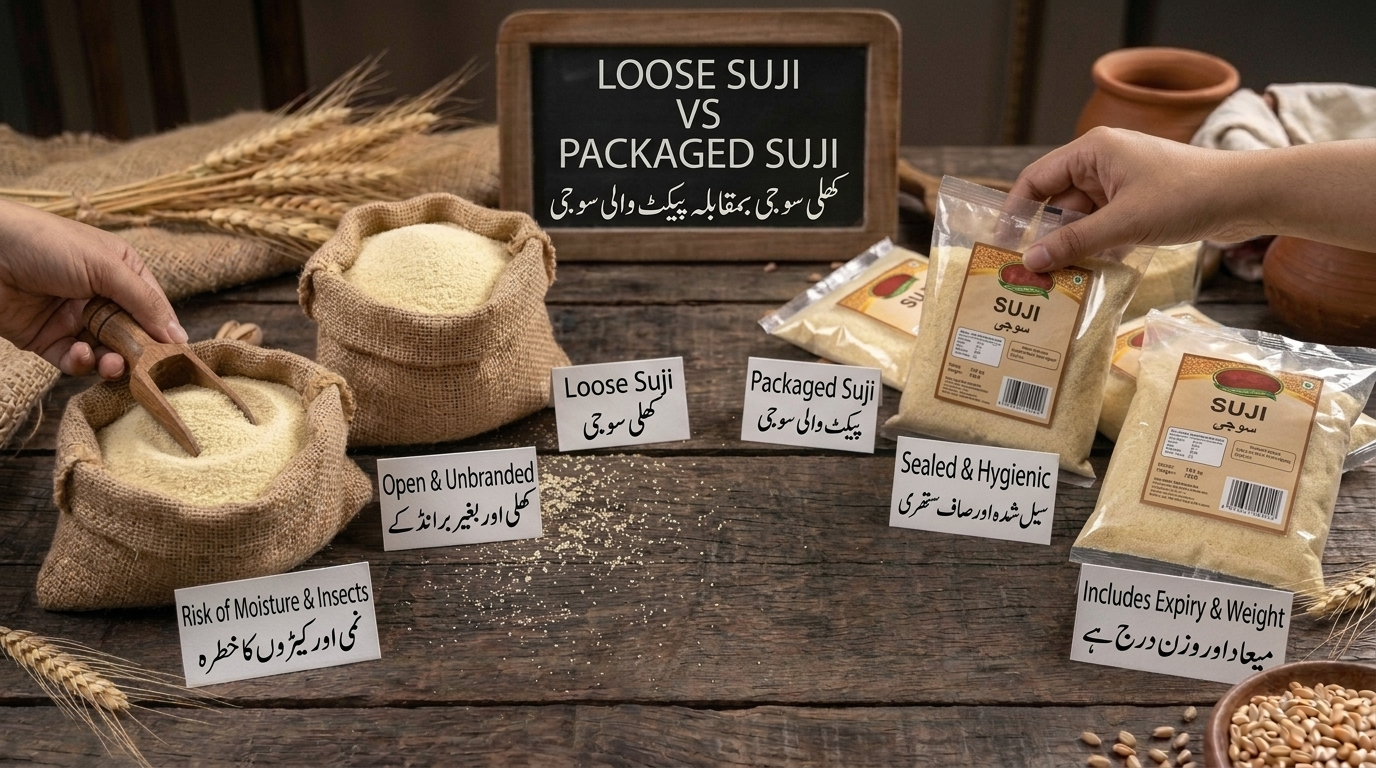
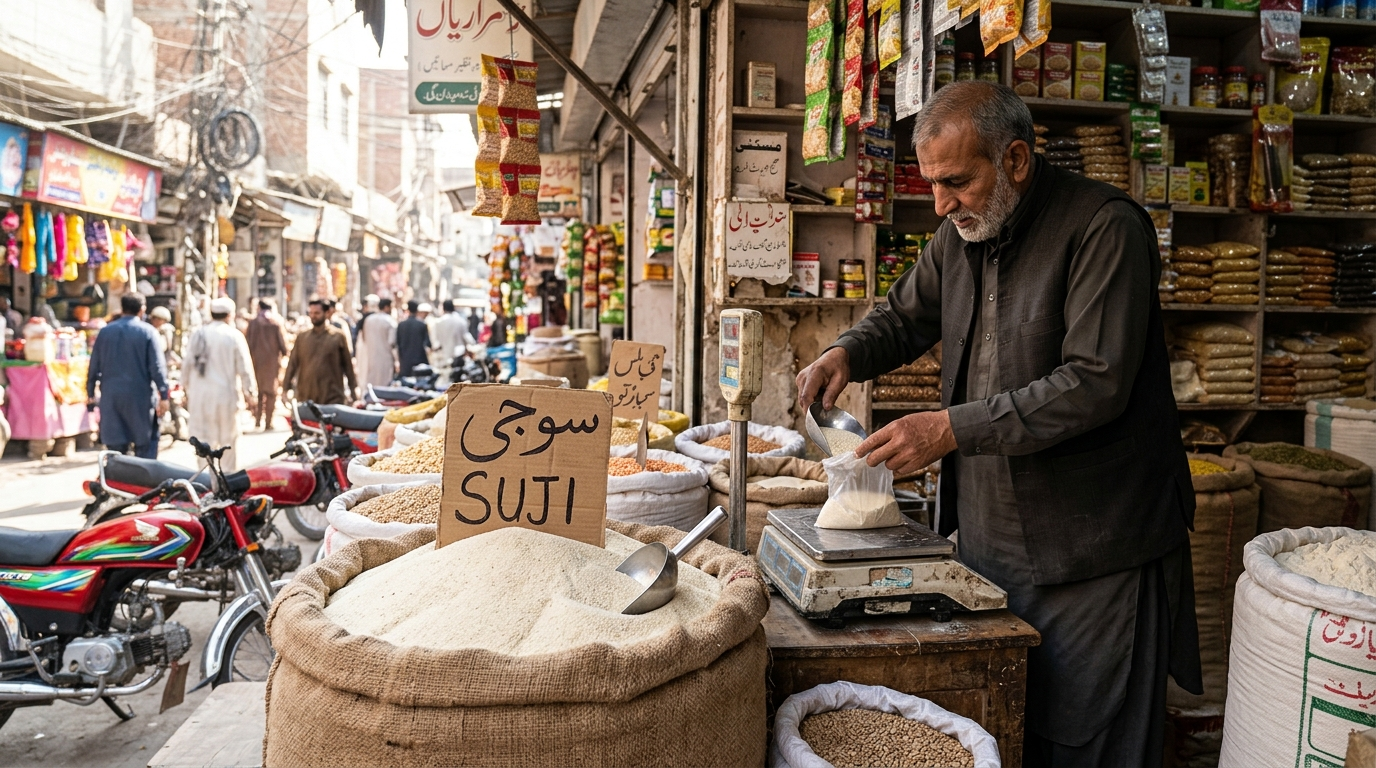
In Pakistan, shoppers may find suji sold loose at local grocery shops or in sealed packets from food brands.
Both options have practical differences.
| Factor | Loose Suji | Packaged Suji |
|---|---|---|
| Packaging | Often supplied in a shop bag or container | Usually sealed by the manufacturer or packer |
| Product information | May be limited | Usually includes product and date information |
| Pack size | Can often be purchased in a chosen quantity | Available in fixed pack sizes |
| Inspection | Depends on shop hygiene and storage | Packaging condition can be checked |
| Convenience | Useful for buying a small quantity | Easier to store in its original pack before opening |
Loose suji is not automatically poor quality, and packaged suji is not automatically perfect. Storage conditions, cleanliness, product condition, and supplier practices matter.
If buying loose suji, choose a shop that keeps it covered and protected from dust, moisture, insects, and unnecessary handling.
How to Store Suji at Home
Proper storage helps keep suji in good condition and protects it from moisture and pests.
Follow these simple practices:
- Store suji in a clean, dry, airtight container.
- Keep it away from direct sunlight and heat.
- Avoid placing it near the stove or areas exposed to steam.
- Use a clean, dry spoon when taking it out.
- Do not mix a new purchase with old stock without checking the older quantity first.
- Follow any storage instructions printed on the package.
If you notice insects, dampness, mould, or an unusual smell, do not use the product.
Does Suji Contain Gluten?
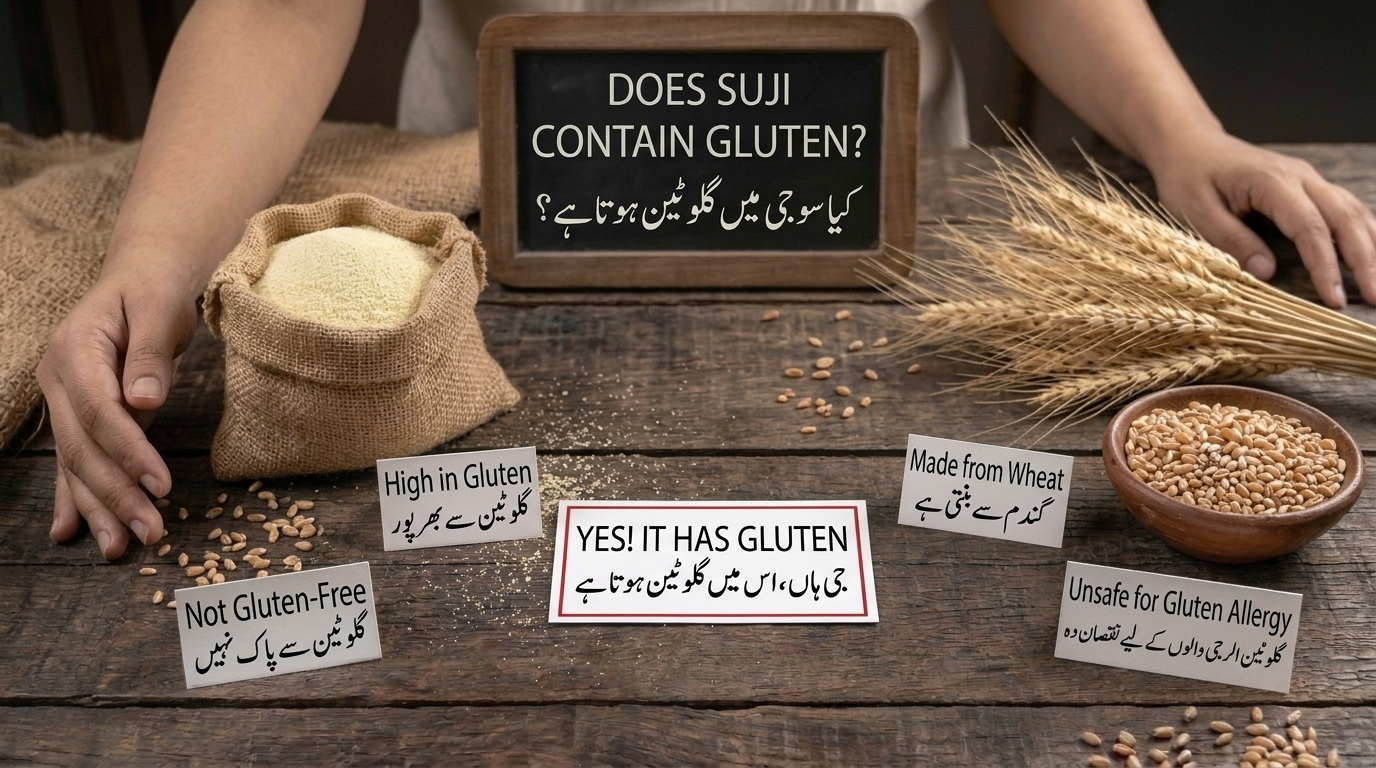
Yes. Ordinary wheat-based suji contains gluten because it is made from wheat.
People who have coeliac disease or need to avoid gluten for medical reasons should not assume that regular suji is suitable for them. Check the ingredient and allergen information carefully.
Also remember that suji is not automatically a whole-grain product. Its nutritional properties depend on the wheat used and how it has been processed.
Where Can You Buy Suji in Pakistan?
Suji is commonly available through different grocery shopping channels.
You can check:
- Local kiryana stores
- Grocery shops
- Supermarkets
- Online grocery stores
- Flour mills and food retailers
Availability, brands, and pack sizes vary by city and retailer. If you need a specific type, such as fine suji or durum wheat semolina, confirm the product details before making a purchase.
You can browse Grocery Stores on Grocer.pk, Supermarkets, and Online Grocery Stores to explore listed businesses.
Frequently Asked Questions About Suji
What is suji called in English?
Suji is commonly called semolina in English. It is a granular wheat product used in desserts, cooking, and selected bakery products.
Is suji the same as semolina?
Yes. Suji and semolina are commonly used for the same type of wheat product. The names sooji and rava are also used in different South Asian markets.
Which suji is better for halwa, fine or coarse?
Both can be used, depending on the texture you prefer. Fine suji can produce a softer consistency, while coarse suji gives a more noticeable grainy texture.
Is suji made from maida?
Suji and maida are different wheat products. Suji has a granular texture, while maida is a fine, refined wheat flour. They are processed and used differently.
Is suji used to make pasta?
Many traditional dried pasta products are made using durum wheat semolina and water. However, not every pasta product uses the same ingredients. Check the packet to identify the flour used.
Does suji contain gluten?
Yes. Regular wheat-based suji contains gluten. It is not suitable for people who must follow a gluten-free diet unless the product is specifically made from a gluten-free ingredient and verified as such.
Can suji be used instead of atta?
Not as a direct replacement in most everyday recipes. Suji has a different particle size and behaves differently from atta when mixed with water. Use the flour specified by the recipe.
How should suji be stored?
Keep it in an airtight container in a cool, dry place away from moisture, heat, and insects. Always use a clean, dry spoon.
Final Thoughts
Suji is a useful wheat-based ingredient in Pakistani cooking, from traditional halwa and kheer to selected savoury dishes and baked products. The most important buying decision is choosing the right texture for your recipe.
Before purchasing, check the product name, ingredients, packaging, date information, and storage conditions. If you specifically need durum wheat semolina for pasta, confirm that detail on the label rather than assuming every type of suji is the same.
A suitable product, stored properly and used in the right recipe, makes it easier to get the texture you want.
Syed Abdul Manan is an SEO expert and WordPress specialist with over 10 years of experience in search engine optimization and WordPress development. He holds a Bachelor of Science in Computer Science (BSCS) and is the Founder & CEO of Grocer.pk, a searchable directory of grocery stores, supermarkets, kiryana shops, and online grocery businesses across Pakistan.
With a technical foundation in computer science, he has spent the past decade working on technical SEO, on-page optimization, content strategy, and building fast, well-structured WordPress websites. For more than six years, he has been developing and managing Grocer.pk, which now covers major cities including Lahore, Karachi, Islamabad and Faisalabad, helping people find nearby stores by city, area and category, along with locations, contact details and map links.
Syed Abdul Manan runs Grocer.pk with a professional, quality-focused approach, combining clean site architecture, structured listings and practical grocery guides to serve both shoppers and business owners. His goal is to help local businesses build a stronger online presence and to help users find reliable local information quickly.
Connect with him on LinkedIn.