Ghee in Pakistan: Desi Ghee Benefits, Price, Calories & More
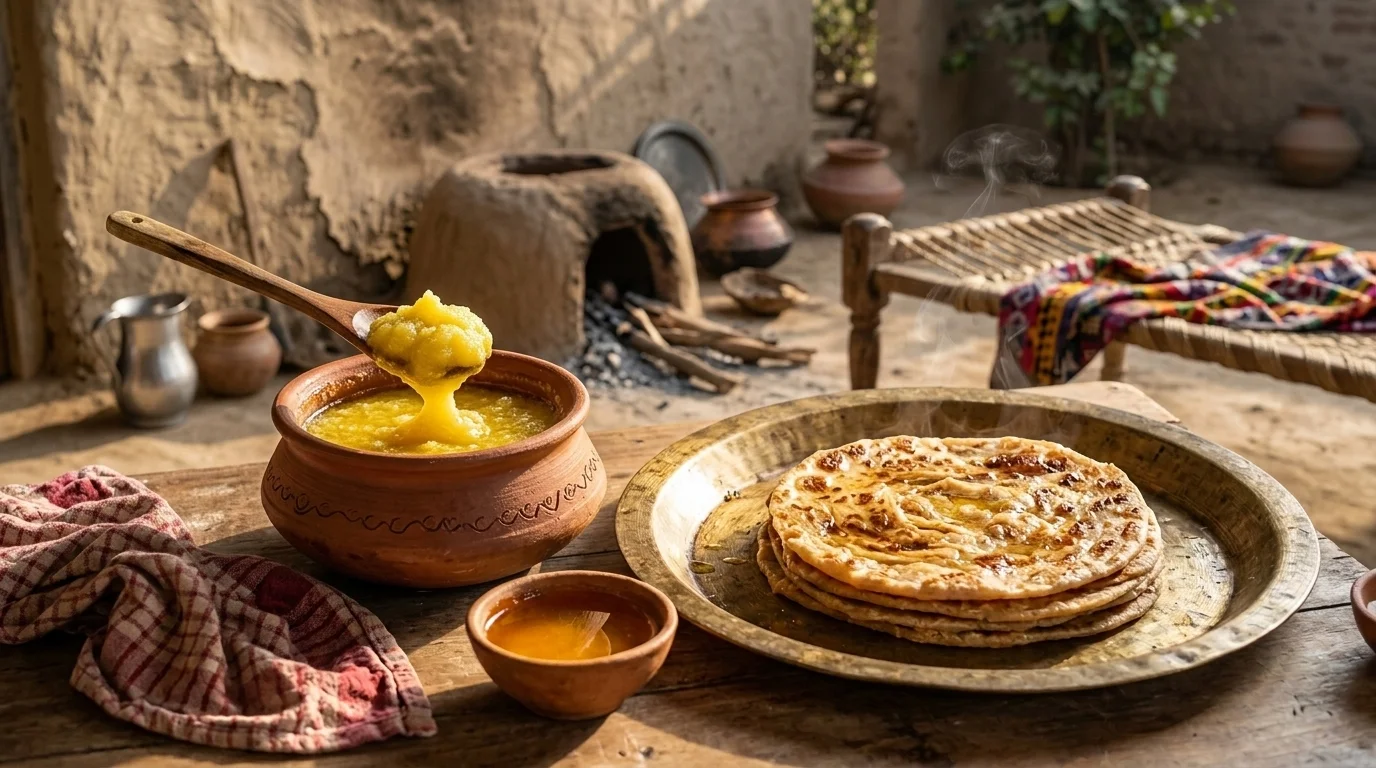
Ghee is a familiar ingredient in Pakistani kitchens. It is used on roti, paratha, and rice, added to daal and halwa, and often kept for traditional cooking. But buying and using ghee is not as simple as picking a jar from the grocery shelf. People also want to know whether desi ghee is good for health, how many calories it contains, what a reasonable desi ghee price in Pakistan looks like, and how to tell whether the product is genuine.
Ghee is a type of clarified butter. It is made by heating butter and separating much of its water and milk solids, leaving a concentrated dairy fat. Traditional ghee can be made from cow or buffalo milk, depending on the method and source.
For Pakistani households, the more useful question is not simply whether ghee is “good” or “bad.” The amount you eat, the rest of your diet, the type of ghee you buy, and how often you use it all matter.
What Is Ghee?
Ghee is clarified butter in which water and milk solids have been removed through heating. The remaining fat has a rich aroma, distinctive taste, and a texture that can change with temperature.
Desi ghee is the traditional form commonly associated with South Asian cooking. It may be produced from cow or buffalo dairy, and traditional preparation can involve turning milk into yogurt, churning it into butter, and then heating the butter to make ghee.
Ghee is different from vegetable cooking fats. It is a dairy-derived fat, while products such as banaspati are made from vegetable oils or fats. Consumers should therefore read the product label rather than assuming that every product described simply as “ghee” has the same ingredients or production method.
Pakistan also has a formal standard for desi ghee. The Pakistan Standards and Quality Control Authority (PSQCA) lists PS 5475-2022, Desi Ghee (1st Rev.), among its food and agriculture standards.
Why Do People Use Desi Ghee in Pakistan?
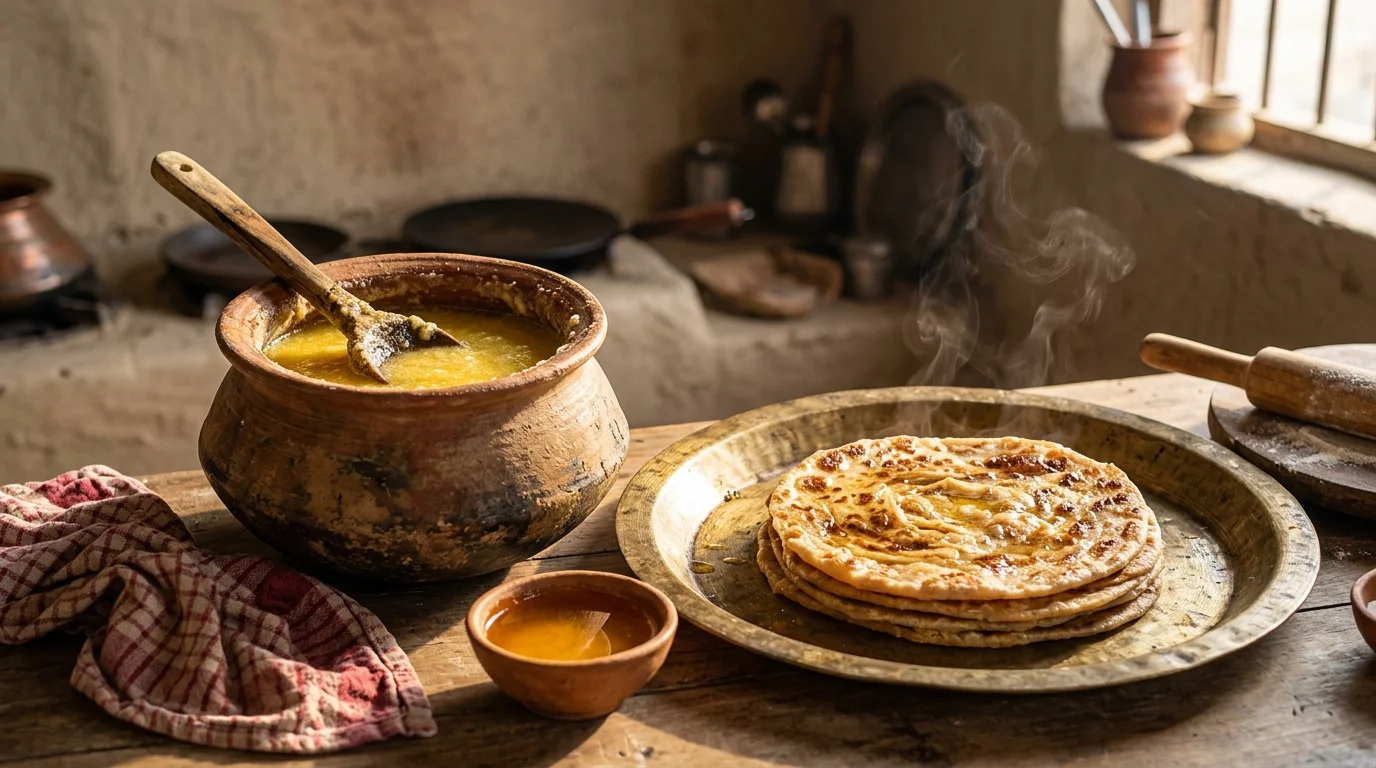
Ghee has a long-standing place in Pakistani and South Asian food culture. Its strong flavour means that a small amount can noticeably change a dish.
It is commonly used for:
- Roti and paratha
- Daal and tarka
- Rice and pulao
- Halwa and traditional sweets
- Baking
- Frying and cooking
- Finishing dishes for extra aroma
Its concentrated fat also makes it useful when a recipe needs richness without adding a large volume of liquid oil.
The important point is that traditional use does not automatically mean unlimited health benefits. Ghee is still a concentrated source of fat and calories.
Desi Ghee Benefits: What Does It Actually Offer?
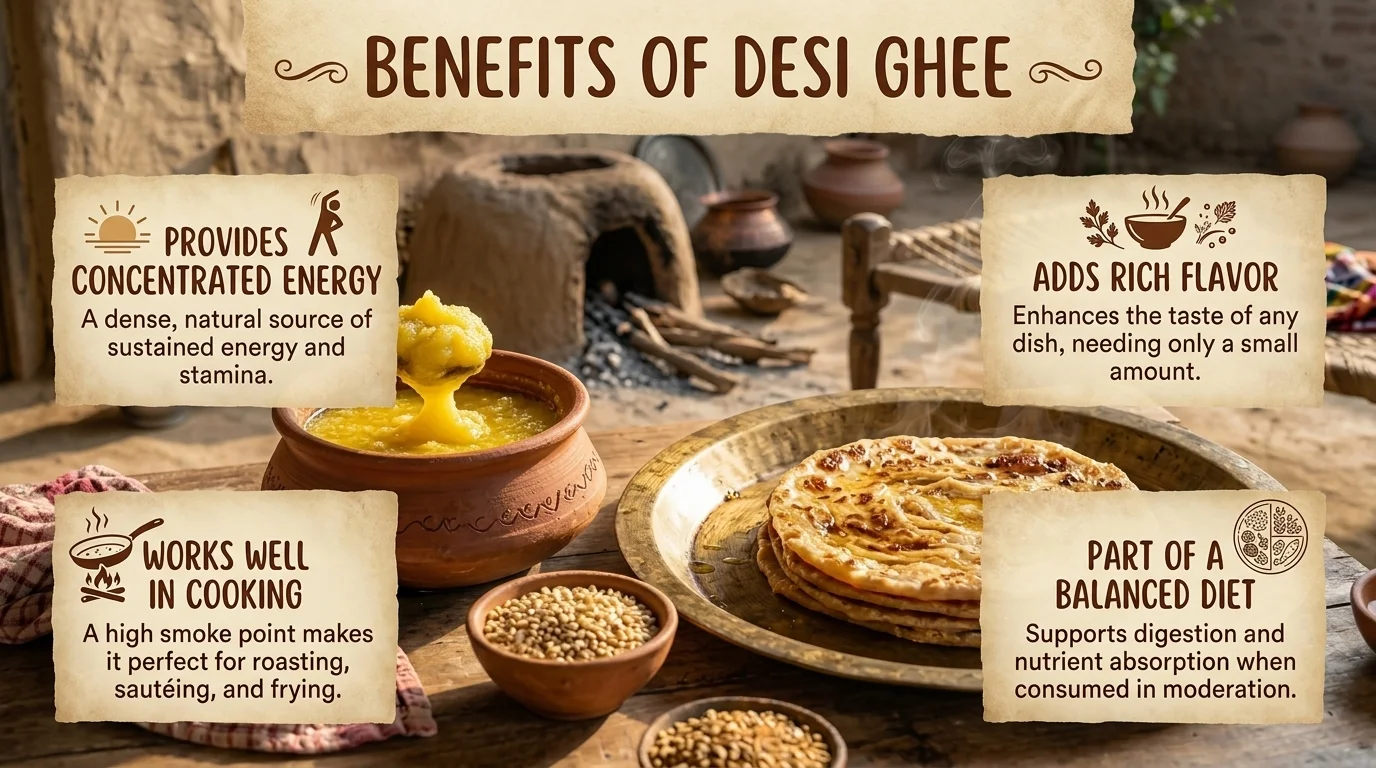
Searches for desi ghee benefits are common, but many online articles go too far by presenting ghee as a cure or a special health food. That is not a reliable way to look at it.
The more realistic benefits are related to its nutritional properties and culinary use.
1. It provides concentrated energy
Ghee is almost entirely fat, so even a small serving provides a substantial amount of energy. This can be useful when someone needs calorie-dense food, but it also means portions matter.
One tablespoon of ghee, around 14 grams, contains roughly 120 calories and 14 grams of fat in USDA-referenced nutrition data.
2. It adds flavour without needing a large amount
A teaspoon of ghee can give roti, daal, or vegetables a strong buttery aroma. For many people, this makes it possible to use a small amount rather than adding a large quantity simply for flavour.
3. It works well in cooking
Ghee is widely used for cooking because it has a relatively high smoke point and a stable, concentrated fat profile. The flavour also suits many Pakistani dishes.
4. It can be part of a balanced diet
There is no need to treat ghee as either a miracle food or a forbidden food. A small amount can fit into an otherwise balanced diet.
However, ghee is high in saturated fat. The World Health Organization recommends keeping saturated fat below 10% of total energy intake and replacing saturated fats where possible with unsaturated fats from plant sources.
So the sensible approach is portion control rather than exaggerated health claims.
Is Desi Ghee Good for Health?
The answer depends on how much you eat and what the rest of your diet looks like.
A teaspoon of ghee added to food is very different from eating several tablespoons every day on top of an already high-fat diet.
Ghee contains a large amount of saturated fat. Regularly consuming too much saturated fat can be a concern for cardiovascular health, which is why major nutrition guidance recommends limiting saturated fat.
This does not mean that eating ghee once makes a meal unhealthy. It means that “natural” or “desi” does not make a food calorie-free or automatically heart-healthy.
A practical way to use it is to measure the amount instead of pouring it freely from the jar.
For example:
- A small amount on one roti can fit into a balanced meal.
- Several tablespoons added to multiple meals can increase calorie and saturated-fat intake quickly.
- If most of your cooking already contains oil, butter, or fatty meat, adding large amounts of ghee may be unnecessary.
How Many Calories Are in Ghee?
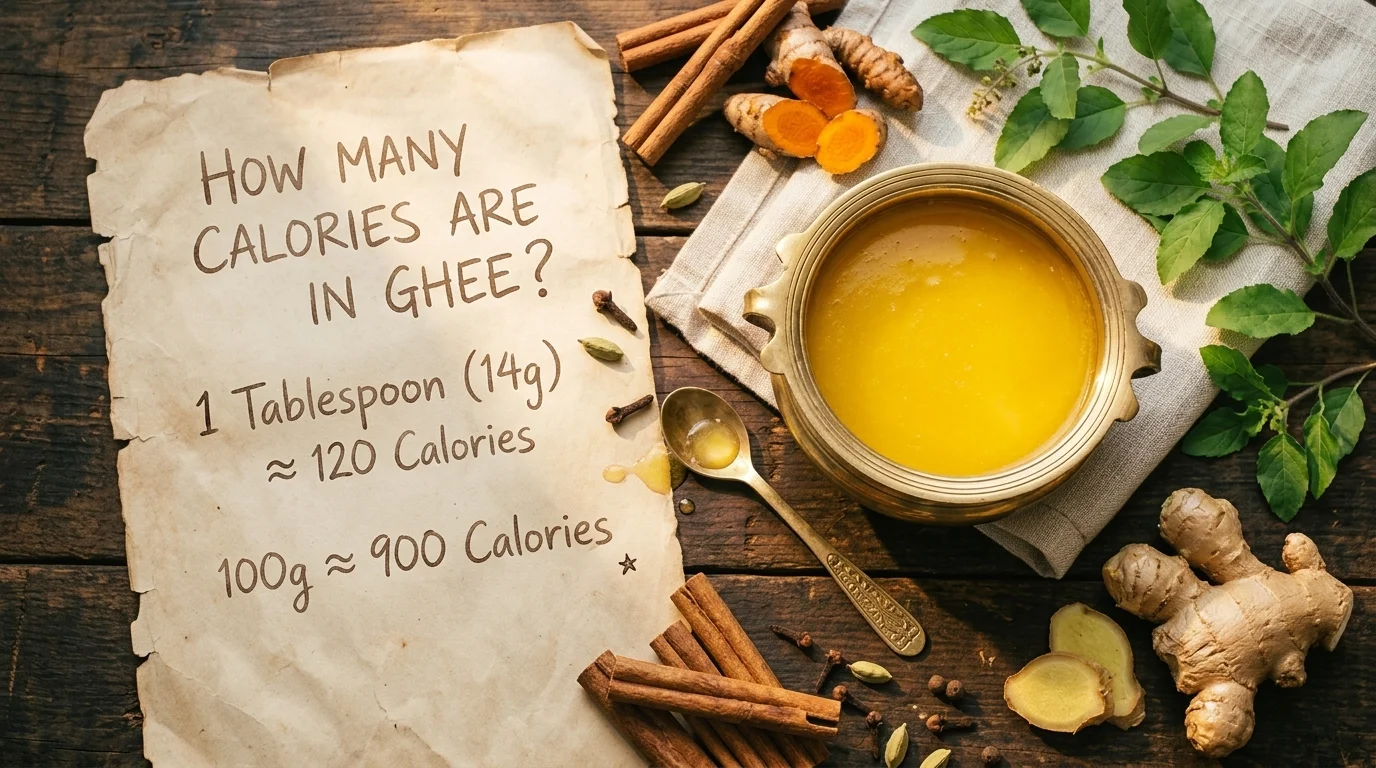
Ghee is calorie-dense because it is concentrated fat.
Approximate values are:
| Amount of ghee | Approximate calories |
|---|---|
| 1 teaspoon (5 g) | 44–45 kcal |
| 1 tablespoon (14 g) | About 120–125 kcal |
| 2 tablespoons | About 240–250 kcal |
| 100 g | About 875–900 kcal |
USDA-referenced data puts a 14-gram tablespoon of ghee at about 120 calories.
The exact number can vary slightly by product and database, but the main point remains the same: ghee is a concentrated source of calories.
How Many Calories Are in a Roti With Ghee?
This depends on the size of the roti and how much ghee you use.
A medium whole-wheat roti is commonly estimated at around 110–120 calories before additional ghee. Adding one teaspoon of ghee contributes roughly another 45 calories.
That means a typical medium roti with one teaspoon of ghee may contain approximately:
110–120 calories from the roti + 45 calories from ghee = around 155–165 calories.
But there is an important catch: Pakistani home rotis are not all the same size. A large roti made with more atta can contain considerably more calories, and some people use more than one teaspoon of ghee.
If you are trying to manage your weight, measuring the ghee is more useful than guessing.
Is Desi Ghee Good for Weight Loss?
Ghee is not a weight-loss food by itself.
The idea that adding desi ghee to your diet automatically helps burn body fat is not supported by basic energy balance. Ghee contains a lot of calories, so large portions can make it harder to maintain a calorie deficit.
At the same time, you do not necessarily have to eliminate ghee to lose weight.
A person can include a small amount of ghee in a calorie-controlled diet. What matters is the total diet and total energy intake over time. Nutrition guidance also emphasizes controlling total fat intake and choosing healthier fat sources where appropriate.
A practical approach could be:
- Use a teaspoon instead of pouring ghee directly from the container.
- Avoid adding ghee automatically to every roti.
- Keep high-fat foods such as fried foods and fatty meats in check.
- Build meals around vegetables, pulses, lean proteins, and whole grains.
- Track portions if weight loss is the goal.
So, is desi ghee good for weight loss? It can be included in a weight-loss diet in a controlled amount, but it does not cause weight loss.
Desi Ghee Price in Pakistan
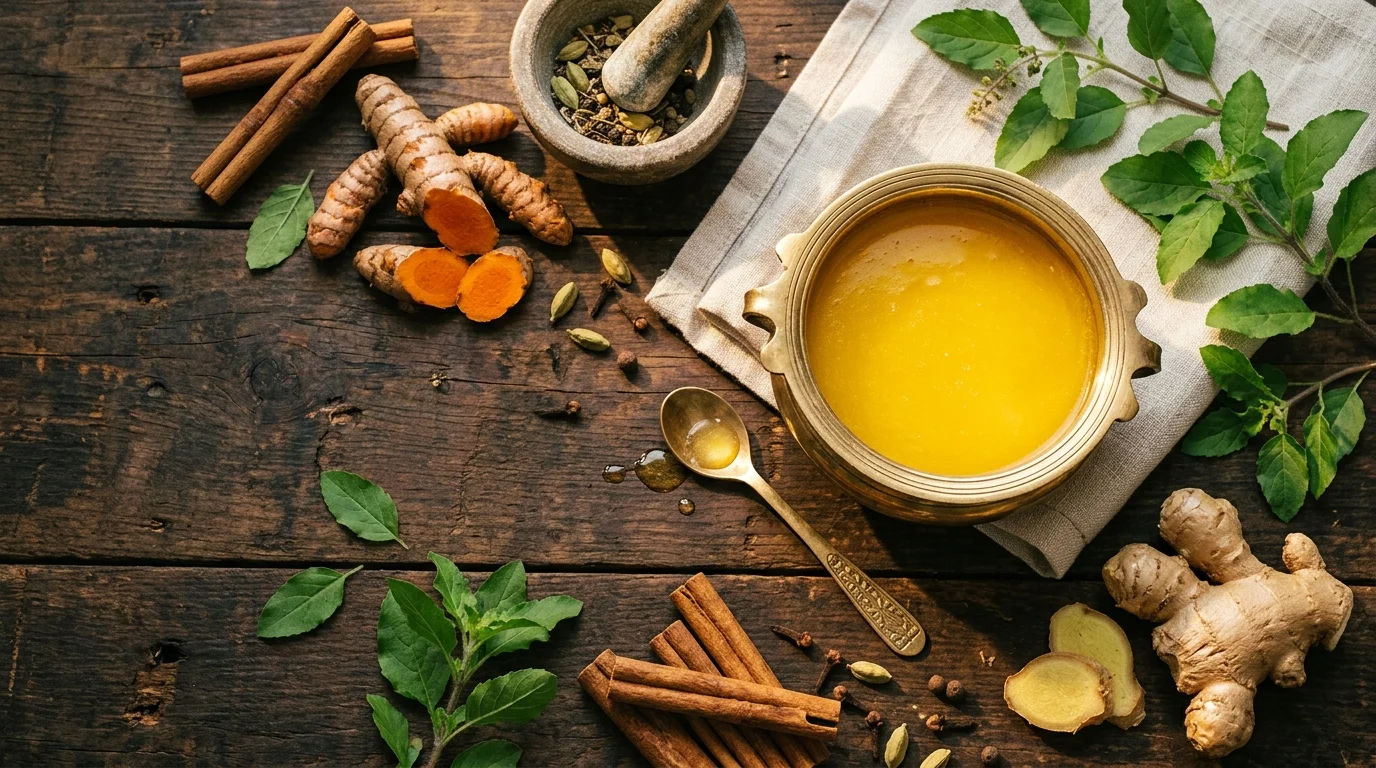
The desi ghee price in Pakistan varies considerably depending on the source, milk type, production method, packaging, brand, and whether the product is commercially produced or made in small batches.
Current online listings show a broad market rather than one fixed price. For example, recent 2026 listings for pure or premium desi ghee commonly place 1 kg products somewhere around the Rs. 2,000–4,500 range, while premium small-batch products can cost more.
Individual retailers can be substantially different. Achha E-Mart, for example, currently lists a 1 kg desi ghee product at Rs. 2,320 and a 500 g product at Rs. 1,200, while a decent departmental store grocery section carries multiple ghee products and brands. These are retailer-specific prices and can change with promotions, pack size, and availability.
Desi Ghee Price 1kg: What Should You Look At?
Do not judge a 1 kg jar only by its price.
Before buying, check:
- Product ingredients
- Manufacturer or producer
- Net weight
- Packaging condition
- Expiry or best-before date
- Batch information
- Food safety or quality information where available
- Whether the product is actually described as desi ghee
- Whether the seller provides enough information about its source
A very expensive product is not automatically pure, and a cheap product is not automatically fake. Price is a clue, not proof of purity.
What Is the Best Ghee in Pakistan?
There is no single product that can honestly be called the best ghee in Pakistan for every household.
The right choice depends on what you want:
- For everyday cooking, you may prefer a reasonably priced packaged product from a reliable seller.
- For traditional flavour, you may look for clearly described cow or buffalo desi ghee.
- For a premium purchase, you may care more about sourcing and production method.
- For regular household use, pack size and price per kilogram also matter.
Instead of trusting a “best ghee” claim, compare the ingredients, source, label, price, seller reputation, and product information.
That gives you a much better basis for choosing ghee than a marketing slogan.
How to Identify Asli Desi Ghee
There is no single home trick that can reliably prove that a jar of ghee is pure.
Online advice often recommends melting, freezing, smelling, or performing other kitchen tests. These observations may tell you something about the product’s texture or aroma, but they should not be treated as definitive laboratory tests for purity.
A better starting point is the packaging.
Look for:
- Clear ingredient information
The label should tell you what the product contains. - A traceable producer
A proper manufacturer or producer is preferable to an anonymous container with no useful information. - Batch and date information
Proper packaging should provide basic product identification and date information. - Consistent appearance and aroma
Colour and texture can vary naturally according to milk source and preparation, so appearance alone should not be used as proof of purity. - Reasonable product information
Be cautious when a seller makes extraordinary health claims without evidence.
For high-value purchases or concerns about adulteration, laboratory testing is far more meaningful than viral kitchen experiments.
How to Make Ghee at Home
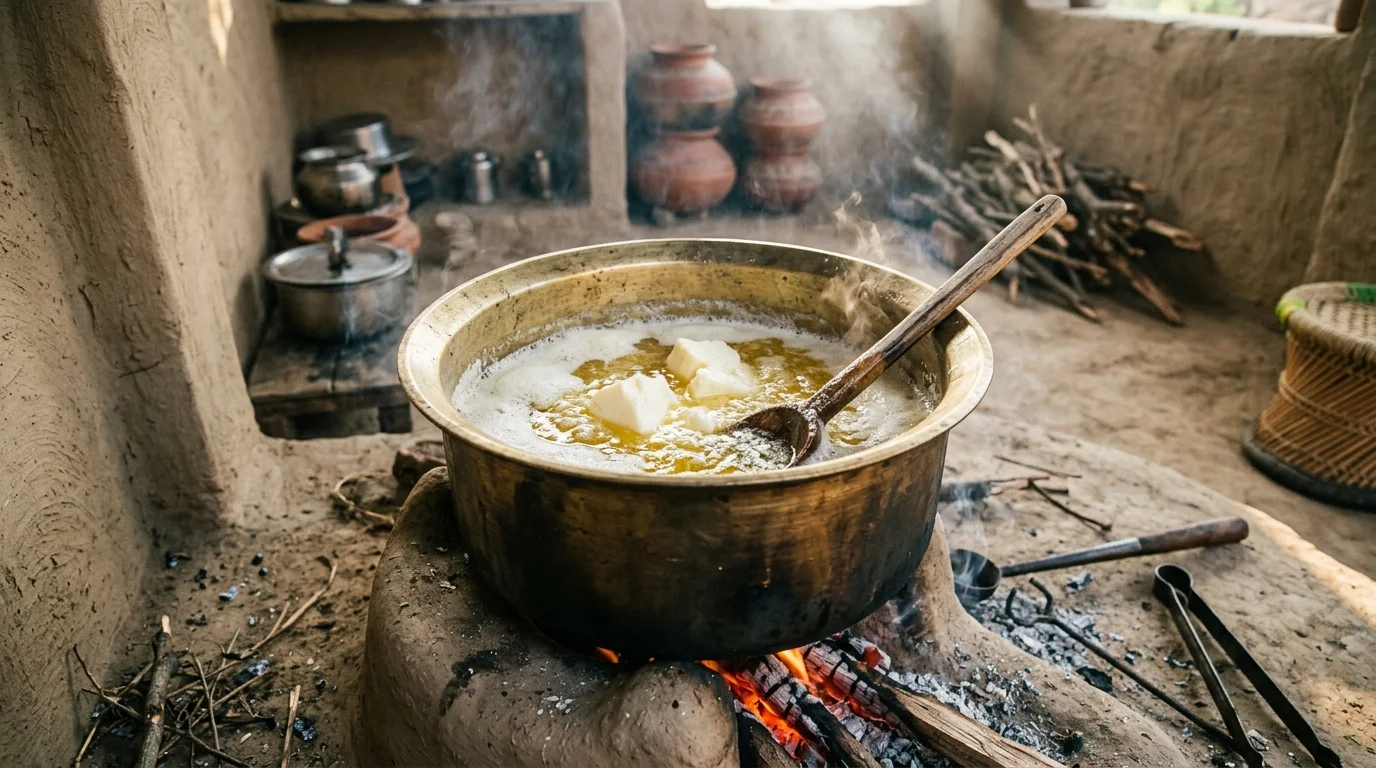
Making ghee at home is possible, and the process is straightforward if you already have butter.
Ingredients
- Unsalted butter
Method
1. Melt the butter
Place the butter in a heavy-bottomed saucepan over low to medium heat. Let it melt slowly.
2. Allow it to simmer
As the butter heats, water begins to evaporate. Foam may appear on the surface while the milk solids separate.
3. Keep the heat controlled
Do not rush the process with very high heat. The goal is to remove the water and allow the milk solids to separate without burning them.
4. Watch the colour
As the process continues, the milk solids settle toward the bottom, and the clear fat becomes more golden. A nutty aroma develops.
5. Strain the ghee
Once the process is complete, allow it to cool slightly and carefully strain the liquid through a fine strainer or clean cloth into a dry, heat-safe container.
6. Store it properly
Keep the finished ghee in a clean, dry container and avoid introducing water or food particles into it.
Traditional methods can begin with milk, yoghurt, and butter rather than ready-made butter. The exact method changes the flavour and characteristics of the finished product.
Desi Ghee vs Cooking Oil
Both ghee and cooking oils are sources of dietary fat, but their fatty-acid profiles are different.
Ghee contains a significant amount of saturated fat. Many plant oils, such as canola, soybean, and sunflower oil, provide more unsaturated fat. The WHO specifically recommends replacing saturated fat with unsaturated fats from plant sources where appropriate.
This does not mean that every meal must be cooked without ghee. It means there is no nutritional reason to treat ghee as the only healthy cooking fat.
For many Pakistani meals, using a smaller amount of ghee for flavour while using other appropriate cooking fats elsewhere can be a more balanced approach.
How Much Desi Ghee Should You Eat?
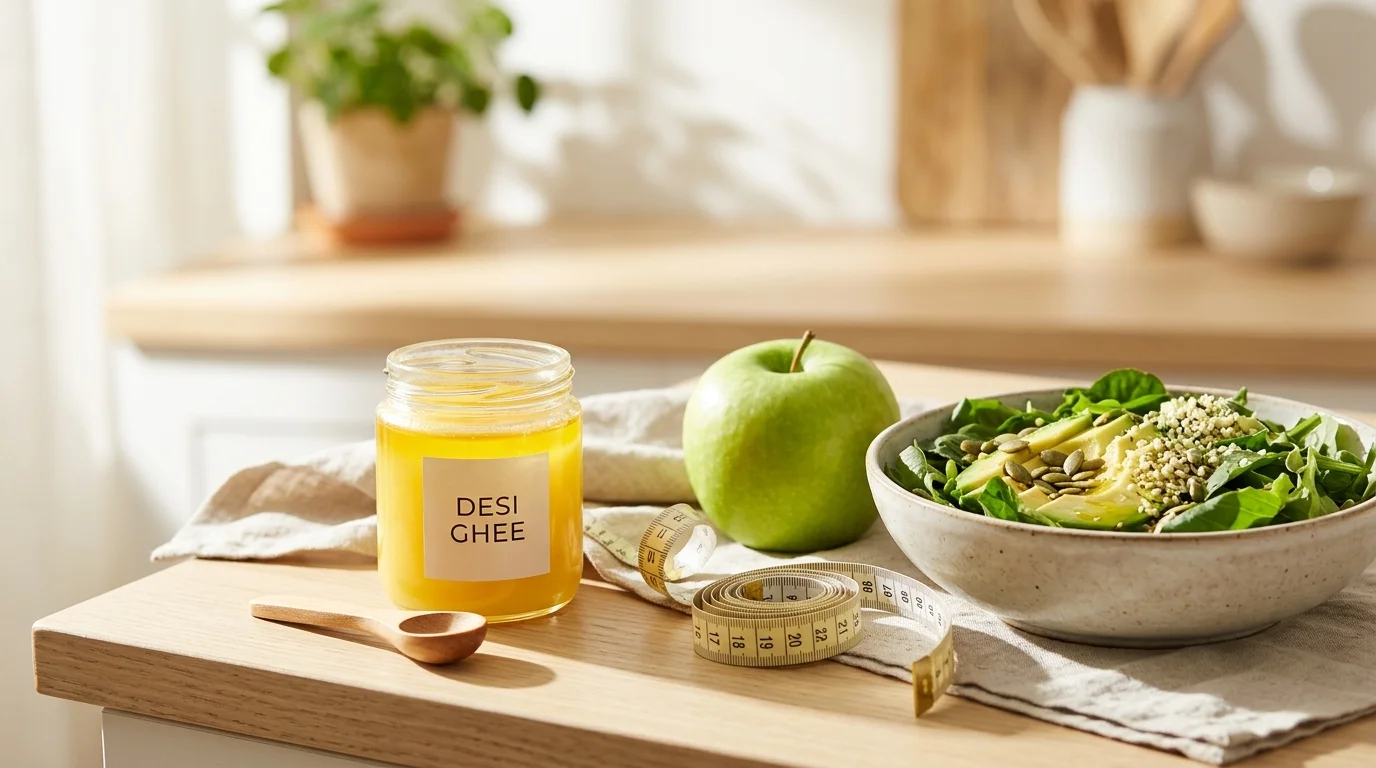
There is no universal number that applies to every person.
Your appropriate amount depends on your overall calorie needs, health status, age, activity level, and the rest of your diet.
The simplest household rule is to measure it rather than eat it freely.
A teaspoon adds only around 45 calories, while a tablespoon adds roughly 120 calories.
That difference becomes significant when ghee is used several times a day.
If your diet already contains fried foods, butter, cream, fatty meat, and other sources of saturated fat, you have less reason to add large amounts of ghee.
Buying Ghee in Pakistan: A Simple Checklist
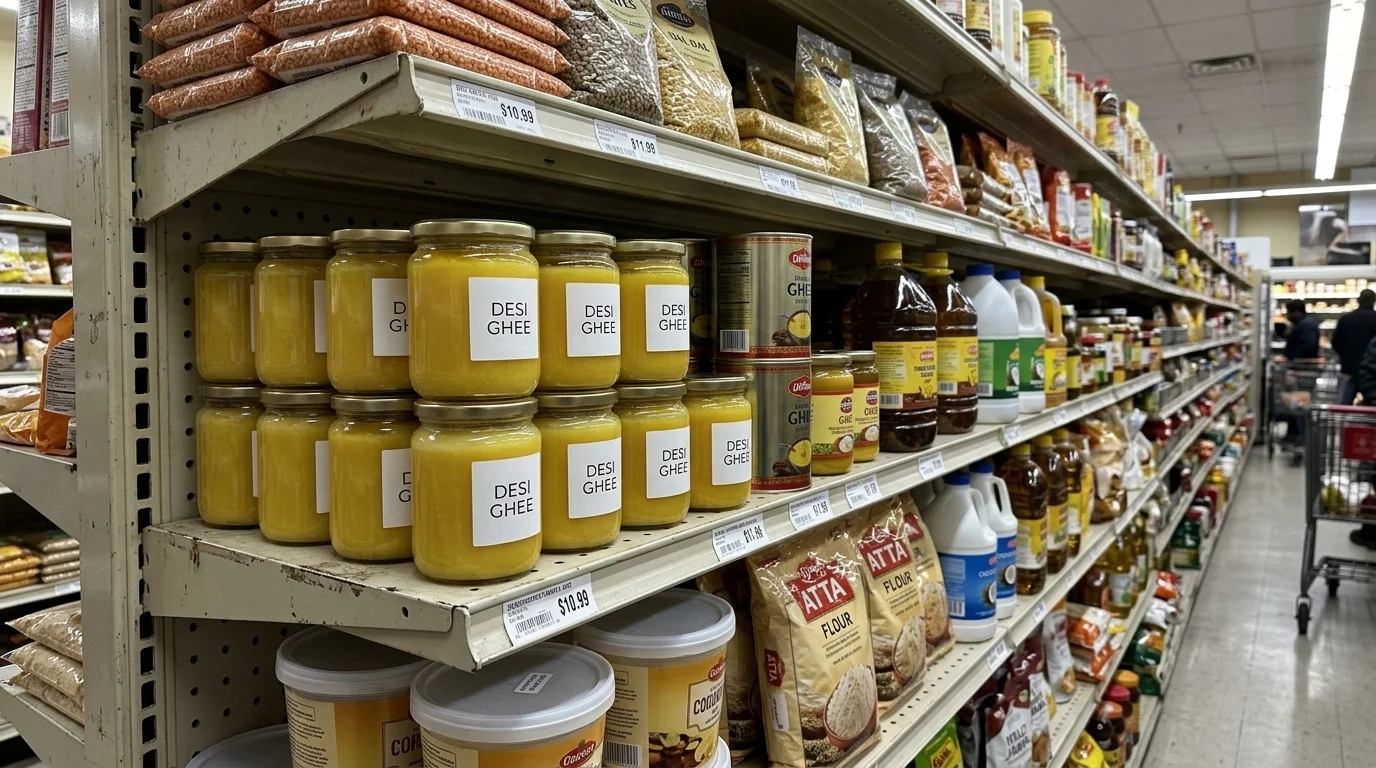
Whether you shop at a supermarket, local mart near me, or online, check the product before paying.
Check the label
Look for ingredients, net weight, manufacturer details, and date information.
Compare the price per kilogram.
A 500 g jar can appear cheaper than a 1 kg jar while actually costing more per kilogram.
Do not confuse marketing with evidence.
Words such as “pure,” “natural,” “traditional,” or “premium” do not automatically prove a product’s quality.
Consider how you will use it.
A family that uses ghee occasionally does not need the same pack size as a household that cooks with it every day.
Buy from a reliable seller.
A transparent retailer or manufacturer gives you more information if there is a problem with the product.
Ghee in the Pakistani Kitchen
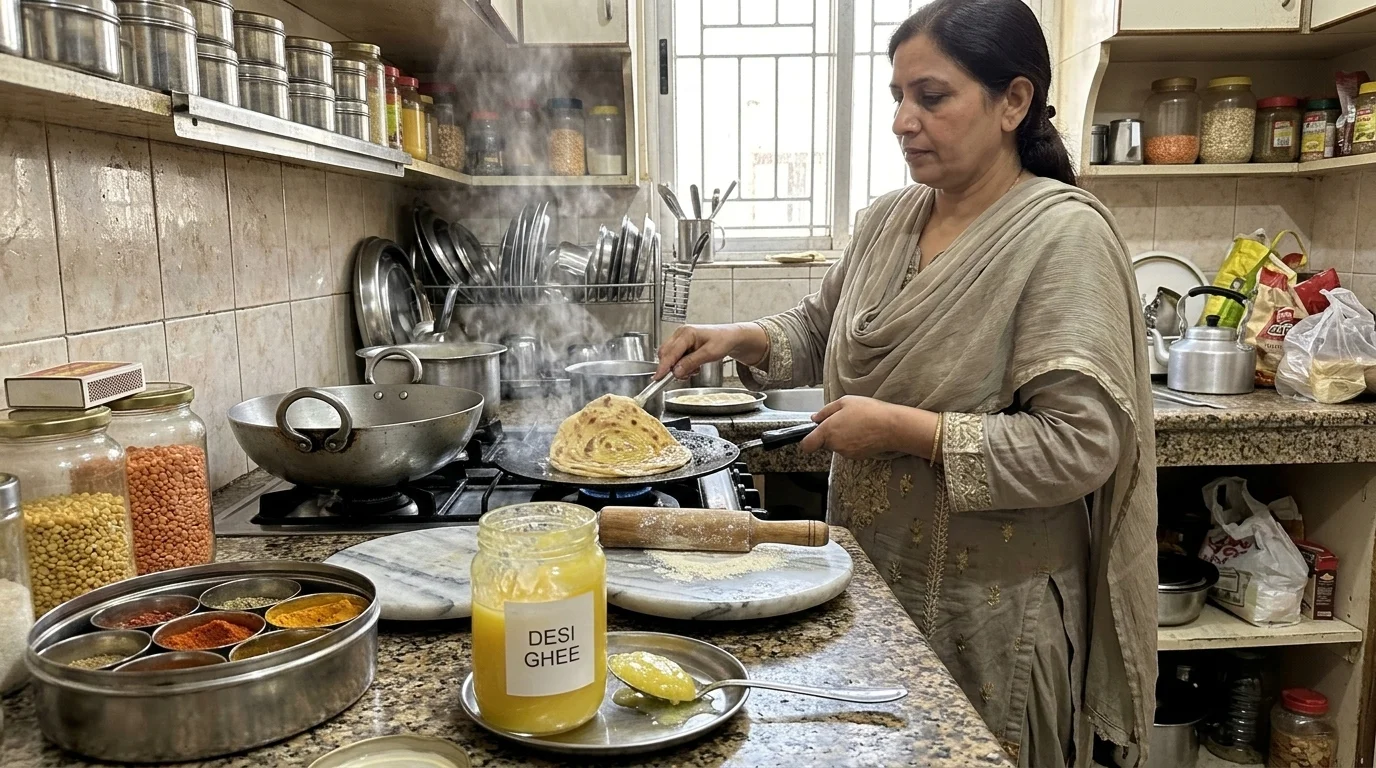
Ghee remains useful because it combines cooking function with a flavour that many Pakistani foods are built around.
A small amount can change the character of daal, rice or roti. It also works naturally in dishes such as halwa and other traditional sweets.
But the modern grocery shopper has a different challenge from previous generations: there are now many packaged products, online sellers, and competing claims about purity and health.
That makes informed buying more important.
Instead of asking only “Which ghee is healthiest?”, ask better questions:
What is this product made from? How much does it cost per kilogram? How much am I actually eating? And does it fit into the rest of my diet?
Those questions lead to a more useful decision.
Frequently Asked Questions About Ghee
Is desi ghee good for health?
Desi ghee can be included in a balanced diet, but it is high in fat and saturated fat. Eating large amounts regularly is not advisable simply because the product is traditional or natural. Portion size and the overall diet matter.
What is ghee?
Ghee is clarified butter made by heating butter and separating water and milk solids from the remaining fat. It is commonly used in South Asian cooking.
How many calories are in a roti with ghee?
A medium whole-wheat roti may contain around 110–120 calories before added fat. One teaspoon of ghee adds about 45 calories, so a medium roti with one teaspoon of ghee may contain roughly 155–165 calories. The actual number depends on the size of the roti and the amount of ghee used.
Is desi ghee good for weight loss?
Ghee does not directly cause weight loss. It is calorie-dense, so large portions can make a calorie deficit harder to maintain. A small amount can still fit into a calorie-controlled diet.
How do you make ghee at home?
Melt unsalted butter over controlled heat, allow the water to evaporate and the milk solids to separate, then strain the clear golden fat into a clean, dry container.
What is the desi ghee price in Pakistan?
Prices vary by producer, milk source, production method, pack size, and seller. Recent 2026 online listings show that 1 kg desi ghee can range from roughly Rs. 2,000 to Rs. 4,500 or more, with premium products sometimes costing higher. Always check the current seller price before buying.
How can I choose the best ghee in Pakistan?
There is no single best ghee for everyone. Compare the ingredient list, producer information, packaging, price per kilogram, product description, and seller reliability instead of relying only on marketing claims.
How can I tell if desi ghee is asli?
Home appearance or smell tests cannot reliably prove purity. Check the label, producer, batch information, and ingredients. If purity is a serious concern, proper laboratory testing is more reliable than viral kitchen tests.
Final Thoughts
Ghee still has a place in Pakistani cooking, but it should be treated as what it is: a concentrated dairy fat, not a miracle health product.
Desi ghee benefits are best understood in the context of normal food use. It provides energy, flavour, and a traditional cooking option, while its high calorie and saturated-fat content means that moderation matters.
When buying ghee in Pakistan, look beyond the jar’s marketing. Compare the ingredients, source, pack size, and desi ghee price in Pakistan. And when eating it, measure the portion rather than assuming that a traditional food can be consumed without limits.
For everyday grocery decisions, that is the more useful way to think about ghee: good quality, sensible portions, and a balanced diet matter more than exaggerated claims.
Syed Abdul Manan is an SEO expert and WordPress specialist with over 10 years of experience in search engine optimization and WordPress development. He holds a Bachelor of Science in Computer Science (BSCS) and is the Founder & CEO of Grocer.pk, a searchable directory of grocery stores, supermarkets, kiryana shops, and online grocery businesses across Pakistan.
With a technical foundation in computer science, he has spent the past decade working on technical SEO, on-page optimization, content strategy, and building fast, well-structured WordPress websites. For more than six years, he has been developing and managing Grocer.pk, which now covers major cities including Lahore, Karachi, Islamabad and Faisalabad, helping people find nearby stores by city, area and category, along with locations, contact details and map links.
Syed Abdul Manan runs Grocer.pk with a professional, quality-focused approach, combining clean site architecture, structured listings and practical grocery guides to serve both shoppers and business owners. His goal is to help local businesses build a stronger online presence and to help users find reliable local information quickly.
Connect with him on LinkedIn.