Milk in Pakistan: Packaged vs Loose Milk
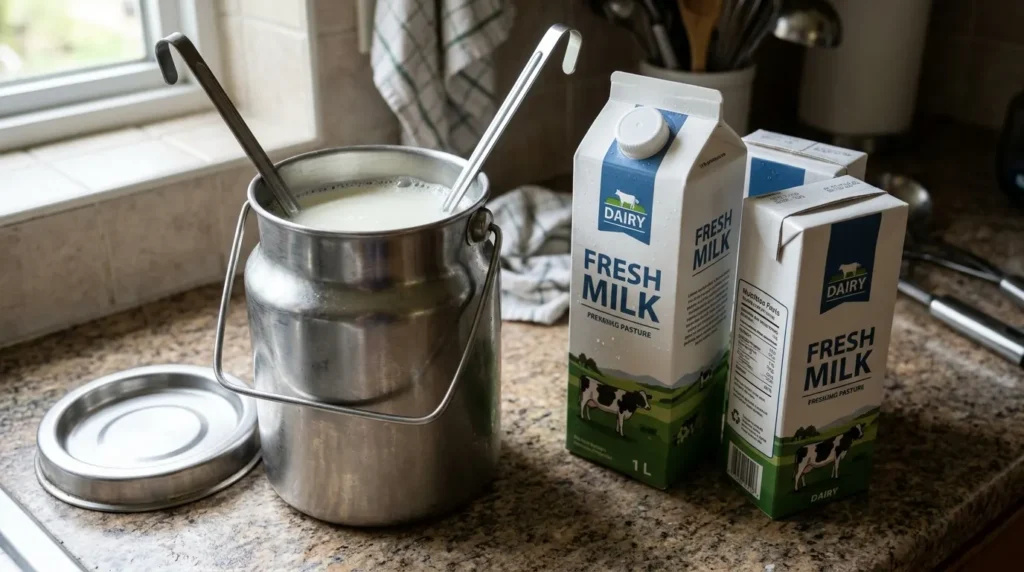
Milk is a regular part of grocery shopping in many Pakistani households. Some families buy fresh milk from a local doodh wala, while others prefer packaged milk from supermarkets and grocery stores. Both options are widely recognised, but there are important differences in processing, handling, storage, product information, and food safety.
The choice between packaged milk and loose milk is not simply about taste or price. It is also important to understand whether the milk is raw, pasteurised, or treated through an ultra-high-temperature (UHT) process. These terms describe how milk is processed, while loose and packaged describe how it is sold.
Understanding these differences can help consumers make more informed decisions when buying milk in Pakistan.
What Is Loose Milk in Pakistan?
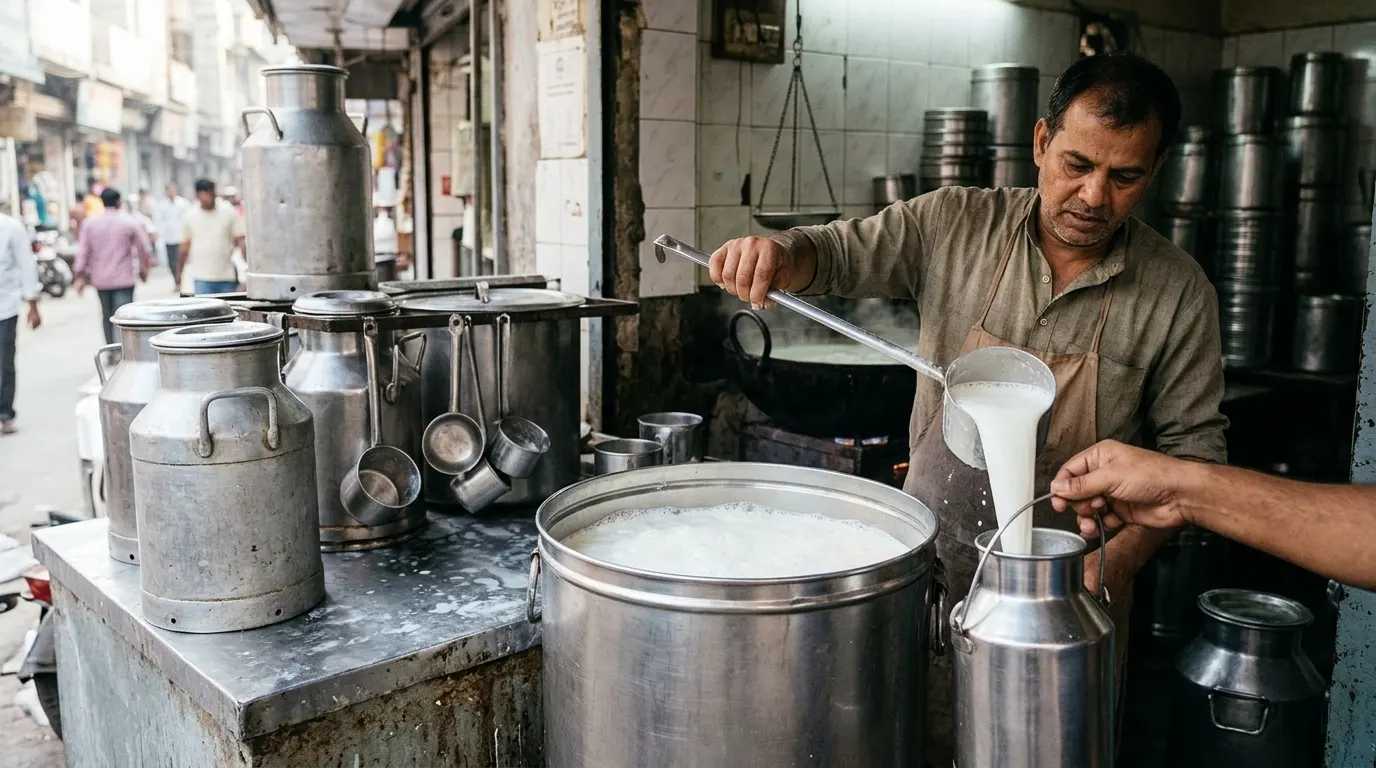
Loose milk is milk sold without an individual sealed retail package. It is commonly purchased from local milk shops, dairy vendors, and traditional milk suppliers.
In Pakistan, loose milk is often supplied through a distribution chain that may include dairy farmers, milk collectors, middlemen, and local sellers. The milk is usually transported in larger containers and transferred into customers’ bottles or household utensils.
Many consumers prefer loose milk because they can purchase the quantity they need and buy from a familiar local supplier. Some also prefer its taste or use it for preparing tea, yoghurt, desserts and other household foods.
However, loose milk does not always come with information about its source, processing method, fat content, collection date or storage history. Unless the supplier can provide reliable information, consumers may find it difficult to establish whether the milk has been pasteurised or properly handled.
It is important to remember that loose milk is not a separate type of milk in terms of its natural composition. The main difference is that it is sold without individual retail packaging.
What Is Packaged Milk?
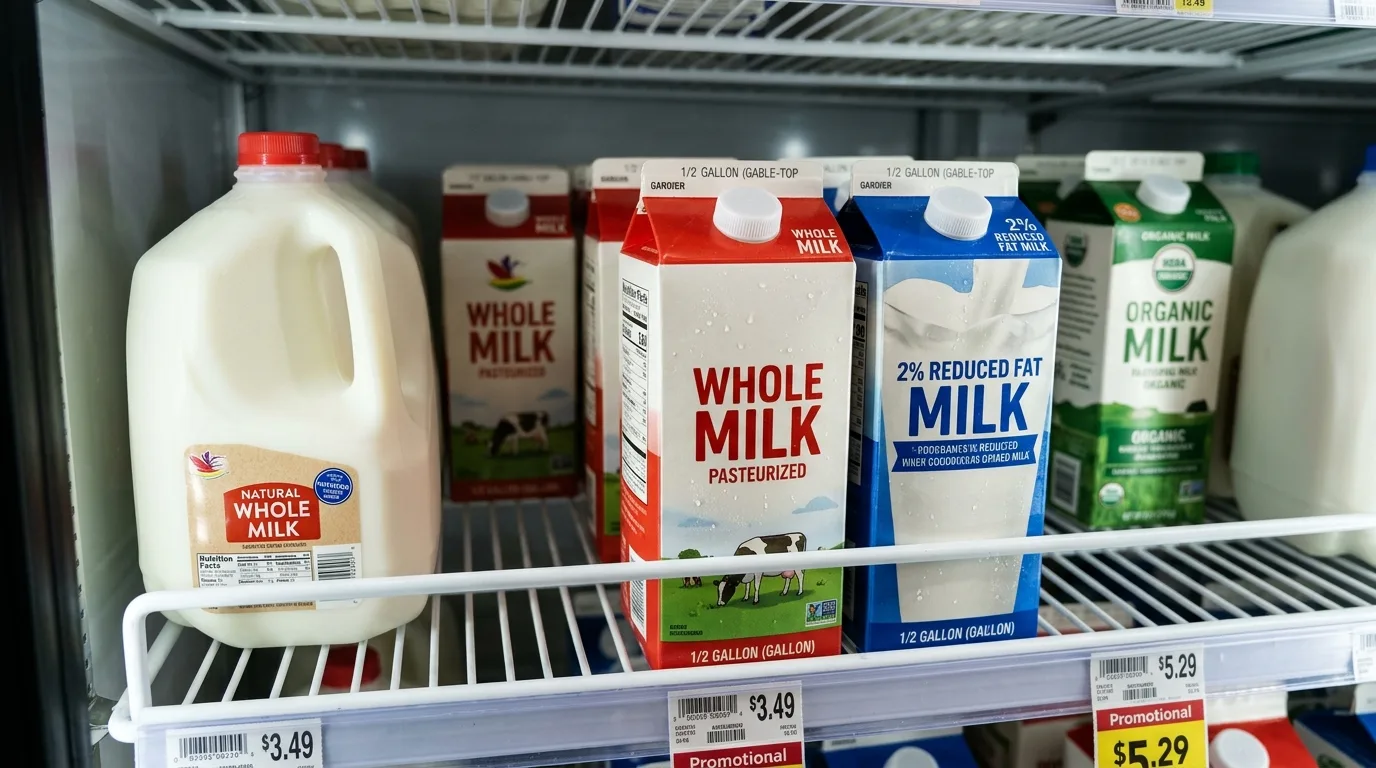
Packaged milk is milk sold in sealed retail containers such as cartons, bottles, or pouches. It is commonly available in supermarkets, grocery stores, and neighbourhood shops and markets, including Township Market in Lahore.
Commercial packaged milk generally undergoes processing before it is packed. Depending on the product, this may involve pasteurisation or ultra-high-temperature treatment.
Packaged milk labels can also provide useful information, including:
- Product type, such as full cream or low-fat milk
- Ingredients
- Milk fat percentage
- Manufacturing and expiry dates
- Batch or code number
- Manufacturer information
- Storage instructions
- Net volume
This information helps consumers compare products and understand how milk should be stored.
However, packaging alone does not guarantee quality or safety. Consumers should still check the manufacturer’s details, product label, seal, date marking, and storage conditions before purchasing.
Packaged Milk vs Loose Milk: Key Differences
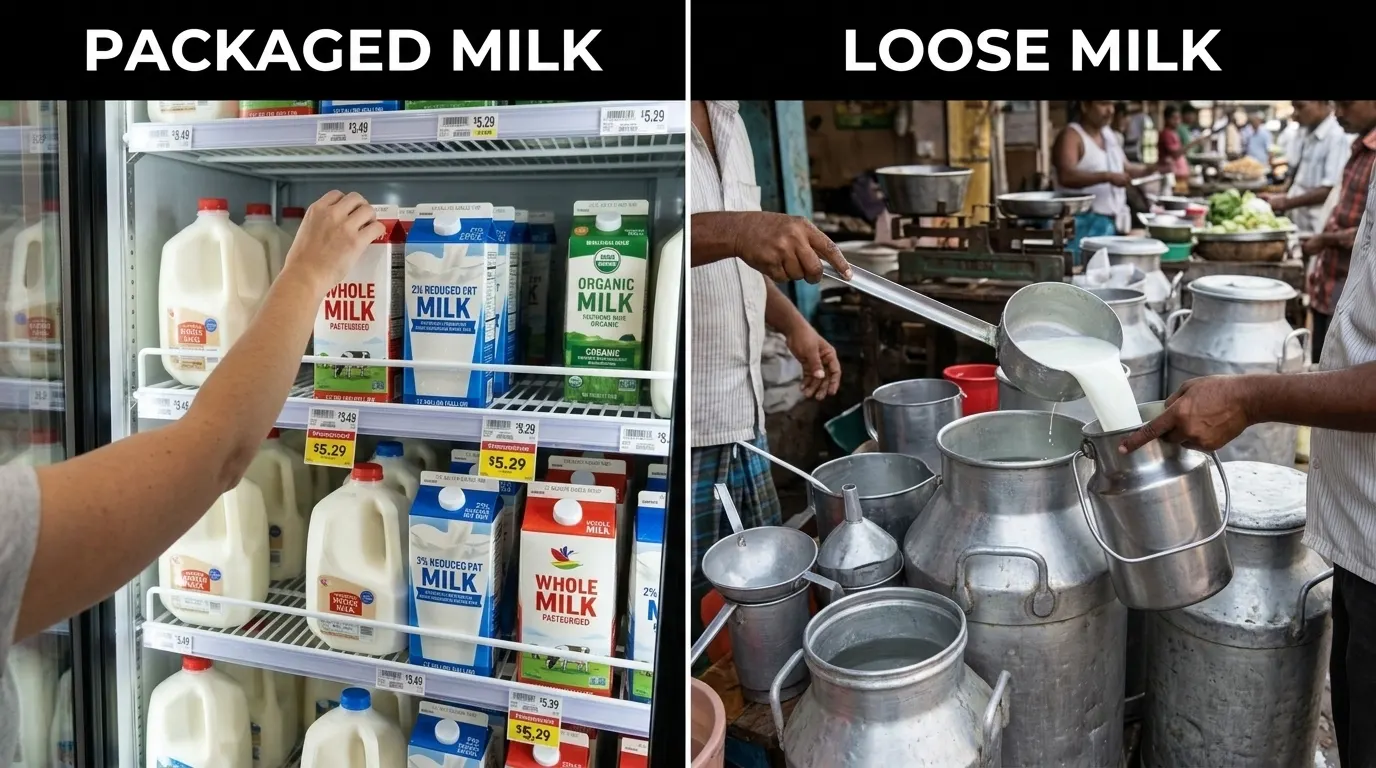
Both types of milk can be part of everyday grocery shopping, but their purchasing and handling arrangements are different.
| Comparison | Loose Milk | Packaged Milk |
|---|---|---|
| Packaging | Sold without individual sealed retail packaging | Sold in sealed cartons, bottles or pouches |
| Processing | Often sold raw or unpasteurised, unless the supplier confirms otherwise | Generally pasteurised or UHT-treated |
| Product information | Usually limited | Usually includes a product label |
| Traceability | Source may be difficult to verify | Manufacturer and batch details may be available |
| Quantity | Flexible quantities can be purchased | Available in fixed pack sizes |
| Storage | Requires careful handling and refrigeration | Depends on whether it is pasteurised or UHT milk |
| Shelf life | Generally short and depends on handling | Varies according to processing and packaging |
| Price | Varies by supplier and location | Varies by brand, type and pack size |
Milk is one example of the difference between loose and packaged grocery products. Similar considerations apply to other household items, where packaging, storage, product information and handling can affect the buying decision. Read our article on loose vs packaged grocery items to understand the wider differences between these two shopping options.
These differences are general observations, not guarantees. The quality of either option depends on the milk itself, its processing, hygiene, transportation, and storage.
What Is the Difference Between Raw, Pasteurised and UHT Milk?
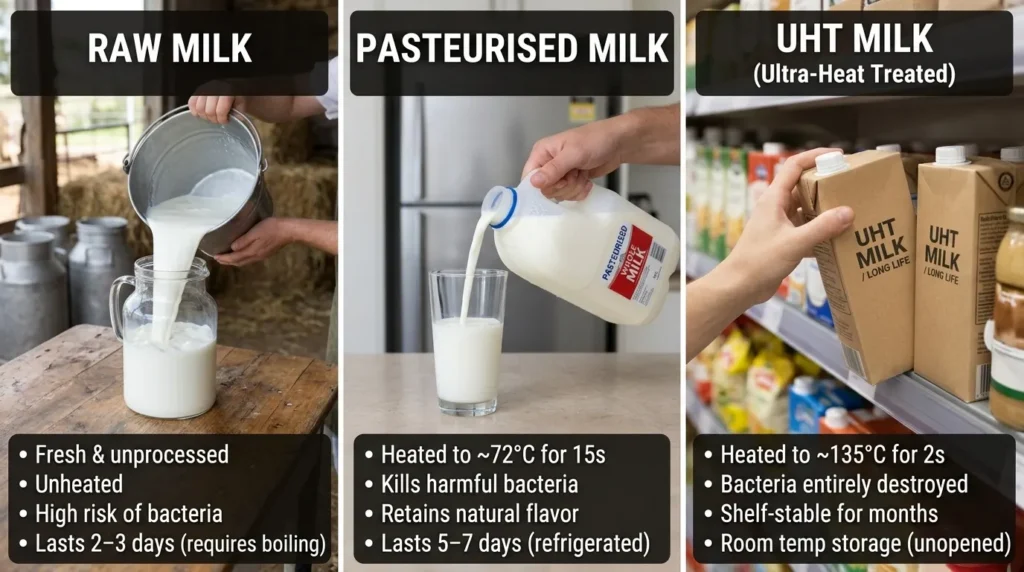
One of the most important things to understand when comparing milk products is the difference between raw milk, pasteurised milk, and UHT milk.
These terms describe different processing methods.
1. Raw Milk
Raw milk is milk that has not undergone pasteurisation or another treatment designed to eliminate harmful microorganisms.
It may be sold directly by a dairy supplier or through a local milk shop. Because it has not been pasteurised, it can contain harmful bacteria if the animal, collection equipment, transportation, or storage conditions are not properly controlled.
Raw milk may look normal and smell fresh even when it contains harmful microorganisms. Its appearance and taste cannot confirm that it is safe to drink.
2. Pasteurised Milk
Pasteurisation is a controlled heat-treatment process used to reduce harmful microorganisms in milk.
Under the Punjab Pure Food Regulations, 2018, the specified pasteurisation process includes heating milk to at least 72°C for 15 seconds and immediately cooling it to no more than 4°C in an approved plant.
Pasteurised milk must remain refrigerated during distribution and sale. The Punjab regulations specify a maximum temperature of 6°C until it reaches the consumer.
This means that refrigeration is an essential part of the safety system. Pasteurised milk should not be left at room temperature for extended periods.
3. UHT Milk
UHT stands for Ultra-High Temperature. It is a heat-treatment process that makes milk commercially sterile when combined with appropriate aseptic packaging.
The Punjab Pure Food Regulations define UHT milk as a treatment of at least 135°C for at least two seconds, followed by immediate aseptic packaging in a sterile container.
Unopened UHT milk can generally be stored at room temperature when the package instructions allow it. Once opened, it should be refrigerated and used within the period stated on the packaging.
UHT treatment does not mean that preservatives must be added to keep the unopened milk shelf-stable. The heat treatment and sterile packaging are central to the process.
Is Packaged Milk Better Than Loose Milk?
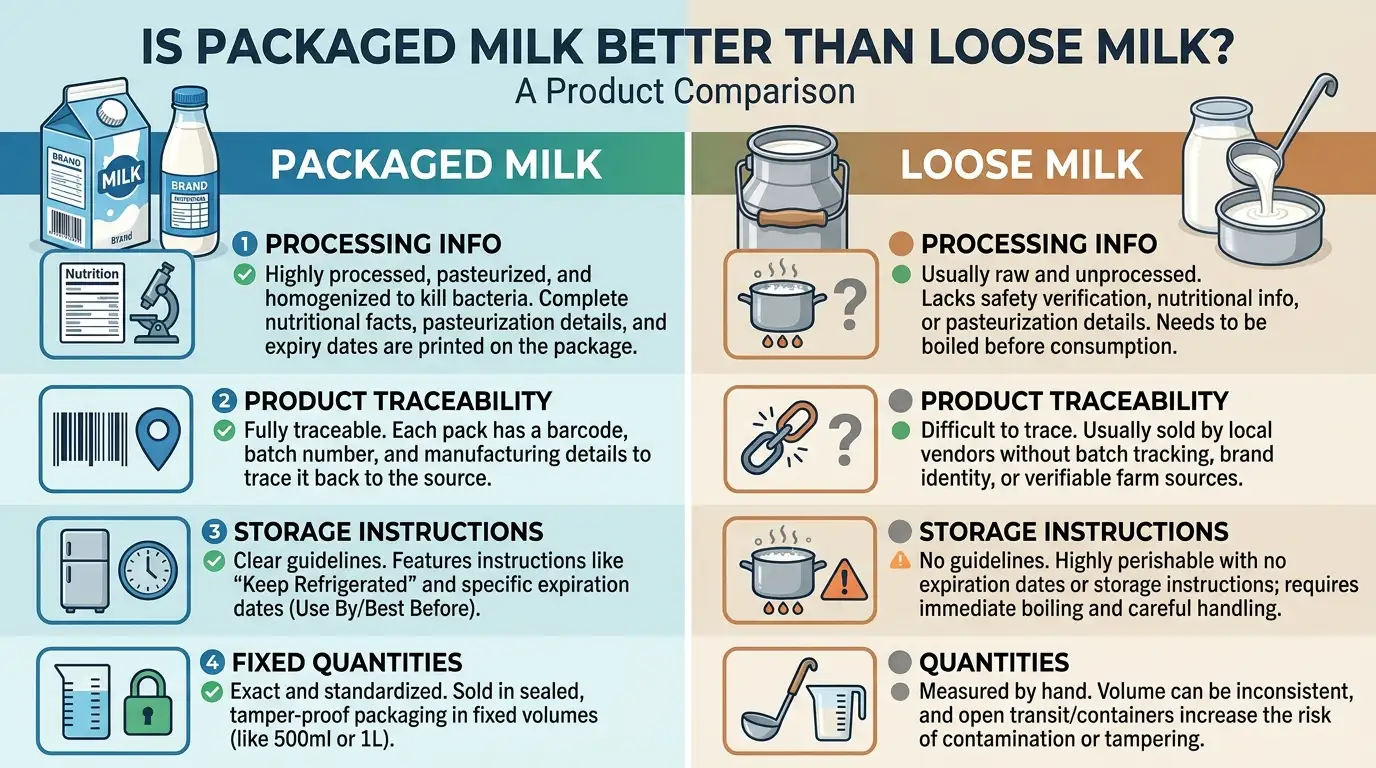
Packaged milk can offer practical advantages because it is generally processed, sealed, and labelled before reaching retailers.
Some of its advantages include:
- Processing information: The label can identify whether the product is UHT or pasteurised.
- Product traceability: Manufacturer and batch details can help identify the source of a product.
- Storage instructions: Consumers can check whether refrigeration is required.
- Fixed quantities: Different pack sizes make it easier to purchase according to household requirements.
- Product comparison: Labels help shoppers compare fat content, ingredients, and other product information.
However, these advantages do not mean that every packaged milk product automatically meets quality standards.
A packaged product may still have quality problems if it is manufactured incorrectly, transported under unsuitable conditions, stored improperly, or sold after its expiry date.
Consumers should choose products from identifiable manufacturers and retailers, check the packaging carefully, and follow the storage instructions.
Is Loose Milk Safe to Drink?
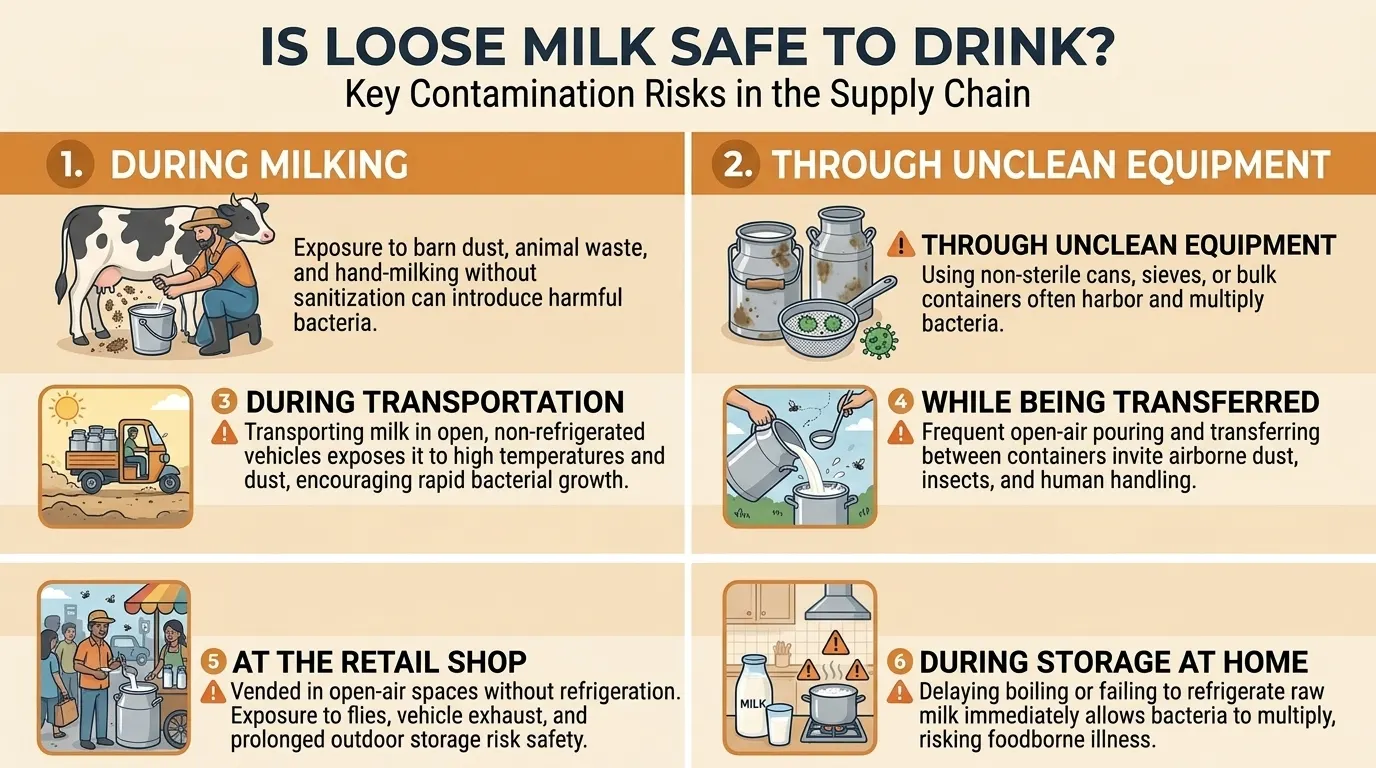
Loose milk requires particular attention because its safety depends heavily on the source and handling conditions.
Milk can become contaminated at different stages, including:
- During milking
- Through unclean collection equipment
- During transportation
- While being transferred between containers
- At the retail shop
- During storage at home
Unpasteurised milk may contain harmful microorganisms even when it appears fresh.
Boiling loose milk at home can reduce the risk from many harmful microorganisms, but it does not guarantee that the milk is free from every food safety problem. It also cannot reliably remove chemical contaminants or correct adulteration.
For this reason, consumers should not rely only on boiling, smell, taste, or appearance to determine milk quality.
When buying loose milk, consider the following:
- Purchase from a supplier who can explain where the milk comes from.
- Check whether the supplier follows hygienic collection and transportation practices.
- Avoid milk kept in uncovered or visibly unclean containers.
- Check whether the milk has been kept cool during transportation and sale.
- Refrigerate milk promptly after bringing it home.
- Avoid purchasing milk that has an unusual smell, visible contamination, or signs of spoilage.
These checks can help reduce avoidable risks, but they cannot replace proper processing and laboratory testing.
Does Packaged Milk Contain Preservatives?
A common concern among consumers is whether packaged milk contains preservatives.
According to Pakistan Standard PS 5344-2022 for packaged liquid milk, packaged full cream milk, low-fat milk, and skimmed milk must be pasteurised or UHT-treated and must be free from added preservatives under the standard.
UHT milk can remain shelf-stable while unopened because of its processing and aseptic packaging. It does not need added preservatives for this purpose.
Consumers should still read the ingredients list rather than assuming that every product sold in a milk carton has the same composition.
Some products marketed as milk drinks, flavoured milk, or tea whiteners may have different formulations from plain liquid milk. Check the product name and ingredients before purchasing.
Milk Ingredients and Nutrition: What Should You Check?
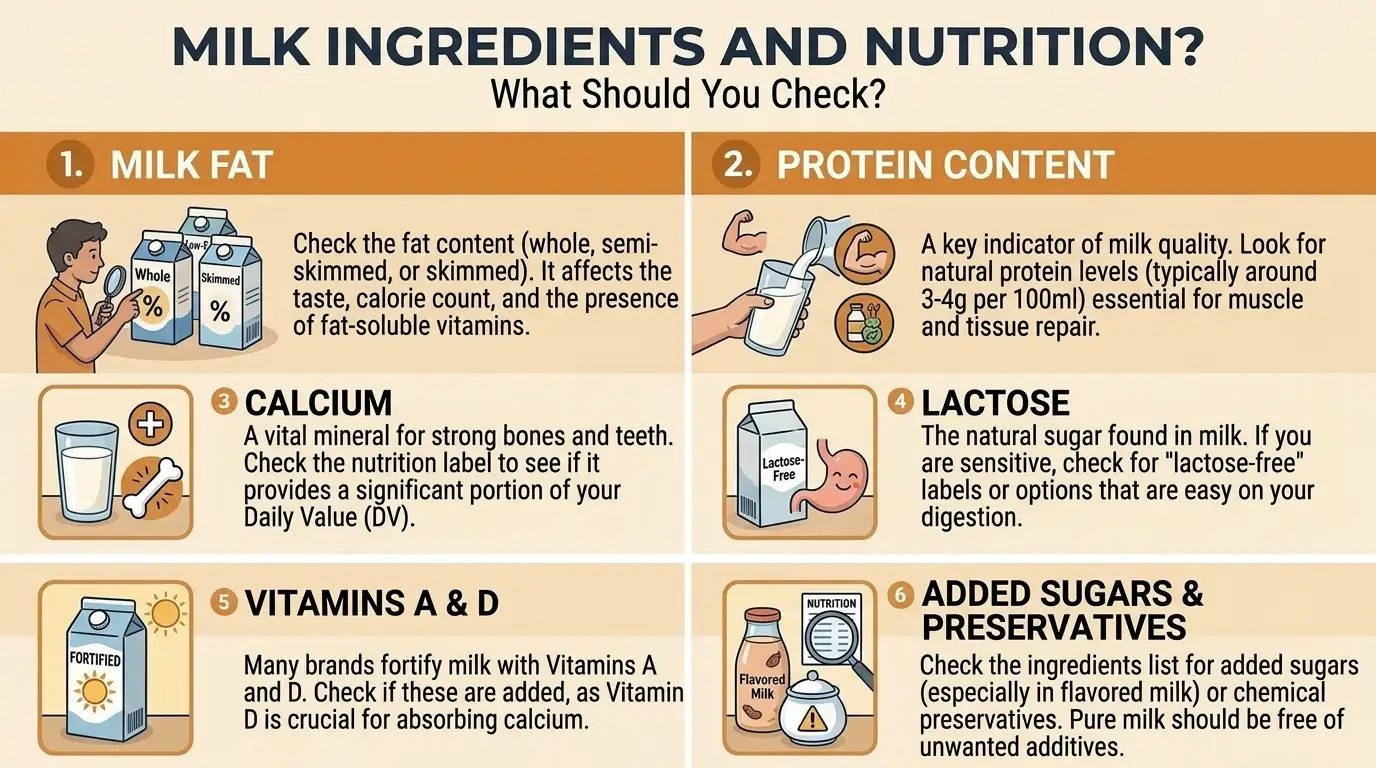
Milk naturally contains water, milk fat, proteins, lactose, and minerals. Its nutritional composition can vary depending on the animal, breed, feed, processing, and fat content.
When comparing packaged milk, the nutrition information panel can help you understand what you are buying.
Pay attention to:
Milk Fat
Milk fat contributes to the energy content and creamy texture of milk. Full cream, low-fat, and skimmed milk differ mainly in their fat content.
Protein
Milk naturally contains protein. Compare the protein figures on the nutrition labels if you want to evaluate different packaged products.
Calcium
Milk is a source of calcium, which is an important mineral for normal bone and dental health. The amount may vary between products, particularly when they have different formulations or added nutrients.
Lactose
Lactose is the naturally occurring sugar in milk. It is different from added table sugar.
If you are comparing two milk products, check the nutrition information per 100 ml where available. This makes comparison easier than relying on serving sizes that may differ between brands.
For more information about reading ingredients, nutrition panels, and storage instructions, see our article on how to read a grocery product label.
What Is the Difference Between Full Cream, Low-Fat, and Skimmed Milk?
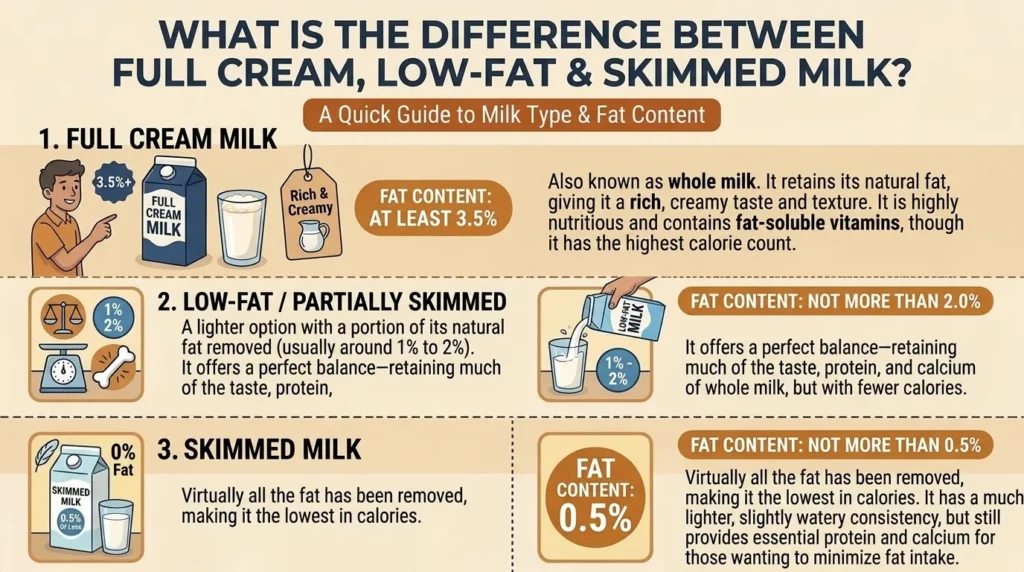
Packaged milk is available in different fat categories. These products are not necessarily different in their basic source; they are classified according to their milk fat content.
Pakistan Standard PS 5344-2022 specifies the following minimum and maximum fat levels for packaged liquid milk:
| Milk Type | Milk Fat Content |
|---|---|
| Full cream milk | At least 3.5% |
| Low-fat or partially skimmed milk | Not more than 2.0% |
| Skimmed milk | Not more than 0.5% |
Full Cream Milk
Full cream milk contains a higher proportion of milk fat compared with low-fat and skimmed varieties. It has a richer texture and is commonly used for drinking, tea, and cooking.
Low-Fat Milk
Low-fat milk contains less fat than full cream milk. It may suit consumers who prefer a product with a lower fat content.
Skimmed Milk
Skimmed milk contains a much smaller amount of milk fat. The fat is removed or reduced during processing.
The choice between these products depends on personal dietary requirements and preferences. Consumers with specific nutritional or medical needs should seek advice from a qualified healthcare professional.
How to Choose Good-Quality Packaged Milk in Pakistan
When buying packaged milk, do not select a product based only on its brand name or price.
Use these checks before placing it in your grocery basket:
- Check the product name: Confirm whether it is plain milk, flavoured milk, or another dairy beverage.
- Check the processing type: Look for pasteurised or UHT information.
- Read the ingredients: Make sure you understand what the product contains.
- Check the manufacturing and expiry dates: Avoid products with missing, unclear, or altered date information.
- Inspect the packaging: Avoid leaking, damaged, swollen, or tampered-with containers.
- Check the batch number: This can help with product identification and complaints.
- Follow storage instructions: Refrigerated milk should be kept cold, while unopened UHT milk should be stored according to the label.
- Buy from a reliable retailer: Choose a shop that handles dairy products properly.
Checking the manufacturer’s name, batch number, packaging condition, and product details is also important when buying other packaged grocery items. For more practical advice, read our article on how to spot fake grocery products in Pakistan.
The Pakistan Standards and Quality Control Authority’s Pakistan Standard for Packaged Liquid Milk (PS 5344-2022) provides requirements relating to product composition, hygiene, labelling and marking.
How to Store Milk at Home
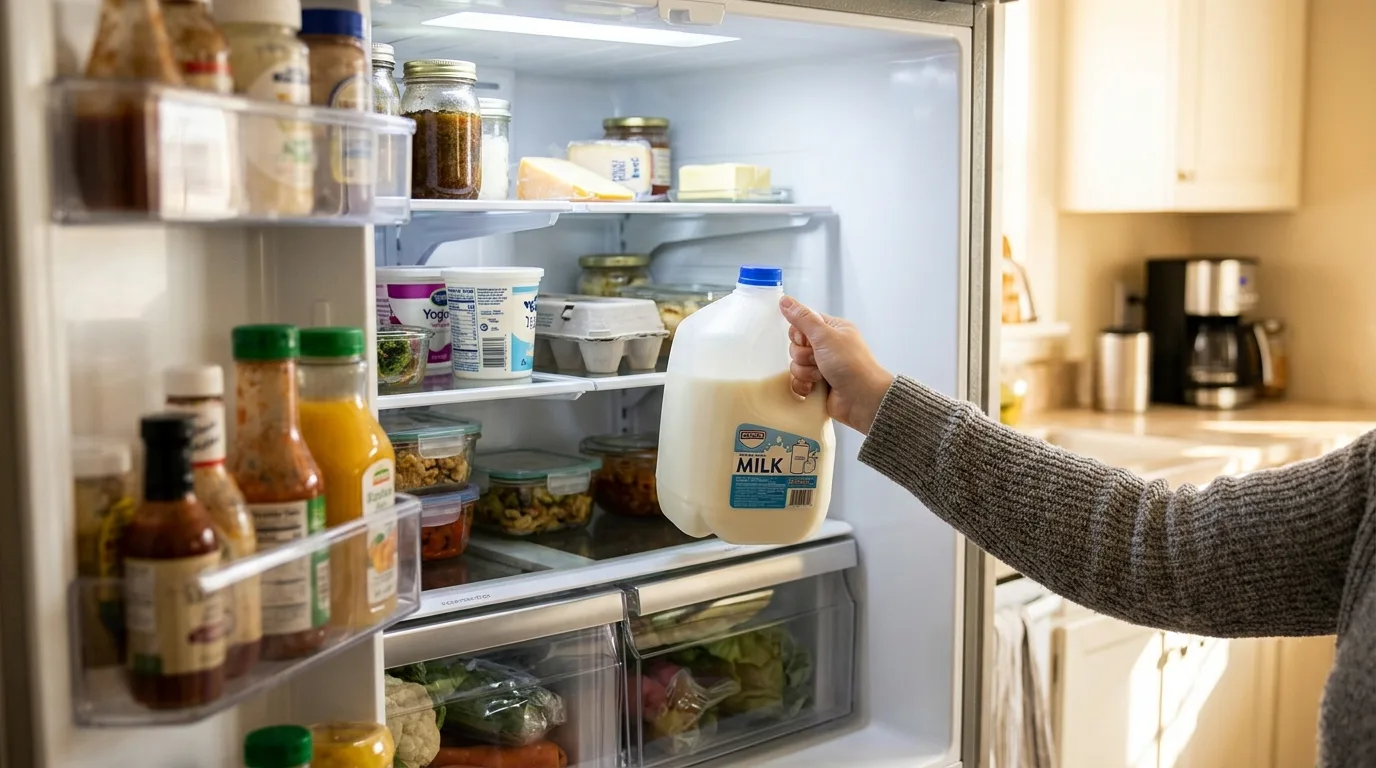
Correct storage is important for both loose and packaged milk.
Storing Loose Milk
- Transfer the milk into a clean, food-grade container.
- Refrigerate it promptly.
- Keep it covered to reduce the risk of contamination.
- Avoid repeatedly leaving it outside the refrigerator.
- Do not mix newly purchased milk with older milk without checking the condition of both.
- Follow appropriate food safety guidance for heating and handling.
If loose milk has been kept at an unsuitable temperature for an extended period, do not assume that boiling will make it safe.
Storing Pasteurised Milk
Pasteurised milk needs refrigeration. Follow the storage temperature and use-by instructions on the package.
Once opened, keep it refrigerated and avoid leaving it outside for long periods.
Storing UHT Milk
Unopened UHT milk can generally be stored in a cool, dry place away from direct sunlight, provided the package instructions allow room-temperature storage.
After opening, refrigerate it and use it within the period stated on the label.
Never use milk from a damaged, leaking, or swollen package, or milk that shows signs of spoilage.
Milk Quality in Pakistan: Why Consumers Should Be Careful
Milk quality is an important consumer issue in Pakistan because milk passes through different production, collection, transportation, and retail channels.
A 2026 official announcement by Pakistan’s Ministry of Planning reported the results of laboratory testing conducted on packaged food products. Out of 104 packaged liquid milk samples tested, 26 did not meet the prescribed standards.
This finding should not be interpreted as evidence that all packaged milk products are unsafe. The results relate to the specific samples tested. However, they demonstrate why consumers should not assume that packaging or a familiar brand name guarantees compliance.
The same announcement directed authorities to conduct a nationwide quality assessment of loose milk as well. This distinction matters because the reported packaged milk assessment did not establish the overall quality of all loose milk sold in Pakistan.
Consumers should therefore pay attention to both the product and the conditions under which it is produced, transported, stored, and sold.
The Punjab Food Authority also provides a food testing service. According to its published information, consumers in Lahore can submit a 200 ml sample of milk intended for household use to the District Food Laboratory for free testing during its stated working hours.
You can check the Punjab Food Authority’s food testing service for current details.
Which Milk Should You Buy: Packaged or Loose?
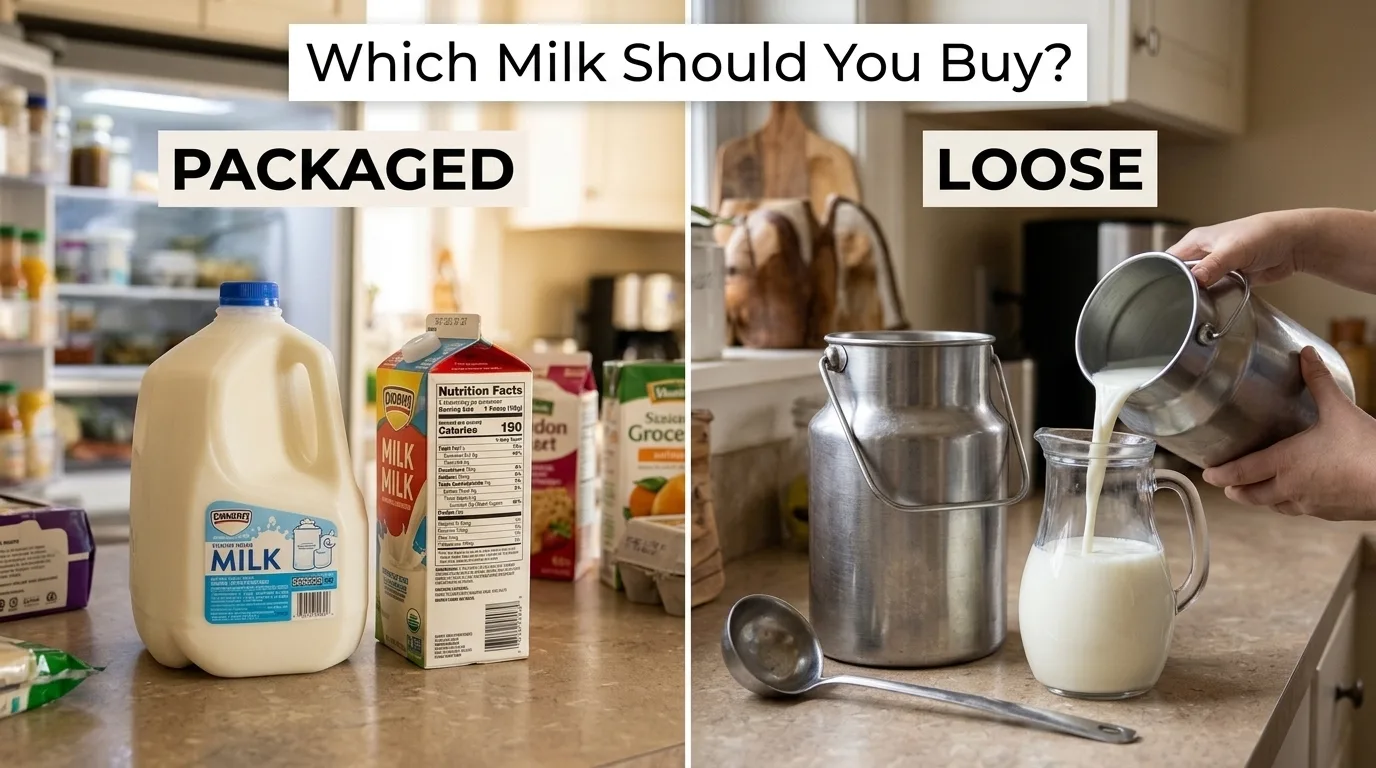
There is no sensible way to judge milk quality by packaging alone. The more important questions are whether the milk has been properly processed, handled, and stored.
For consumers who want product information, processing details, and traceability, commercially packaged pasteurised or UHT milk can be a practical choice.
Consumers who buy loose milk should pay close attention to the supplier’s hygiene practices, milk source, transportation, and storage. If the milk is raw, it carries risks that cannot be judged by appearance or smell.
When comparing prices, also consider the type of milk, fat content, quantity, and storage requirements. A cheaper product is not necessarily better value if its quality or handling is uncertain.
The best purchasing decision is based on reliable product information and food safety practices rather than assumptions that all loose milk is natural or that all packaged milk is automatically safe.
Frequently Asked Questions
1. Is packaged milk better than loose milk?
Packaged milk can offer better product information, traceability, and controlled processing. However, packaging alone does not guarantee quality. The manufacturer, processing method, transportation, and storage conditions all matter.
2. Is loose milk raw milk?
Not necessarily. Loose milk describes how milk is sold, while raw milk describes milk that has not been pasteurised or similarly treated. However, loose milk sold through traditional vendors in Pakistan is often unpasteurised.
3. Does packaged milk contain preservatives?
Packaged liquid milk that complies with Pakistan Standard PS 5344-2022 must be free from added preservatives. UHT milk can remain shelf-stable while unopened because of heat treatment and aseptic packaging.
4. What is the difference between UHT milk and pasteurised milk?
Pasteurised milk receives a controlled heat treatment to reduce harmful microorganisms and requires refrigeration. UHT milk receives a higher-temperature treatment and is aseptically packed, allowing unopened packs to remain shelf-stable when the label permits.
5. Should loose milk be boiled before drinking?
Raw or unpasteurised milk should not be consumed without appropriate heat treatment. Boiling can reduce the risk from many harmful microorganisms, but it cannot guarantee the removal of chemical contaminants or adulterants.
6. How can I check the quality of milk in Pakistan?
You can check the product label, manufacturer information, batch number, packaging condition, and storage requirements. However, these checks cannot identify every form of adulteration or contamination. Laboratory testing is a more reliable way to assess specific quality parameters.
7. What is full cream milk?
Full cream milk is milk with a higher milk fat content than low-fat or skimmed milk. Pakistan Standard PS 5344-2022 specifies a minimum milk fat content of 3.5% for packaged full cream milk.
8. Can UHT milk be stored without refrigeration?
Unopened UHT milk can generally be stored at room temperature when the packaging instructions allow it. Once opened, it should be refrigerated and used according to the manufacturer’s instructions.
Final Thoughts
Packaged and loose milk are both common purchasing options in Pakistan, but they differ in how they are sold, processed, labelled, and stored.
Packaged milk can make it easier to check product information and identify its manufacturer, while loose milk requires consumers to pay closer attention to the supplier and handling conditions. Understanding the difference between raw, pasteurised and UHT milk is particularly important when making a purchasing decision.
Before buying milk, check its source, processing method, packaging and storage requirements. A careful approach can help households make more informed grocery choices and avoid relying on assumptions about milk quality.
Syed Abdul Manan is an SEO expert and WordPress specialist with over 10 years of experience in search engine optimization and WordPress development. He holds a Bachelor of Science in Computer Science (BSCS) and is the Founder & CEO of Grocer.pk, a searchable directory of grocery stores, supermarkets, kiryana shops, and online grocery businesses across Pakistan.
With a technical foundation in computer science, he has spent the past decade working on technical SEO, on-page optimization, content strategy, and building fast, well-structured WordPress websites. For more than six years, he has been developing and managing Grocer.pk, which now covers major cities including Lahore, Karachi, Islamabad and Faisalabad, helping people find nearby stores by city, area and category, along with locations, contact details and map links.
Syed Abdul Manan runs Grocer.pk with a professional, quality-focused approach, combining clean site architecture, structured listings and practical grocery guides to serve both shoppers and business owners. His goal is to help local businesses build a stronger online presence and to help users find reliable local information quickly.
Connect with him on LinkedIn.