Oats Meaning in Urdu: What Are Oats Called in Urdu?
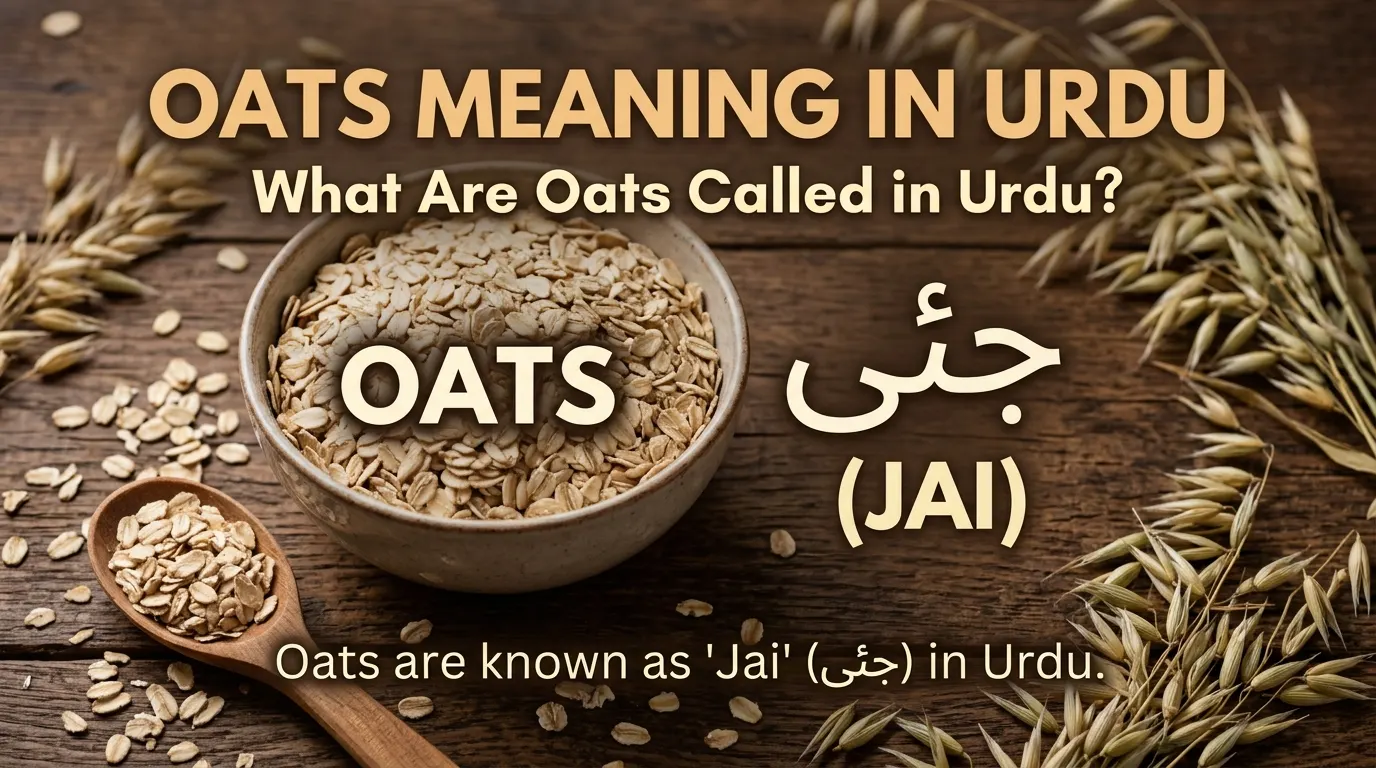
Oats Meaning in Urdu: Oats are called جئی (Jai) in Urdu. They are a cereal grain commonly eaten as porridge, breakfast cereal, or added to different recipes. In Pakistan, oats are usually sold in packets labelled as white oats, rolled oats, instant oats, or oatmeal.
There is often confusion between oats, جئی (Jai), and dalia (دلیہ). These words do not mean the same thing. Oats are a separate grain, jau means barley, and dalia usually refers to a porridge or a dish made from broken grains.
Understanding these names makes it easier to identify oats in grocery shops and choose the right product.
What Is Oats Meaning in Urdu?
The Urdu name for oats is جئی (Jai). It is pronounced ja-ee. Oats come from a cereal plant known scientifically as Avena sativa.
In Pakistan, people commonly use the English word “oats” when referring to packaged products. Some shoppers also use the word jai, particularly when asking about the grain in Urdu.
The name is also recorded as Jayi or Javi in a Pakistan-focused reference on food plants. You can read the Pakistan food plants reference for its local name and botanical information.
| English name | Urdu name |
|---|---|
| Oats | جئی (Jai) |
| Oat grain | جئی کا دانہ |
| Oat plant | جئی کا پودا |
| Oatmeal porridge | جئی کا دلیہ |
| Oat flour | جئی کا آٹا |
| Rolled oats | رولڈ جئی |
| White oats | سفید جئی |
The Urdu descriptions for processed oat products are explanatory translations. Pakistani shops generally use the English product names printed on their packaging.
Difference Between Oats, Jau and Dalia
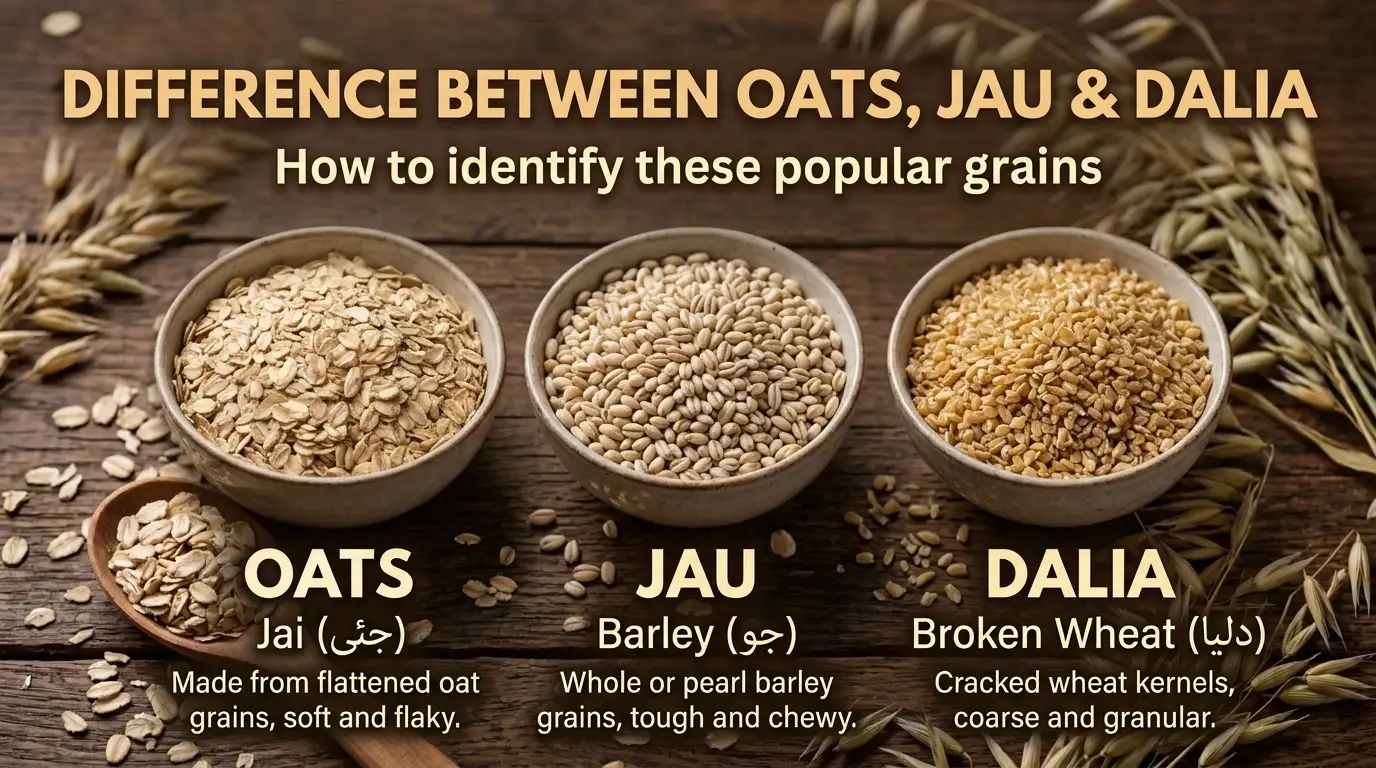
Oats, jau, and dalia are often confused because all three are associated with cereal grains and porridge. However, they are different.
| Name | Urdu | What it means |
|---|---|---|
| Oats | جئی (Jai) | A cereal grain from the oat plant |
| Barley | جو | A separate cereal grain, commonly called jau |
| Dalia | دلیہ | A porridge or dish usually made from broken wheat or another grain |
1. Oats (Jai – جئی)
Oats are a cereal grain used in breakfast meals, porridge, baking, and other recipes. Packaged oats are commonly available as rolled, quick, or instant oats.
They can be cooked with milk or water. Some people also prepare savoury oats with vegetables and spices.
2. Jau (Barley – جو)
Jau is the Urdu name for barley. It is a different grain from oats, even though both belong to the cereal grass family.
Barley is used in different foods and drinks, including barley porridge. It is also the grain traditionally used to prepare talbeena.
Remember this distinction:
- Oats = Jai (جئی)
- Barley = Jau (جو)
They are not interchangeable names.
3. Dalia (دلیہ)
Dalia is generally a porridge made from broken wheat. Depending on the recipe, it can also be prepared using other grains.
Oats can also be cooked into a porridge. This is why people sometimes call the prepared dish oats ka dalia. However, that does not mean oats and traditional wheat dalia are the same grain.
For example, wheat dalia is made from broken wheat, while oats porridge is prepared using oats.
What Are White Oats Called in Urdu?
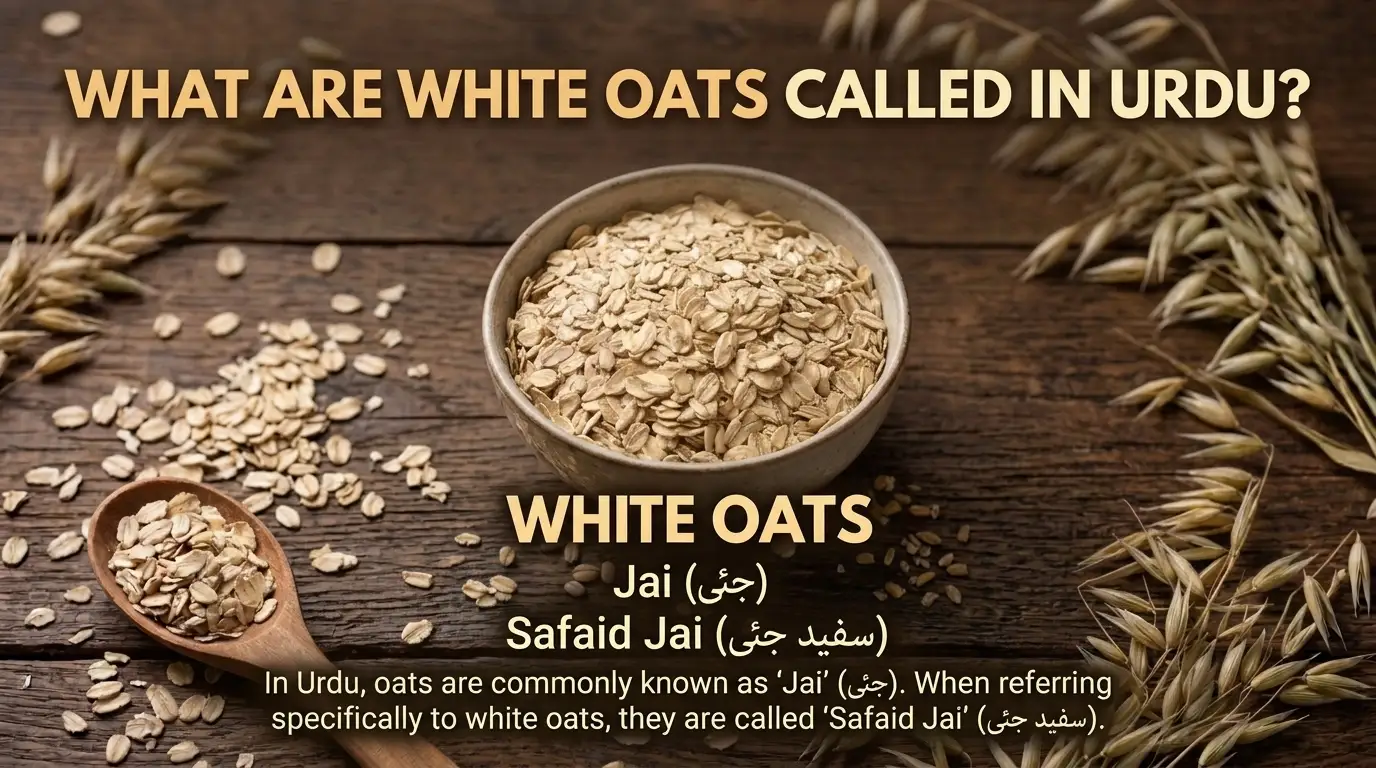
White oats are commonly described as سفید جئی (Safed Jai). However, “white oats” is a product or retail label rather than the name of a completely different cereal grain.
The exact processing method depends on the product. Check the ingredients and product description instead of assuming that every packet labelled white oats has the same texture or preparation method.
In Pakistani supermarkets, white oats are often sold as breakfast oats and may be used for porridge, overnight oats, and other recipes.
What Are Rolled Oats Called in Urdu?
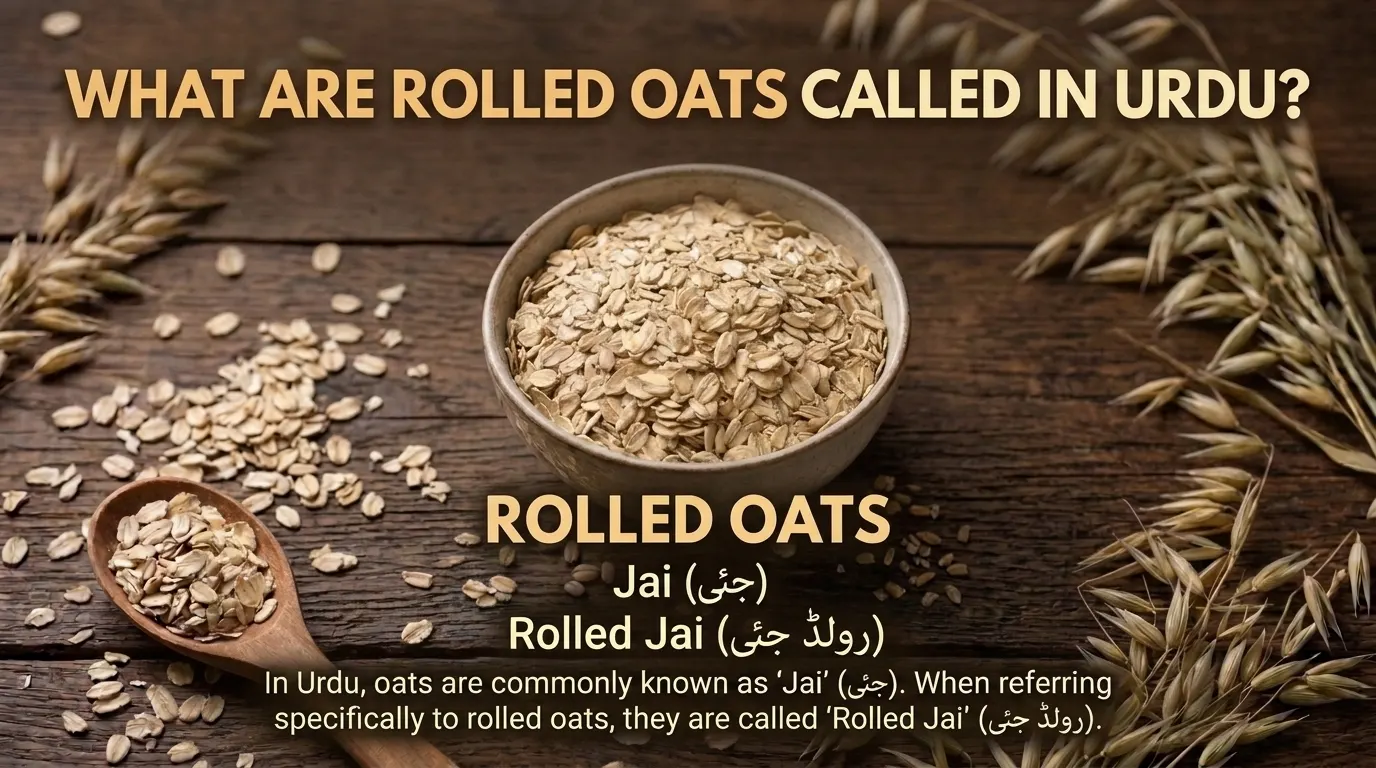
Rolled oats can be described as رولڈ جئی (Rolled Jai).
They are made by steaming oat grains and pressing them into flat flakes. This gives them their familiar flattened shape and makes them convenient for cooking.
Rolled oats are commonly used for:
- Breakfast porridge
- Overnight oats
- Oatmeal with milk
- Homemade granola
- Oat cookies and baking recipes
The term “rolled oats” describes how the grain is processed. It does not refer to a separate grain from ordinary oats.
What Is Oatmeal Called in Urdu?
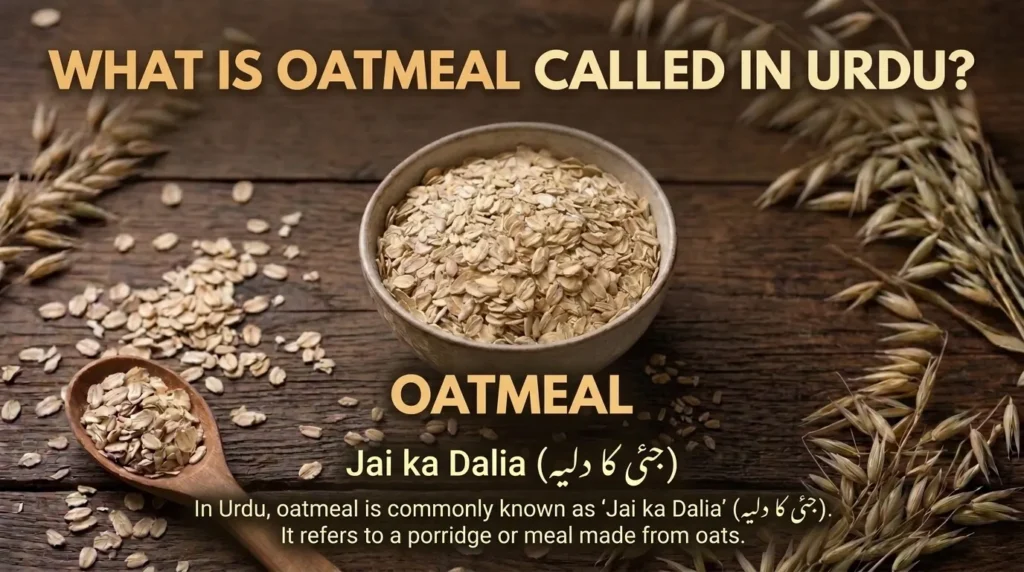
Oatmeal can mean oats or a cooked dish made from oats, depending on how the word is used.
In everyday Pakistani cooking, the prepared dish can be called جئی کا دلیہ (Jai ka Dalia).
For example, when oats are cooked with milk, water, fruit, or nuts, the resulting meal is a type of oat porridge.
It is useful to understand the difference:
- Oats are the grain.
- Oatmeal can refer to the oats or the prepared porridge.
- Jai ka dalia is a descriptive Urdu name for porridge made from oats.
How Are Oats Used in Pakistani Food?
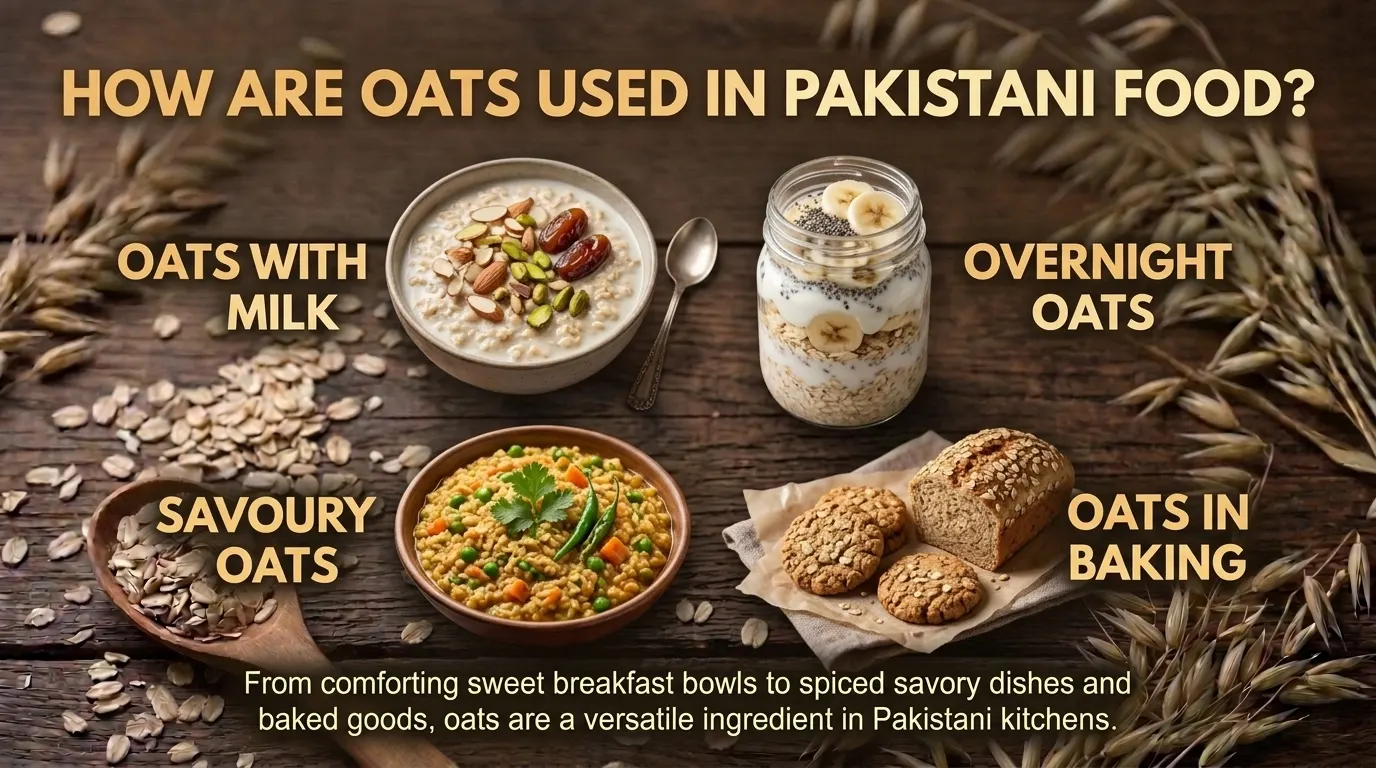
Oats are used in several simple meals. Although many people associate them with sweet breakfast porridge, they can also be prepared in savoury dishes.
1. Oats with milk
Cook oats with milk until they reach the desired consistency. Some people add dates, bananas, or nuts for flavour.
2. Overnight oats
Mix oats with milk or yoghurt and leave them covered in the refrigerator overnight. Add fruit or nuts before serving.
3. Savoury oats
Cook oats with vegetables, onions, tomatoes, and spices. This creates a savoury porridge that can be served as breakfast or a light meal.
4. Oats in baking
Oats can be used in cookies, homemade cereal bars, and some bread or baking recipes.
If you are planning your household food supplies, you can also refer to Grocer.pk’s complete grocery items list in Pakistan and Pakistani pantry staples guide.
How to Identify Oats When Shopping in Pakistan
When buying oats, look at the product name and ingredients rather than relying only on the Urdu translation.
A few practical checks can help:
- Look for “Oats”, “White Oats”, “Rolled Oats”, or “Instant Oats” on the front of the packet.
- Check the ingredient list to confirm that oats are the main ingredient.
- Check whether the product contains added sugar, flavouring, or other ingredients.
- Read the preparation instructions to understand whether the oats need cooking or can be prepared quickly.
- Check the manufacturing and expiry information before buying.
If you want to compare available varieties and understand their uses, read Grocer.pk’s Oats Price in Pakistan: Types, Uses & Buying Guide.
Frequently Asked Questions
What is Oats Meaning in Urdu?
The meaning in Urdu is جئی (Jai). It is a cereal grain used in porridge, breakfast meals, and different food recipes.
What are oats called in Pakistan?
Oats are commonly called oats in Pakistani shops. Their Urdu name is Jai (جئی). Packets may be labelled white oats, rolled oats, instant oats, or oatmeal.
Are oats called Jau in Urdu?
No. Oats are called Jai (جئی), while Jau (جو) means barley. They are two different cereal grains.
Are oats and dalia the same?
No. Oats are a grain, while dalia usually refers to a porridge made from broken wheat or other grains. Oats can be cooked into a porridge called oats ka dalia, but oats and wheat dalia are not the same.
What does white oats mean in Urdu?
White oats can be described as Safed Jai (سفید جئی). The term is commonly used on product packaging and does not necessarily identify a separate grain variety.
What are rolled oats called in Urdu?
Rolled oats can be described as Rolled Jai (رولڈ جئی). They are oat grains that have been steamed and pressed into flat flakes.
What is oatmeal called in Urdu?
Oatmeal can refer to oats or a porridge prepared from them. The cooked dish can be described as Jai ka Dalia (جئی کا دلیہ).
Is Jai the same as Jau?
No. Jai (جئی) means oats, while Jau (جو) means barley. They are different grains and have different culinary uses.
Final Thoughts
Oats are called Jai (جئی) in Urdu, not Jau (جو). Jau means barley, while dalia usually refers to a porridge made from broken wheat or another grain.
When buying oats in Pakistan, you may see product names such as white oats, rolled oats, instant oats, and oatmeal. These terms describe the product or its preparation rather than changing the Urdu name of the grain.
Syed Abdul Manan is an SEO expert and WordPress specialist with over 10 years of experience in search engine optimization and WordPress development. He holds a Bachelor of Science in Computer Science (BSCS) and is the Founder & CEO of Grocer.pk, a searchable directory of grocery stores, supermarkets, kiryana shops, and online grocery businesses across Pakistan.
With a technical foundation in computer science, he has spent the past decade working on technical SEO, on-page optimization, content strategy, and building fast, well-structured WordPress websites. For more than six years, he has been developing and managing Grocer.pk, which now covers major cities including Lahore, Karachi, Islamabad and Faisalabad, helping people find nearby stores by city, area and category, along with locations, contact details and map links.
Syed Abdul Manan runs Grocer.pk with a professional, quality-focused approach, combining clean site architecture, structured listings and practical grocery guides to serve both shoppers and business owners. His goal is to help local businesses build a stronger online presence and to help users find reliable local information quickly.
Connect with him on LinkedIn.