
How Technology Is Changing Grocery Shopping in Pakistan
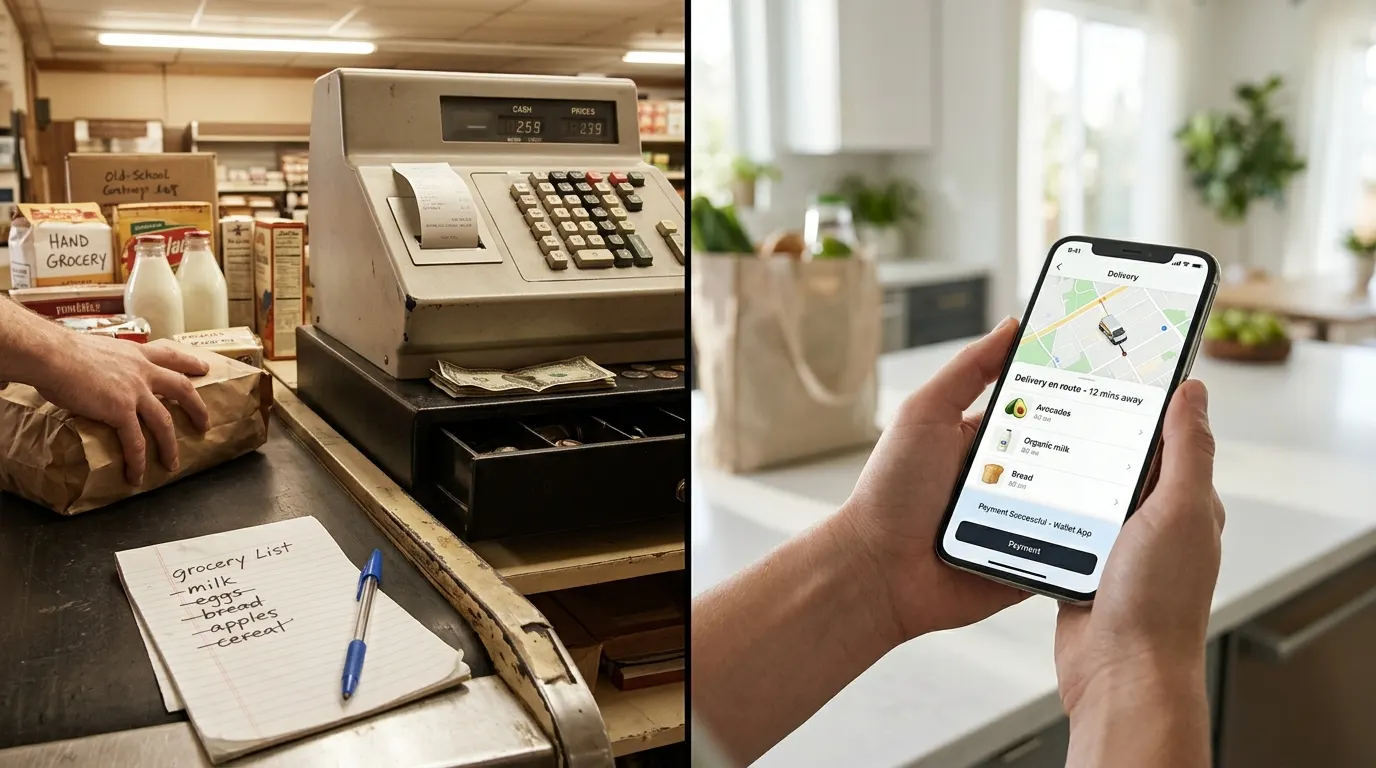
Grocery shopping in Pakistan is no longer limited to visiting a nearby kiryana shop, carrying a handwritten list, or travelling to a supermarket for monthly rashan. Today, shoppers can check products on their phones, browse online grocery catalogues, compare prices, make digital payments and, where services are available, get groceries delivered to their homes.
Technology has not replaced traditional grocery shopping. Instead, it has added more ways to find stores, plan purchases and order everyday essentials. Many families still prefer visiting local markets, while others use a combination of online orders and in-person shopping.
The change is also creating new opportunities for grocery businesses. Supermarkets can use online catalogues, delivery services, and digital payment options, while smaller stores can improve their visibility through business listings and online communication.
This article looks at how technology is changing grocery shopping in Pakistan, what shoppers should know before ordering online, and how local grocery businesses can adapt to changing customer habits.
1. Grocery Apps Are Making Shopping More Convenient
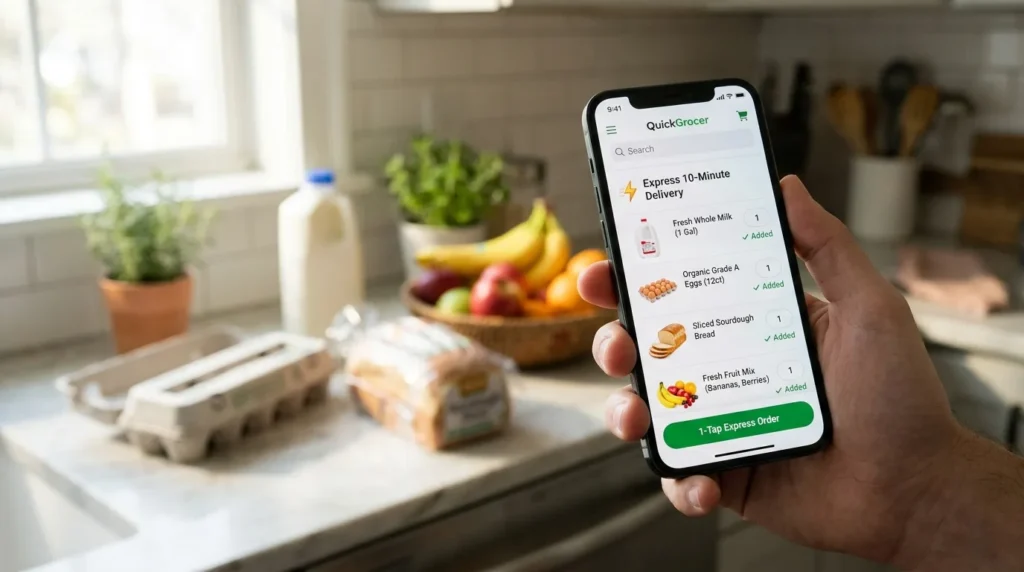
One of the most noticeable changes is the growth of mobile-based grocery shopping. Instead of travelling to a store to check its products, customers can browse an app or website and see what is available for their delivery location.
Depending on the service, shoppers may be able to order items such as flour, rice, cooking oil, milk, snacks, cleaning products and personal-care essentials. Some platforms operate through supermarkets or partner shops, while others fulfil orders through their own storage and delivery networks.
For busy households, this can save a trip to the market. It may also help people review their basket before placing an order.
However, a grocery app is only useful if it serves the customer’s area and stocks the required items. Delivery charges, minimum-order rules, product substitutions, and estimated delivery times can also affect the experience.
Before placing an order, compare the final checkout total rather than judging an app by its advertised discount alone.
For a more detailed comparison of available services, read Grocer.pk’s Grocery App in Pakistan: Best Options for Online Shopping.
2. Online Grocery Delivery Technology Is Changing How People Buy Essentials
Online grocery delivery gives customers another way to purchase everyday products. Instead of visiting a store, they can select products online and receive an order at a supported address.
In Pakistan, different services operate in different areas, and their coverage can change. A service available in one part of Karachi, Lahore or Islamabad may not cover every neighbourhood in that city.
Developments in the market show how grocery delivery is becoming part of a wider digital-services ecosystem. In January 2026, inDrive announced a grocery-delivery service in Karachi through a partnership with Krave Mart. The service allowed users to order groceries and other everyday products through the inDrive app. This was a specific launch in Karachi, not evidence that the service was already available nationwide.
Delivery technology can help customers who have limited time, need to restock household supplies, or prefer not to carry heavy shopping bags. But it does not automatically make every purchase cheaper or faster.
Customers should check the delivery area, item availability, charges, and estimated arrival time before relying on an online order for essential products.
3. Digital Payments Are Creating More Ways to Pay
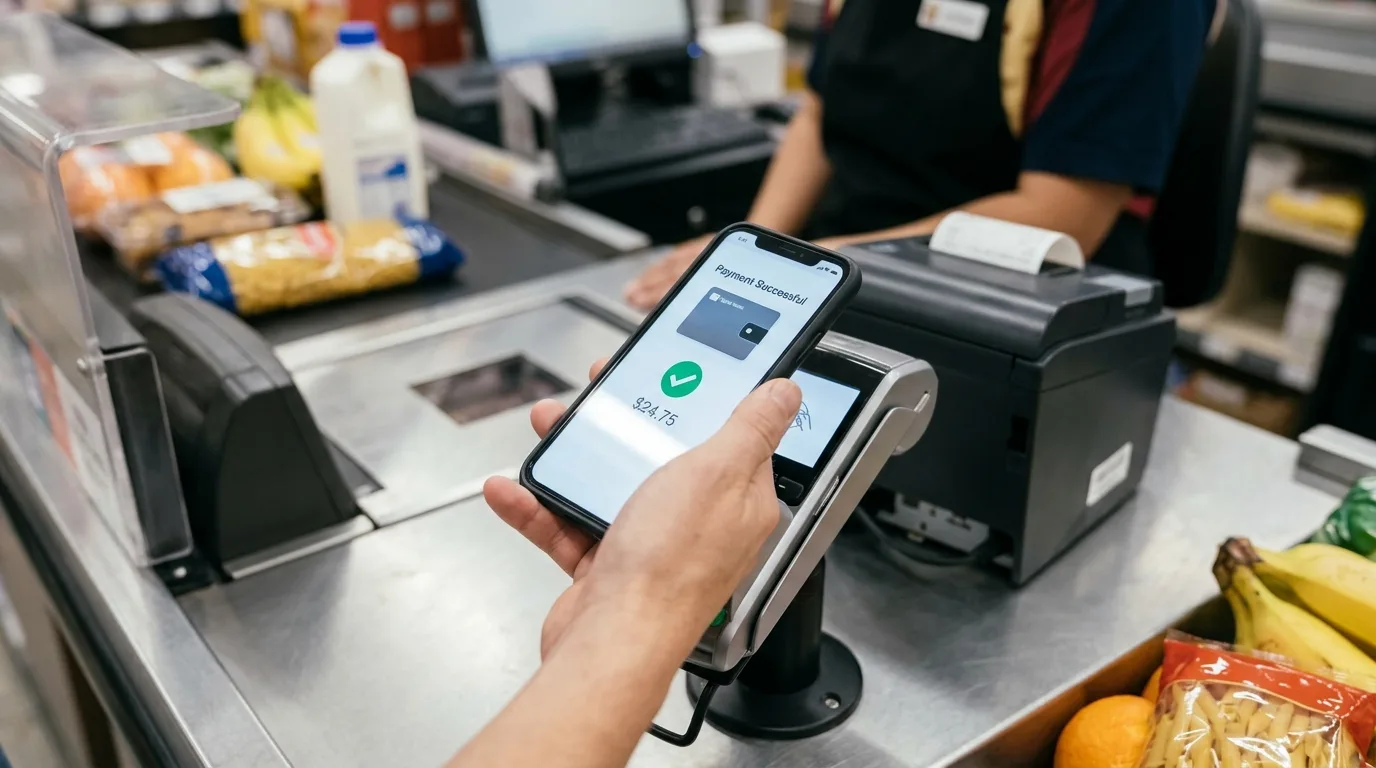
Technology is also changing how people pay for purchases. Depending on the retailer, customers may be able to pay through a debit or credit card, a mobile wallet, a bank app, a supported instant-payment option, or cash on delivery.
Digital payments can make checkout more convenient because shoppers do not always need to carry the exact amount of cash. They may also receive a digital transaction record that helps them review their spending.
Pakistan’s wider payment system has been moving towards digital transactions. The State Bank of Pakistan’s FY2025–26 payment-system reporting, covered by Associated Press of Pakistan in March 2026, reported that digital channels accounted for 92% of retail transaction volume in the second quarter of that fiscal year. This is a measure of retail transactions across the economy, not a figure specifically for grocery purchases. Source: Associated Press of Pakistan.
Cash remains relevant in online shopping, too. A Gallup and Gilani survey published in December 2025 reported that 60% of surveyed Pakistani online purchasers had paid by cash on delivery for an online purchase in the previous six months. This finding covered online purchases generally, rather than groceries alone.
For grocery businesses, offering suitable payment options can help serve customers with different preferences. For shoppers, the practical step is to check which payment methods a particular store supports before ordering.
4. Price Comparison Is Becoming Easier
In a traditional shopping trip, customers may need to visit multiple stores or ask shopkeepers for prices before deciding where to buy. Online catalogues can make some of this comparison easier because products and prices may be visible before checkout.
Technology can help shoppers compare:
- Different brands of the same product.
- Pack sizes and quantities.
- Prices per kilogram, litre, or unit.
- Available discounts and their conditions.
- Delivery charges and minimum-order requirements.
The important point is to compare like with like. A discounted 800-gram pack is not directly comparable with a 1-kilogram pack unless you account for the difference in quantity.
For example, suppose one product costs Rs. 320 for 800 grams and another costs Rs. 375 for 1 kilogram. The first costs Rs. 400 per kilogram, while the second costs Rs. 375 per kilogram. Although the first pack has a lower shelf price, the second offers the lower price per kilogram.
Online prices may differ from in-store prices, and not every local shop publishes a catalogue. Customers should check the final price and any applicable charges before completing an order.
Technology makes comparison more convenient, but the customer still needs to make an informed decision.
5. Digital Store Listings Help Customers Find Nearby Shops
Not every shopper wants home delivery. Many people still prefer buying fresh produce in person, visiting a supermarket for monthly shopping or purchasing a few items from a neighbourhood kiryana store.
Online directories and digital maps help these customers discover businesses by name, city, area, or store category. A shopper can search for supermarkets in a neighbourhood, look for a nearby grocery store, or check the address of a particular retailer before travelling.
This is where accurate local business information becomes important. A useful listing should help customers understand where a store is located and provide relevant details that can be checked before a visit.
Grocer.pk helps users browse grocery businesses through its directory, including grocery stores near you in Lahore and grocery stores in Lahore by area.
For customers, the benefit is easier discovery. For local businesses, a well-maintained online listing can help them reach people who are already searching for a grocery shop in their area.
A listing does not guarantee that every detail is current, however. Opening hours, phone numbers, stock, and delivery arrangements should be confirmed with the business when necessary.
6. Local Grocery Shops Can Use Technology Too
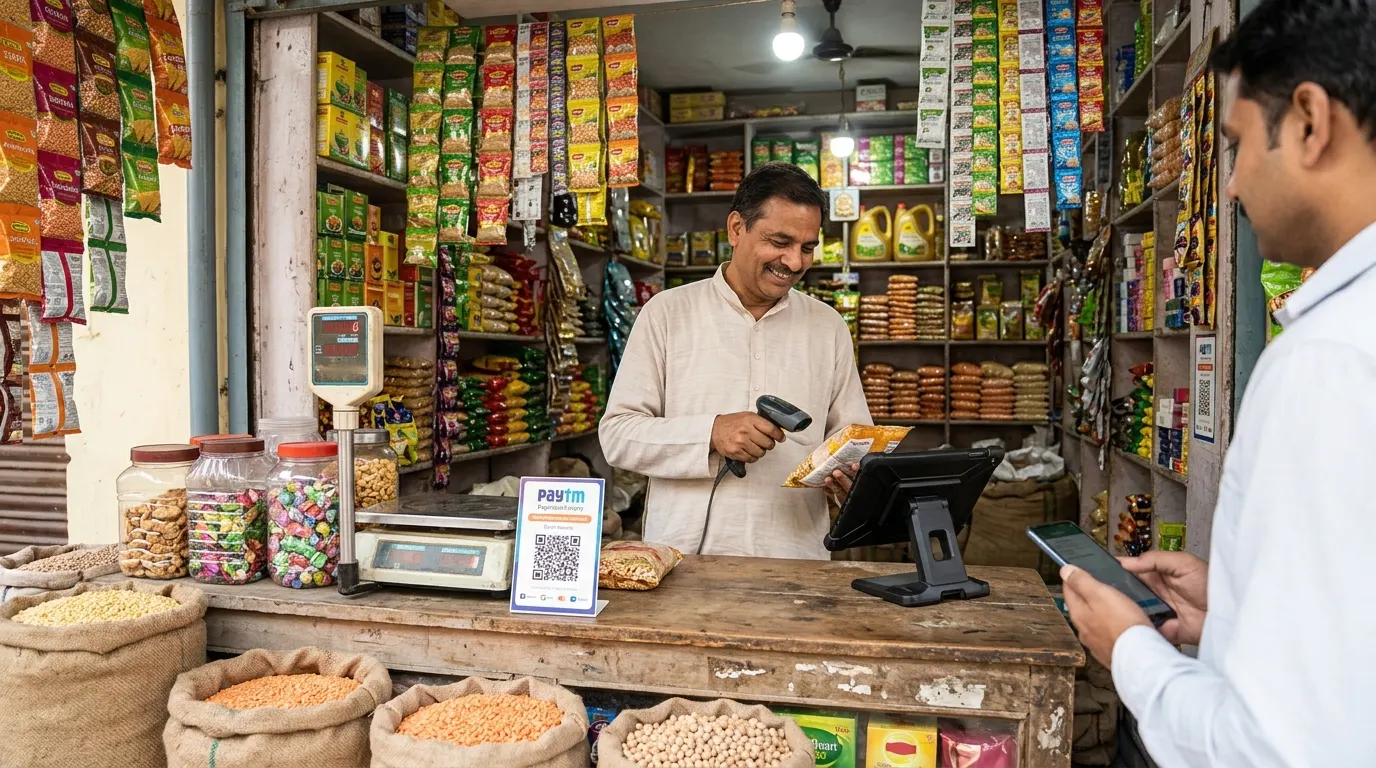
Digital grocery shopping is not only for supermarkets and delivery companies. Small grocery shops and kiryana stores can also use basic digital tools to improve how customers find and contact them.
A local shop might benefit from:
An accurate online listing: A clear business name, correct address, relevant category, and working contact details help customers identify the shop.
Digital communication: Where appropriate, a store may use messaging or phone calls to answer questions about availability, opening hours or ordering arrangements.
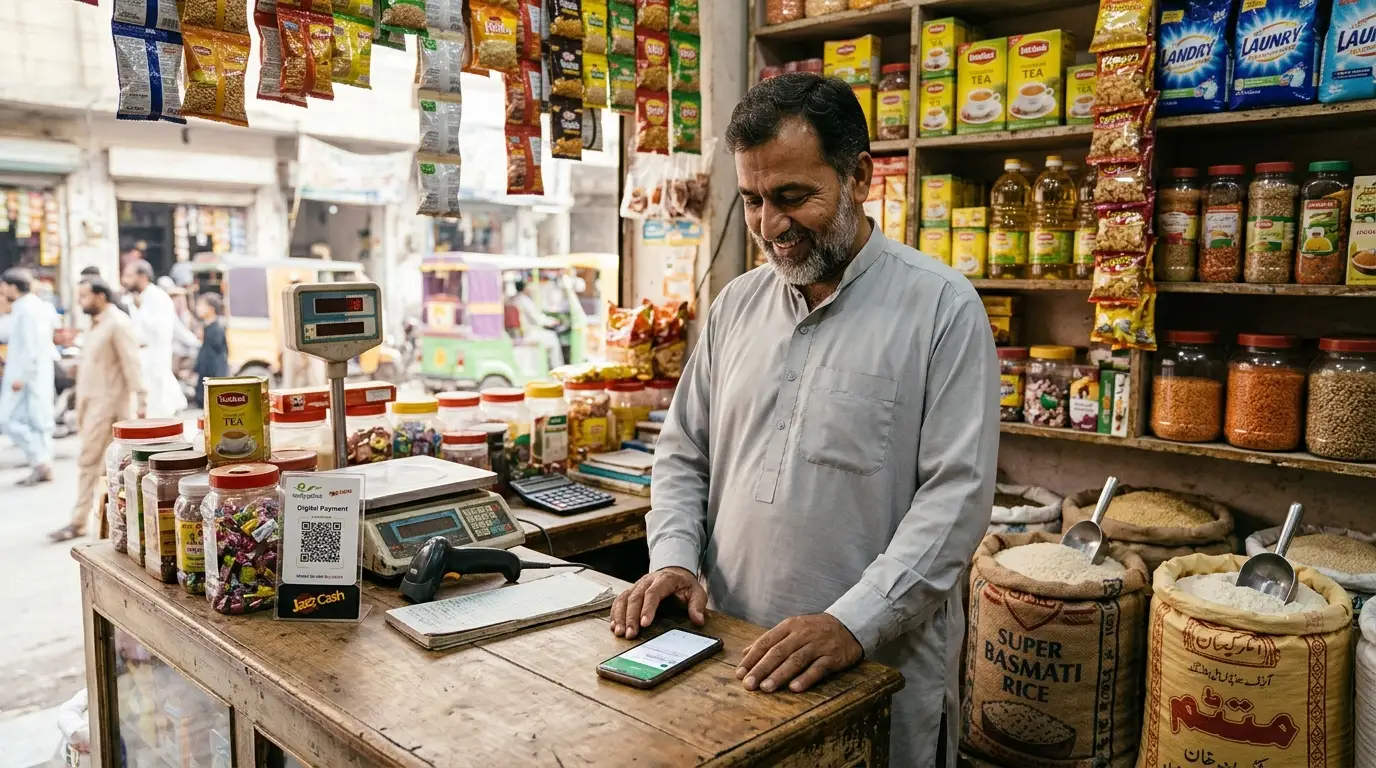
Digital payments: Supported payment methods can offer customers another way to settle their bills.
A product catalogue: A store that maintains an online product list can make it easier for customers to check what it sells, provided the information is kept up to date.
Customer feedback: Genuine customer feedback can help a business understand where its service needs improvement. Businesses should not manufacture reviews or pressure customers to leave misleading feedback.
Not every shop needs a full mobile app or a complex online store. The best starting point is often to make basic information accurate and easy to find, then add services that customers actually use.
7. Technology Can Help Families Plan Grocery Budgets
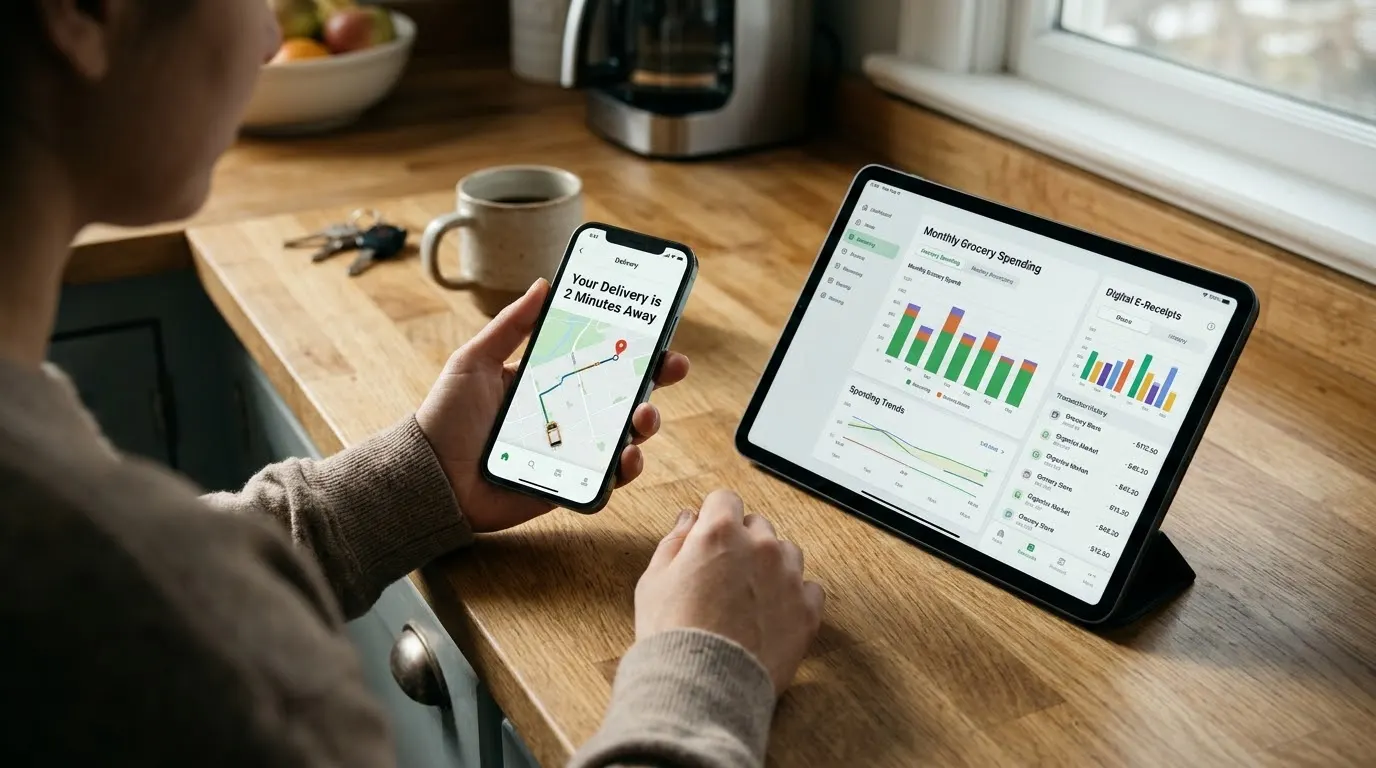
Grocery shopping often includes many small purchases that can become difficult to track over a month. Digital receipts, banking records, shopping histories, and spreadsheets can help families understand where their money is going.
A simple system can work well:
- Create a list of the groceries your household regularly uses.
- Set a monthly budget for pantry essentials and household supplies.
- Plan fresh-food purchases according to weekly needs.
- Record grocery spending using receipts or a spreadsheet.
- Review the total at the end of the week or month.
- Adjust quantities and shopping habits where you notice unnecessary spending.
Some grocery apps also keep order histories, making it easier to check what was purchased previously. However, an order history is not the same as a complete household budget, particularly if the family also shops in physical stores.
Technology is most useful when it supports a clear plan. Buying more products because an app displays a promotion can increase spending rather than reduce it.
For practical budgeting ideas, read Grocer.pk’s What Are Smart Ways to Save Money on Groceries? A Weekly and Monthly Guide.
8. Delivery Tracking and Digital Records Improve Order Management
Where a grocery service provides order tracking, customers may be able to see whether an order has been confirmed, prepared, or dispatched. Digital confirmations can also help customers keep track of the products and charges associated with an order.
These features can reduce uncertainty, but the experience depends on the provider’s systems and how accurately they are updated.
Customers should review their basket before confirming the order, check the delivery details, and keep the confirmation until the purchase is complete. If an item is missing, damaged, or replaced with an unsuitable product, the provider’s support and refund policies become important.
Grocery businesses can also benefit from digital order records. Properly managed records can help staff identify common products, track orders, and respond to customer questions.
The technology only works well when the underlying information is accurate, and there is a clear process for dealing with problems.
9. What Are the Challenges of Digital Grocery Shopping?
Technology offers convenience, but it also creates challenges that customers and businesses should consider.
Delivery coverage is not universal.
A grocery service may cover selected neighbourhoods rather than an entire city. Customers should enter their address and confirm availability before preparing a basket.
Product availability can change.
An item shown in a catalogue may become unavailable before an order is fulfilled. Customers should review substitution options and contact the provider if an item is essential.
Extra charges can affect the total.
Delivery fees, minimum-order requirements and other charges can make a small online order more expensive than buying from a nearby shop.
Customers need to protect their accounts.
Use official apps and websites, keep account passwords private, and avoid sharing one-time verification codes with people who contact you unexpectedly. Check the payment amount and recipient before approving a transaction.
Not everyone prefers online shopping.
Some customers want to inspect fruit and vegetables personally, pay in cash, or speak directly with the shopkeeper. Others may have limited internet access or find apps difficult to use.
For this reason, traditional stores remain an important part of grocery shopping. Technology is adding options rather than making every existing method unnecessary.
10. What Could the Future of Grocery Shopping Look Like in Pakistan?
The future will depend on customer needs, business investment, delivery infrastructure, and the reliability of digital services. Several developments may continue to shape the market.
Better online catalogues: More retailers may improve the accuracy of product information, pack sizes, prices and availability.
More connected payment options: Retailers may add payment methods that suit their customers, while cash remains an option where supported.
Improved order management: Businesses may use digital systems to organise orders, monitor stock and respond to customer requests.
More personalised shopping tools: Some services may help users reorder regular items or organise shopping lists. Customers should still review their baskets to avoid unnecessary purchases.
Stronger local discovery: Online directories and business profiles can help customers discover shops in specific areas without requiring every business to operate a delivery app.
These are possible directions, not guarantees that every retailer will adopt the same technology. The most successful changes will be those that solve real problems for shoppers and businesses.
How to Choose Between Online and In-Store Grocery Shopping
Neither method is always better. The right choice depends on your location, shopping list, budget, and preferences.
| Shopping need | Option to consider |
|---|---|
| Buying many household essentials at once | Compare a supermarket visit with a full online order |
| Getting a few urgent items | A nearby grocery or kiryana store may be more practical |
| Checking prices before buying | Browse online catalogues where available |
| Choosing fresh fruit and vegetables personally | In-store shopping may suit your preference |
| Avoiding travel with heavy bags | Home delivery, if available at your address |
| Finding shops in a particular neighbourhood | Use a local grocery directory or map |
Before choosing, compare the full cost, including delivery or transport, and confirm that the products you need are available.
Frequently Asked Questions
How is technology changing grocery shopping in Pakistan?
Technology is giving shoppers more ways to discover stores, browse online catalogues, compare prices, order groceries, track deliveries, and pay digitally. Traditional supermarkets, local grocery stores, and kiryana shops remain important, so the changes vary by customer and location.
Can I order groceries online in Pakistan?
Yes. Several services offer online grocery shopping in selected areas. Availability, products, delivery charges, and payment options depend on the provider and your address. Check the current details before ordering.
Are grocery apps cheaper than local shops?
Not necessarily. App prices, discounts, and delivery fees vary, while local stores may have different prices and stock. Compare the same products and quantities and include all extra charges before deciding.
How can technology help me save money on groceries?
Shopping lists, order histories, digital receipts, and price comparisons can help you plan purchases and monitor spending. They work best when combined with a budget and a habit of avoiding unnecessary purchases.
Can small kiryana stores benefit from technology?
Yes. Accurate online listings, digital communication, suitable payment options, and up-to-date product information can help small shops become easier to find and contact. They do not necessarily need to build their own app.
Is digital payment necessary for online grocery shopping?
No single payment method is available everywhere. Depending on the provider, customers may be offered cash on delivery, cards, mobile wallets, or other supported methods. Check the options shown at checkout.
Is online grocery shopping safe?
It can be safer when customers use official services, protect their login details, verify payment requests, and review order and refund policies. Avoid sharing passwords or one-time verification codes.
Final Thoughts
Technology is changing grocery shopping in Pakistan by making store discovery, online ordering, price comparison, payment, and order management easier in some situations. It is also creating new ways for local grocery businesses to connect with customers.
However, convenience does not automatically mean lower prices or better service. Delivery coverage, product availability, extra charges, and customer preferences still matter.
For shoppers, the best approach is to use technology where it solves a real problem and continue comparing options carefully. For grocery businesses, accurate digital information and reliable customer service are practical places to start.
Syed Abdul Manan is an SEO expert and WordPress specialist with over 10 years of experience in search engine optimization and WordPress development. He holds a Bachelor of Science in Computer Science (BSCS) and is the Founder & CEO of Grocer.pk, a searchable directory of grocery stores, supermarkets, kiryana shops, and online grocery businesses across Pakistan.
With a technical foundation in computer science, he has spent the past decade working on technical SEO, on-page optimization, content strategy, and building fast, well-structured WordPress websites. For more than six years, he has been developing and managing Grocer.pk, which now covers major cities including Lahore, Karachi, Islamabad and Faisalabad, helping people find nearby stores by city, area and category, along with locations, contact details and map links.
Syed Abdul Manan runs Grocer.pk with a professional, quality-focused approach, combining clean site architecture, structured listings and practical grocery guides to serve both shoppers and business owners. His goal is to help local businesses build a stronger online presence and to help users find reliable local information quickly.
Connect with him on LinkedIn.