8 Grocery Industry Trends Shaping Pakistan
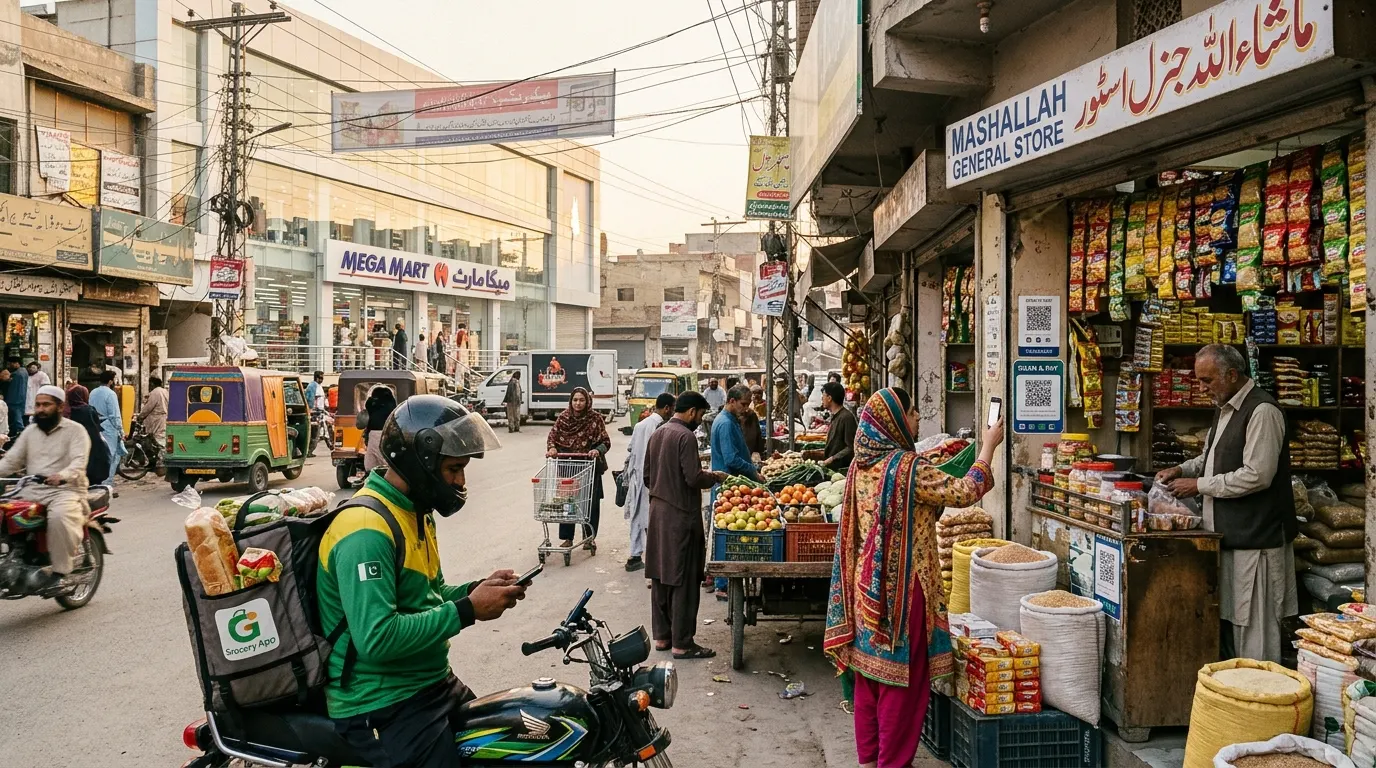
Pakistan’s grocery industry trends are changing as consumers, retailers, and food businesses adapt to new shopping habits and business challenges. Traditional kiryana stores remain important, while supermarkets, cash-and-carry outlets, and online grocery platforms offer customers more ways to buy everyday essentials.
Price changes, digital payments, delivery services, food safety, and technology are influencing how grocery businesses operate. These developments are not happening at the same speed everywhere. A supermarket in Karachi may have different resources and customer expectations from a small neighbourhood shop in Sialkot or Faisalabad.
Understanding these changes helps shoppers make better purchasing decisions and gives grocery businesses an idea of what customers may expect in the coming years.
Here are eight grocery industry trends shaping Pakistan in 2026.
1. Price-Conscious Shopping Is Influencing Grocery Purchases
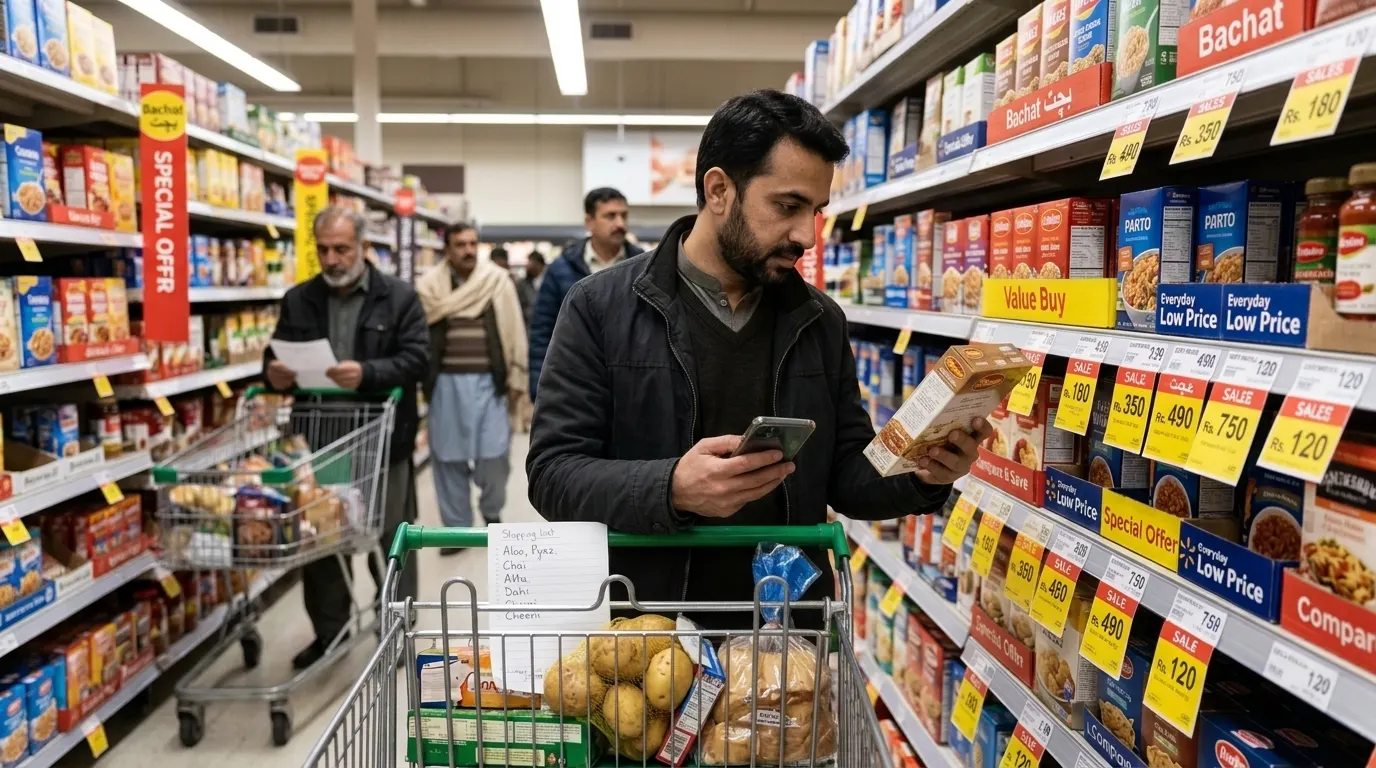
Price is a major consideration when Pakistani households buy everyday groceries. Families often compare brands, pack sizes, retailer offers, and product quality before deciding where to shop.
Changes in food prices can also affect shopping quantities and household budgets. Customers may switch to a different brand, choose a smaller pack, purchase selected items in bulk, or visit more than one shop to compare prices.
This creates pressure on grocery retailers to offer competitive prices without compromising product quality.
The Government of Pakistan has also highlighted the importance of monitoring wholesale and retail price differences. In October 2026, the National Price Monitoring Committee discussed essential commodity prices, inflation, market supplies, and wholesale-retail price gaps.
For grocery businesses, transparent pricing and genuine promotions can help build customer confidence. For shoppers, comparing the price per kilogram, litre, or unit is often more useful than looking at the discount percentage alone.
A large pack is not automatically cheaper, and a promotional offer is not always the best value.
Read more about how inflation is affecting grocery prices in Pakistan.
2. Online Grocery Shopping Is Becoming Another Retail Channel
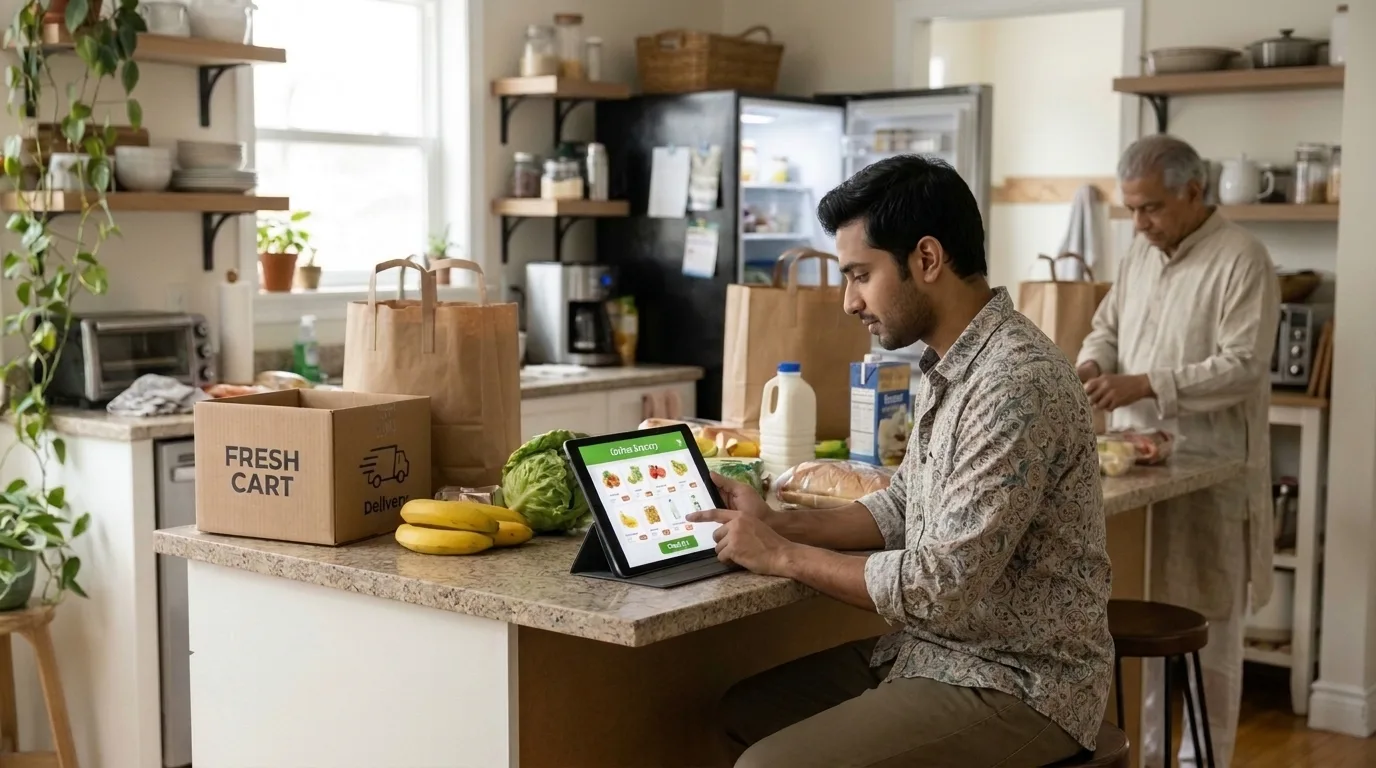
Online grocery shopping gives customers another way to purchase food and household essentials without visiting a physical store.
Depending on the service and delivery area, customers may be able to order items such as:
- Rice, flour, sugar, and pulses
- Cooking oil and packaged food
- Milk, dairy products, and beverages
- Snacks, biscuits, and breakfast items
- Cleaning products and household essentials
Convenience, delivery charges, product availability, and trust all influence whether customers choose online grocery services.
Research conducted by the Institute of Business Administration Karachi examined how online grocery channels interact with traditional grocery shopping in Pakistan. The research highlights that physical stores remain important, particularly for fresh food and products customers prefer to select themselves. Online shopping can complement traditional retail rather than simply replace it.
This creates opportunities for supermarkets and grocery businesses to offer both in-store and online purchasing options. However, retailers need accurate product listings, reliable stock information, clear delivery charges, and a practical process for handling unavailable products.
Customers can also browse online grocery stores in Pakistan to explore businesses offering online shopping services.
3. Digital Payments Are Changing Retail Transactions
Cash is still useful for everyday grocery purchases, but digital payment methods are becoming more visible across Pakistan’s retail economy.
Customers may encounter:
- Debit and credit card payments
- Mobile banking applications
- Mobile wallets
- QR-code payments
- Raast-based merchant payments
The State Bank of Pakistan’s Payment Systems Review for January–March 2026 reported that digital channels accounted for 92% of formal retail payment transactions by volume during that quarter. This figure covers the wider formal payment system, not grocery stores alone, but it shows the growing importance of digital payment infrastructure.
For grocery retailers, accepting suitable digital payment options can make checkout more convenient and provide customers with transaction records. It may also help businesses maintain better records of sales received through supported payment channels.
However, smaller shops may face practical challenges such as transaction fees, unreliable internet access, device availability, and staff training.
Retailers should select payment options that are reliable and suitable for their business size. Customers should also confirm that a payment has been completed before leaving the checkout counter.
4. Neighbourhood Kiryana Stores Are Adapting to Modern Shopping Needs
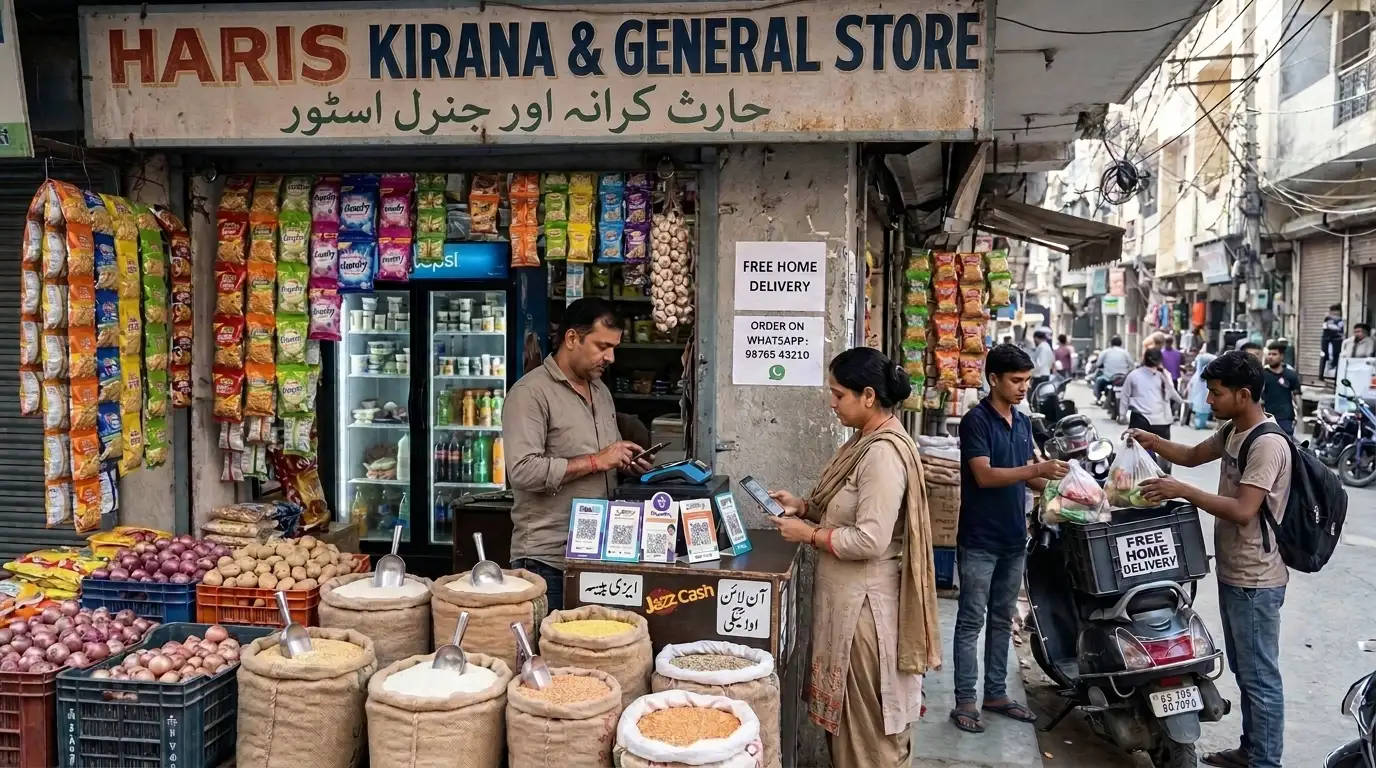
Traditional kiryana stores continue to play an important role in Pakistan’s grocery market. Their proximity, personal relationships with customers, smaller purchase quantities, and familiarity with local households make them useful for everyday shopping.
A customer may visit a nearby shop for milk, bread, eggs, tea, sugar, or a small quantity of another essential product rather than travelling to a supermarket.
At the same time, neighbourhood retailers can improve their businesses through practical changes, including:
- Keeping frequently purchased products in stock
- Maintaining clear prices
- Accepting convenient payment methods
- Recording regular customer orders
- Offering phone or messaging-based ordering
- Improving product storage and shop cleanliness
Not every kiryana store needs a mobile application or a complicated digital system. Simple improvements can make daily operations more organised.
The opportunity is to combine the convenience and local relationships of traditional retail with better stock management and customer service.
You can browse kiryana stores in Pakistan to see how neighbourhood grocery businesses are represented across different areas.
5. Supply Chain Management and Product Availability Matter More
A grocery business cannot serve customers properly if essential products are frequently unavailable.
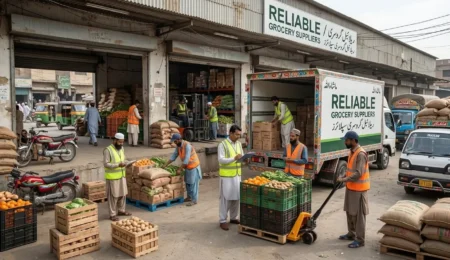
Retailers depend on manufacturers, distributors, wholesalers, transport services, warehouses, and local suppliers to keep products moving from production facilities to store shelves.
Disruptions at any stage can affect product availability and costs. Seasonal changes, transport problems, weather conditions, storage limitations, and delays in distribution can all create challenges for grocery businesses.
Better supply chain management involves:
- Monitoring stock levels
- Identifying products that sell quickly
- Planning orders before stock runs out
- Maintaining relationships with reliable suppliers
- Reducing unnecessary inventory
- Tracking expiry dates
- Improving storage and handling practices
Fresh food requires particular attention because fruits, vegetables, dairy products, and meat can lose quality when storage and transportation conditions are unsuitable.
For supermarkets and larger grocery retailers, better inventory systems can help reduce stock shortages and unnecessary waste. Smaller shops can also benefit from simple stock registers and regular supplier checks.
6. Food Safety, Product Labels, and Traceability Are Important
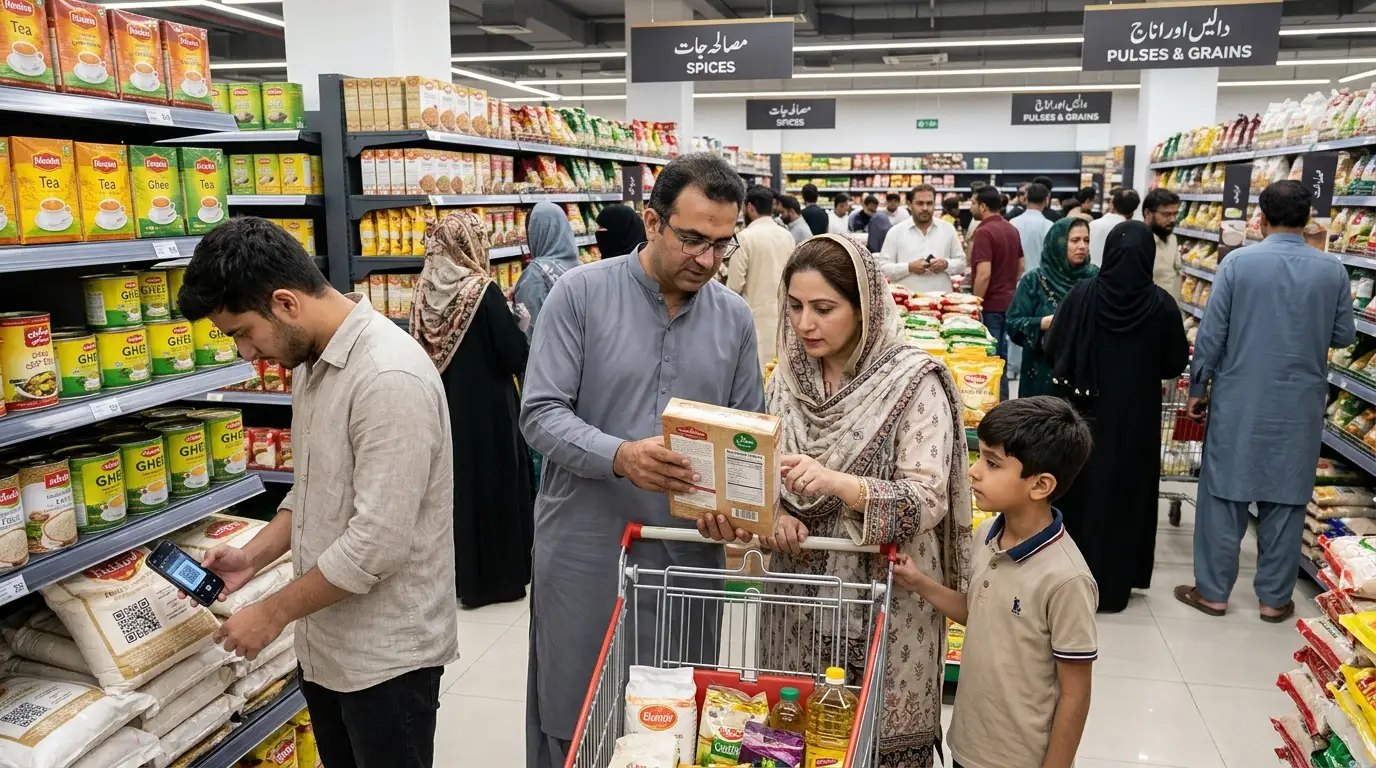
Customers want to know what they are buying, particularly when purchasing packaged food, dairy products, cooking ingredients, and other items consumed regularly.
Product labels provide useful information such as ingredients, net weight, manufacturing details, expiry dates, storage instructions, and nutritional information where applicable.
Food businesses also need to pay attention to hygiene, proper storage, and handling practices. These factors are especially important for products that require refrigeration or have shorter shelf lives.
Another relevant development is product traceability. Traceability means being able to identify where a product came from and follow its movement through different stages of the supply chain.
For example, a retailer may need to identify a supplier or batch when a product quality issue is reported. Better records can make it easier to investigate such problems and manage affected stock.
Customers should check packaging condition, expiry dates, ingredients, and storage instructions before purchasing. Businesses should follow the food-safety requirements applicable to their location and product category.
For official food-safety information in Punjab, visit the Punjab Food Authority.
7. Private-Label Products and Local Brands Present New Opportunities
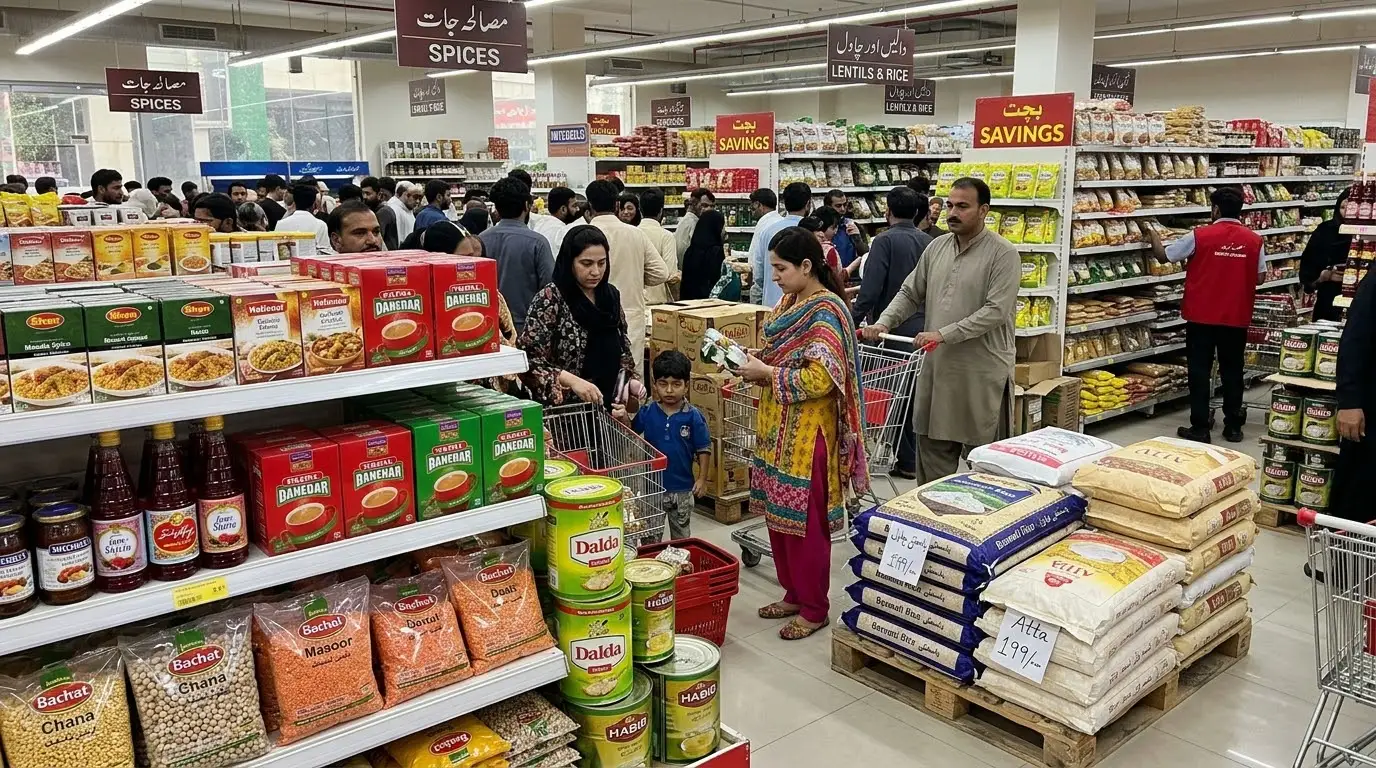
Private-label products are items sold under a retailer’s own brand rather than the brand of an independent manufacturer.
In international grocery markets, supermarket-owned brands are an established retail category. They can give retailers more control over product selection, pricing, and packaging.
For Pakistan, this is a potential growth opportunity, but it should not be treated as an established nationwide shift without reliable market data.
Retailers interested in developing their own product ranges need to consider several factors:
- Consistent product quality
- Reliable manufacturing partners
- Appropriate food-safety compliance
- Clear packaging and labelling
- Competitive pricing
- Customer trust
Local food manufacturers and regional brands also have opportunities to reach customers through supermarkets and online grocery channels.
For shoppers, a new or unfamiliar brand should be judged by its ingredients, quality, packaging, price, and reliability rather than its label alone.
8. Technology and Data Are Creating New Opportunities for Grocery Businesses
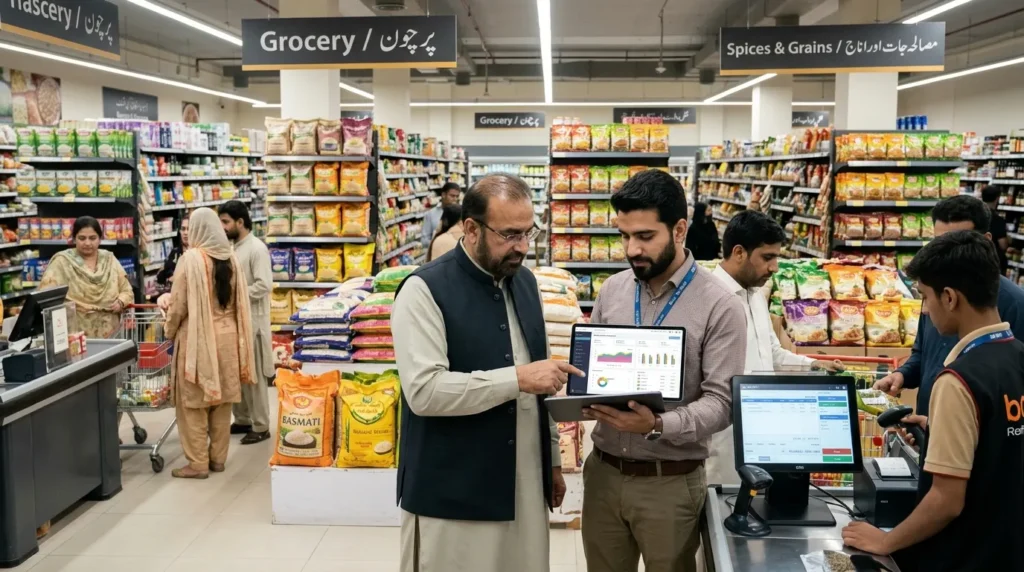
Technology is becoming relevant to more parts of grocery retail, from stock management to customer communication.
Larger retailers can use digital systems to monitor inventory, review sales patterns, manage supplier orders, and understand which products customers purchase regularly.
Some businesses may also explore artificial intelligence and data analytics for tasks such as demand forecasting, personalised offers, and identifying products that need replenishment.
These technologies are opportunities rather than proof that every Pakistani grocery retailer is already using AI.
Smaller businesses can start with simpler tools, including digital sales records, spreadsheets, inventory applications, and messaging platforms for customer orders.
The main purpose is practical: reduce manual errors, understand customer demand, avoid unnecessary stock, and make business decisions using better information.
For a closer look at the role of technology in supermarket shopping, read 6 Supermarket Trends Reshaping Grocery Shopping in Pakistan.
What These Grocery Industry Trends Mean for Pakistani Businesses
These trends show that grocery retail is not limited to selling products from shelves. Businesses must also consider customer budgets, product availability, payment options, supply chain reliability, and the shopping experience.
Different retail formats may respond in different ways.
Supermarkets can focus on product variety, organised shopping spaces, reliable stock, and convenient checkout options.
Cash and carry outlets can serve customers looking for larger pack sizes, bulk purchases, and a broad selection of household products.
Neighbourhood grocery stores can compete through proximity, personal service, smaller quantities, and quick access to everyday essentials.
Online grocery businesses need accurate product information, dependable delivery, clear charges, and customer support.
You can explore the different retail formats through Grocer.pk:
- Supermarkets in Pakistan
- Grocery stores in Pakistan
- Kiryana stores in Pakistan
- Online grocery stores in Pakistan
Frequently Asked Questions
What are the main grocery industry trends in Pakistan in 2026?
Important developments include price-conscious shopping, online grocery services, digital payments, neighbourhood store improvements, supply chain management, food safety, private-label opportunities, and the use of retail technology.
Is online grocery shopping replacing traditional grocery stores?
No. Online grocery services provide another purchasing option, but physical stores remain important for fresh food, immediate purchases, personal service, and product selection. Both channels can serve different customer needs.
Why are digital payments important for grocery businesses?
Digital payments can make checkout more convenient and help businesses maintain transaction records. The payment options available depend on the retailer’s facilities and the customer’s preferred payment method.
What is a private-label grocery product?
A private-label product is sold under a retailer’s own brand. The retailer generally works with a manufacturer to produce or package the product according to agreed specifications.
How can small kiryana stores compete with supermarkets?
Small stores can focus on nearby customers, convenient access, smaller purchase quantities, reliable everyday stock, personal service, and suitable digital payment options.
Why is supply chain management important in the grocery industry?
Supply chain management helps businesses maintain product availability, manage stock, coordinate suppliers, reduce waste, and handle products properly during storage and transportation.
How is technology helping grocery businesses?
Digital systems can support inventory management, sales tracking, customer orders, supplier coordination, and demand planning. More advanced businesses may also explore analytics and AI-based tools.
Final Thoughts
Pakistan’s grocery industry is developing through changes in consumer behaviour, retail operations, and technology. Customers want reasonable prices, convenient shopping, reliable products, and more ways to make purchases.
At the same time, grocery businesses must manage stock, maintain food quality, work with suppliers, and adapt to changing customer expectations.
The future will not belong to one type of retailer alone. Supermarkets, online grocery platforms, cash and carry outlets, and neighbourhood kiryana stores can all remain relevant by serving customers in ways that match their needs.
Article research note: This article discusses developments and opportunities visible in Pakistan’s grocery and retail environment in 2026. Some trends, such as digital payments, are supported by national data, while others, including private-label expansion and AI adoption, are presented as emerging opportunities rather than confirmed nationwide practices.
Syed Abdul Manan is an SEO expert and WordPress specialist with over 10 years of experience in search engine optimization and WordPress development. He holds a Bachelor of Science in Computer Science (BSCS) and is the Founder & CEO of Grocer.pk, a searchable directory of grocery stores, supermarkets, kiryana shops, and online grocery businesses across Pakistan.
With a technical foundation in computer science, he has spent the past decade working on technical SEO, on-page optimization, content strategy, and building fast, well-structured WordPress websites. For more than six years, he has been developing and managing Grocer.pk, which now covers major cities including Lahore, Karachi, Islamabad and Faisalabad, helping people find nearby stores by city, area and category, along with locations, contact details and map links.
Syed Abdul Manan runs Grocer.pk with a professional, quality-focused approach, combining clean site architecture, structured listings and practical grocery guides to serve both shoppers and business owners. His goal is to help local businesses build a stronger online presence and to help users find reliable local information quickly.
Connect with him on LinkedIn.