Types of Atta and Flour Used in Pakistan
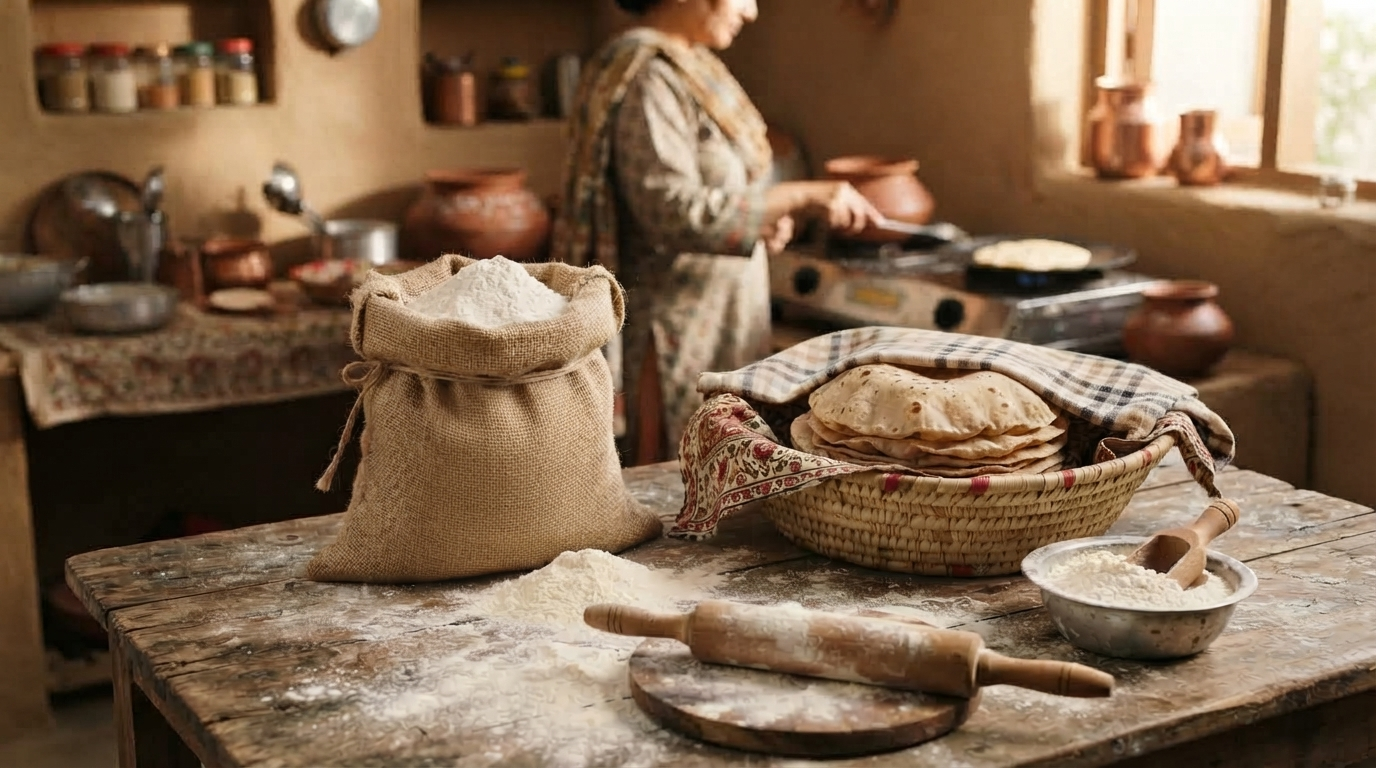
Walk into any Pakistani kitchen, and you will almost always find a big container of Atta and Flour. Roti, paratha, puri, pakora — most of our daily food starts with some kind of flour. But if you look closely at the market, you will notice that Atta and Flour are not just one thing. There are several types, and each one behaves differently when you cook with it.
Many people buy whatever is available without thinking much. Sometimes the roti turns out hard, sometimes the pakoras break, and sometimes the dough feels sticky. A lot of these small problems come from using the wrong type of flour for the dish. So it helps to know the basic differences.
Types of Atta and Flour You Will Find
Chakki Atta
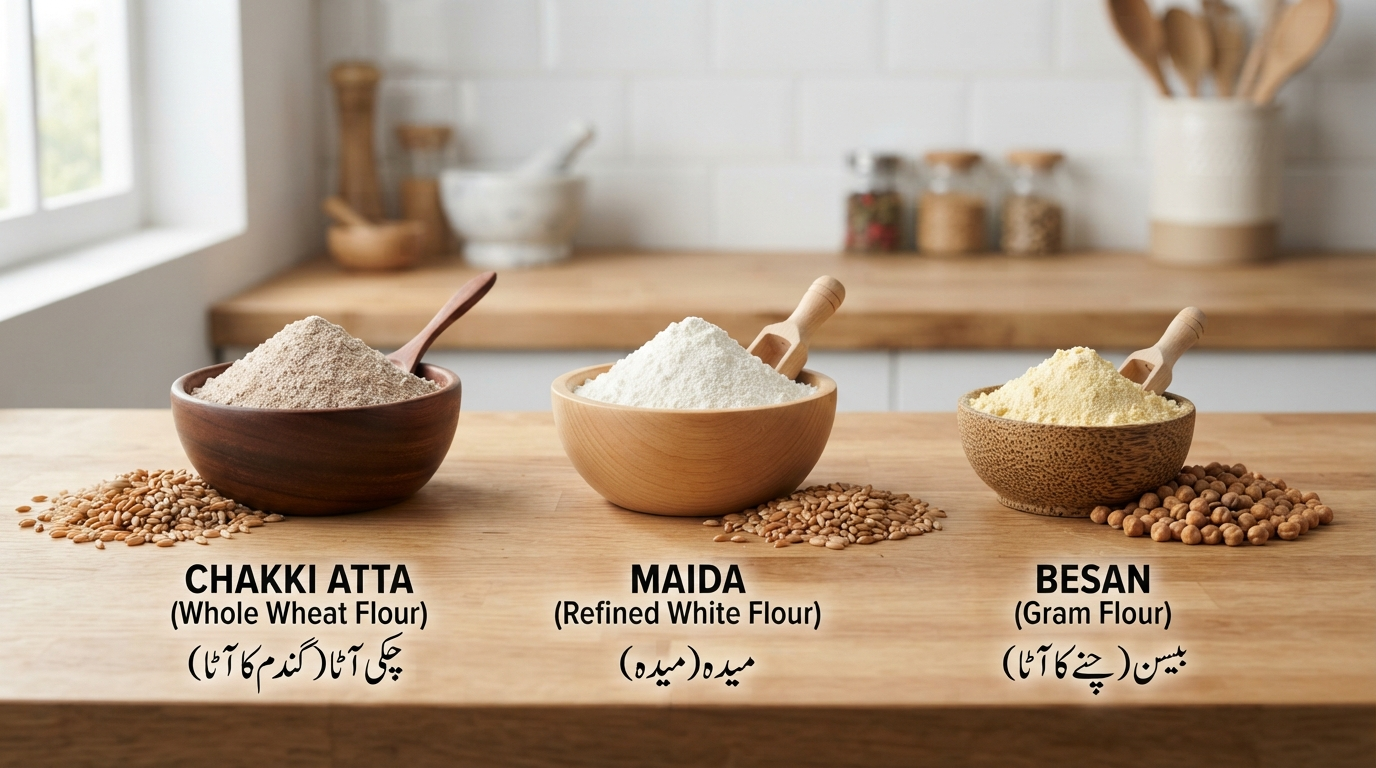
This is the everyday atta most families use for roti. It is made by grinding whole wheat, usually in a local chakki. The colour is a little dull, and the texture feels slightly rough. Because the bran is still in it, chakki atta has more fibre. Fresh chakki atta gives better taste and soft rotis if the wheat is good. Many people still prefer getting it ground from a nearby mill instead of buying packed versions.
Maida
Maida is completely different. It is white, very fine, and smooth. The bran and germ are removed, so it becomes soft and stretchy. This is why it is used for things that need crispiness or lightness — samosas, puris, biscuits, cakes, and some bakery items. Maida is not usually used for daily roti because it has less nutrition and the roti does not stay soft for long.
Fine Atta
Some brands sell a version called fine atta or resultant atta. It is lighter than full chakki atta and a bit closer to maida in texture. People who want softer rotis sometimes choose this. It is a middle option between pure chakki atta and maida.
Multigrain Atta
In bigger stores, you can now find multigrain atta. It contains wheat mixed with other grains like oats, barley, or millet. Some families buy it thinking it is healthier. The taste and texture are different from normal chakki atta, so it may take a few tries to get used to it.
Besan
Besan is made from chana daal. It is yellow and has a strong smell when raw. Almost every home keeps besan because it is needed for pakoras, kadhi, and many snacks. Good besan should feel smooth and should not have a bitter taste.
Sooji (Rava)
Sooji is coarse and grainy. It is used for sooji halwa, upma, and some sweets. You can buy fine sooji or thicker sooji depending on what you want to make.
There are also other flours like rice flour and corn flour, but they are used less often in daily cooking.
Which Atta and Flour for Which Dish?
- Daily roti and paratha → Chakki atta works best for most people
- Soft and layered parathas → Some mix a little maida with chakki atta
- Puri and kachori → Maida gives better puff and crispiness
- Pakoras → Besan is the only real choice
- Halwa → Sooji
- Bakery style items → Mostly maida
Using the wrong flour can change the whole result. For example, making pakoras with wheat atta will not give the same texture as besan.
What Atta and Flour to Check When Buying
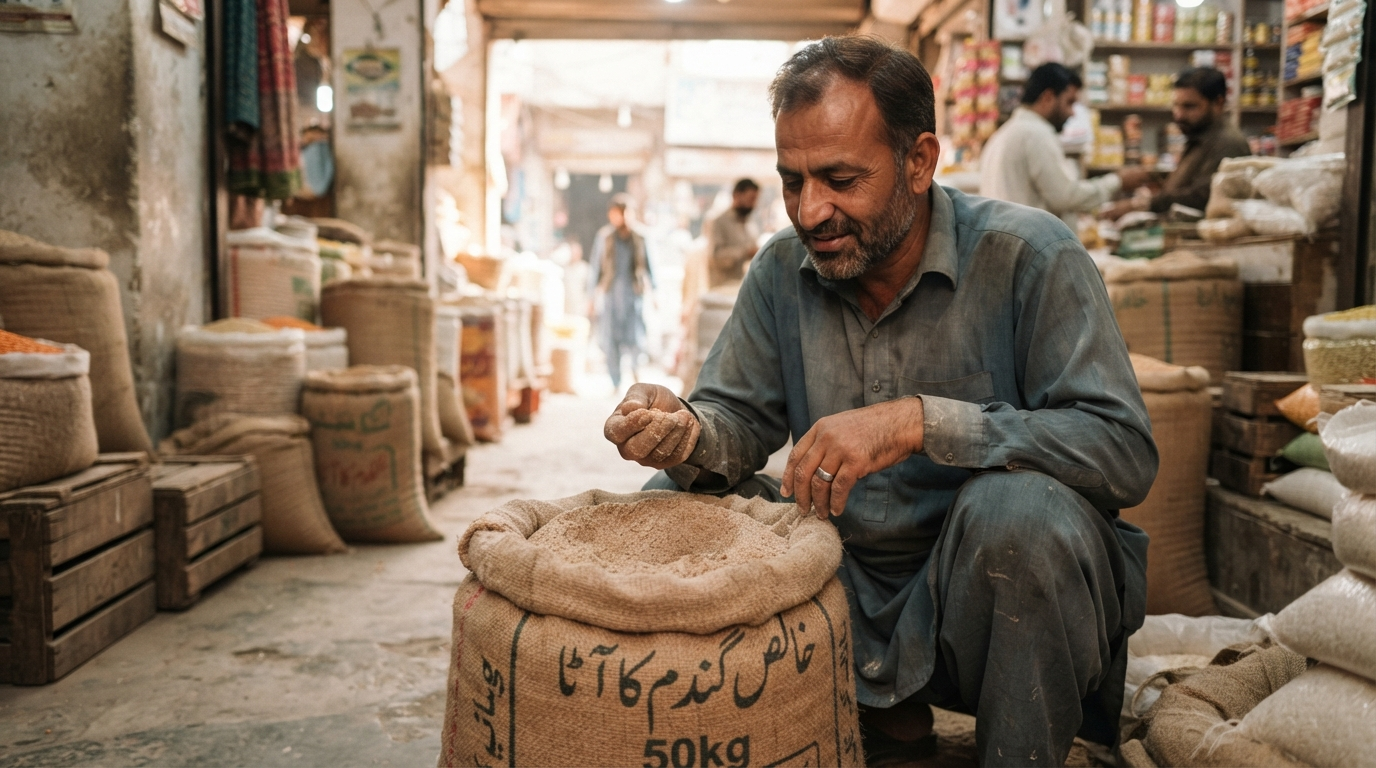
When you stand in front of the Atta and Flour section in a store, a few simple things can help:
Look at the colour and feel of the atta if it is open. Fresh chakki atta should not look too dark or smell old. For packed atta, check the date. Older stock sometimes becomes dry, and the dough does not bind well.
For besan, make sure there are no lumps or insects. Good quality besan feels fine and smooth between the fingers.
If you buy in large quantities, store it properly in a clean, dry container. Moisture can spoil atta quickly, especially in humid weather.
You can find these different types of atta and flour in most grocery stores and local chakki shops across Pakistan. Choosing a clean and busy store usually means the stock is fresher.
A Practical Way to Decide
You do not need every type of Atta and Flour in your kitchen. Most homes do well with three basic ones:
- Chakki atta for daily roti
- Maida for occasional special items
- Besan for snacks
The rest can be bought only when needed. This saves money and avoids wastage.
Final Thoughts
Atta and flour are such a normal part of our lives that we rarely stop to think about it. But small differences in the type of flour can change how your food turns out. Once you understand the basics, shopping becomes easier, and cooking results become more consistent.
Next time you buy atta, take a moment to check what you are actually getting. It is a small step that makes a noticeable difference in daily meals.