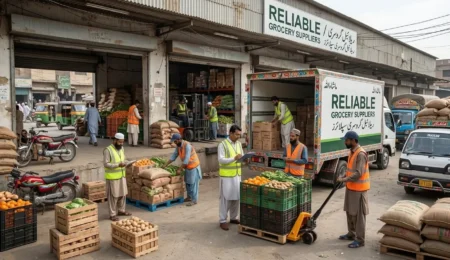
Why Grocery Wholesalers Should Fix Product Data Before Investing in E-commerce and AI
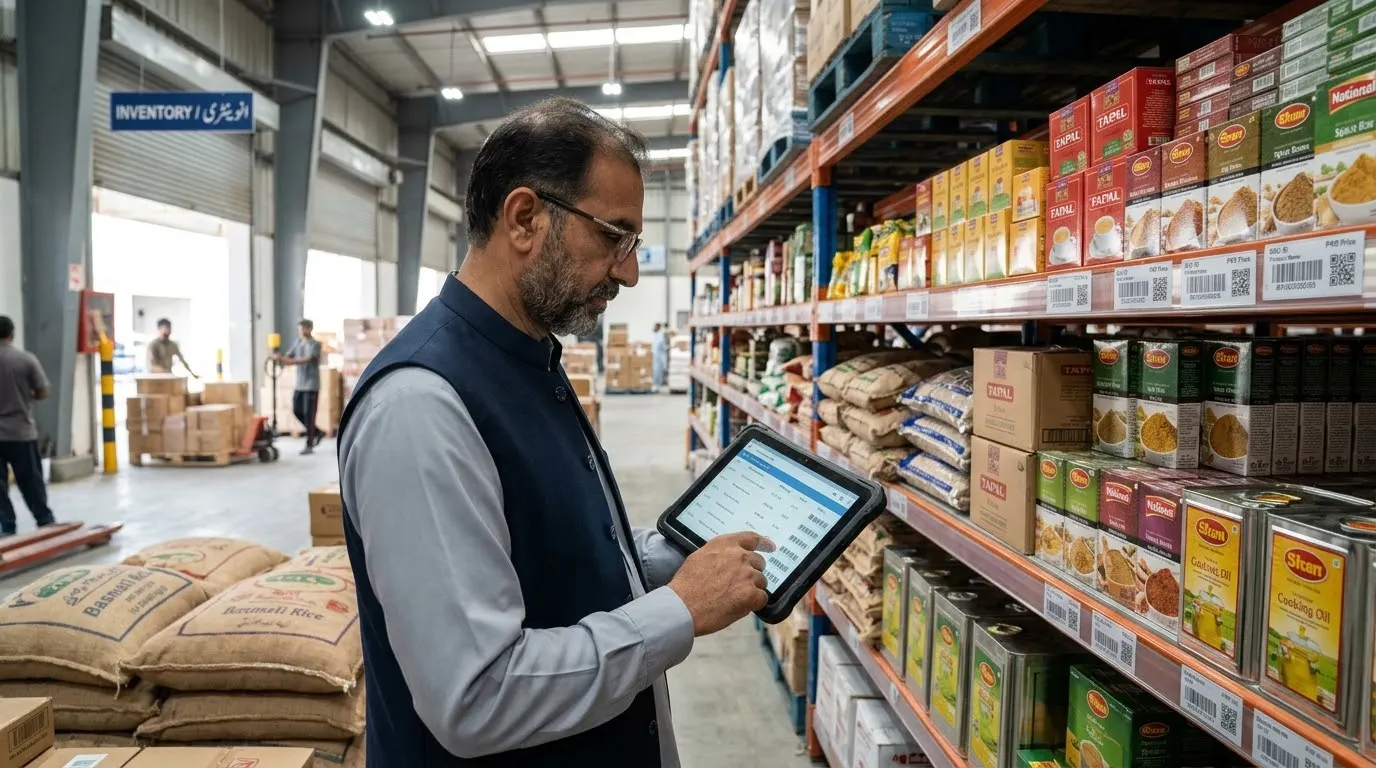
Grocery wholesalers handle thousands of products, different pack sizes, supplier prices, customer orders, and stock movements. Managing all this information becomes difficult when product records are incomplete or stored in separate systems.
A wholesale distributor may sell the same cooking oil in individual bottles, cartons, and larger bulk quantities. If these formats are not connected correctly in the inventory system, stock figures can become inaccurate. An online customer might see a product as available even when the warehouse has run out of the required pack size.
This is one reason grocery businesses should pay attention to product data before investing heavily in E-commerce and AI
For Pakistani Grocery wholesalers, cash and carry businesses, distributors, and larger grocery suppliers, accurate product information can improve inventory control, purchasing, pricing, and customer service.
What Is Product Data in the Grocery Wholesale Business?
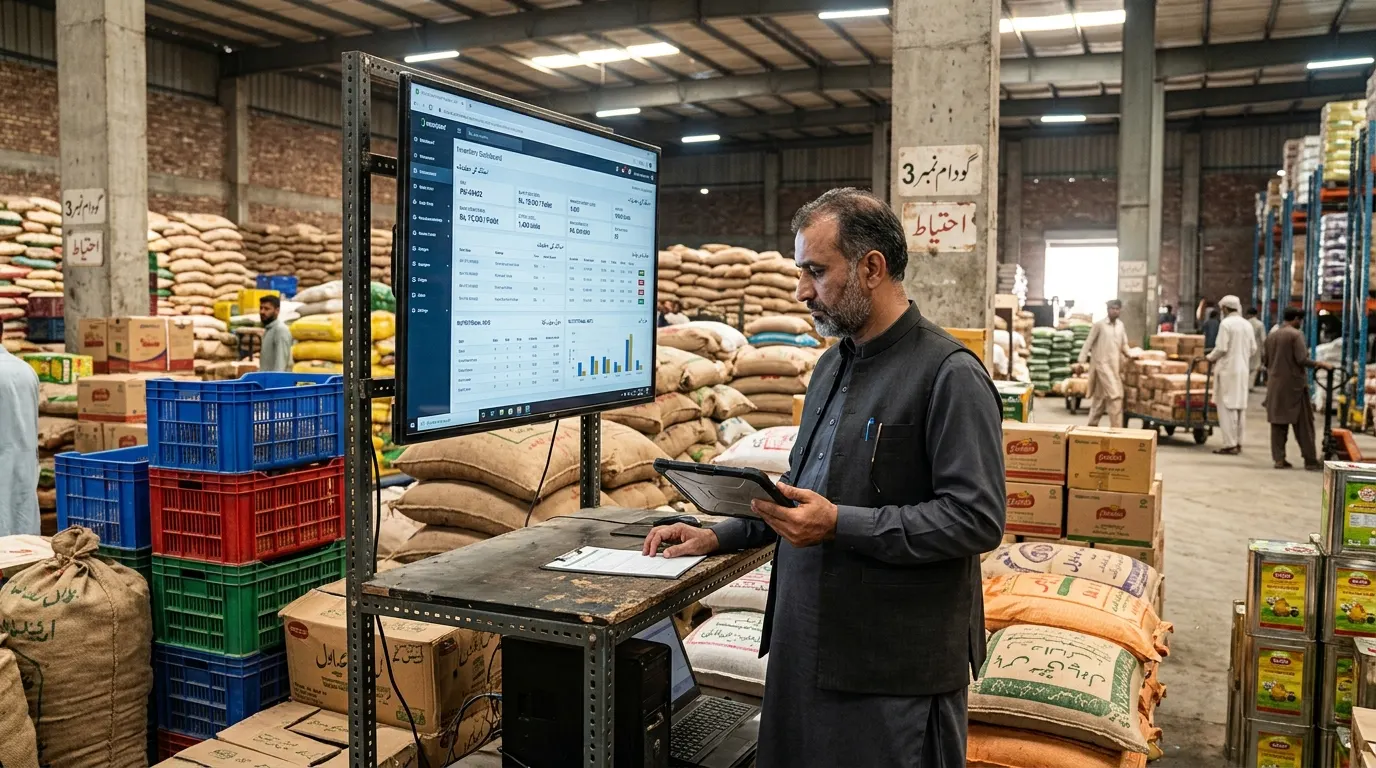
Product data is the information a business stores about every item it purchases, stores, sells, and distributes.
A grocery wholesaler may handle packaged food, beverages, cooking ingredients, personal-care products, cleaning supplies, and household essentials. Each product needs an identifiable and consistent record.
A useful product record can include:
- Product name and brand
- SKU or internal product code
- Barcode or GTIN, where applicable
- Product category
- Pack size and net weight
- Unit of measurement
- Case or carton quantity
- Purchase price
- Wholesale selling price
- Retail selling price, where relevant
- Supplier details
- Tax information, where applicable
- Product images
- Batch number and expiry information, where applicable
For example, a wholesaler selling a 1-litre bottle of cooking oil should maintain a clear record of that product. If the same bottle is also sold in a carton containing 12 bottles, the carton should have its own correctly defined packaging information and relationship with the individual bottle.
When this information is incomplete, employees may enter the same product under different names or use incorrect quantities during purchasing and sales.
1. One Product Can Have Multiple Pack Sizes
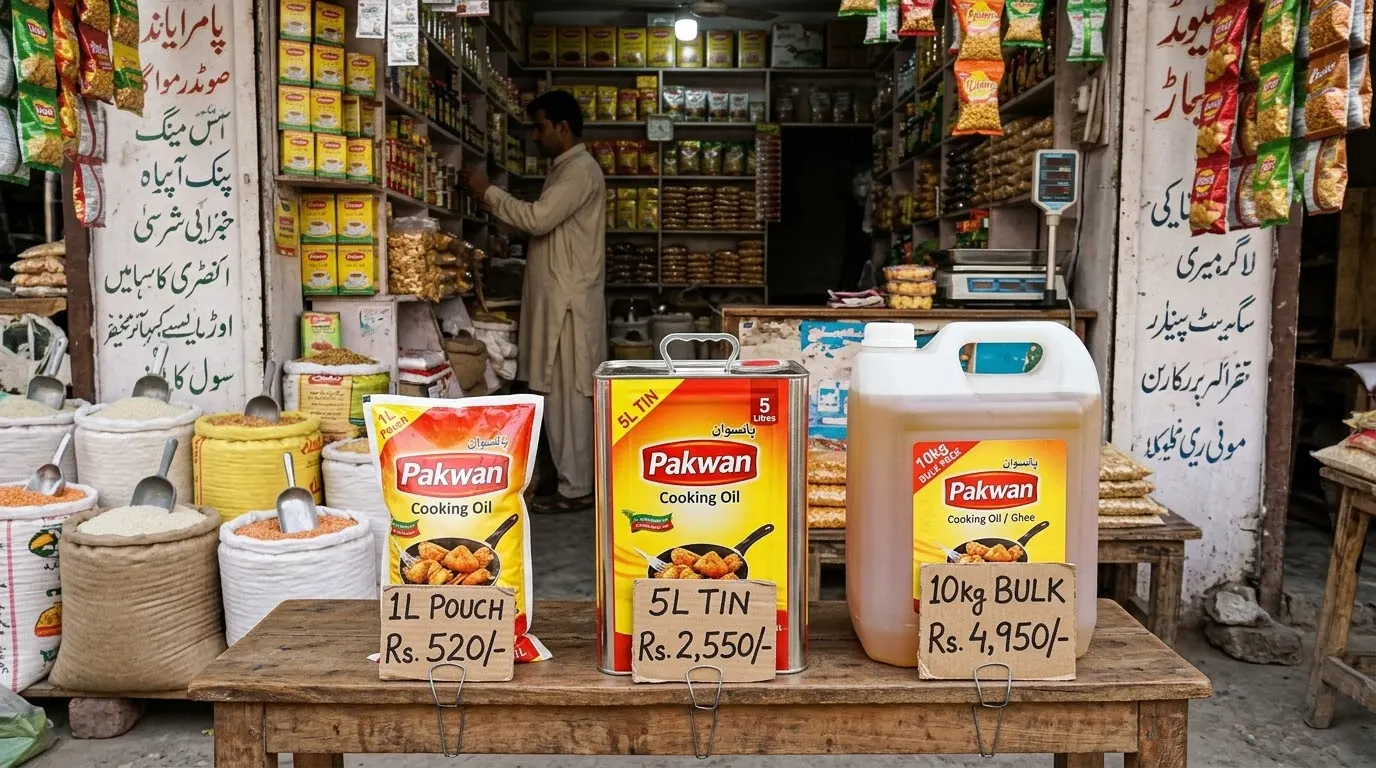
One of the most important data problems in grocery wholesale is the difference between individual units, inner packs, cartons, and bulk quantities.
Consider a hypothetical example:
| Packaging level | Quantity |
|---|---|
| Individual bottle | 1 bottle |
| Small case | 6 bottles |
| Large carton | 12 bottles |
| Warehouse quantity | 20 large cartons |
If a wholesaler has 20 cartons, each containing 12 bottles, the total stock is 240 individual bottles.
The inventory system must understand the relationship between these packaging levels.
If an employee records 20 cartons as 20 individual bottles, the stock figure will be wrong. If the system does not recognise the conversion, it may also produce incorrect purchasing reports or display misleading availability to customers.
A well-maintained product record should clearly define:
- The smallest unit that can be sold
- The quantity inside each inner pack
- The quantity inside each carton
- Whether customers can purchase individual units or only full cases
- The barcode associated with each packaging level, where applicable
This is particularly important for Grocery wholesalers that supply supermarkets, kiryana stores, restaurants, and other retailers.
2. Duplicate Product Records Create Inventory Problems
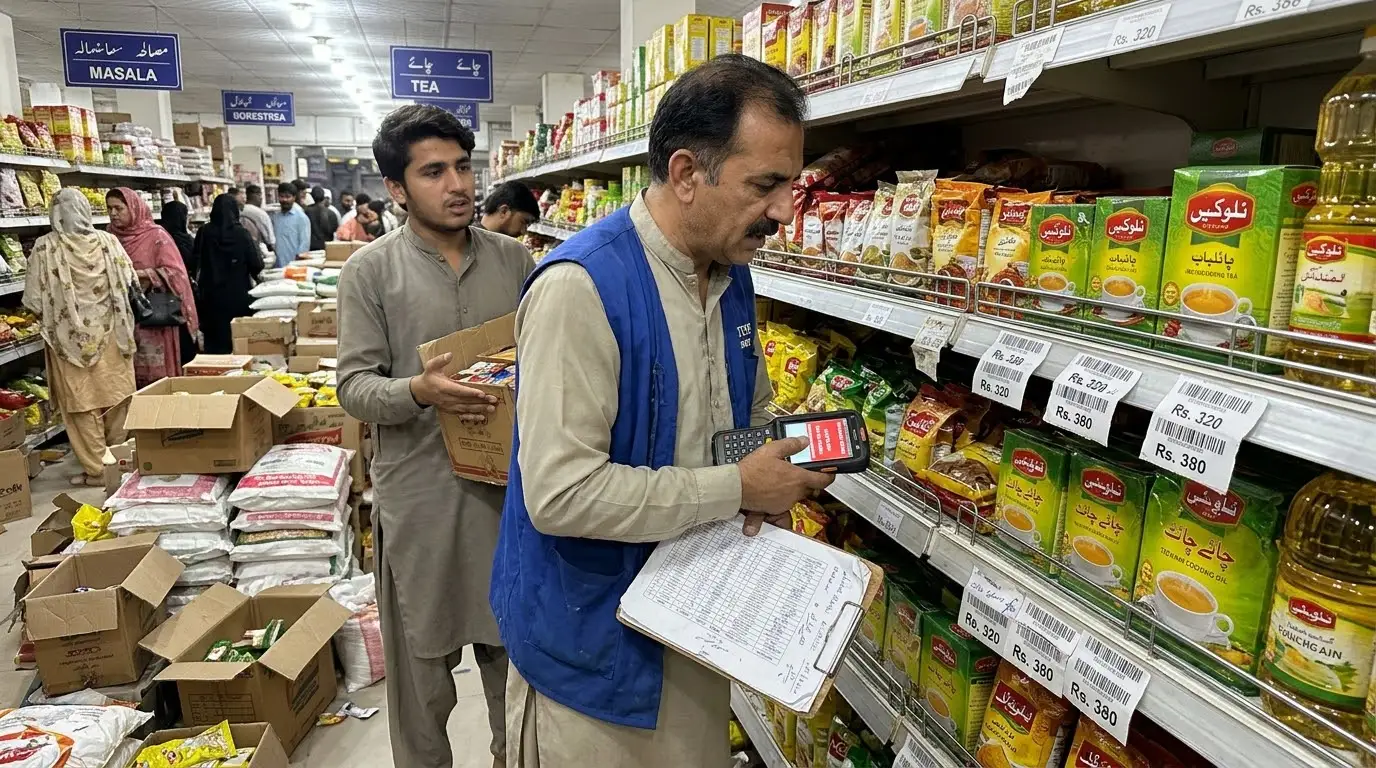
Duplicate records often develop when different employees enter products into a system without following common naming rules.
For example, the same item might appear under different names:
- National Cooking Oil 1L
- National Oil One Litre
- National Cooking Oil Bottle
- National Oil 1000ml
These names may refer to the same product, but the inventory system can treat them as separate items.
This creates several problems.
Incorrect stock totals: Inventory may be divided between duplicate records rather than showing one accurate quantity.
Purchasing mistakes: Buyers may order a product that is already available under another record.
Unclear sales reports: Management may struggle to understand the actual sales performance of an item.
Customer confusion: Online buyers may see multiple listings for what appears to be the same product.
Grocery wholesalers should establish consistent naming rules and check existing records before creating new products. Product identification should rely on appropriate identifiers and verified packaging information, not just similar names.
3. Accurate Product Data Makes E-commerce More Reliable

Launching an online wholesale catalogue requires more than uploading product names and prices.
Customers need enough information to identify the correct product and understand what they are ordering.
A useful online grocery product listing should include:
- Correct product name
- Brand and product variation
- Net weight or volume
- Pack and carton quantity
- Clear product image
- Selling price
- Minimum order quantity, if applicable
- Availability status
- Relevant product description
Imagine a kiryana store owner ordering cooking oil from a wholesale supplier. The catalogue displays a price but does not clearly explain whether the price is for one bottle or a carton of 12.
This creates unnecessary questions and can lead to incorrect orders.
Accurate product data helps customers understand the offer before checkout. It also helps warehouse employees pick the correct product and quantity.
For wholesalers planning online ordering, the product catalogue should be connected to reliable inventory and pricing information rather than maintained separately through manual updates.
4. Barcodes Help Identify Products Consistently
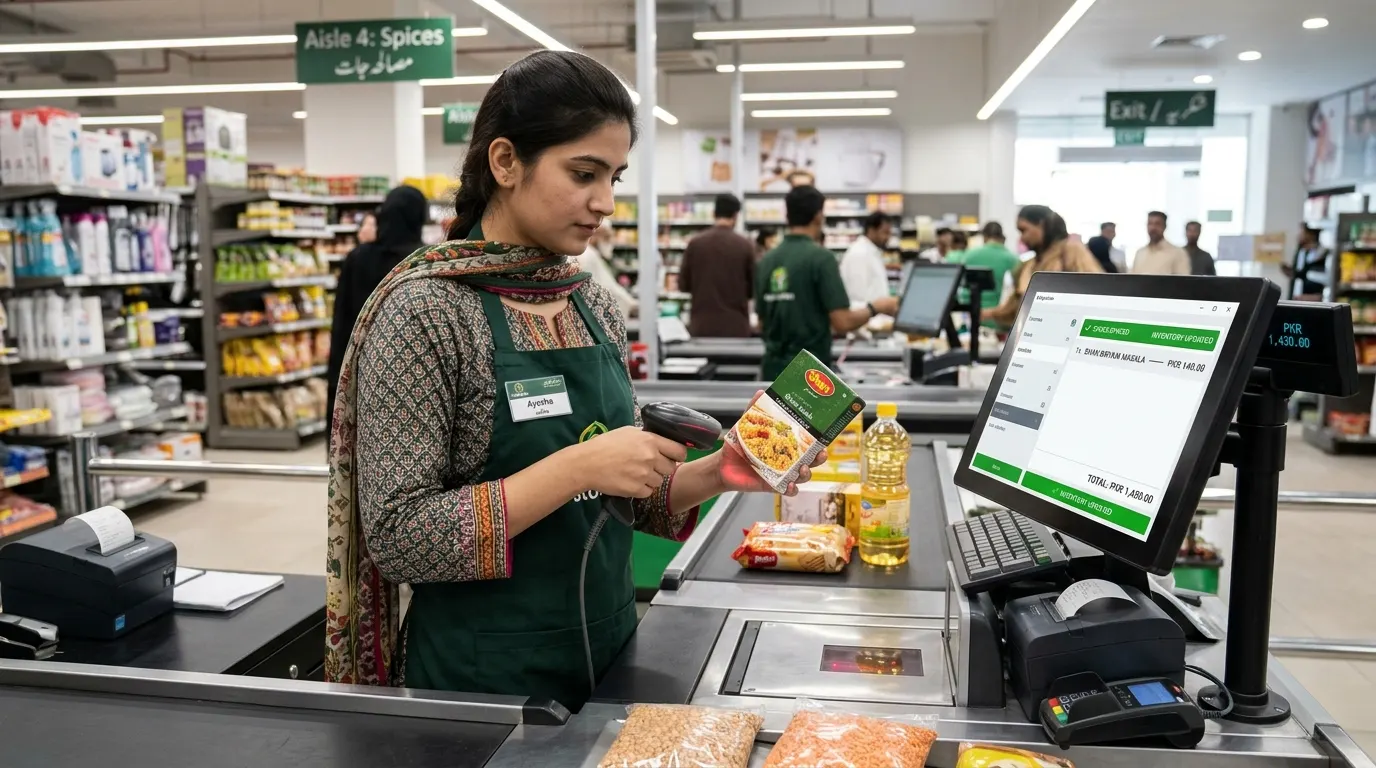
Barcodes provide a way to identify products through machine-readable numbers. They can support stock receiving, sales transactions, warehouse movement, and product verification.
The Global Trade Item Number (GTIN) is used within the GS1 system to identify trade items. Different packaging levels may require appropriate identification so that an individual unit is not confused with a case or another product variation.
For example, a 500g pack of rice and a 1kg pack of the same brand should not be treated as identical trade items.
Grocery wholesalers should maintain accurate barcode records and connect them to the correct product and packaging information.
The GS1 Pakistan Verified by GS1 service provides access to product identity verification through the GS1 Registry. The GS1 retail barcode implementation guideline also explains how product identification supports retail operations and information accuracy.
A barcode does not automatically guarantee that every product detail is correct. Businesses still need to maintain accurate records and verify the information associated with each identifier.
5. Product Data Connects Purchasing, Warehouse, and Sales Teams
In many wholesale businesses, different departments handle different parts of the same product journey.
The purchasing team deals with suppliers and purchase prices. Warehouse employees receive, store, and dispatch products. Sales teams prepare quotations and customer orders. Finance teams manage invoices, payments, and accounting records.
If these departments use disconnected product information, errors can pass from one process to another.
For example:
- A purchasing employee orders 50 cartons from a supplier.
- Warehouse staff receive the delivery and record the quantity.
- The inventory system stores the stock under an incorrect pack size.
- The sales team prepares an order using the wrong unit.
- The invoice shows a different quantity or price from what was dispatched.
A connected business system can reduce these inconsistencies by using shared product records across purchasing, inventory, sales, and accounting.
However, installing an ERP system does not automatically solve poor data quality. Existing records must be reviewed, corrected, and organised before the system can produce dependable results.
6. Better Data Makes AI and Forecasting More Useful

Artificial intelligence can help grocery businesses analyse sales patterns, forecast demand, identify unusual stock movements, and automate selected administrative tasks.
But AI tools depend on the information they receive.
If a wholesaler has duplicate products, incorrect pack conversions, outdated prices, and incomplete inventory records, automated reports may produce misleading results.
For example, an AI forecasting system may incorrectly estimate demand if it treats a carton of 12 bottles as one bottle in some transactions and 12 bottles in others.
Before introducing advanced automation, Grocery wholesalers should establish reliable product and transaction records.
Once the data is consistent, businesses can consider practical applications such as:
- Identifying fast-moving and slow-moving products
- Forecasting future purchasing requirements
- Detecting unusual sales patterns
- Highlighting products approaching expiry
- Preparing purchasing recommendations
- Organising supplier and invoice information
- Supporting management reports
AI should support business decisions, not replace basic inventory controls or human verification.
How technology is changing grocery shopping in Pakistan: read Grocer.pk’s article on technology.
7. Wholesale Pricing and Supplier Rebates Need Proper Records
Wholesale grocery pricing can be more complicated than a single selling price.
A product may have different purchase costs, customer-specific selling prices, quantity discounts, promotional rates, and supplier rebates.
For example, a distributor may offer one price to a small kiryana store and a different price to a customer purchasing several cartons.
If these arrangements are recorded in separate spreadsheets, employees may struggle to calculate the correct selling price or understand the actual profit margin.
A structured pricing system should record:
- Supplier purchase cost
- Current wholesale selling price
- Customer-specific price agreements
- Quantity-based discounts
- Promotional pricing dates
- Supplier rebates and incentives
- Applicable taxes and other charges
This information helps management understand the actual cost and margin of a product.
A business should also define who can approve price changes and maintain a record of important updates.
8. How Grocery Wholesalers Can Improve Their Product Data

Grocery wholesalers do not need to rebuild their entire business system in one step. A practical improvement project can begin with a review of existing product records.
Step 1: Prepare a complete product list
Collect product information from spreadsheets, accounting software, inventory applications, supplier invoices, and existing catalogues.
Identify duplicate records and products with missing information.
Step 2: Create consistent product names and codes
Set naming rules for brands, product variations, sizes, and packaging. Assign a unique internal SKU to each product record.
Do not use the same SKU for different pack sizes or variations.
Step 3: Define units and packaging relationships
Record whether an item is sold individually, in an inner pack, or as a carton.
Test the quantity conversions before using them for live stock transactions.
Step 4: Verify barcodes and product information
Check product identifiers and packaging details against reliable supplier or brand information where available.
Do not assume that a similar product name means the barcode or pack size is identical.
Step 5: Review prices and supplier information
Remove outdated prices, organise supplier records, and establish a process for updating purchase costs and selling prices.
Step 6: Connect the data to business software
Once product records are reasonably clean, connect them to the relevant inventory, purchasing, accounting, sales, and e-commerce processes.
Test the system using a limited group of products before migrating the entire catalogue.
Step 7: Maintain data quality
Product data is not a one-time project. New products, revised packaging, price changes, supplier changes, and discontinued items require regular updates.
Assign responsibility to a person or team that reviews important product changes.
9. What Should Wholesalers Check Before Buying ERP or E-commerce Software?

Choosing software before understanding the business’s data problems can lead to unnecessary costs.
A wholesaler should first identify the processes that need improvement and then evaluate software against those requirements.
Important questions include:
- Can the system manage individual units, cases, cartons, and bulk quantities?
- Can it connect different packaging levels to the correct inventory?
- Can it store product barcodes and images?
- Can it manage multiple warehouses or storage locations?
- Can it support supplier-specific purchase prices?
- Can it handle customer-specific wholesale pricing?
- Can it track batches and expiry dates where required?
- Can it connect purchasing, inventory, sales, and accounting?
- Can it provide accurate stock information to an online catalogue?
- Can users control access and approve important changes?
- Can the business export its data if it changes software later?
A system should be selected according to the business’s actual requirements, not simply because it advertises AI features or a modern e-commerce interface.
A Practical Product Data Checklist
Before launching an online wholesale catalogue or introducing AI-based inventory tools, review the following:
- Each product has a clear and consistent name.
- Each item has a unique internal SKU.
- Product barcodes are recorded where applicable.
- Pack sizes and units of measurement are correct.
- Carton and individual-unit conversions are tested.
- Product images match the current packaging.
- Purchase and selling prices are up to date.
- Supplier records are maintained.
- Stock quantities match physical inventory checks.
- Expiry and batch information is recorded where relevant.
- Duplicate and discontinued products are reviewed.
- Employees know how product information should be updated.
You can browse 8 Grocery Industry Trends.
Frequently Asked Questions
What is item data in a grocery wholesale business in E-commerce and AI?
Item data is the information maintained for each product, including its name, SKU, barcode, pack size, unit of measurement, price, supplier, and inventory details.
Why is product data important for grocery wholesalers?
Accurate product data helps wholesalers manage stock, prepare orders, calculate prices, identify products, and share reliable information with retailers and customers.
Can a grocery wholesaler launch e-commerce without clean product data?
A business can technically launch an online catalogue with incomplete records, but it may face incorrect product listings, wrong quantities, stock discrepancies, and customer complaints. Cleaning important product information first can reduce these problems.
What is the difference between an SKU and a barcode?
An SKU is an internal product code created by a business to manage its inventory. A barcode is a machine-readable representation of product identification or other encoded information. A business may use its own SKU alongside a manufacturer or GS1 product identifier.
How does product data help AI in grocery businesses?
Consistent product and transaction information gives AI systems more reliable input for demand forecasting, stock analysis, sales reporting, and selected administrative tasks. Poor data can produce misleading results.
What is a unit of measure in wholesale grocery?
A unit of measure describes how a product is counted or sold, such as a bottle, kilogram, litre, pack, carton, or case. Correct unit relationships are essential when wholesalers sell products in different quantities.
Should small grocery wholesalers invest in ERP software?
Not every small wholesaler needs a complex ERP system. The right choice depends on the number of products, warehouses, employees, customers, and daily transactions. Some businesses can begin with structured spreadsheets or simpler inventory software before moving to a larger system.
Final Thoughts
E-commerce and artificial intelligence can create opportunities for grocery wholesalers, but both depend on reliable business information.
A wholesaler that cannot confidently identify its products, packaging quantities, stock levels, and prices may struggle to manage online orders or trust automated reports.
The practical starting point is to organise product records, standardise units of measurement, verify identifiers, and connect purchasing, inventory, and sales information.
Once these foundations are in place, businesses can make better decisions about ERP systems, online wholesale ordering, forecasting, and AI.
For grocery wholesalers in Pakistan, improving item data is not just a technical exercise. It is a way to make everyday business operations more accurate, organised, and dependable.
Syed Abdul Manan is an SEO expert and WordPress specialist with over 10 years of experience in search engine optimization and WordPress development. He holds a Bachelor of Science in Computer Science (BSCS) and is the Founder & CEO of Grocer.pk, a searchable directory of grocery stores, supermarkets, kiryana shops, and online grocery businesses across Pakistan.
With a technical foundation in computer science, he has spent the past decade working on technical SEO, on-page optimization, content strategy, and building fast, well-structured WordPress websites. For more than six years, he has been developing and managing Grocer.pk, which now covers major cities including Lahore, Karachi, Islamabad and Faisalabad, helping people find nearby stores by city, area and category, along with locations, contact details and map links.
Syed Abdul Manan runs Grocer.pk with a professional, quality-focused approach, combining clean site architecture, structured listings and practical grocery guides to serve both shoppers and business owners. His goal is to help local businesses build a stronger online presence and to help users find reliable local information quickly.
Connect with him on LinkedIn.