Tea in Pakistan: Black Tea, Green Tea, Herbal Infusions & a Better Buying Guide
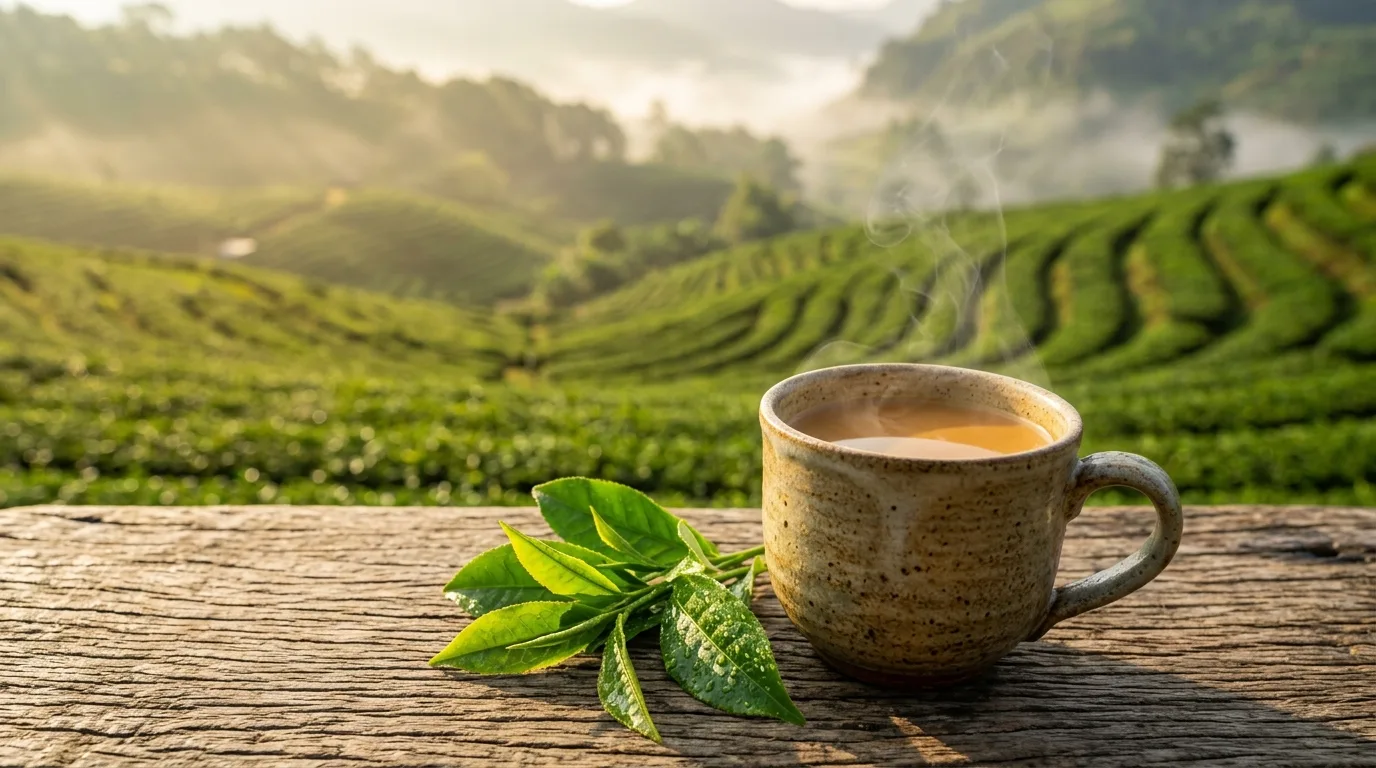
Tea means different things to different people in Pakistan. For one person, it is a strong cup of doodh patti after breakfast. For another, it is green tea after lunch, a fragrant cup of herbal infusion in the evening, or a chilled bubble tea while meeting friends.
But choosing tea is not simply about picking a packet from a grocery shelf. The leaves, ingredients, brewing method, and even the cup you use can change the experience.
This guide brings together traditional Pakistani chai, black tea, green tea, herbal infusions, and modern café-style drinks. It also covers what research actually says about green tea benefits, how to choose tea for your routine, and what to check before buying.
Start Here: Which Type of Tea Are You Looking For?
If the tea aisle feels confusing, begin with the taste and experience you want rather than the brand name.
| If you prefer… | Consider… | What to expect |
|---|---|---|
| Strong, familiar milk tea | Black tea | A robust flavour that works well with milk and sugar |
| A lighter cup without milk | Green tea | A fresh, grassy or mildly vegetal taste |
| A classic breakfast-style brew | English Breakfast tea | A full-bodied black tea blend |
| Minty, refreshing flavour | Spearmint or other mint infusions | A cool herbal aroma |
| Floral, gentle flavour | Chamomile tea | A delicate, apple-like floral character |
| A tangy, ruby-red drink | Hibiscus tea | A tart, fruity flavour |
| A sweet, chewy cold drink | Boba or bubble tea | Tea or another drink served with chewy pearls or toppings |
These are starting points, not strict rules. Green tea can be flavoured, black tea can be served without milk, and herbal blends may combine several plants.
Black Tea vs Green Tea: What Actually Changes?
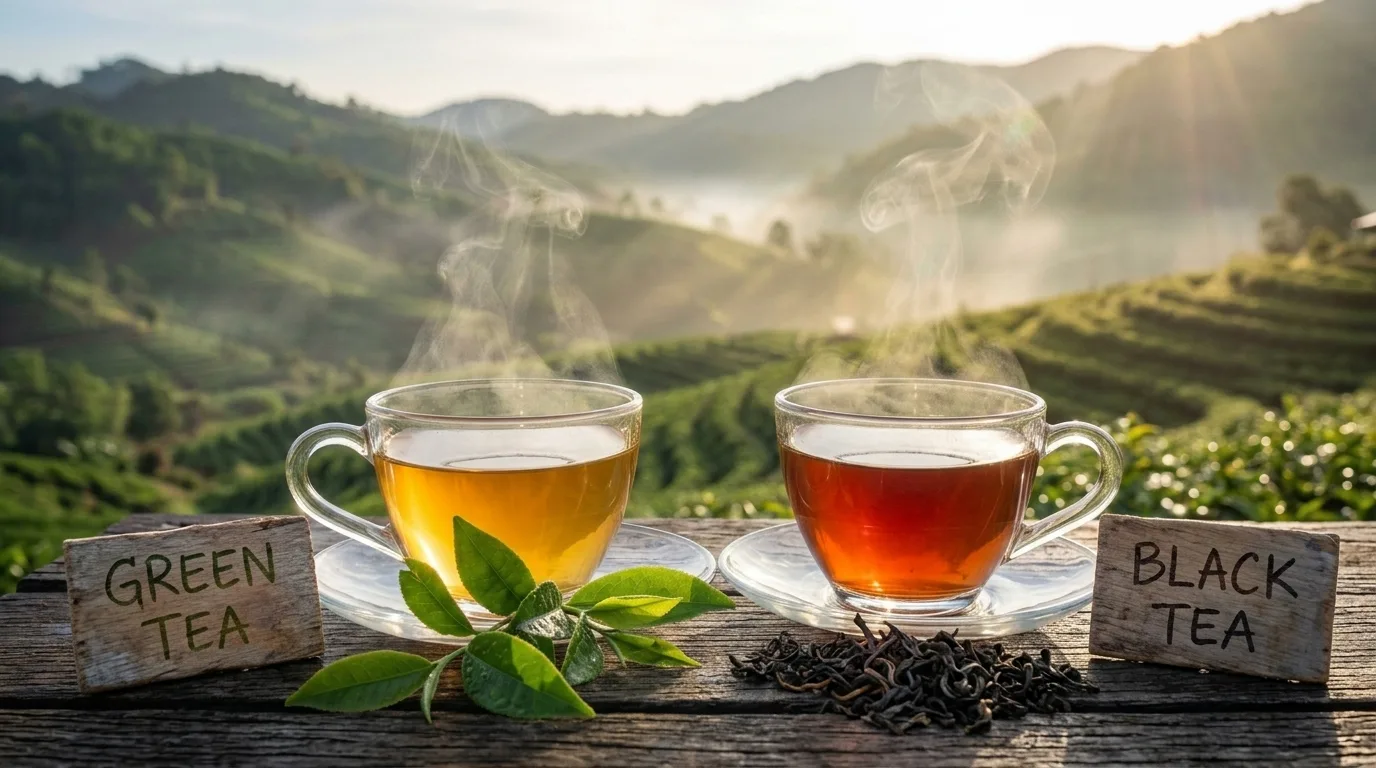
Black tea and green tea usually come from the same plant, Camellia sinensis. The major difference is how the leaves are processed after harvesting.
Black tea: the everyday favourite
Black tea undergoes oxidation during processing, which develops its darker colour and stronger flavour. It is widely used for milk tea and is a practical choice for households that prefer a rich, familiar brew.
In Pakistan, black tea is commonly prepared with water, milk and sugar. Some households boil the tea leaves with the milk, while others brew the tea first and add milk later.
Black tea may suit you if:
- You prefer a strong cup with milk.
- You enjoy traditional chai with breakfast or evening snacks.
- You want a versatile tea for plain brewing or milk-based recipes.
Green tea: lighter and more delicate
Green tea is processed to limit oxidation, helping retain its characteristic green colour and flavour. Depending on the leaves and preparation, it can taste grassy, fresh, nutty or slightly bitter.
It is often prepared without milk, although recipes vary. Over-steeping it or using excessively hot water can make the taste unpleasantly bitter.
Green tea may suit you if:
- You prefer tea without milk.
- You want a lighter-tasting alternative to traditional chai.
- You enjoy experimenting with lemon or other flavourings.
Is one automatically healthier?
Not necessarily. Both black and green tea contain naturally occurring plant compounds, including polyphenols. Their composition differs because of processing, and the amount in your cup depends on the leaves and brewing method.
Neither should be treated as a replacement for a balanced diet, prescribed treatment, or healthy daily habits.
Green Tea Benefits: What Can You Reasonably Expect?
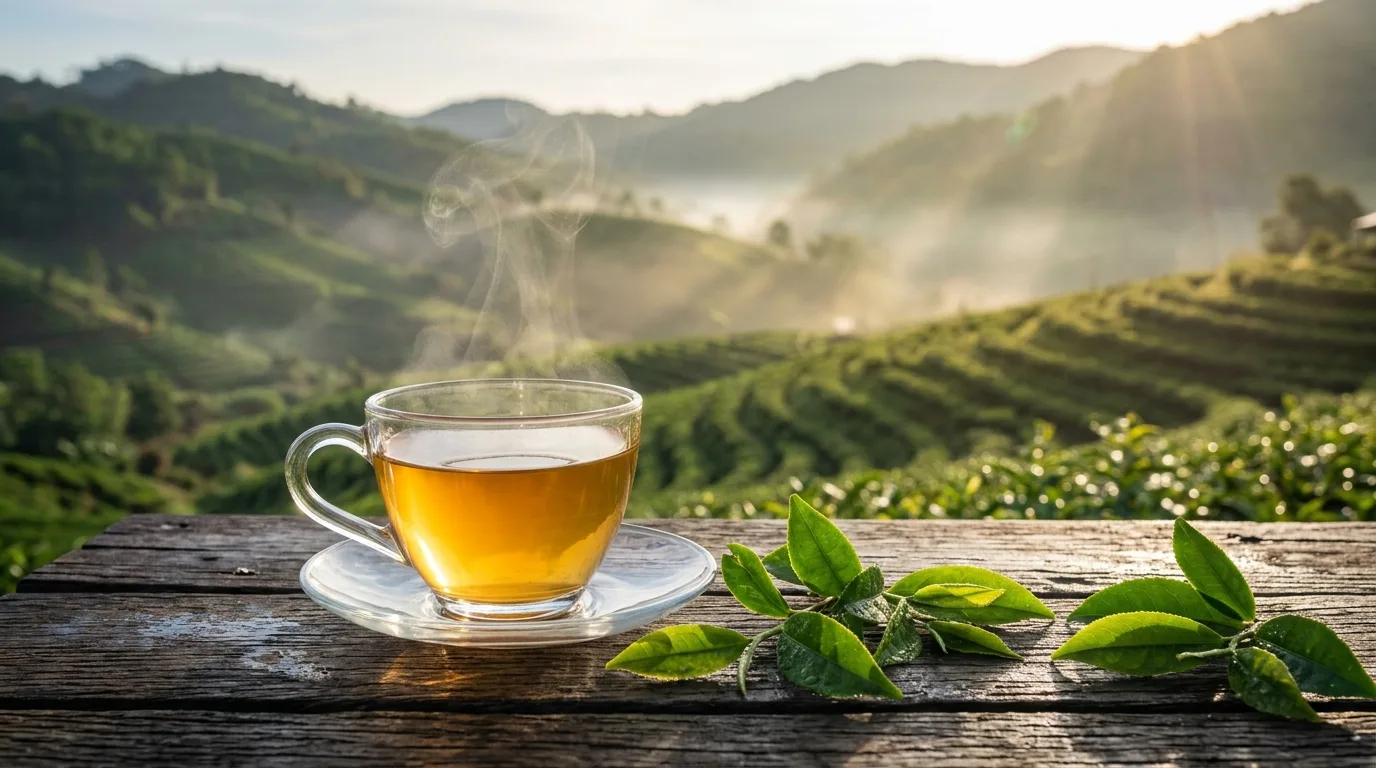
Green tea is often discussed in conversations about weight management, heart health, and antioxidants. The important distinction is between a possible benefit supported by research and a promise that has not been established.
Green tea contains catechins, a type of polyphenol, as well as caffeine. Researchers have studied these compounds for their potential effects on several aspects of health.
Antioxidant compounds
Green tea provides plant compounds that have antioxidant activity. This is one reason researchers continue to investigate its possible role in health.
However, the presence of antioxidants does not mean that drinking green tea prevents a particular disease.
Heart health
Some research has linked green and black tea consumption with favourable changes in certain cardiovascular risk factors. The evidence is not strong enough to claim that a few cups will prevent heart disease.
Weight management
Green tea is sometimes promoted as a fat-burning drink. Evidence does not establish ordinary green tea as an effective standalone weight-loss treatment. Any effect on body weight appears to be modest or uncertain.
Replacing a heavily sweetened drink with unsweetened tea may reduce added sugar intake, but that is different from claiming that green tea directly burns body fat.
Mental alertness
Green tea contains caffeine, which can temporarily increase alertness. The amount varies with the tea, serving size, and brewing time, and the effect will differ between individuals.
What about green tea side effects?
Green tea as a beverage is generally well tolerated by adults, but it is not caffeine-free. Too much caffeine may cause restlessness, sleep problems, or a racing heartbeat in sensitive people.
Concentrated green tea extracts and supplements are different from a normal brewed cup and have been associated with additional safety concerns, including rare liver injury. If you take medication or have a medical condition, ask a healthcare professional before using concentrated extracts or supplements.
A sensible approach: enjoy green tea because you like it, keep added sugar modest, and do not rely on it as a cure or a shortcut to weight loss.
Beyond the Usual Cup: Three Herbal Teas Worth Knowing
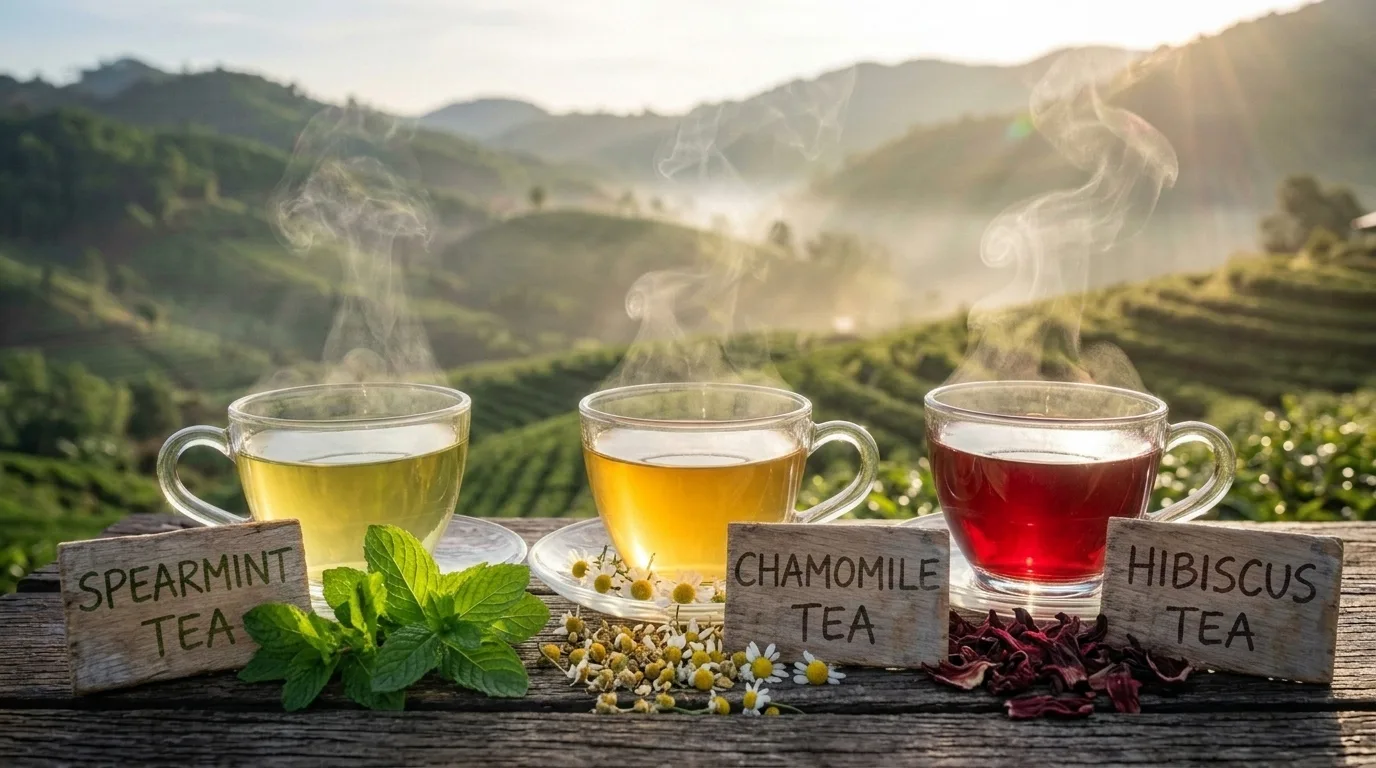
The word “tea” is used for many hot drinks, but chamomile, spearmint and hibiscus are not traditional tea leaves from Camellia sinensis. They are usually classed as herbal infusions.
That difference matters, particularly when you are comparing flavour and caffeine content.
Spearmint tea
Spearmint tea is made from spearmint leaves. It has a fresh, minty aroma and can be served hot or chilled.
Choose it if you enjoy a refreshing herbal drink rather than the malty taste of black tea. Check the ingredients if you buy a blend, since a product containing black or green tea may also contain caffeine.
Do not assume that every claim about mint tea treating digestive problems has been proven. Traditional use and clinical evidence are not the same thing.
Chamomile tea
Chamomile tea is prepared from chamomile flowers. Its gentle floral flavour makes it a popular evening drink.
Some people choose it as part of a relaxing bedtime routine. However, it should not be presented as a guaranteed treatment for insomnia or anxiety. People allergic to plants in the daisy family may also need to be cautious, and herbal products can interact with certain medicines.
Hibiscus tea
Hibiscus tea is commonly recognised by its deep red colour and tangy, tart taste. It can be served warm or as a cold infusion.
What about hibiscus tea benefits?
Hibiscus has been studied for possible effects on blood pressure and other health measures. Some findings are promising, but the strength of evidence varies, and hibiscus tea should not replace blood pressure medicine or professional care.
If you take medication, particularly for blood pressure, discuss regular medicinal use of hibiscus products with your healthcare professional.
Buying tip: look at the ingredient list. A packet labelled “herbal tea” might contain pure dried flowers or leaves, or it may be a mixture with flavourings and traditional tea leaves.
Tapal Tea and Other Everyday Grocery Choices
For shoppers in Pakistan, choosing tea often begins with a familiar brand. Tapal tea offers options across traditional black tea, green tea, and other tea-based products.
Its range includes products such as Danedar, Family Mixture, Tezdum, Mezban and green tea. The right choice depends on the strength, flavour and preparation you prefer—not simply on which product has the most familiar name.
Here is a useful way to compare everyday options:
- For traditional milk chai: compare black tea blends intended for regular household brewing.
- For a stronger cup: consider a blend marketed for a stronger flavour, then adjust the quantity and brewing time.
- For a tea bag routine: compare the number of bags, flavour, and cost per serving.
- For green tea: decide whether you prefer plain green tea or a flavoured variety.
- For trying something new: check herbal and fruit infusions rather than assuming all tea packets contain the same leaves.
Before buying, compare the exact pack size and product variant. A larger packet may offer a lower cost per gram, but only if you will use it before the flavour deteriorates.
You can read more about the available range in Grocer.pk’s Tapal Tea in Pakistan guide and compare pack-size examples in the Tapal tea price guide. Prices and availability can change between retailers, cities, and promotions.
English Breakfast Tea: Is It Different from Regular Black Tea?
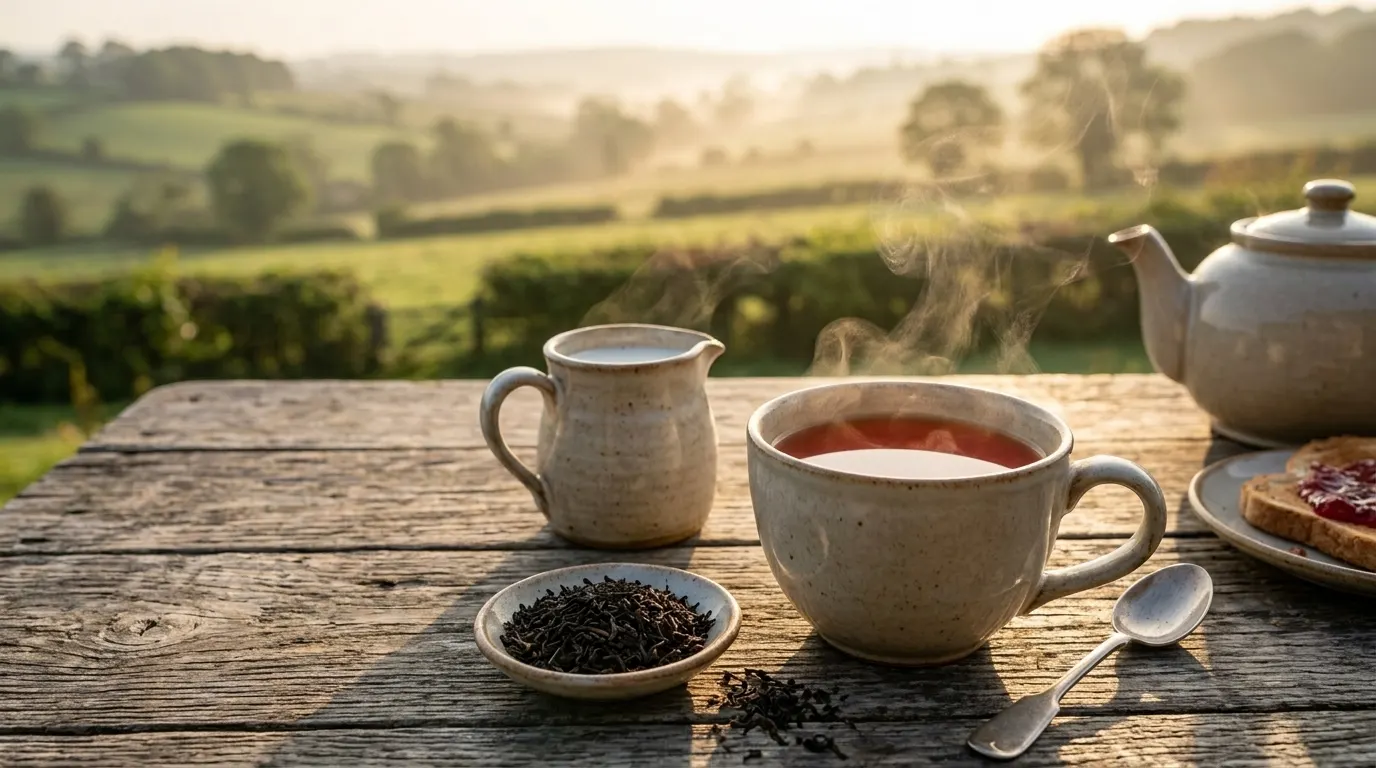
English Breakfast tea is generally a blend of black teas designed to produce a full-bodied cup. It is often served in the morning and may be enjoyed plain or with milk.
It is not a separate species of tea. Like other black tea blends, its flavour depends on the leaves, their origin, the blend, and the brewing method.
If you normally drink Pakistani milk tea, try English Breakfast tea in two ways: first without milk to notice its flavour, then with a small amount of milk to see how the taste changes.
Do not assume every English Breakfast blend will taste identical. Different brands and cafés may use different blends.
From a Tea Cup at Home to a Café-Style Drink
The same tea can taste different depending on how you prepare it. You do not need expensive equipment to improve your daily cup.
Three small changes that make a difference
1. Use a clean tea cup or mug. Residual smells from other drinks can affect how tea tastes. Rinse your cup properly, especially after milk-based drinks.
2. Pay attention to brewing time. Longer brewing usually produces a stronger cup, but it can also increase bitterness. Follow the packet instructions as a starting point, then adjust to taste.
3. Store tea correctly. Keep tea in a tightly sealed container away from moisture, direct sunlight, heat, and strong food odours. Tea can absorb surrounding smells, so avoid storing it beside strongly scented spices.
For green tea, try water that has cooled slightly after boiling rather than immediately pouring vigorously boiling water over delicate leaves. For black tea, use a brewing method that produces the strength you enjoy.
And one often-overlooked point: allow very hot tea to cool to a comfortable drinking temperature. Repeatedly drinking beverages at scalding temperatures is not a healthy habit.
Boba Tea and Bubble Tea: What Are They?
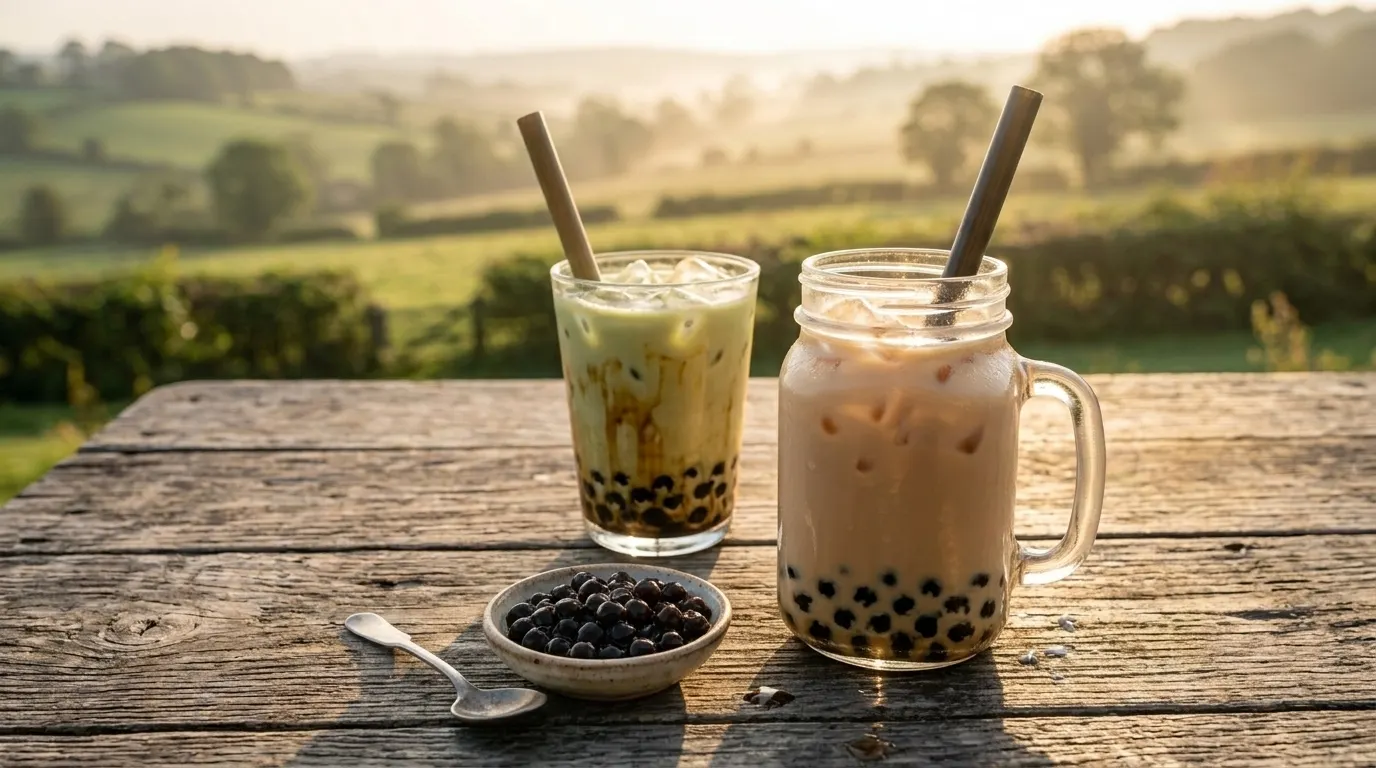
Boba tea and bubble tea are commonly used names for a category of drinks that may contain tea, milk or fruit flavours, sweeteners, ice and chewy toppings such as tapioca pearls.
The terms often refer to the same general drink, although recipes and naming conventions vary by shop.
Popular styles include:
- Milk tea with tapioca pearls.
- Fruit-flavoured tea drinks.
- Iced tea with jelly or other chewy toppings.
- Matcha-based drinks.
- Blended or layered café drinks.
Bubble tea is different from a simple cup of brewed green or black tea. Some versions contain substantial added sugar, syrups, and toppings, and caffeine content varies according to the recipe.
If you enjoy bubble tea, ask about sweetness levels and serving size. You can still enjoy a café drink without assuming that every version is a low-sugar or health-focused option.
Where Does The Coffee Bean & Tea Leaf Fit In?

The Coffee Bean & Tea Leaf is a café brand, not a type of tea leaf. Its Pakistani website lists tea choices such as Chai, English Breakfast, Estate Darjeeling, Moroccan Mint and Lemon Chamomile, alongside other beverages.
This is useful for readers who want to explore tea beyond supermarket packets. A café menu can help you discover styles that you may later want to prepare at home.
For example, trying English Breakfast tea or a mint infusion at a café can help you decide whether you prefer a strong black tea or a more aromatic herbal drink.
One Important Name to Understand: Tea Tree Oil Is Not Tea
Tea tree oil sometimes appears in searches alongside tea, but it is an essential oil derived from the tea tree plant. It is not the same as black tea, green tea, or a drink made from tea leaves.
Tea tree oil is used in some topical personal-care products. It must not be swallowed: ingestion can cause serious poisoning. Do not add it to drinking water, tea, or food.
This distinction is especially important when searching online for “tea benefits” because a beverage and an essential oil have very different uses and safety considerations.
How to Buy Tea Without Wasting Money
You do not need to purchase every variety at once. Start with the kind you are most likely to drink, then experiment with a smaller pack of another type.
Use this checklist when shopping:
- Check the product name: black tea, green tea, herbal infusion, and flavoured tea are not interchangeable.
- Compare pack size: calculate the cost per 100 grams or per tea bag rather than comparing packet prices alone.
- Read the ingredients: this is especially important for flavoured and herbal blends.
- Check the date and packaging: choose intact packaging and follow the storage guidance on the label.
- Consider your preparation method: loose-leaf tea, tea bags and instant mixes are designed for different levels of convenience.
- Look at added sugar: sweetened instant mixes and ready-to-drink beverages may differ considerably from plain tea.
- Confirm availability locally: a product listed online may not be available in every city or branch.
You can use Grocer.pk to explore supermarkets, grocery stores, and online grocery stores in Pakistan. Check the individual retailer for current stock and prices; directory listings do not guarantee that a specific tea product is available.
A Simple Tea Routine for Different Preferences
There is no single perfect tea schedule. The following examples are starting points, not health prescriptions.
| Your preference | A practical approach |
|---|---|
| Traditional chai drinker | Keep your usual black tea and adjust added sugar to your preference |
| Trying to reduce sweet drinks | Experiment with unsweetened black or green tea |
| Sensitive to caffeine | Consider a clearly labelled caffeine-free herbal infusion |
| Enjoy an evening hot drink | Try chamomile or another caffeine-free herbal blend, checking the ingredients |
| Interested in new flavours | Try spearmint or hibiscus in a small pack before buying more |
| Café-style drinks fan | Compare the sweetness and serving size of bubble tea and other flavoured drinks. |
Remember that “herbal” does not automatically mean safe for everyone. Allergies, pregnancy, medicines and existing health conditions can affect whether a particular herb is suitable.
Frequently Asked Questions
Is black tea better than green tea?
Neither is automatically better for everyone. Black tea has a fuller flavour and is commonly used for milk tea, while green tea often has a lighter, more vegetal taste. Both contain plant compounds, and traditional varieties generally contain caffeine.
What are the main green tea benefits?
Green tea contains catechins and other polyphenols. Research has investigated their possible effects on cardiovascular risk factors and other health outcomes, but evidence is mixed for many claims. Green tea is not a proven standalone weight-loss treatment.
Does green tea contain caffeine?
Yes. The amount depends on the type of tea, serving size, and brewing method. If you are sensitive to caffeine, check product information and avoid drinking caffeinated tea close to bedtime if it affects your sleep.
What is the difference between spearmint tea and green tea?
Spearmint tea is an herbal infusion made from mint leaves. Green tea comes from Camellia sinensis. Pure spearmint infusion is naturally caffeine-free, while green tea normally contains caffeine.
What are chamomile tea and hibiscus tea used for?
Chamomile is often chosen for its mild floral flavour and as part of an evening routine. Hibiscus has a tart taste and is also studied for possible health effects. Neither should be treated as a guaranteed cure for a health condition.
What are hibiscus tea benefits?
Research suggests possible effects on blood pressure and other health measures, but evidence is not conclusive enough to replace medical treatment. Ask a healthcare professional before using hibiscus regularly for medicinal purposes, especially if you take medication.
Is English Breakfast tea green tea?
No. English Breakfast tea is generally a black tea blend. Its full-bodied flavour makes it popular as a morning drink, with or without milk.
Are boba tea and bubble tea the same?
The terms are often used for similar drinks containing tea or other flavoured bases and toppings such as tapioca pearls. Recipes differ by shop, so check ingredients, caffeine, and sugar levels.
Is The Coffee Bean & Tea Leaf a tea brand?
The Coffee Bean & Tea Leaf is a café brand that serves coffee and tea-based drinks. Its menu includes options such as Chai, English Breakfast, Moroccan Mint, and Lemon Chamomile.
Can tea tree oil be added to tea?
No. Tea tree oil is an essential oil, not a beverage ingredient. It should not be swallowed because it can cause serious poisoning.
How should tea be stored at home?
Store tea in a sealed container in a cool, dry place away from direct sunlight, moisture, and strong odours. Follow the package instructions and close the packet properly after opening.
Final Thought
A good tea choice is the one that fits your taste, budget, and routine. Traditional black tea remains a familiar option for milk chai, green tea offers a lighter alternative, and herbal infusions provide different flavours for people who want to explore beyond ordinary tea leaves.
Start with one variety, learn how you like to brew it, and compare products carefully before buying a larger pack. Tea does not need exaggerated health promises or complicated rituals to be worth enjoying.
Syed Abdul Manan is an SEO expert and WordPress specialist with over 10 years of experience in search engine optimization and WordPress development. He holds a Bachelor of Science in Computer Science (BSCS) and is the Founder & CEO of Grocer.pk, a searchable directory of grocery stores, supermarkets, kiryana shops, and online grocery businesses across Pakistan.
With a technical foundation in computer science, he has spent the past decade working on technical SEO, on-page optimization, content strategy, and building fast, well-structured WordPress websites. For more than six years, he has been developing and managing Grocer.pk, which now covers major cities including Lahore, Karachi, Islamabad and Faisalabad, helping people find nearby stores by city, area and category, along with locations, contact details and map links.
Syed Abdul Manan runs Grocer.pk with a professional, quality-focused approach, combining clean site architecture, structured listings and practical grocery guides to serve both shoppers and business owners. His goal is to help local businesses build a stronger online presence and to help users find reliable local information quickly.
Connect with him on LinkedIn.